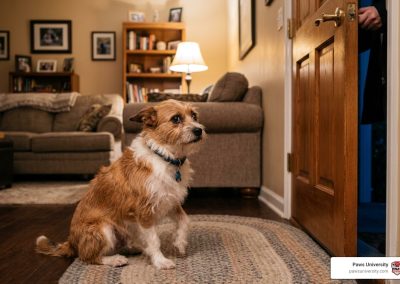
When Your Senior Dog Won't Stop Barking Alone: What's Really Going On
Older dog barking when left alone is one of the most common — and most misunderstood — problems senior pet owners face.
Here's a quick summary of why it happens and what helps:
| Cause | What to Look For | Quick Fix |
|---|---|---|
| Separation anxiety | Barking starts within minutes of leaving | Gradual desensitization training |
| Canine cognitive dysfunction (CCD) | Disorientation, pacing, night barking | Vet assessment, routine, enrichment |
| Pain (e.g., arthritis) | Restlessness, difficulty lying down | Vet exam, pain management |
| Vision or hearing loss | Startled easily, anxious without you | Night lights, consistent home layout |
| Boredom or frustration | Barking with no other symptoms | Puzzle toys, exercise before leaving |
This isn't just a nuisance behavior. In most cases, your dog is telling you something is wrong.
Up to 80% of dogs over age 8 have osteoarthritis. One-third of dogs in their early teens show signs of cognitive dysfunction syndrome — rising to two-thirds by their mid-teens. These conditions directly drive the barking you're hearing when you walk out the door.
The good news? Most causes are manageable with the right approach.
I'm Allen Daniels, co-founder of Paws University in Kailua-Kona, Hawaiʻi, and I've spent over 25 years working through behavioral challenges — including older dog barking when left alone — using the same science-backed, trust-based methods I developed training marine mammals. In the sections below, I'll walk you through exactly how to identify what's driving your senior dog's barking and what actually works to help them feel safe alone.
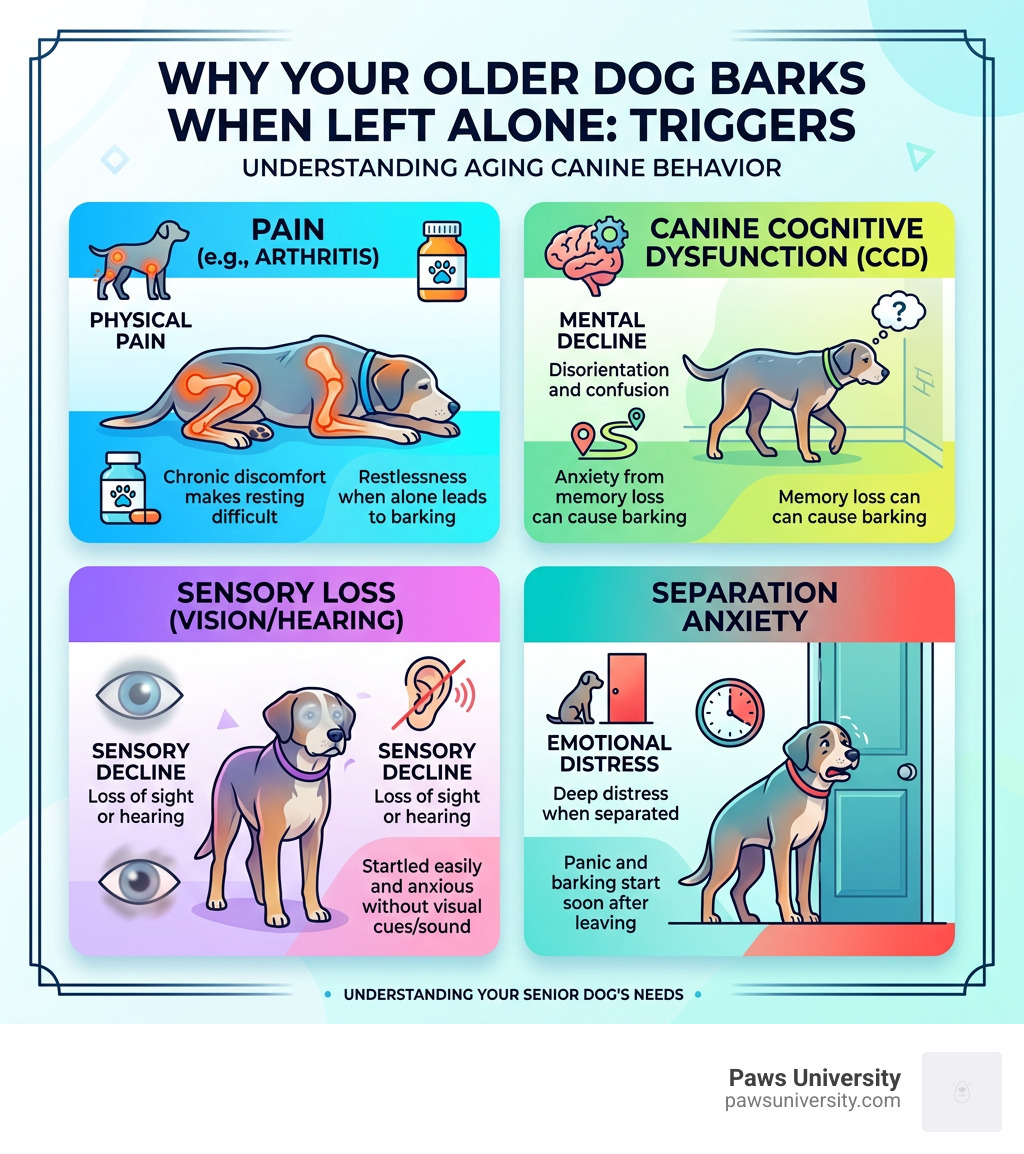
Understanding Why Your Older Dog is Barking When Left Alone

When we see a senior dog start to vocalize more than they used to, it’s easy to assume they are just becoming "grumpy" in their old age. However, the reasons behind an older dog barking when left alone are often deeply rooted in physiological changes.
One of the primary drivers is separation anxiety. Interestingly, research indicates that dogs adopted from shelters are far more likely to experience this than those who have been with the same family since puppyhood. This suggests that a history of loss or changes in the "pack" structure can leave a lasting mark on a dog's psyche, which may resurface or worsen as they age.
A study on dog separation anxiety confirms that this is a complex problem involving physiological stress signs like pacing, whining, and panting. For a senior dog, this anxiety can be triggered by a simple change in the household schedule—perhaps you’ve started a new job in Kona or your kids have moved away to the mainland for college. These shifts disrupt the predictable routine that senior dogs rely on for a sense of security.
Sensory loss also plays a massive role. If your dog is becoming deaf or blind, they may not realize you’ve left the room until they "wake up" to total silence or darkness. This sudden realization can cause a panic response. Imagine being in a familiar place and suddenly realizing you are alone and can't see or hear your surroundings clearly—you’d probably "sound off" to find your people, too.
Differentiating Between Anxiety, Dementia, and Physical Pain
To help our old friends, we must first play detective. Is the barking a result of a worried mind, a confused brain, or a hurting body? We often use the DISHAA framework to help owners categorize these behaviors.
| Category | Symptom Examples | Likely Cause |
|---|---|---|
| Disorientation | Getting stuck in corners, staring at walls | Cognitive Dysfunction (CCD) |
| Interactions | Less interest in petting, or becoming "velcro" dog | CCD or Anxiety |
| Sleep/Wake Cycle | Sleeping all day, barking all night | CCD (Sundowning) |
| House Soiling | Accidents shortly after being outside | Medical or CCD |
| Activity Levels | Repetitive pacing or lack of interest in play | Pain or CCD |
| Anxiety | Panic when you pick up your keys | Separation Anxiety |
Canine Cognitive Dysfunction (CCD) is often compared to human Alzheimer’s. It involves the accumulation of amyloid beta plaques in the brain and oxidative stress, leading to "sundowning"—a state where confusion and barking increase as the sun sets over the Pacific.
Physical pain is another major contributor. Scientific research on osteoarthritis in dogs shows that nearly 80% of seniors suffer from joint discomfort. When you leave, your dog may pace because they can't find a comfortable way to lie down. That barking isn't just "noise"; it's a cry for help because their hips or elbows are throbbing.
Effective Strategies to Reduce Older Dog Barking When Left Alone
Once we understand the why, we can focus on the how. Treating an older dog barking when left alone requires a blend of behavior modification and environmental changes.
Desensitization and Counterconditioning
The goal here is to change your dog's emotional response to your departure. We start by identifying "predeparture cues"—the sounds of you grabbing your keys, putting on your shoes, or locking the back door.
- The Drill: Pick up your keys, then sit back down and watch TV. Put on your shoes, then go make a sandwich. By repeating these actions without actually leaving, you break the association between the cue and the panic.
- Graduated Departures: Start by leaving for just a few seconds. If your dog stays calm, return and reward them. Slowly build up to minutes, then hours. If you need professional guidance to get started, you can find more info about training services to help structure these sessions.
Exercise and Brain Training
A tired dog is a quiet dog, but for seniors, we have to be careful. High-impact running might hurt their joints, but aerobic exercise like a gentle walk through a palm-shaded park or a short swim in the warm Pacific can work wonders. Mental stimulation is equally important. Experts suggest that a focused "brain training" session—like teaching a new simple trick or using a puzzle—can be as exhausting for a dog as a 40-minute walk.
Creating a Secure Environment to Stop an Older Dog Barking When Left Alone
Our homes in West Hawaii can be bright and open, which is great for us, but sometimes overwhelming for a confused senior.
- Safe Spaces: Limit your dog's access to a smaller, cozy area. A large, empty house can feel daunting to a dog with vision loss.
- Orthopedic Bedding: Provide high-quality support to take the pressure off aging joints.
- Night Lights and Navigation: If your dog is losing their sight, use night lights to reduce shadows. Some owners find that placing yellow tape on the edges of stairs helps dogs with poor depth perception navigate safely.
- Scented Comfort: Leave a piece of clothing you’ve recently worn in their bed. Your scent is a powerful "safety signal" that can reduce barking.
- Pheromones: Use diffusers that release dog-appeasing pheromones (DAP) to create a naturally calming atmosphere.
Mental Stimulation and Exercise for the Older Dog Barking When Left Alone
Boredom often looks like anxiety. If your dog is barking simply because they have nothing to do, interactive toys are your best friend.
- Hollow Toys: Stuff a hollow rubber toy with dog-safe peanut butter or wet food and freeze it. This can keep a dog occupied for 20-30 minutes, which is often the "peak panic" window after you leave.
- Evening Massages: If your dog barks due to physical restlessness, a gentle evening massage can help relax their muscles and improve circulation.
- Low-Impact Play: Short sessions of "find the treat" hidden around the room can provide mental engagement without straining their bodies.
When to Consult Your Veterinarian and Use Calming Aids
If you’ve tried environmental changes and the barking continues, it’s time for a professional medical assessment. We always recommend a full senior wellness check, including blood tests and a urinalysis, to rule out underlying issues like urinary tract infections or thyroid imbalances.
For severe cases of older dog barking when left alone, your vet might suggest anti-anxiety medications.
- Trazodone: Often used for situational anxiety (like when you go to work).
- Selegiline: Specifically used to treat symptoms of Cognitive Dysfunction.
- Supplements: Organic MCT oil has shown promise in supporting brain health in aging dogs. Melatonin or L-tryptophan can also help regulate sleep cycles.
Scientific research on dog-appeasing pheromone (DAP) in hospitalized dogs has demonstrated that these scents significantly reduce stress behaviors. While some owners look into citronella collars as a "humane" bark deterrent, we urge caution with seniors. A spray of citronella might stop the noise, but it doesn't address the underlying fear or pain, and it can sometimes make an anxious dog even more stressed.
Common Mistakes to Avoid and Long-Term Management
The most important rule when dealing with a senior dog is: Never punish the barking.
Shouting or using physical corrections will only increase your dog's anxiety. They aren't barking to be "bad"; they are barking because they are scared, confused, or hurting. If you return home to a mess or hear them barking as you walk up the driveway, take a deep breath. Punishment after the fact is ineffective because dogs do not connect a delayed correction with their earlier behavior. It only teaches them to fear your return.
Instead, pay close attention to patterns in your dog's barking. Notice whether it starts right after you leave, happens at certain times of day, or seems linked to sounds, discomfort, or confusion. Those clues can help you tell the difference between separation anxiety, pain, and age-related cognitive changes.
Long-term management is about maintaining the human-animal bond. Consistency is the ultimate comfort for a senior dog. Keep their meal times, walk times, and "tuck-in" routines as identical as possible every day.
Frequently Asked Questions About Senior Dog Barking
Why is my senior dog suddenly barking at night?
This is often related to "sundowning" or Cognitive Dysfunction Syndrome. As light levels drop, a dog with failing vision or cognitive decline can become disoriented. It can also be a sign of arthritis pain; as the evening air cools with the trade winds and the dog stays still for longer periods, their joints may stiffen up, causing them to bark for help.
Are citronella collars safe for older dogs?
While often marketed as a humane alternative to shock collars, citronella collars should be used with extreme care in seniors. The sudden spray can be very startling to a dog with sensory loss or heart conditions. We always recommend addressing the root cause of the barking—whether it's anxiety or pain.
How can I tell if my dog has dementia or just anxiety?
Look for the DISHAA signs mentioned earlier. If your dog is getting lost in familiar corners or failing to recognize family members, it’s likely dementia (CCD). If the barking only happens in the minutes after you leave and is accompanied by destructive behavior at exit points (like scratching at the door), it’s more likely separation anxiety. Often, in seniors, it's a bit of both.
Conclusion
Managing an older dog barking when left alone requires a heavy dose of compassion and a little bit of science. Whether it’s adjusting their environment with orthopedic beds and night lights, or working through a desensitization plan, your efforts will directly improve your dog's quality of life in their golden years.
At Paws University, we understand the unique needs of West Hawaii's senior dogs. Our seven-acre campus in Kailua-Kona was designed to be a premier facility where dogs of all ages can feel secure. If your senior dog needs a supervised, safe environment while you're away, you can find more info about daycare services to see how we can help reduce their isolation and keep them engaged.
Your dog has spent a lifetime being your loyal companion—now is the time to return the favor by ensuring their final years are filled with comfort, not confusion.