
Big Island Dog Activity: Where to Start
The best Big Island dog activity depends on your dog's energy, comfort around other dogs, and the day's weather. Start with a cool-morning leashed walk on a permitted trail or park, a visit to a designated off-leash dog area for social dogs, or a shaded waterfront outing where dogs are allowed. Bring fresh water, use a leash unless you are inside a fenced off-leash area, and check the rules for each beach or park before you go.
Hawaii Island offers more than one kind of adventure: coastal walks near Kailua-Kona, nature paths in higher-elevation areas, community strolls, supervised daycare play, and even shelter-dog field trips for visitors who want to help an adoptable dog enjoy time outside. The key is choosing an outing that matches your dog's fitness, training, and heat tolerance.
Tropical conditions add real hazards. Hot pavement and lava rock can burn paws, saltwater should not replace drinking water, and freshwater in some areas can carry disease risks. Shorter outings early in the day, frequent shade breaks, and a full water bowl are often smarter than trying to do too much.
I'm Allen Daniels, a Hawaii Island native who has worked in animal behavior for more than 25 years and founded Paws University to help dogs learn, play, and rest in a supervised setting. In this guide, I'll share practical Big Island dog activity ideas for active dogs, social dogs, seniors, and pets who need a calmer path to confidence.
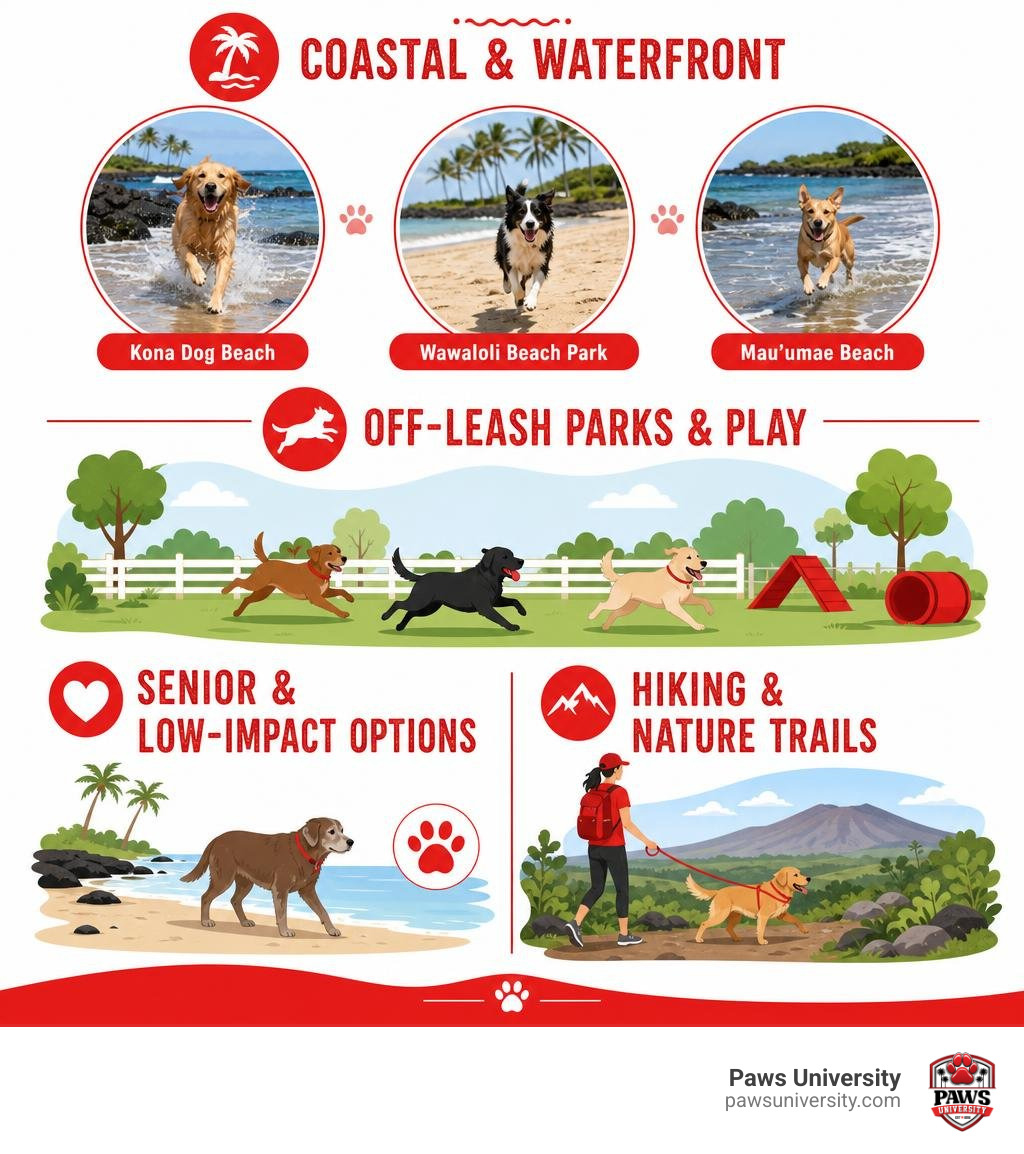
Top Dog-Friendly Beaches and Waterfront Spots

When planning an excursion along the coastline, knowing where your canine companion is legally permitted—and safe—is the essential first step. Many visitors and new residents assume all shorelines are open to four-legged friends, but Hawaii County prohibits pets on county beach parks. Thankfully, several waterfront areas and shoreline trails welcome dogs for wading, swimming, and scenic exploration. Exploring dog-friendly activities across the state reveals that our island provides distinct coastal environments, provided you follow local guidelines.
- Waikoloa Beach (South Section): Dogs on a standard leash are permitted along the southern shoreline of the bay near Lava Lava Beach Club. Dogs are prohibited in the main resort beach parking lots. Visitors typically use gravel overflow parking areas or arrange a quick drop-off before securing a vehicle.
Ocean safety demands active oversight. Saltwater ingestion can cause severe electrolyte imbalances and dehydration; always provide plenty of fresh, cool drinking water. Watch for sharp submerged coral heads, strong undertows, and sea urchins near rocky ledges. After swimming, thoroughly rinse your pup's coat and ear canals with clean freshwater to prevent skin irritation and bacterial moisture buildup in our warm climate.
Premier Hiking Trails and Parks for Big Island Dog Activity
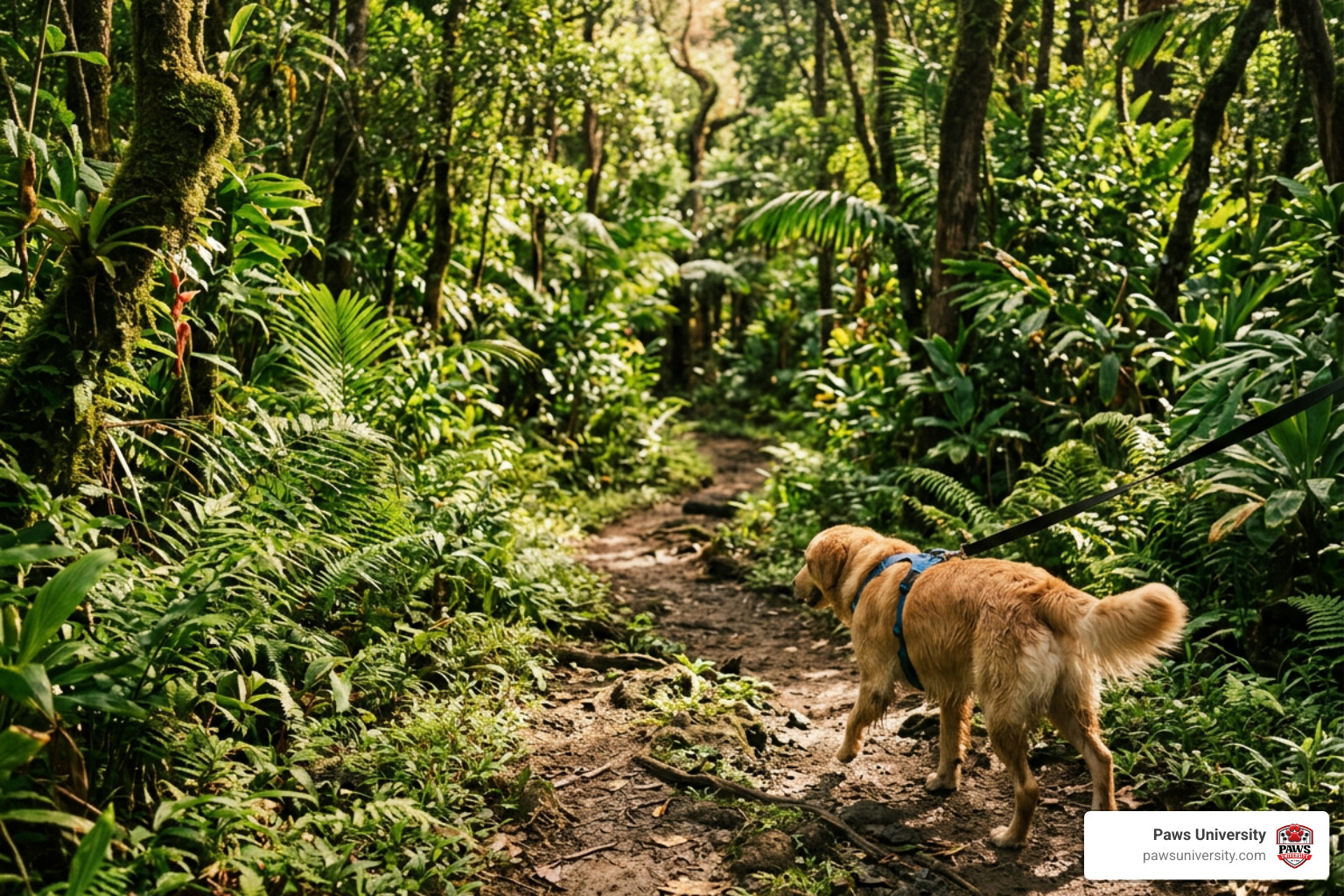
For terrestrial exercise, Hawaii Island's varied topography provides everything from shaded mountain trails to sprawling volcanic vistas. Before heading out, always consult Hawaii County park guidelines and permitted areas to ensure your chosen path allows domestic pets. Keeping dogs securely leashed protects sensitive native flora and fauna while respecting other trail users. Structuring The Daily Grind: Exercise Routines to Keep Your Dog Fit through varied elevation walks builds healthy cardiovascular strength and lean muscle.
- Waimea Nature Park (Ulu La'au): Located at a cooler elevation in Waimea, this tranquil nature sanctuary features a 1-mile walking loop through native trees, streamside paths, and open grassy patches. Leashed dogs thrive in the brisk mountain air, making it an ideal midday retreat when coastal zones become too warm.
- Walua Trail: Running roughly 3 miles one way (about 6 miles out and back) along the lower slopes of Hualalai in Kailua-Kona, this paved pathway is popular for morning and evening walks. It offers panoramic ocean views but climbs steadily as you head uphill, so turn back early on warm days. It accommodates dogs of all sizes on standard 6-foot leashes.
- Namakani Paio Campground (Hawaii Volcanoes National Park): While many national park backcountry trails strictly prohibit pets to protect endangered wildlife like the Nene goose, the Namakani Paio campground, along with the park's paved roadways and parking areas, is the one place where leashed dogs are welcome, under towering eucalyptus trees. Dogs must stay on a six-foot leash and are not permitted on any park trail.
Scenic Nature Walks and Off-Leash Dog Parks
If your dog desires vigorous off-leash romping, fenced dog parks provide a secure environment without running afoul of island leash laws. The Hawaii Island Humane Society's Animal Community Center in Holualoa hosts Central Bark Park, a well-kept facility with double-gated entry and separate enclosures for large and small dogs, plus shade, benches, and a splash pad. Keeping the two sizes apart means gentle play for smaller or more timid dogs while high-energy canines get ample space to run. Check the Humane Society's current hours before you drive up, as the bark parks are not open every day of the week.
In East Hawaii, neighborhood recreation spaces in Hilo—including Machado Acres, Gilbert Carvalho Park, and Ainaola Park—permit leashed dogs along designated perimeter walkways. When visiting any off-leash or neighborhood park, practice good community etiquette: keep your dog leashed until safely inside double-gated transition zones, monitor body language continuously, and immediately remove pet waste to keep shared island spaces pristine.
Structured Daycare and Supervised Play Adventures
Not every high-energy pet thrives in an unpredictable public dog park. Uncontrolled environments often feature mismatched play styles, unmonitored toys that trigger resource guarding, or dogs lacking basic social boundaries. Structured daycare environments offer a curated alternative where dogs participate in supervised playgroups arranged by size, energy level, and play style.
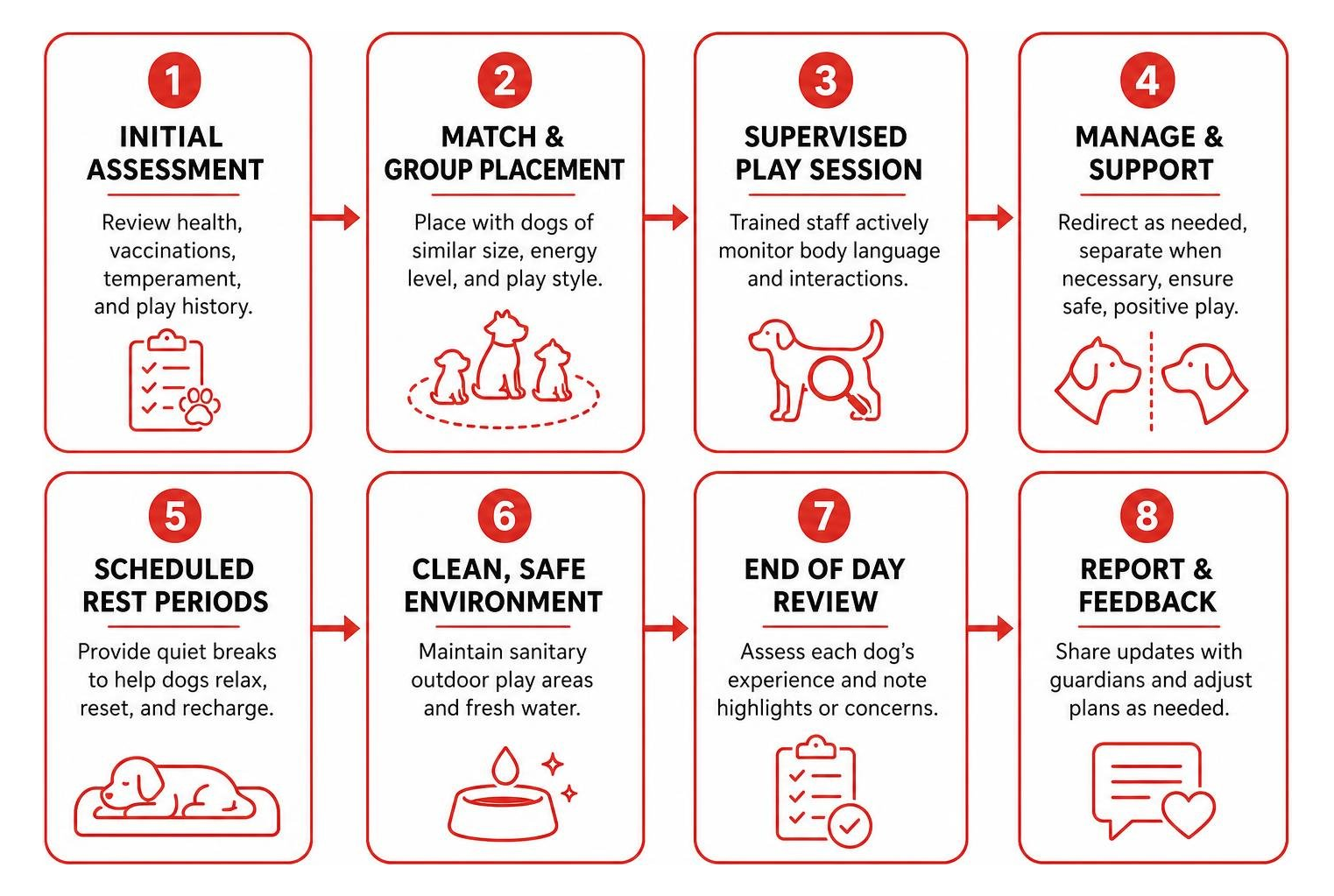
Enrolling your pup where your dog can play all day on the Big Island provides vital cognitive stimulation and physical exercise that dramatically curbs separation anxiety and destructive chewing at home. When selecting among The Best Professional Pet Daycare Options on the Big Island, look for facilities that utilize trained staff to manage body language, enforce regular mandatory rest periods, and maintain sanitary outdoor surfaces.
Choosing a Low-Impact Big Island Dog Activity for Senior Pets
Senior dogs and young puppies have unique physiological needs that require tailored exercise regimens. Growing puppies need carefully managed socialization to build real-world confidence without overworking developing growth plates. Conversely, older dogs benefit from low-impact mobility exercises that preserve muscle mass without aggravating arthritic joints.
When researching Big Island Dog Daycare: Finding the Best Spot for Your Furry Friend, look for facilities featuring specialized amenities. Premium pet campuses provide open-air roofed pavilions, climate-controlled rest suites, and shock-absorbing rubberized flooring that cushions aging joints during play. Prioritizing structured, gentle movement over high-impact running keeps older dogs happy, agile, and free from next-day soreness.
Community Strolls and Shelter Field Trips
For dogs that prefer gentle community socialization, urban strolls offer exceptional olfactory enrichment. The monthly Kokua Kailua Village Stroll transforms Ali'i Drive into a pedestrian-only marketplace on Sunday afternoons. Walking your leashed, well-mannered pup past open-air artisan booths provides rich sensory engagement in a festive, oceanfront setting.
If you are an island visitor missing your pet or a local resident looking to give back, the Hawaii Island Humane Society's "Field Trips for Shelter Dogs" program offers a wonderful way to enjoy island activities. By taking an adoptable shelter dog out for the day to hike, visit dog-friendly beaches, or enjoy quiet park paths, you provide essential behavioral enrichment and decompression. Participants are equipped with a day-trip backpack containing travel water bowls, towels, treats, and emergency gear, creating a rewarding experience for both human and canine.
Essential Health and Climate Safety Guidelines
Exploring Hawaii Island's diverse terrain requires proactive safety habits. Sharp volcanic basalt (pahoehoe and a'a lava) acts like abrasive sandpaper on tender paw pads. Avoid hiking across raw lava fields during mid-day heat, and inspect paws thoroughly for lacerations after every outing. Working through a Kona Dog Training Guide: From Puppies to Pros using positive, rewards-based methods ensures your dog masters reliable recall, preventing them from bolting across dangerous terrain or disturbing native wildlife.
Reviewing local safety warnings and regional guidelines helps pet parents navigate unique island risks before stepping onto remote trailheads.
Planning a Safe Big Island Dog Activity in Coastal Heat
The tropical sun can elevate ground temperatures rapidly, turning asphalt and dark sand into severe burn hazards. Always test pavement with the back of your hand for seven seconds; if it feels uncomfortable to your skin, it will blister your dog's paws. Plan outdoor excursions for dawn or late afternoon, and watch diligently for early indicators of canine heat exhaustion:
- Excessive, heavy panting or thick, sticky saliva
- Bright red or pale, dry gums
- Glazed eyes, disorientation, and slow response to cues
- Lethargy, stumbling, or sudden refusal to walk
Beyond heat, inland freshwater systems carry specific biological hazards. Waipio Valley and various stagnant freshwater streams across the island harbor Leptospira bacteria, which causes Leptospirosis—a severe illness transmissible to both animals and humans. Keep in mind that the standard canine Leptospirosis vaccine protects against only a limited number of Leptospira serovars, and it does not cover every strain circulating in Hawaii — ask your veterinarian what is right for your dog and the areas you visit. Never permit dogs to drink from or swim in stagnant inland freshwater ponds. Stick to clear ocean waters or bring your own municipal tap water. Additionally, if traversing Central Big Island trails along Saddle Road (Highway 200), keep dogs close on a bright leash and wear high-visibility gear, as active hunting occurs year-round in adjacent state forest reserves.
Frequently Asked Questions About Big Island Pet Outings
Are dogs allowed on all public beaches and county parks on the Big Island?
No. Hawaii County regulations strictly prohibit dogs (with the exception of service animals) in county beach parks, including popular spots like Reed's Bay and Spencer Beach Park. Dogs are permitted on specific non-county shorelines, designated state trail corridors, and selected neighborhood parks where local signage explicitly permits leashed recreation.
What health precautions and vaccinations are needed before joining group play or public hikes?
Before participating in public dog parks, daycare campuses, or community group events, dogs must be up to date on core vaccinations: Rabies, DHLPP (Distemper, Hepatitis, Leptospirosis, Parainfluenza, Parvovirus), and Bordetella (often required every 6 to 12 months for group play). Because Hawaii experiences a year-round flea, tick, and heartworm season due to our warm tropical climate, continuous veterinary-approved parasite preventatives are vital for your dog's safety.
How can visitors without pets participate in dog activities on the island?
Visitors can participate through the Hawaii Island Humane Society’s "Field Trips for Shelter Dogs" program. Available by advance appointment at shelter facilities in Holualoa (Kona) and Keaau (East Hawaii), this program allows individuals and families (with children 8 years and older) to check out an adoptable dog for a day of outdoor recreation. Outings require a fully enclosed vehicle for safe transportation, and all dogs must remain securely harnessed and leashed throughout the day.
Conclusion
From early-morning shoreline walks to brisk afternoon hikes through Waimea Nature Park, Hawaii Island provides endless opportunities to bond with your dog. Balancing these outdoor adventures with an understanding of tropical climate safety, proper hydration, and local park rules ensures every outing remains safe and joyful.
When your schedule calls for focused daytime exercise, socialization, or overnight care, choosing a dedicated facility makes all the difference. At Paws University, we have served West Hawaii since 2002 across our expansive seven-acre campus. As the island's first premier daycare and training center, our experienced team provides enriching, supervised playgroups tailored to your pet's unique temperament, keeping them active, fulfilled, and safe. Learn how our team provides safe and supervised pet daycare in Kailua-Kona and give your companion the ultimate island staycation.