How Dog Boarding and Training Work Together
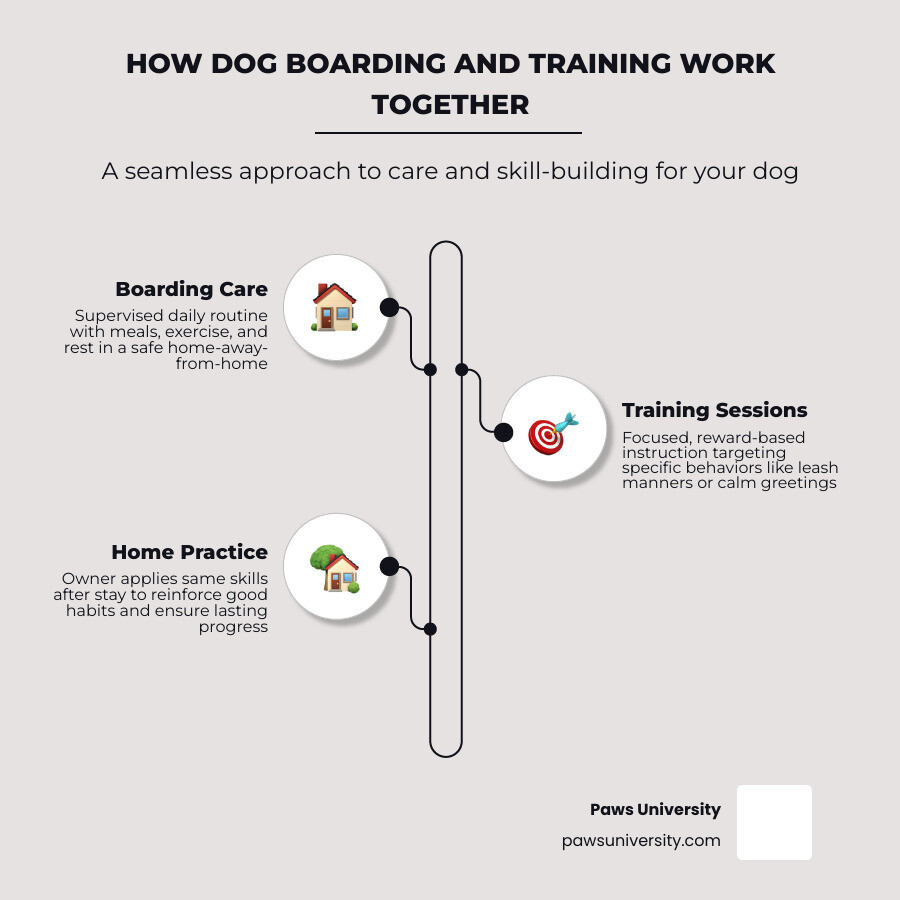
Dog boarding and training can work together, but a boarding stay does not always include training. Boarding gives your dog supervised care and a daily routine while you are away. Training targets skills or behavior goals through separate sessions. If you want both, ask how sessions fit into your dog’s stay and how you’ll practice the same skills at home.
For busy West Hawaii pet parents, the right plan starts with a clear goal, whether that is calmer greetings, better leash manners, or help with barking. A safe routine matters, but lasting progress also takes practice after your dog comes home.
I’m Allen Daniels, co-founder of Paws University in Kailua-Kona. I’ve worked in animal behavior since the late 1980s and have spent more than 25 years using reward-based methods in dog boarding and training.
How Can Dog Boarding and Training Support Your Dog?
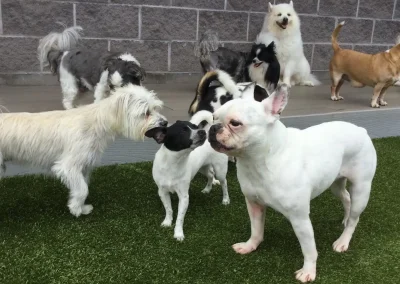
When you arrange overnight boarding alongside targeted instruction, your dog benefits from a continuous rhythm of care, mental engagement, and structured rest. Quality overnight dog boarding provides an enriching home away from home, ensuring daily meals, exercise, and social needs are handled with care.
Layering dedicated instruction on top of that baseline turns normal downtime into valuable skill-building. Rather than practicing unwanted behaviors out of boredom or disruption, dogs gain productive outlets. Our trainers engage them in focused, positive exercises while staff manage daily group dynamics, creating repeated opportunities to reinforce good manners from morning to evening.
Understanding Boarding and Training Services
Every canine guest arrives with unique personality traits, energy levels, and learning histories. Pairing boarding with instruction begins with identifying these baselines. An energetic adolescent pup might need basic impulse control around open doorways, whereas an older companion may require confidence-building exercises to feel relaxed in new environments.
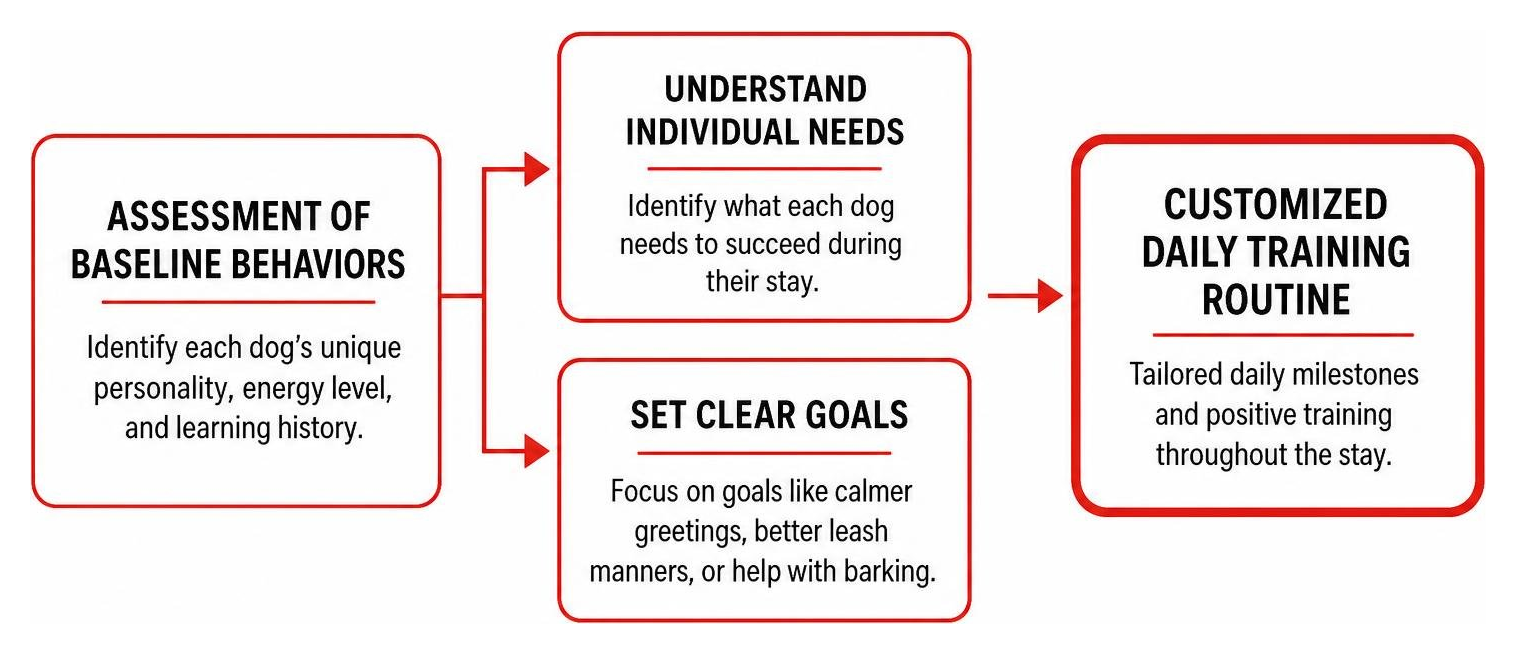
By tailoring daily milestones to your dog's specific needs, we replace chaotic trial-and-error with clear expectations. Whether you are addressing overexcitement during playtime or seeking rock-solid foundational responses, a coordinated plan ensures your dog practices the right behaviors consistently throughout their stay.
A Typical Boarding Routine and Training Support

A successful residency relies on a balanced daily schedule. Training works best when dogs are well-rested, physically exercised, and mentally stimulated without reaching sensory overload.
A well-orchestrated daily schedule includes:
- Morning Play and Social Outings: Dogs stretch their legs and socialize in spacious boarding playgroups matched by size and temperament.
- Dedicated Reward-Based Lessons: Handlers conduct short, upbeat, one-on-one sessions focusing on high-value reinforcement, marker cues, and precise skill building.
- Midday Decompression: Calm rest periods allow the dog's central nervous system to absorb new concepts without fatigue.
- Afternoon Enrichment: Structured puzzles, sniffing games, and outdoor strolls reinforce loose-leash habits in low-distraction zones.
- Evening Wind-Down: A peaceful dinner and settling routine prepare dogs for a restful, secure night.
Frequent, short sessions maintain high enthusiasm and prevent frustration, allowing your dog to make steady behavioral leaps.
Comparing Training Approaches
Pet parents often wonder whether intensive resident programs or weekly group classes offer the best path forward. Both methods have distinct strengths depending on your available free time, your dog's current behavior, and your long-term goals.
| Feature | Intensive Board & Train Approach | Weekly Group Obedience Classes |
|---|---|---|
| Time Investment for Owner | Minimal day-to-day time during the stay; focused commitment during post-stay handovers | High weekly commitment for classes plus daily homework at home |
| Consistency of Cues | Professional handlers establish precise mechanics and timing multiple times daily | Relies entirely on the owner's handling skills and schedule from day one |
| Distraction Level | Controlled, gradual progression from zero distractions to real-world stimuli | High immediate distraction (room full of unfamiliar dogs and people) |
| Pace of Skill Acquisition | Accelerated due to daily repetitions and professional mechanics | Gradual, building week-by-week over several months |
| Best Suited For | Busy schedules, complex reactivity, or fast-tracking core foundations | Owners who enjoy learning the training mechanics alongside their dog |
Regardless of the format you choose, modern animal science shows that positive, humane methods yield the most reliable long-term results. The American Veterinary Society of Animal Behavior emphasizes that reward-based approaches build confident companions while protecting the emotional welfare of our pets.
Building Consistency Through Training
A primary hurdle in dog ownership is finding the time to deliver hundreds of clean, properly timed repetitions every week. Work, family, and daily errands often leave pet parents with limited bandwidth, leading to accidental reinforcement of bad habits—like allowing leash pulling when rushing across the parking lot.
Enrolling in a structured program bridges this gap. When experienced instructors guide your dog through foundational dog obedience training, the dog learns clear patterns without the confusing mixed signals that human schedules often create. Once the dog understands the core concepts, transferring those polished behaviors back to your household becomes much simpler.
Core Skills to Practice Through Dog Training
A well-rounded training regimen establishes essential lifestyle behaviors that keep dogs safe and welcome in public settings.
Key competencies to cultivate include:
- Reliable Recall: Teaching your dog to turn away from interesting distractions and return immediately when called.
- Polished Leash Manners: Mastering loose leash walking techniques so casual neighborhood strolls remain stress-free.
- Threshold and Doorway Patience: Waiting calmly at open gates and entryways rather than darting out into driveways or roads.
- Relaxed Crate and Station Etiquette: Learning to settle comfortably on a designated mat or inside a secure resting area.
- Impulse Control: Resisting the urge to snatch dropped items, jump on visiting guests, or chase sudden outdoor movements.
Key Behavioral Goals and Distraction Proofing

A dog that performs a perfect sit in a quiet living room may completely forget their training when a neighborhood cat sprints by. Reliable behavior requires methodical "distraction proofing." Professional settings excel here because handlers can carefully control the distance, duration, and intensity of real-world triggers before expecting compliance.
Addressing Leash Reactivity and High Anxiety
Leash reactivity often stems from fear or frustration rather than malice. When a dog feels restricted by a leash, approaching stimuli—such as passing bicycles or unfamiliar dogs—can trigger defensive barking and lunging. This phenomenon, known as trigger stacking, occurs when multiple stressors accumulate until the dog can no longer self-regulate.
By applying proven leash reactivity correction methods, handlers help dogs form positive emotional associations with things that previously worried them. For pups struggling with deeper environmental stress, structured high anxiety behavior modification provides the predictability they need to thrive. Using gentle positive reinforcement for reactive behaviors builds genuine confidence rather than masking fear through intimidation.
Real-World Environmental Distraction Training
To ensure new habits hold up outside of a quiet classroom, training must transition to dynamic environments. Handlers introduce controlled distractions in stages:
- Distance Management: Practicing cues far enough from other dogs so your pup remains below their emotional threshold.
- Auditory Habituation: Exposing dogs to outdoor sounds, passing maintenance equipment, and rustling palms while pairing those noises with high-value rewards.
- Neutral Dog Exposure: Teaching dogs to remain calm near other dogs without demanding direct social contact.
- Dynamic Movement: Proofing cues while toys roll, people walk briskly, or doors open and close nearby.
This step-by-step approach ensures that your dog learns to think clearly and make good choices, even in stimulating environments.
How to Choose a Quality Boarding Facility and Support Training at Home
Selecting the right facility requires careful research. You are entrusting your canine family member to an away-from-home environment, so safety, facility cleanliness, and thoughtful management must come first.
When touring potential campuses, look for:
- Expansive Outdoor Yards: Clean, secure play yards with ample natural ventilation and tropical shade.
- Strict Wellness Protocols: Clear policies regarding vaccinations, tick and flea prevention, and rapid veterinary support.
- Positive Handling Philosophy: Staff who use humane, reward-focused methods to guide and reward good choices.
- Transparent Daily Operations: Detailed routines for feeding, rest, exercise, and enrichment.
- Enthusiastic Client Feedback: A track record of happy dogs and satisfied local families.
Evaluating Campus Standards and Complementary Services
A top-tier pet care center offers more than basic kennels. A spacious campus with dedicated enrichment zones allows dogs to enjoy sensory stimulation, safe social play, and peaceful rest.
Facilities that integrate daycare playgroups, professional bathing, and training support under one roof make life easy for owners. When dogs are already familiar with the play yards and care team through regular daytime visits, boarding stays feel like a seamless second home.
Follow-Up Training and In-Home Reinforcement
A dog is not an appliance that gets permanently "fixed" at a facility; they are living, thinking creatures who adapt to the human holding the leash. The most critical component of any program is the transfer of skills back to you.
A dedicated handover plan should include:
- The In-Person Owner Handover: A detailed coaching session where trainers demonstrate your dog's cues and guide your timing and handling mechanics.
- At-Home Integration Support: Practical steps for reinforcing house boundaries, mealtime routines, and door manners in your own living space.
- Ongoing Practice: Opportunities for ongoing group classes or refresher lessons to keep handling skills sharp as your dog matures.
When your entire family uses consistent verbal cues and reward markers at home, your dog will maintain their good habits for years to come.
Frequently Asked Questions About Dog Boarding and Training
How long does it take to build lasting training habits?
Building solid behavioral habits generally takes several weeks of consistent, daily practice. While dogs can learn the mechanics of basic cues relatively quickly, proofing those behaviors against real-world distractions and turning them into reliable habits requires steady, repeated reinforcement over time.
What behavioral issues can training help address?
Structured training programs are well suited for handling leash pulling, jumping on houseguests, selective recall, door-dashing, and overexcitement around other dogs. For dogs showing signs of fear reactivity or environmental anxiety, a reward-based modification plan helps build emotional regulation and calm focus.
How do owners maintain training results at home?
Maintaining your dog's new skills comes down to daily consistency. Use the same verbal cues, hand signals, and reward schedules established by your training team. Integrating quick, two-minute practice sessions into everyday routines—like asking for a calm sit before opening the door for a walk—keeps behaviors sharp and reliable.
Conclusion
Combining overnight care with dedicated instruction gives dogs a rich, structured environment to build lifelong manners. By pairing experienced, positive-reinforcement handling with a secure outdoor campus, pet parents can tackle troublesome habits like leash pulling, overexcitement, and poor recall while enjoying complete peace of mind.
Ready to give your companion the gift of clear communication, calm focus, and positive habits? Discover how our reward-based Paws University training programs can help your dog thrive both at home and across our island community.