What Is High Anxiety Dog Training — and Does Your Dog Need It?
High anxiety dog training is a science-backed approach to helping dogs whose fear, stress, or panic is interfering with daily life. It goes beyond basic obedience. It targets the emotional root of the problem — not just the behavior on the surface.
Quick answer — the core steps of high anxiety dog training:
- Identify the triggers — what specifically causes your dog's fear or stress response
- Keep your dog sub-threshold — work at a distance or intensity where they stay calm enough to learn
- Use desensitization and counterconditioning — gradually pair triggers with positive experiences to rewire the emotional response
- Build a predictable routine — consistency lowers baseline anxiety over time
- Avoid aversive methods — punishment worsens fear and erodes trust
- Know when to get help — a certified trainer or veterinary behaviorist may be needed for severe cases
An anxious dog isn't being stubborn or difficult. They're overwhelmed. As one training principle puts it plainly: your dog is not giving you a hard time — they are having a hard time.
The signs can look like barking, destructive chewing, or lunging on the leash. Or they can be quieter — freezing, refusing treats, hiding behind you. Both are distress signals from a nervous system that's been pushed past its limit.
The good news? The brain can be retrained. With the right approach, most anxious dogs can learn to feel genuinely safer in the world.
I'm Allen Daniels, co-founder of Paws University in Kailua-Kona, and I've spent over 25 years applying operant conditioning and rewards-based methods to high anxiety dog training — first refined during a decade training marine mammals alongside behavioral scientists at the Hilton Waikoloa Village. Everything in this guide is grounded in the same trust-first, science-backed framework I've used with hundreds of dogs here on Hawaiʻi Island.
High anxiety dog training glossary:
Recognizing the Signs: Normal Fear vs. Clinical Anxiety
To help an anxious dog, we first have to understand what they are trying to tell us. Many owners miss the early warning signs of stress because they don't look like typical panic.
Fear is a normal, healthy evolutionary response to a real, immediate threat—like a sudden loud crack of thunder over Hualālai. Once the sound passes, a healthy dog's nervous system recovers quickly, and they return to their normal state. Clinical anxiety, on the other hand, is a chronic state of anticipation. The dog is constantly waiting for the next scary thing to happen, even when the environment is completely safe.
Anxious dogs frequently display "displacement behaviors"—normal dog behaviors performed out of context because the dog is experiencing internal conflict. Common examples include:
- Yawning when they aren't tired (such as during a training session or when a stranger approaches).
- Ground sniffing suddenly and when a trigger appears, pretending to be deeply interested in a blade of grass to avoid looking at the threat.
- Lip licking or tongue flicking when no food is nearby.
- Whale eye, where the dog keeps their head still but follows a threat with their eyes, exposing the whites of their sclera.
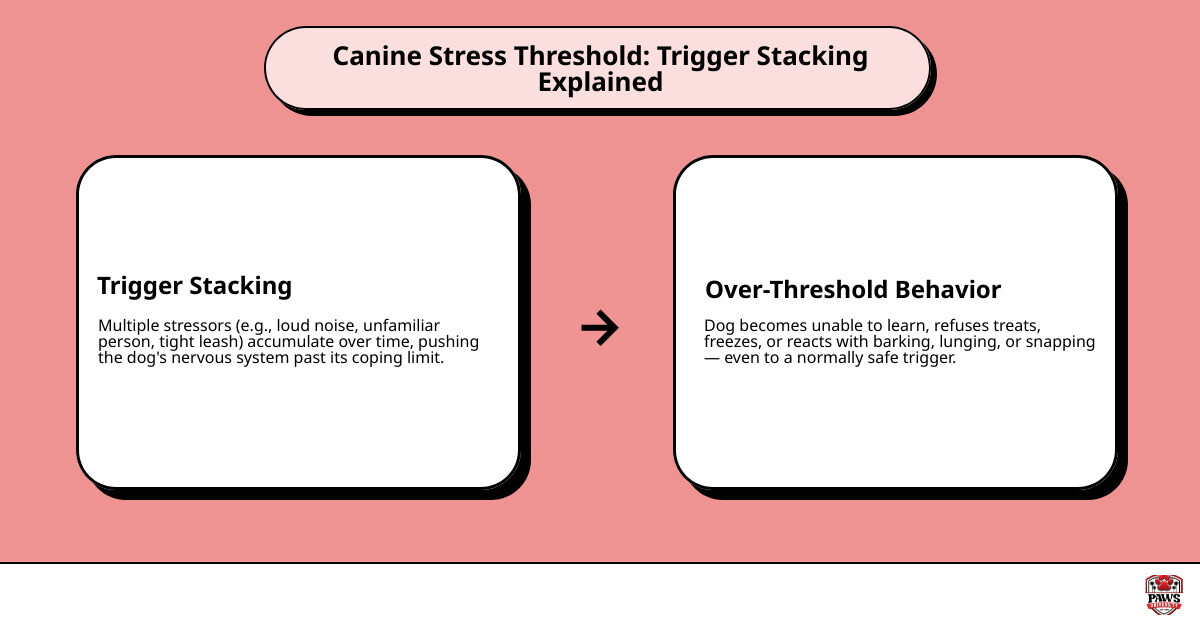
When a dog is pushed past their emotional limit, they cross their "threshold." At this point, their body undergoes cortisol flooding, the amygdala (the brain's threat-detection center) fires rapidly, and the sympathetic nervous system takes over.
When a dog is over threshold, they are in survival mode. The part of the brain that processes logic and learning completely shuts down. If your dog refuses a piece of high-value boiled chicken when a trigger is nearby, they aren't being stubborn—their brain is physically incapable of processing "treat = reward."
If your pup is struggling with these physical reactions, you can learn more about how to help them calm down in our guide on how to stop the shakes with these proven anxious dog solutions. For those raising young puppies, understanding these developmental baselines early is crucial; you can explore the science of early fear responses in this evidence-based guide to puppy anxiety.
Science-Backed High Anxiety Dog Training Techniques
When it comes to high anxiety dog training, traditional obedience training often fails because it only addresses the physical behavior (like barking or lunging) rather than the underlying emotion. If we force an anxious dog to sit while they are terrified, we haven't made them feel any safer—we've just suppressed their outward expression of fear.
To achieve lasting change, we must use classical counterconditioning and systematic desensitization.
- Systematic Desensitization: This involves exposing your dog to a very low, non-threatening version of their trigger. For example, if your dog is terrified of delivery trucks, we might start by playing a faint audio recording of a truck engine at the lowest volume while sitting in our living room.
- Classical Counterconditioning: This is the process of changing your dog’s Conditioned Emotional Response (CER). We pair the low-intensity trigger immediately with an incredibly high-value reward—like fresh, warm Kona-roasted chicken or freeze-dried beef liver.
The goal is to change the dog's internal prediction from "Truck sound = danger" to "Truck sound = I get delicious chicken!"

The absolute golden rule of this process is keeping your dog sub-threshold. We must manage the distance, volume, or intensity of the trigger so the dog remains calm, relaxed, and capable of thinking. When we keep them in this calm state, the parasympathetic nervous system (responsible for resting and digesting) remains active, allowing the brain to form new, positive associations.
To build a solid foundation of focus and cooperation before tackling these heavy emotional triggers, check out the ultimate guide to dog obedience training.
Step-by-Step High Anxiety Dog Training for Separation Distress
Separation distress is one of the most common challenges we address in high anxiety dog training. True separation anxiety is a panic disorder. The moment you prepare to leave, the dog's nervous system experiences a massive spike in adrenaline.
To tackle this, we must break down their "pattern recognition." Highly intelligent dogs often memorize our departure sequences. They might start pacing, panting, or whining at 2:00 PM because they've noticed a sequence of cues: you put on closed-toe shoes, grab your keys, and pick up your bag. By the time you actually walk out the door, your dog has already been in a state of high stress for two hours.
We can systematically desensitize them to these cues using this step-by-step approach:
- Deconstruct the Departure Cues: Make a list of all your departure triggers. Several times a day, perform these actions without actually leaving. Pick up your keys and sit on the couch. Put on your shoes and feed your dog dinner. Walk to the door, touch the handle, and walk back to the kitchen.
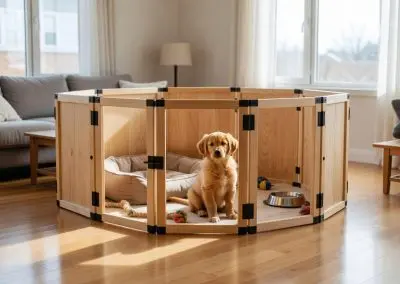
- Begin Independence Training: Teach your dog that they can be relaxed even when they aren't glued to your side. Use baby gates or exercise pens to create mild physical separation while you are still in the same room. Give them a stuffed food toy to enjoy while you sit a few feet away.
- Practice Micro-Departures: Once your dog is comfortable with your departure cues, begin stepping away for tiny increments of time—literally starting with two to five seconds. Walk out the door, close it, and immediately walk back in before they have a chance to panic.
- Gradually Increase Duration: Slowly build the time up to thirty seconds, then two minutes, then five minutes. If your dog whines, paces, or shows any signs of distress, you have moved too fast. Go back to the last successful step and reduce the time by half.
For a deeper dive into managing this specific panic response, read our ultimate guide to managing separation anxiety in dogs and explore these practical dog anxious when leave tips.
Managing Environmental Triggers and Leash Reactivity
Leash reactivity—where a dog barks, lunges, or growls at other dogs, people, or cars while on walks—is almost always driven by fear. When a dog is on a leash, they know they cannot run away from a perceived threat. Because "flight" is taken off the table, they resort to "fight" behaviors to force the scary thing to stay away.
To manage this safely, we use distance management. If your dog reacts to another dog at fifty feet, then your starting training distance is sixty feet. Stand at this safe distance, wait for your dog to look at the other dog, and the millisecond they look without reacting, mark the behavior (with a word like "yes!") and feed them a high-value treat.
We must also talk about trigger stacking. Trigger stacking occurs when multiple small stressors pile up throughout the day without the dog having a chance to fully recover. A morning walk with a loose dog encounter, a loud delivery driver at noon, and a sudden afternoon rainstorm can stack up. By evening, a simple knock on the door causes an explosive reaction. The final trigger isn't the sole cause; the dog's emotional bucket was simply full.
Never punish a dog for growling, lunging, or barking. A growl is a vital communication tool—it is your dog saying, "I am uncomfortable, please help me." If we punish the growl, we do not fix the underlying fear; we simply remove the warning system. A dog that has been punished for growling will eventually stop growling, but they will still feel terrified—leading to a dog that bites "without warning." Learn more about interpreting and managing these warnings in our guide on how to stop dog growling, and check out our stop the barking with this leash reactivity guide to regain peace on your daily walks.
Building Confidence and Creating Predictable Routines
Anxiety thrives on uncertainty. One of the most effective ways to reduce a dog's baseline stress is to make their world highly predictable. When a dog knows exactly what is going to happen and when, they gain a sense of environmental control, which naturally lowers cortisol levels.
- Establish a Consistent Schedule: Feed meals, go for walks, and schedule rest times at the exact same times every day.
- Implement "Life Rewards": Have your dog perform a simple, known behavior (like a "sit" or "down") before they get things they want—like having their food bowl set down, getting their leash put on, or being invited onto the couch. This isn't about dominance; it's about giving your dog a clear framework for how to access good things in their environment.
- Incorporate Structured Rest: Many owners of high-energy, anxious dogs fall into the trap of trying to exhaust their dog with hours of fetch or running. The old saying "a tired dog is a good dog" is a myth for anxious pups. Chaotic, high-arousal exercise actually floods the body with adrenaline and cortisol, keeping the dog's nervous system in a constant state of hyper-alertness. Anxious dogs need structured, quiet rest—often 16 to 18 hours of sleep a day—to allow their stress hormones to return to baseline.
- Provide Mental Stimulation: Scent work, puzzle feeders, and tracking games engage the thinking brain and naturally tire a dog out without spiking their adrenaline.
If you are working with an older dog who may have missed out on early experiences, building this confidence is still entirely possible. Discover how to safely expand their comfort zone in our practical guide to socializing an adult dog.
Force-Free Crate Training for Anxious Dogs
Standard crate training guides often promise results in three to seven days by letting the dog "cry it out." For a genuinely anxious dog, this "tough love" approach is ethically wrong and can cause severe behavioral regression. When a panicked dog is locked in a crate, they can experience extreme distress, leading to broken teeth, bloody paws, and lifelong crate aversion.
For anxious dogs, crate training must be planned for a minimum of 28 days, focusing on a slow, force-free desensitization protocol.

- The 5-Day Calm Zone: Start with the crate door completely open or removed. Place the crate in a peaceful, family-adjacent spot. For the first five days, simply feed your dog their meals near the crate. Start four feet away, and move the food bowl six inches closer each day only if your dog remains completely relaxed.
- The Treat Trail: Toss high-value treats just inside the crate entrance. Let your dog walk in, grab the treat, and walk right back out. Never close the door behind them.
- The 7-Second Rule: Once your dog is happily walking all the way into the crate to enjoy a stuffed food toy, gently close the door. Keep it closed for exactly seven seconds while you sit right next to them, then open it and reward them. Slowly build this duration over the course of weeks, not days.
- Monitor Their Response: Anxious dogs often hide their stress when humans are in the room. Observe them discreetly from a distance when you step away. If you see pacing, panting, or lip licking, you have exceeded their threshold.
Sometimes, despite our best efforts, a crate is simply not the right fit for a dog with severe past trauma (such as rescue dogs with containment phobias). In these cases, safe alternatives like a dog-proofed room with a secure baby gate are perfectly acceptable solutions.
For a complete step-by-step breakdown of this gentle process, check out this how to crate train an anxious dog guide, and read the complete guide to dog kennels for anxious dogs to choose the safest setup for your pup.
Professional Support and Veterinary Intervention
There is no shame in admitting when you need help. High anxiety is a complex physiological condition, and trying to handle it alone can be exhausting for both you and your dog.
For severe cases—especially those involving self-injury, extreme panic attacks, or aggression—working with a veterinary behaviorist or a certified dog trainer is essential.
In many cases of severe anxiety, behavior modification alone is not enough because the dog's baseline stress is simply too high for them to learn. This is where veterinary behavior medicine plays a crucial role. Anti-anxiety medications (such as daily fluoxetine or situational trazodone and gabapentin) are not designed to sedate your dog. Instead, they act as a chemical life jacket, lowering the baseline panic threshold just enough so that the dog's thinking brain can stay online during training.
When to Seek Professional High Anxiety Dog Training
When searching for professional help for an anxious dog, you must be incredibly selective. The dog training industry is currently unregulated, meaning anyone can call themselves a "behaviorist."
Look for trainers holding independent, science-based credentials such as:
- CPDT-KA (Certified Professional Dog Trainer - Knowledge Assessed)
- KPA-CTP (Karen Pryor Academy Certified Training Partner)
- Fear-Free Certified Professionals
Red Flags to Avoid:
- Any trainer who promises a "quick fix" or "guarantees" results. True emotional rehabilitation takes time.
- Trainers who use aversive tools such as prong collars, choke chains, slip leads, or e-collars (shock collars). While these tools can suppress outward behavior through fear of pain, they increase the underlying anxiety and can cause severe behavioral fallout.
- Anyone who uses dominance theory, "alpha rolls," or tells you to "be the pack leader." These outdated concepts have been rejected by the scientific community.
If you are located on Hawaiʻi Island and need personalized, professional guidance, explore our private training options or read our guide on barking up the right tree to find aggression training to find qualified help in Hawaii County.
Frequently Asked Questions About Dog Anxiety
How long does it take to see improvement in an anxious dog?
Emotional rehabilitation is a journey, not a destination. While you may see small behavioral improvements within the first two to four weeks of establishing a predictable routine, true behavior change typically takes two to three months of consistent daily work. It is also completely normal to experience training regressions—about 68% of dogs experience some level of regression four to six months after starting a program. Progress is rarely a straight line; measure success by faster recovery times and less intense reactions.
Can aversive training methods fix high anxiety?
No. Aversive training methods (like prong collars, electronic collars, or physical corrections) might temporarily stop a behavior like barking or lunging because the dog wants to avoid pain. However, this is simply "learned helplessness." The underlying fear and anxiety are still there, often worsening because the dog now associates the pain of the collar with the trigger itself. This approach erodes trust and can lead to sudden, severe aggression.
What is trigger stacking and how do I prevent it?
Trigger stacking is the accumulation of multiple stressors over a short period. To prevent it, keep a daily log of your dog's triggers. If your dog has a highly stressful encounter in the morning, modify the rest of their day. Skip the busy afternoon walk, provide a quiet room to rest in, and offer calming mental stimulation games like a stuffed frozen food toy. Giving your dog 24 to 48 hours of quiet decompression time after a major stress event allows their cortisol levels to return to normal.
Conclusion
Helping a dog navigate severe fear and stress is one of the most challenging—yet deeply rewarding—journeys an owner can take. By shifting our perspective from "my dog is misbehaving" to "my dog is asking for help," we can build a relationship based on trust, safety, and mutual understanding.
At Paws University, we are committed to providing the highest standard of rewards-based, force-free care. Our premium pet care facility, situated on a beautiful seven-acre tropical campus in Kailua-Kona, was the very first in the state of Hawaii to offer structured, supervised doggie daycare. We focus on low-stress, supervised play and personalized attention to help dogs build confidence and naturally reduce behavioral issues in a safe, tropical paradise.
Whether you need professional boarding, structured daycare socialization, or customized private coaching, we are here to support you and your dog every step of the way. Explore premium dog training services with us today and take the first step toward a calmer, happier life with your canine companion.