
Why Dog Obedience Training Is One of the Best Things You Can Do for Your Dog
Dog obedience training is the process of teaching your dog to respond reliably to cues — like sit, come, and heel — so they can behave safely and calmly in everyday life.
Here's what you need to know at a glance:
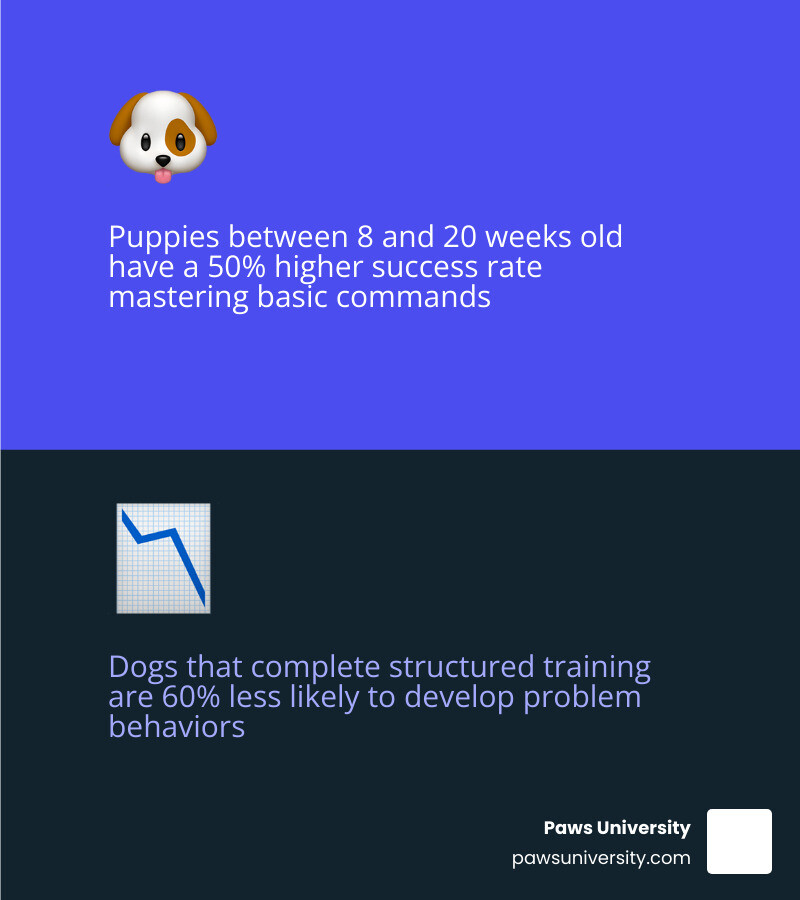
- Start early — puppies between 8 and 20 weeks old have a 50% higher success rate mastering basic commands
- The most important foundational cues are sit, recall (come), heel, leave it, and stay
- Rewards-based training builds trust and reduces problem behaviors like barking, anxiety, and aggression
- Dogs that complete structured training are 60% less likely to develop problem behaviors
- Training benefits dogs of all ages — it's never too late to start
- Group classes, private sessions, and in-home training each serve different needs
Whether your dog is a brand-new puppy or a rescue with some rough edges, the goal is the same: a dog who feels safe, listens reliably, and fits into your family's daily life.
Training isn't just about commands. It's about building a genuine relationship with your dog — one built on clear communication and mutual trust. Over 70% of dog owners report better bonding and communication after completing structured obedience classes. That's not a small thing.
For busy West Hawaiʻi pet parents dealing with barking, separation anxiety, destructive behavior, or aggression, structured training isn't optional — it's essential.
I'm Allen Daniels, co-founder of Paws University in Kailua-Kona, and I've spent over 25 years applying science-backed, rewards-based dog obedience training methods — the same operant conditioning principles I originally developed training dolphins at the Hilton Waikoloa Village. In this guide, I'll walk you through everything you need to know to get your dog on the right path.
The Core Pillars of Dog Obedience Training
At its heart, successful training relies on three core pillars: consistency, repetition, and positive habit formation. Dogs do not naturally understand human language or household rules. They learn by associating their actions with immediate consequences. When we consistently reward desirable behaviors, those behaviors become deeply ingrained habits.
According to expert resources like Obedience Training for Dogs | PetMD , training is not about establishing dominance or acting like an "alpha." Instead, it is about giving your dog the cognitive tools they need to navigate our human-centric world safely.
Repetition is the engine of habit. A dog might understand what a cue means in a quiet living room, but that does not mean they can perform it on a busy beach or a bustling park. True obedience requires "proofing" commands across varied environments. By practicing in short, engaging sessions, we help our dogs generalize their learning until their response to our cues becomes second nature.

Essential Commands in Dog Obedience Training
Every successful training journey begins with a few foundational commands. These are not just party tricks; they are essential safety tools that protect your dog and make daily life harmonious.
- Sit (and Down): These are the ultimate "default" behaviors. A dog who is sitting or lying down cannot jump on guests, bolt out the front door, or counter-surf. We treat these cues as a physical anchor for your dog’s attention.
- Recall (Come): A reliable recall is arguably the most critical safety skill your dog can learn. It can prevent a dog from running into traffic or chasing local wildlife. Building a strong recall requires making yourself the most exciting, rewarding thing in your dog’s environment.
- Heel: Walking politely on a loose leash makes outings enjoyable instead of a physical tug-of-war. Learning to heel teaches your dog to match your pace and focus on your movement. For a step-by-step guide tailored to our local environment, check out our resources on How to Teach Your Puppy to Heel in Hawaii County and discover how to Walk This Way and Master the Leash with Your New Puppy.
The Best Order to Teach Obedience Skills
When introducing a dog to training for the first time, trying to teach everything at once can cause overwhelm. A structured, safety-first progression ensures steady progress and builds confidence.
- The Marker Word: Before teaching any physical commands, you must teach your dog how they will be rewarded. By loading a marker word (like "Yes!" or utilizing a clicker), you create an immediate bridge between the correct action and the reward.
- Sit and Down: These are excellent introductory behaviors because they are easy to guide using a food lure. They build the initial training bond and teach your dog how to learn.
- Leave It and Drop It: These are critical safety cues. "Leave it" is preventative, telling your dog not to touch an item in the first place. "Drop it" is the release cue for when they already have something in their mouth. Prioritizing these early on prevents dangerous ingestions.
- Stay: Once your dog understands basic positions, you can introduce stay by gradually adding the "3 Ds": Duration, Distance, and Distraction.
- Leash Manners and Playpen/Crate Skills: Building comfortable, positive boundaries is an ongoing process. You can learn more about structured containment by exploring Crate Training: Teaching Your Dog to Love Their Space and reading our guide on How to Successfully Playpen Train Your Puppy Without the Stress.
Training Philosophies and Their Impact on Behavior
How we train our dogs matters just as much as what we teach them. Modern animal behavior science has moved decisively away from old-school, force-based methods. Today’s most effective training philosophies prioritize relationship building, emotional connection, and trust-first communication.

Rewards-Based Training vs. Aversive Methods
Rewards-based training focuses on reinforcing desired behaviors with positive motivators like high-value treats, toys, and enthusiastic praise. Conversely, aversive methods rely on physical corrections, dominance theories, or tools designed to cause discomfort (such as choke, prong, or electronic collars).
Science-backed research shows that dogs trained with rewards-based methods display significantly lower levels of stress, anxiety, and defensive aggression. Because they are not afraid of making mistakes, they become active, enthusiastic participants in the learning process. Conversely, aversive techniques often suppress behaviors temporarily through fear, which can lead to long-term behavioral fallout and damage the trust between owner and dog.
Building a Calm, Confident, and Connected Companion
Obedience is not about mechanical perfection; it is about helping your dog feel calm, confident, and deeply connected to their family. A confident dog is naturally less reactive to strange noises, unfamiliar people, and new environments.
Integrating your dog into daily family routines is a fantastic way to reinforce these bonds. When the entire household uses consistent cues and rewards, the dog's learning accelerates. For new pet parents, starting off with the right routines from day one is essential. Our guide, The New Owner Guide to Overnight Puppy Care and Potty Training, offers practical advice for establishing these vital household habits smoothly.
Selecting and Preparing for the Right Training Program
Choosing how to train your dog depends on your dog’s personality, your lifestyle, and your specific goals. There are several structured formats available, each offering unique benefits for different stages of a dog's life.
| Training Format | Best For | Key Benefits | Considerations |
|---|---|---|---|
| Group Classes | Socialization, basic manners, distraction training | Real-world distraction proofing, peer learning | Not suitable for highly reactive or fearful dogs |
| Private Sessions | Specific behavioral issues, customized schedules | One-on-one attention, tailored plans | Requires dedicated follow-up practice at home |
| Board & Train | Intensive skill building, busy owners | Rapid progress, professional foundation | Needs consistent owner transition sessions |
Group Classes vs. Private Sessions vs. Virtual Training
Group classes are fantastic for building socialization skills and teaching your dog to focus on you around real-world distractions. A structured group environment with 4 to 6 dogs provides the perfect balance of distraction and safety. Research shows that group classes can reduce general anxiety in 65% of participating dogs. If you are looking for interactive, engaging group environments, explore the Fun Obedience Classes Kona Dogs Actually Enjoy.
For dogs dealing with specific behavioral struggles like intense fear or leash reactivity, or for owners with highly irregular schedules, Private Training is often the ideal choice. Private sessions allow a professional to assess your dog in their natural environment and build a completely customized plan. Virtual training can also serve as an excellent, low-stress starting point for highly sensitive dogs before they transition to in-person environments.
Local Specialized Centers vs. National Retail Chains
National chains typically offer highly standardized, pre-packaged curriculums. While they can provide basic convenience, they often lack the flexibility to adapt to individual dog temperaments or unique regional lifestyles.
Local specialized centers, on the other hand, focus heavily on community, tailored curriculums, and deep trainer expertise. In Hawaii County, local centers understand the unique lifestyle of our island dogs—from navigating sandy beaches to behaving politely at outdoor cafes. To learn more about developing these real-world skills locally, take a look at Mastering Manners with Kona Pet Training Classes.
Class Requirements, Age, and Health Protocols
To ensure the safety and well-being of all participants, reputable training programs enforce strict health and equipment requirements.
- Age Limits: Puppy preschool classes typically accept puppies starting between 8 and 10 weeks of age. Standard beginner classes are usually designed for dogs 5 to 6 months and older.
- Vaccination Records: Age-appropriate vaccinations are mandatory. For puppies, this generally includes the first rounds of the DHPP (Distemper, Hepatitis, Parvovirus, Parainfluenza) series. For adult dogs, proof of current Rabies and booster vaccinations is required. These must typically be administered at least 48 hours prior to the first class session.
- Required Equipment: A standard flat collar or front-clip harness, a 4-to-6-foot non-retractable leash, and a pouch filled with pea-sized, high-value treats. Aversive training equipment is strictly prohibited in modern, rewards-based programs.
Competitive Obedience Standards vs. Everyday Pet Manners
It is helpful to distinguish between everyday pet manners and competitive obedience. For the average pet owner, "obedience" means a dog who doesn't pull on the leash, comes when called, and settles quietly during dinner.
In contrast, competitive obedience trials—governed by international bodies like the FEDERATION CYNOLOGIQUE INTERNATIONALE (FCI) (AISBL) —demand extreme precision. In competition, a "heel" requires the dog's shoulder to remain perfectly aligned with the handler's left knee within inches, and scent discrimination tasks require pinpoint accuracy.
While most families do not need competition-level precision, exploring competitive frameworks can be a fun, rewarding hobby that deepens your partnership with your dog.
Frequently Asked Questions about Dog Obedience Training
How early should my puppy start dog obedience training?
The sooner, the better! Puppies go through a critical socialization window that begins closing around 16 weeks of age. Starting positive, structured training between 8 and 20 weeks of age yields a 50% higher success rate in mastering basic commands compared to starting later in life. Early training helps prevent common unwanted behaviors from ever taking root. Explore our resources in the Category: Puppy Training to set your young pup up for a lifetime of success.
Is my dog too old for obedience training?
Absolutely not! The old adage "you can't teach an old dog new tricks" is entirely false. While senior dogs or rescue dogs with established habits may take a bit more patience and repetition to retrain, they are highly capable of learning. In fact, training sessions provide excellent mental stimulation that keeps older dogs' minds active and sharp. Check out our Category: Dog Training for tips on working with adult and senior dogs.
What should I bring to my dog's first training class?
To ensure a smooth first session, come prepared with:
- Written proof of your dog's up-to-date vaccinations.
- A standard flat buckle collar or a comfortable body harness.
- A fixed 4-to-6-foot leather or nylon leash (no retractable leashes).
- A large supply of soft, smelly, high-value treats cut into tiny, pea-sized pieces (like freeze-dried liver, chicken, or cheese).
- A treat pouch for easy access to rewards.
Conclusion
Investing time in dog obedience training is the single best gift you can give your dog and your family. By focusing on positive, rewards-based methods, you build a foundation of trust and clear communication that lasts a lifetime. Trained dogs are happier, safer, and 40% more likely to be integrated into fun family outings and activities.
At Paws University, West Hawaii’s premier pet facility since 2002, we are dedicated to helping you build that perfect bond. Situated on a beautiful, spacious seven-acre campus in Kailua-Kona, we offer a tropical, stress-free environment where dogs can learn and thrive. From our pioneering, fully supervised Doggie Daycare program to our premium, expert-led training services, we treat every dog like a member of our own family.
Ready to transform your dog into a calm, confident companion? Learn more about our premium training services and let us help you take the first step toward a happier, more peaceful home today!