Why How Can I Stop My Dog Attacking Other Dogs Is One of the Most Common Questions We Hear
If you're wondering how can i stop my dog attacking other dogs, here's a quick answer:
- Stay calm and increase distance from the other dog immediately
- Redirect your dog's attention to you using a high-value treat or a cue like "watch me"
- Never punish growling or lunging — it makes the underlying fear or frustration worse
- Identify the trigger (fear, leash frustration, resource guarding, or territory)
- Use desensitization and counter-conditioning — gradually expose your dog to other dogs at a safe distance while pairing the experience with rewards
- Consult a professional if your dog has bitten, the behavior is escalating, or you're not seeing improvement
Dog aggression toward other dogs is the single most common — and most serious — behavior problem pet owners face. It's also the number-one reason people seek help from trainers and veterinarians.
But here's the thing most owners don't realize: what looks like aggression is often fear or frustration in disguise. A dog that lunges, snarls, or snaps at another dog on the street isn't necessarily a dangerous dog. More often, it's a dog that feels trapped, threatened, or overwhelmed — and hasn't learned a better way to cope.
That doesn't make it less stressful for you. Or less urgent.
The good news? In most cases, dog-on-dog aggression can be meaningfully reduced — sometimes dramatically — with the right approach.
I'm Allen Daniels, co-founder of Paws University in Kailua-Kona, and I've spent over 25 years helping West Hawaiʻi dog owners work through exactly this kind of challenge — using the same science-backed, rewards-based methods I originally developed training dolphins. Understanding how to stop a dog attacking other dogs is something I've guided hundreds of families through, and in this guide I'll walk you through what actually works.
How can i stop my dog attacking other dogs definitions:
- how do i stop my dog growling at other dogs
- how to correct leash reactivity
- dog training for aggressive dogs near me
Understanding Why Dogs Show Aggression Toward Other Dogs
To resolve any behavioral challenge, we must first understand the root cause. Aggression is not a single diagnosis or a fixed personality trait. Instead, it is an emotional response or a learned behavior. When your dog reacts aggressively, they are trying to communicate that they feel threatened, uncomfortable, or frustrated.
According to the ASPCA's Overview of Canine Aggression, aggression is typically classified by its function. The most common forms of dog-on-dog aggression include:
- Fear Aggression: The dog perceives another dog as a threat and uses aggressive behavior (barking, growling, lunging) to force the other dog to move away.
- Frustration-Elicited Aggression: Often called barrier frustration, this occurs when a dog is highly motivated to approach another dog but is restricted by a leash, fence, or window.
- Resource Guarding (Possessive Aggression): The dog displays aggression to protect valued items like food, toys, beds, or even their human companion.
- Social and Territorial Aggression: This often develops as dogs mature into social maturity (typically between one and three years of age), causing them to become more selective about which dogs they tolerate in their space.

Fear, Frustration, and Resource Guarding Triggers
Many dogs who appear "mean" are actually insecure. When a dog is afraid, their natural instinct is either flight or fight. If they are on a leash or cornered, flight is no longer an option, so they resort to fight-based behaviors to keep the scary trigger at bay.
Frustration is another massive trigger. When a dog wants to play or investigate but a leash or gate holds them back, that built-up energy can quickly boil over into redirected aggression.
Resource guarding is also deeply instinctual. If your dog freezes, hovers over, or growls when another dog approaches their food bowl or favorite chew toy, they are guarding resources. For a detailed look at handling this at home, see our guide on how do i stop my dog growling at other dogs.
Recognizing Early Warning Signs of Dog-to-Dog Aggression
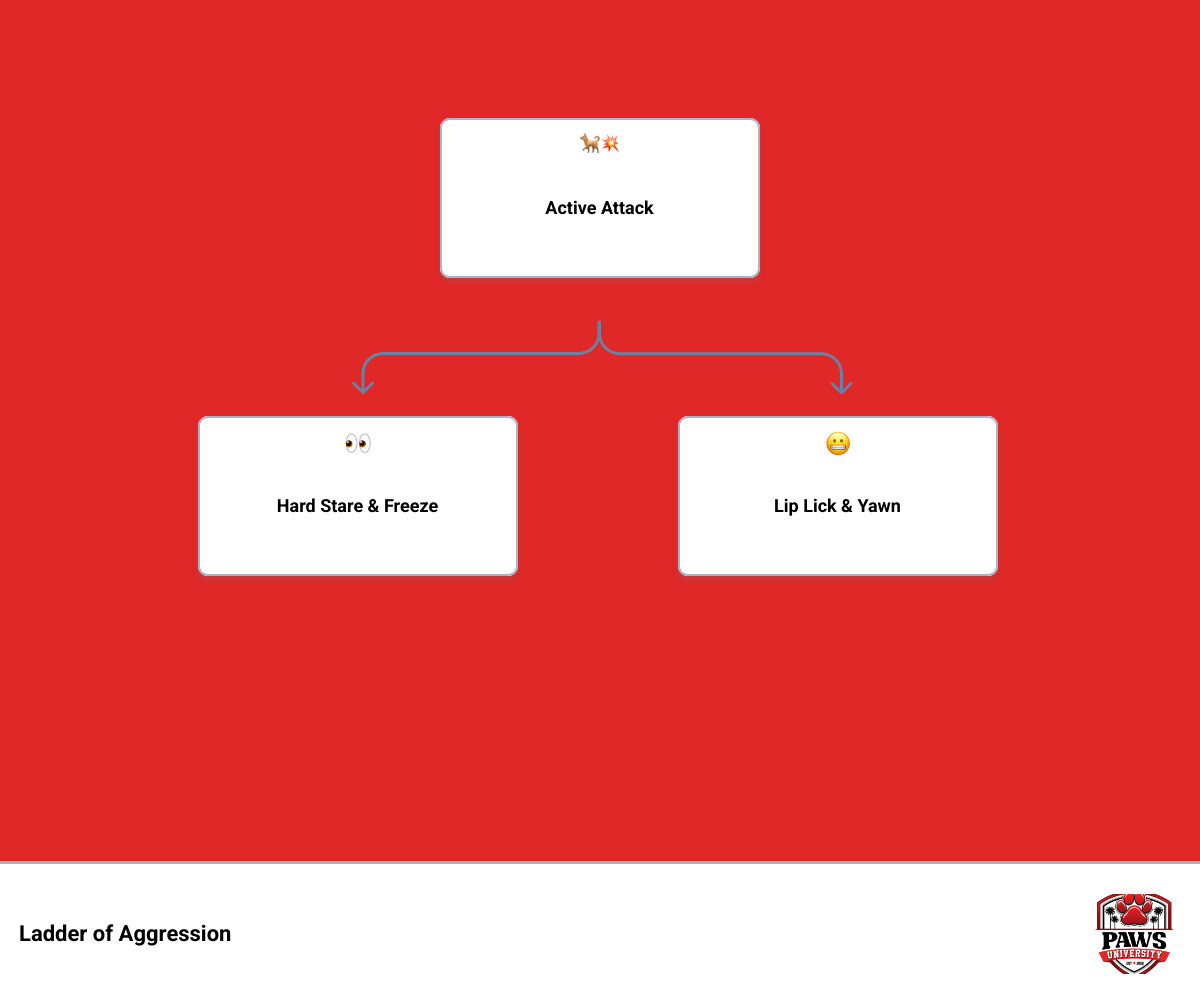
Dogs rarely bite without warning. However, human companions often miss the subtle, early signals of discomfort, only noticing the behavior when it escalates to barking or snapping. By learning to read your dog’s body language, you can intervene long before an attack occurs.
Look out for these early warning signs:
- Yawning or lip-licking when another dog is nearby (displacement behaviors indicating stress).
- A stiff, frozen body posture and a high, vibrating tail.
- A hard, direct stare (locking eyes with the other dog).
- Closed mouth and tense facial muscles, sometimes with the ears pinned back or held rigidly forward.
- Raised hackles (the hair along the spine standing up).
If these subtle cues are ignored or punished, the dog learns that their polite warning signals do not work, which can cause them to skip straight to lunging, snarling, or biting. For more tips on identifying these subtle red flags, check out our Signs of a Poorly Socialized Dog Essential Guide.
On-Leash Reactivity vs. True Aggression: Why the Difference Matters
One of the most important distinctions to make is the difference between leash reactivity and true dog-to-dog aggression. As noted in the Whole Dog Journal's Analysis of Dog-on-Dog Aggression, many dogs who display terrifying behavior on a leash are perfectly social, friendly, and playful when off-leash in a controlled environment.
This is because the leash alters a dog's natural communication. In a natural, off-leash setting, dogs greet each other by walking in curves, sniffing, and maintaining the option to walk away. A tight leash forces a head-on approach, restricts movement, and prevents the "flight" option, leaving the dog feeling trapped and highly defensive.
Barrier Frustration on Walks
When walks become a stressful game of tug-of-war, barrier frustration is often the culprit. The leash acts as a barrier, preventing your dog from reaching the other dog. This builds up intense arousal and frustration. When that energy has nowhere to go, it manifests as lunging, barking, and spinning.
This behavior is highly self-reinforcing. If your dog barks hysterically at another dog, and that dog eventually walks away, your dog believes their barking caused the threat to leave. To break this cycle, read our Stop the Barking with This Leash Reactivity Guide.
How Can I Stop My Dog Attacking Other Dogs While on a Leash?
Managing and correcting leash reactivity requires consistent, rewards-based training. The goal is to teach your dog that seeing another dog is a cue to look at you for a high-value treat, rather than a cue to react.
Key steps for on-leash management:
- Never allow on-leash greetings: On-leash greetings are highly unpredictable and put both dogs in a tense position. Keep walks strictly for exercise and training.
- Maintain a loose leash: Tension on the leash travels directly to your dog, signaling that you are anxious and that a threat is near.
- Create distance: If you see another dog approaching, proactively cross the street, step behind a parked car, or turn around before your dog reaches their reactive threshold.
- Keep high-value treats on hand: Use boiled chicken, hot dogs, or freeze-dried meat to reward calm behavior at a distance.
For a step-by-step training protocol, check out our In-Depth Guide to Leash Reactivity Correction.
How Can I Stop My Dog Attacking Other Dogs Using Force-Free Training?
We advocate strictly for positive, rewards-based training methods. Punishing an aggressive or reactive dog (using tools like prong collars, shock collars, or physical corrections like alpha rolls) is not only inhumane but highly dangerous.
Punishment does not change how your dog feels about other dogs; it merely suppresses the outward behavior. Even worse, if a dog is punished every time they see another dog, they will quickly associate the pain or fear of the punishment with the presence of other dogs, making their underlying aggression far worse.

Step-by-Step Desensitization and Counter-Conditioning
Desensitization and counter-conditioning are the gold standards for changing a dog's emotional response to a trigger.
- Desensitization means gradually exposing your dog to another dog at a distance where they feel safe and relaxed (this is called staying "under threshold").
- Counter-conditioning means pairing the sight of the other dog with something incredibly positive (like a premium, high-value treat).
The Process:
- Find the Threshold: Identify the exact distance at which your dog notices another dog but does not react (e.g., 50 feet away).
- Mark and Reward: The moment your dog looks at the other dog at this safe distance, use a marker word (like "Yes!") or a clicker, and immediately feed them a high-value treat.
- Turn and Move: Walk a few steps away to give your dog a break.
- Repeat: Repeat this process several times. You want your dog to learn: Seeing another dog makes delicious treats happen!
- Decrease Distance Slowly: Over several weeks, gradually decrease the distance to the other dog, always working at your dog's pace. If they react, you have moved too fast; simply increase the distance and try again.
To learn more about transforming your dog's social skills, read our guide: How to Turn Your Lone Wolf into a Social Star.
Teaching Alternative Behaviors to Prevent Attacks
In addition to changing your dog's emotional state, you should teach them alternative, incompatible behaviors to perform when they see another dog. A dog cannot lunge at another dog if they are busy performing a rock-solid "sit-stay" or maintaining eye contact with you.
Useful commands to practice daily in low-distraction environments before using them on walks include:
- The "Watch Me" Cue: Teaches your dog to make eye contact with you on command, pulling their focus away from the trigger.
- The "Touch" Command: A hand-target game where your dog touches their nose to your palm. This is an excellent tool for physically moving your dog away from a trigger in a fun, stress-free way.
- The "Find It" Game: Tossing a handful of high-value treats on the ground. This lowers your dog's head, changes their body language, and keeps their brain focused on sniffing out rewards rather than staring at the approaching dog.
Discover more practical tips in our article on Reducing Dog Behavior Issues Without Pulling Your Hair Out.
Safe Management and Emergency Intervention Strategies
While behavior modification is the long-term solution, immediate environmental management is crucial to keep everyone safe. If your dog has a history of aggression, you must take proactive steps to prevent them from practicing the unwanted behavior.
| Tool Type | Tool Name | Purpose and Proper Use |
|---|---|---|
| Proactive Management | Basket Muzzle | Allows the dog to pant, drink, and take treats while preventing accidental bites. Introduce slowly with positive reinforcement. |
| Proactive Management | Front-Clip Harness | Gives you better physical leverage and control over a strong dog without putting painful pressure on their neck. |
| Proactive Management | Visual Barriers | Using curtains, frosted window clings, or solid baby gates at home to block your dog's view of passing dogs. |
| Reactive Emergency | Physical Barriers | Using a baby gate, a door, or a large object (like an umbrella) to block a charging dog. |
| Reactive Emergency | The Wheelbarrow Method | A technique used to safely separate fighting dogs by grabbing their back legs and walking backward. |
How Can I Stop My Dog Attacking Other Dogs in Multi-Dog Households?
Aggression between dogs living in the same home can be incredibly stressful. This often stems from resource guarding (over food, toys, sleeping spots, or attention) or same-sex aggression, which is particularly common and severe between female dogs.
To manage a multi-dog household safely:
- Feed dogs in completely separate rooms with closed doors to prevent food-related tension.
- Pick up high-value toys and chews when the dogs are together.
- Use baby gates and crates to give each dog their own safe haven where they can relax undisturbed.
- Supervise all interactions closely and step in to separate the dogs if you notice stiff body language or staring.
If you are dealing with growling or tension at home, read our guide on How to Stop Your Dog from Growling at You for deeper insights into household dynamics.
Safely Breaking Up a Dog Fight Without Getting Hurt
If a fight does break out, your absolute priority is safety. Never grab a fighting dog by the collar or put your hands near their mouths. In the heat of the moment, dogs experience extreme arousal and will reflexively bite whatever touches them—including you (this is called redirected aggression).
Safe methods to break up a fight:
- Use a physical barrier: Slide a large piece of cardboard, a broom, a baby gate, or a chair between the dogs to block their access to each other.
- Make a sudden loud noise: Slam a door, bang metal pans together, or blow a loud whistle to startle the dogs into pausing.
- The Wheelbarrow Method: If there are two people present, each person should approach one dog from behind. Grab the dog's rear legs just above the hocks, lift them off the ground like a wheelbarrow, and immediately walk backward in a circular motion. This disables their forward traction and prevents them from turning around to bite you. Once separated, immediately lead them to secure, separate areas.
Frequently Asked Questions About Dog-on-Dog Aggression
Can dog aggression be cured or only managed?
In most cases, dog-on-dog aggression can be significantly reduced and managed, but we rarely use the word "cured." Aggression is an emotional response, and like humans, dogs can have bad days.
With consistent, rewards-based training, many dogs can learn to walk calmly past other dogs or even enjoy structured, supervised social play. However, for some dogs with severe histories of trauma or genetic predisposition, lifetime management—such as avoiding dog parks and utilizing a basket muzzle in public—is the safest and most responsible path.
When should I seek professional help for my dog's aggression?
You should seek professional help immediately if:
- Your dog has a history of biting or injuring another animal or human.
- The aggressive behavior is rapidly escalating in frequency or intensity.
- You feel anxious, overwhelmed, or unable to safely control your dog on walks.
- The aggression is occurring between dogs living in the same household.
Working with a qualified, force-free trainer or a veterinary behaviorist is the best way to ensure safety and get a customized behavior plan. To find qualified help in your area, see our guide on finding aggression training in your area.
What role do muzzles and harnesses play in managing aggression?
Muzzles and harnesses are fantastic management tools, but they are not cures on their own. A basket muzzle is a compassionate safety tool that allows your dog to pant, drink water, and receive training treats while giving you peace of mind during training sessions.
A front-clip harness or a head halter provides gentle, physical control without causing pain, helping you redirect a strong dog's focus back to you. If you're wondering how your dog's behavior affects their social opportunities, check out our guide: Is Your Dog Too Reactive for Daycare? Here Are Your Best Options.
Conclusion
Helping a dog work through dog-directed aggression is a journey that requires patience, consistency, and a deep understanding of your dog's emotional world. By focusing on rewards-based training, recognizing early warning signs, and maintaining safe management protocols, you can help your dog feel safe and secure in public settings.
If you are located in Hawaii County and need professional guidance, Paws University is here to help. Since 2002, our premier seven-acre campus in West Hawaiʻi has provided structured, supervised environments designed to reduce behavior issues and build confidence. Our professional, rewards-based training services can help you and your dog find harmony on walks and at home.
Learn more about our premium training services to start your journey toward a calmer, happier pup today.