Why Every Dog Owner Needs a Plan for Socializing Dogs with Other Dogs
Socializing dogs with other dogs is one of the most important things you can do for your dog's long-term health and happiness — but it's also one of the most misunderstood.
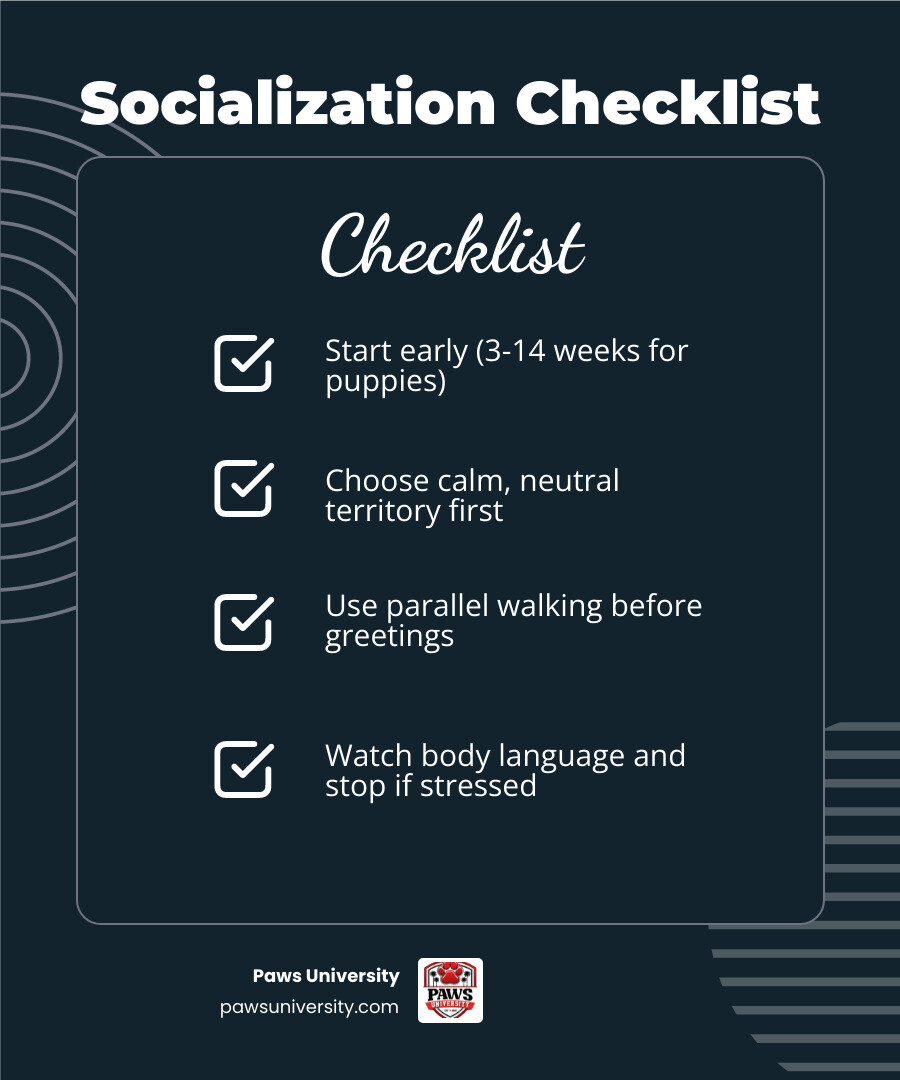
Here's a quick-reference guide to doing it right:
| Step | What to Do |
|---|---|
| 1 | Start early (ideally 3–14 weeks for puppies) |
| 2 | Choose a calm, neutral environment |
| 3 | Use parallel walking before face-to-face greetings |
| 4 | Keep sessions short and positive |
| 5 | Reward calm behavior with high-value treats |
| 6 | Watch body language closely and stop if stress appears |
| 7 | Build up to off-leash play gradually in a secure area |
| 8 | Seek professional help for fear, reactivity, or aggression |
Not all dogs take to other dogs naturally. Some missed the critical early window. Others had a bad experience that stuck with them. And some simply need a slower, more structured approach to feel safe.
The good news? With the right plan, almost any dog can make progress — whether they're 8 weeks old or 8 years old.
I'm Allen Daniels, co-founder of Paws University in Kailua-Kona, and I've spent over 25 years helping dogs build real social confidence using the same science-backed, rewards-based methods I refined training marine mammals. Socializing dogs with other dogs is one of the most common challenges I see in Hawaii County pet owners, and the step-by-step checklist below is exactly what we use on our seven-acre campus every day.
Key terms for socializing dogs with other dogs:
Why Socializing Dogs with Other Dogs Matters for Long-Term Health
When we talk about socializing dogs with other dogs, we aren't just talking about teaching them to play nicely at a backyard barbecue. Socialization is a fundamental pillar of a dog's overall mental and physical well-being.
Dogs are inherently social animals, but their ability to navigate complex social interactions is not entirely automatic. According to the Normal Social Behavior in Dogs - Dog Owners - Merck Veterinary Manual, dogs communicate through a sophisticated system of visual signals, scent marking, vocalizations, and body postures. When a dog is denied the opportunity to practice and refine these communication skills, their mental health suffers.
A lack of healthy dog-to-dog interaction often leads to severe behavior degradation. Dogs that miss out on healthy peer contact frequently experience chronic stress, social isolation, and generalized anxiety. This anxiety can manifest in destructive behaviors at home, excessive barking, or hyper-reactivity on walks. If you want to know what this looks like in practice, check out our guide on the signs of poorly socialized dog.
Properly socialized dogs are physically healthier too. Engaging in natural play styles with compatible partners provides balanced, low-impact exercise that keeps joints healthy, prevents obesity, and burns off excess energy that might otherwise turn into destructive habits. Furthermore, learning how to exist calmly in the presence of other dogs—even without interacting—lowers a dog's baseline cortisol levels, which supports a stronger immune system and a longer, happier life.
Understanding Why Some Dogs Struggle to Socialize
If your dog tenses up, barks, or tries to hide when another dog approaches, it can be incredibly frustrating. However, understanding the "why" behind their behavior is the first step toward helping them. Dogs do not decide to be "bad" or "stubborn"; their social struggles are almost always rooted in fear, a lack of exposure, or past trauma.
Here are the primary reasons a dog might struggle with dog-to-dog socialization:
- Lack of Early Exposure: The most critical socialization window in a dog's life opens around 3 weeks of age and begins to close between 12 and 14 weeks. If a puppy is kept completely isolated from other dogs during this time, they may never fully learn how to interpret normal canine body language.
- Negative Past Experiences: A single traumatic event—such as being attacked, bullied, or rushed by an off-leash dog—can leave a lasting impression. This trauma causes the dog to view all unfamiliar dogs as immediate threats.
- The Rehearsal Effect: When a dog feels anxious, they may bark or lunge to keep the other dog away. If the other dog walks away, your dog learns: "My barking made the scary thing go away!" They rehearse and lock in this reactive behavior, making it their default response.
- Genetic Predispositions: Landmark behavioral research (such as the classic Scott and Fuller studies) suggest that while genetics account for about 35% of a dog's behavioral tendencies, a massive 65% is shaped by their environment and experiences. Even a dog with a cautious genetic temperament can become a well-adjusted companion with the right guidance.
No matter why your dog is struggling, it is important to remember that it is never too late to help them. For a deeper look at transforming a reactive or fearful pup, read our article on how to turn your lone wolf into a social star.
The Step-by-Step Checklist for Safe Introductions
Before you introduce your dog to another canine, you must set the stage for success. Throwing two unfamiliar dogs into a backyard and hoping they "figure it out" is a recipe for disaster. Instead, we use a highly structured, step-by-step introduction protocol designed to keep stress levels low and safety levels high.
Step-by-Step Guide to Socializing Dogs with Other Dogs
Before you even think about letting your dog sniff another dog, you must establish a solid foundation of focus and obedience. Your dog needs to know that you are the coordinator of the environment and that calm behavior pays off.
- Master the Default Sit: Teach your dog to offer a sit automatically when they are unsure of what to do. This gives them a default, non-threatening behavior to perform instead of lunging or pacing.
- Maintain a Loose Leash: A tight leash transmits your own tension directly down the line to your dog. Practice walking on a loose leash around mild distractions first.
- Teach Focus Commands: Use a command like "Look at me" or "Touch" to redirect your dog's attention away from other dogs and back to you.
- Practice the "Do Nothing" Exercise: Sometimes, the best socialization is simply teaching your dog to relax in the presence of other dogs without interacting. You can learn more about this game-changing technique in our guide to the do nothing exercise and other socialization secrets.
Phase 2: Parallel Walking and Controlled Greetings
Once your dog can focus on you around distant distractions, you can begin the parallel walking protocol. This is widely considered the safest way to introduce two dogs because it allows them to gather information about each other without the pressure of a direct, head-on approach.
- Choose a Neutral Partner: Select a helper dog that is calm, vaccinated, and neutral-tempered. Avoid high-energy or reactive dogs for these initial sessions.
- Start at a Safe Distance: Begin walking in the same direction on opposite sides of a quiet path or park. The distance should be wide enough that both dogs can remain calm and accept treats.
- Gradually Close the Distance: Over multiple sessions (or during one long walk, if both dogs are highly relaxed), slowly decrease the parallel distance between the dogs.
- Progress to Side-by-Side Walking: Once the dogs are walking calmly parallel to each other, transition to walking side-by-side, with the owners acting as buffers between the dogs.
- The 3-Second Sniff: If both dogs show loose, wiggly body language, you can allow a brief, controlled greeting. Keep the leashes completely loose. Let them sniff for exactly three seconds (neck to rear, naturally), then cheerfully call your dog away and reward them with a high-value treat. Keep greetings brief to prevent arousal from building into tension.
For a highly detailed, step-by-step breakdown of this walking protocol, you can refer to this pitbull socialization guide, which outlines these exact mechanics for powerful, strong-willed breeds.
Phase 3: Gradual Off-Leash Play in Secure Areas
If your dog has mastered parallel walks and brief, controlled greetings, you can slowly transition to off-leash play.
- Use a Secure, Fenced Space: Choose a neutral, securely fenced yard. Avoid public dog parks, which are highly unpredictable.
- Consider Draglines: Leave a light, 10-foot leash (with the handle cut off to prevent snagging) dragging behind each dog. This allows you to quickly step on the line and separate the dogs if play becomes too intense, without having to grab their collars directly.
- Match Play Styles: Ensure your helper dog matches your dog's energy level. A quiet, older dog who prefers gentle sniffing will quickly become overwhelmed by a young, bouncy "body-slammer."
- Take Frequent Breaks: Interrupt play every few minutes to practice recall, calm down, and reward your dog. This prevents over-arousal, which is a primary trigger for dog fights.
- Review Safety Protocols: Before releasing the dogs, ensure you know how to safely interrupt an interaction. Keep tools like a visual barrier or a consistent verbal signal handy, as outlined in the Canine Playgroups best practices from the ASPCA.
Age-Specific Strategies: Puppies vs. Adult and Senior Dogs
A dog's social needs and capabilities change dramatically as they grow. What works beautifully for a 10-week-old puppy can be stressful or even harmful to an 8-year-old senior.
| Life Stage | Primary Social Goal | Best Environment | Key Warning Signs |
|---|---|---|---|
| Puppy (3–16 weeks) | Positive exposure, learning canine manners, bite inhibition | Controlled puppy classes, supervised playdates with vaccinated adult dogs | Cowering, trying to escape, excessive yelping |
| Adult (1–7 years) | Maintaining social tolerance, preventing leash reactivity | Small group play, parallel walks with familiar dogs | Stiff body, intense staring, raised hackles, low growls |
| Senior (7+ years) | Gentle companionship, mental stimulation without physical strain | One-on-one walks, quiet sniffing sessions in calm yards | Pacing, panting, grunting, avoidance behaviors |
Socializing Puppies During the Sensitive Window
The sensitive socialization window for puppies is incredibly brief, closing around 12 to 16 weeks of age. According to the Social Behavior of Dogs - Behavior - Merck Veterinary Manual, a puppy's mind is uniquely flexible during this stage, making it the perfect time to build positive associations with the world.
During this window, enroll your puppy in a high-quality, rewards-based puppy class. These classes focus on teaching puppies to ignore other dogs and focus on their owners, rather than engaging in unstructured free-for-alls. You can also host small "puppy parties" with up to six healthy, vaccinated puppies of similar sizes to help them practice bite inhibition and learn normal canine body language. To make sure you don't miss a single step, utilize our comprehensive puppy socialization checklist.
Socializing Dogs with Other Dogs in Adulthood and Senior Years
A common misconception is that adult dogs need to play with every dog they meet. In reality, most dogs reach social maturity between ages one and three. Just like humans, as dogs grow up, they tend to become more selective about their friends.
Off-leash playgroups that are highly beneficial for puppies can actually have detrimental effects on adult dogs, who often no longer enjoy playing with large groups of unfamiliar dogs. For adult and senior dogs, socialization should focus on peaceful coexistence.
Keep senior dog interactions short, gentle, and structured. Respect their physical limitations—arthritis or reduced vision can make an older dog highly defensive around bouncy, energetic younger dogs. Focus on quiet, companionable parallel walks or sniff-walks where they can enjoy the presence of another dog without the pressure to play. You can explore more adult-specific training ideas in our dog socialization category.
Common Mistakes to Avoid and When to Seek Professional Help

Even the most well-meaning dog owners can make mistakes that accidentally reinforce the very behaviors they are trying to fix. When socializing dogs with other dogs, keep these critical "don'ts" in mind:
- Never Force an Interaction: If your dog is pulling back, hiding behind you, or growling, they are telling you they are overwhelmed. Forcing them closer will only sensitize them further, increasing their fear and potentially triggering a defensive bite.
- Never Punish a Growl: A growl is a dog's way of saying, "I am uncomfortable, please stop." If you punish a dog for growling, you do not fix the underlying fear; you simply remove their warning system. This can lead to a dog that bites "without warning."
- Avoid Tight Leashes: Keeping a tight, tense leash during greetings prevents dogs from approaching each other in a natural, curved arc. It forces them into a stiff, head-on posture that can easily trigger a conflict.
- Skip the Public Dog Parks: Public dog parks are highly unpredictable. You cannot control the vaccination status, training level, or behavior of the other dogs present. A single bad experience at a dog park can set your training back by months.
If your dog displays severe anxiety, lunges aggressively, or has a history of fighting, it is time to seek professional help. A certified, positive-reinforcement behaviorist can design a customized behavior modification plan tailored to your dog's specific triggers. Working with a professional ensures that you and your dog remain safe while building real, lasting confidence.
Frequently Asked Questions about Dog Socialization
What are the signs of fear or stress during dog interactions?
Dogs communicate their discomfort long before they growl or bite. Early signs of stress include:
- Whale Eye: Showing the whites of their eyes.
- Lip Licking or Stress Yawning: Licking their lips or yawning when they aren't tired.
- Stiff Body Posture: A frozen, rigid frame with their mouth tightly closed.
- Tucked Tail or Pinned Ears: Pulling their tail between their legs and flattening their ears back against their head.
If you see these signs, calmly and cheerfully increase the distance between your dog and the trigger.
Can an adult dog lose their social skills over time?
Yes. Socialization is a lifelong maintenance process. If an adult dog is completely isolated from other dogs for months or years, they can lose their ability to behave appropriately around their peers. Regular, calm exposure—even just parallel walking with a neighborhood dog friend once a week—is essential to keep their social skills sharp.
Is the dog park a good place for socializing dogs?
Generally, no. While a highly social, resilient dog might enjoy a quiet dog park during off-peak hours, dog parks are not suitable for socializing a fearful, reactive, or undersocialized dog. The lack of structure and the presence of untrained dogs make the environment far too unpredictable and risky. Controlled playdates or professional daycare environments are much safer alternatives.
Conclusion
Socializing dogs with other dogs is not a race; it is a lifelong journey of patience, consistency, and positive reinforcement. By respecting your dog's individual comfort levels, using structured introduction protocols like parallel walking, and avoiding common pitfalls, you can help your canine companion navigate the world with ease and confidence.
If you live in Hawaii County and are looking for a safe, structured environment to help your dog build social skills, we are here to help. At Paws University, our premium seven-acre campus in Kailua-Kona features spacious, secure outdoor yards designed specifically for safe, supervised play. Our experienced team uses strictly rewards-based methods to match dogs by size, age, and play style, ensuring every interaction is a positive one.
Ready to take the next step in your dog's socialization journey? Explore our Premium Dog Daycare and Training Services today to set your pup up for a lifetime of social success.