Understanding the Critical Socialization Window
A puppy socialization checklist is one of the most important tools you'll use in your puppy's first few months of life. Here's a quick overview of what it covers:
Core Puppy Socialization Checklist Categories:
- People - Men, women, children, elderly, people in hats/uniforms, people with mobility aids
- Animals - Vaccinated dogs, cats, livestock, birds
- Sounds - Thunder, sirens, vacuum cleaners, doorbells, traffic
- Surfaces - Grass, gravel, tile, sand, metal grates, wet ground
- Handling - Ears, paws, mouth, nails, collar, hugging, restraint
- Environments - Parks, parking lots, pet-friendly stores, vehicles
- Objects - Umbrellas, bicycles, skateboards, balloons, bags
The goal is simple: positive experiences, not just exposure. Every item on the list is an opportunity to build a confident, calm adult dog — or miss that window entirely.
Behavioral problems are the number one cause of dogs being surrendered to shelters. They're also the leading cause of death in dogs under three years old — ahead of infectious disease. Most of those problems trace back to one thing: a puppy that wasn't properly introduced to the world during its critical early weeks.
The good news? A structured checklist makes this manageable, even for busy pet parents.
I'm Allen Daniels, co-founder of Paws University here on Hawaiʻi Island, and after 25+ years of applying rewards-based training methods — first with marine mammals, then with hundreds of dogs — a puppy socialization checklist is the single tool I recommend to every new puppy owner before anything else. Let's walk through exactly how to use it.
When we talk about "bomb-proofing" a dog, we are talking about their ability to handle the unexpected with a wagging tail rather than a growl or a bolt for the door. This foundation is built during a very narrow timeframe: the first three months of life. Specifically, the window between 3 and 14 weeks is the most influential period for your dog's future behavior.
During this time, a puppy’s brain is incredibly plastic. They are biologically primed to accept new things as "normal." In these early weeks, sociability actually outweighs fear. After about 14 to 16 weeks, that window begins to close, and the puppy’s natural caution toward the unknown increases significantly.
According to the American Veterinary Society of Animal Behavior (AVSAB) position statement, improper socialization during this time increases the risk of fear, avoidance, and aggression later in life. In fact, most aggression issues in adult dogs are simply the result of inefficient socialization during puppyhood. By following a puppy socialization checklist early on, you aren't just teaching "manners"—you are building lifelong resilience and protecting the bond you have with your dog.
How to Safely Socialize Before Full Vaccination
A common concern for new pet parents in Hawaii is how to balance socialization with the risk of infectious diseases like Parvovirus. Many owners wait until their puppy is fully vaccinated (usually around 16–18 weeks) to leave the house. Unfortunately, by then, the most critical socialization window has already slammed shut.
The AVSAB believes it should be the standard of care for puppies to receive socialization before they are fully vaccinated. The key is doing it safely. You can provide massive amounts of exposure without ever putting your puppy’s paws on a public floor.
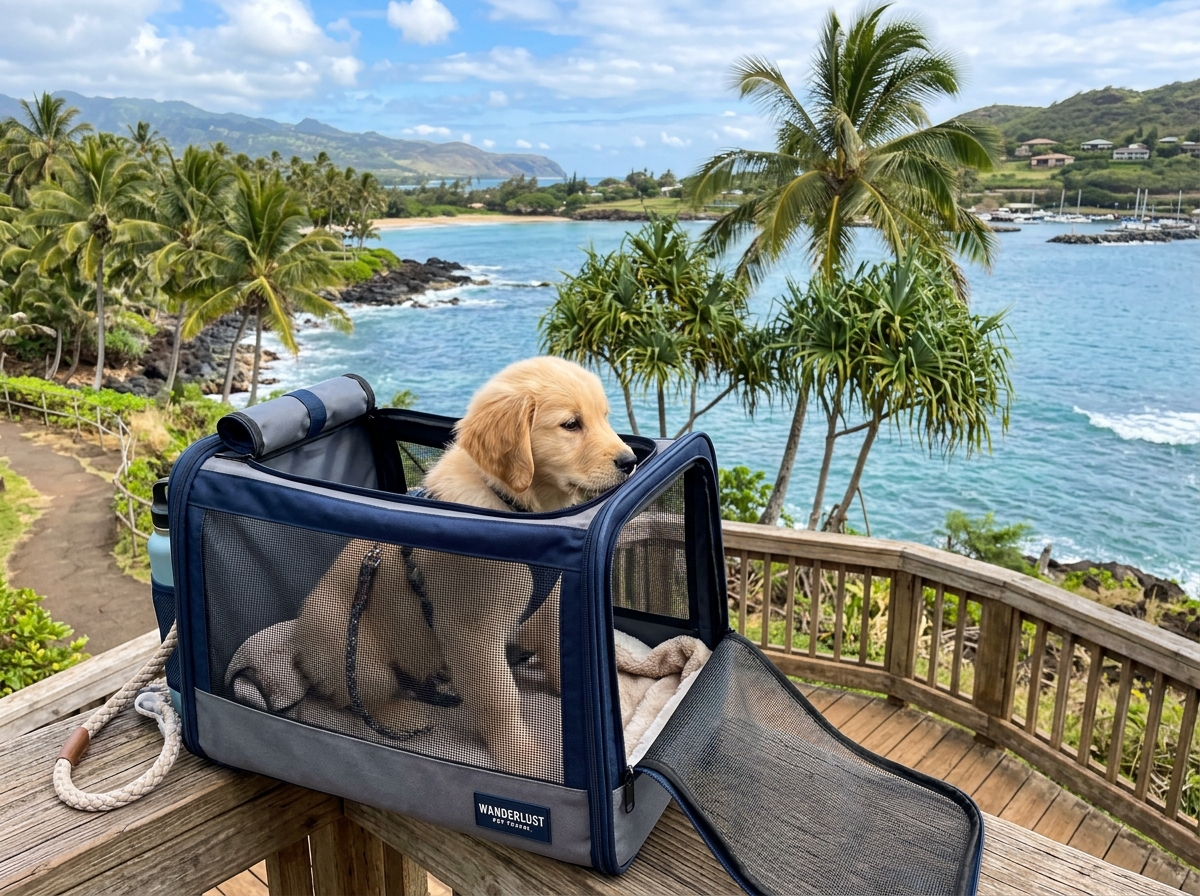
Here is how we recommend staying safe while checking off your list:
- The "Puppy Stroller" or Carrier: Use a premium carrier or even a wagon to take your puppy to high-traffic areas. They get the sights, sounds, and smells of the Kona or Hilo streets without the risk of ground-borne germs.
- Car Socialization: Park your car near a busy school or a shopping center. Let your puppy watch the world go by from the safety of the backseat while you feed them high-value treats.
- Controlled Playdates: Host "puppy parties" at home with dogs you know are healthy, fully vaccinated, and puppy-friendly.
- Visual and Scent Exposure: Bring the world to them. Set up an umbrella in the living room or let them sniff a bag of groceries that smells like the outdoors.
If you’re looking for professional guidance on navigating these early weeks, our puppy training services focus on safe, rewards-based exposure that respects your puppy's health and emotional well-being.
The Ultimate Puppy Socialization Checklist: 100 Experiences
To truly prepare a dog for life in Hawaii, they need to see more than just your backyard. A great way to stay on track is to aim for "100 experiences in 100 days." This ensures you are hitting a wide variety of categories rather than just repeating the same walk every day.
You can download a Comprehensive Puppy Socialization Checklist PDF to track your progress, but here is how we break down the most essential island-specific experiences.
People and Animal Encounters in the Puppy Socialization Checklist
Socialization isn't just about meeting "people"; it's about meeting all kinds of people. Puppies can be surprisingly specific. A dog that is comfortable with a woman in a sundress might be terrified of a man in a high-visibility construction vest or someone wearing a bike helmet.
Key People to Meet:
- Children of all ages (infants, toddlers, and energetic school-age kids)
- People with facial hair, glasses, or large hats
- People using mobility aids like wheelchairs, walkers, or canes
- People in uniforms (postal carriers, delivery drivers)
- People of diverse ethnicities and heights
Animal Introductions: When it comes to other animals, quality beats quantity. One bad experience with a "bully" dog can set a puppy back for months. We focus on how to turn your lone wolf into a social star by using supervised play with stable, vaccinated adult dogs who can teach your puppy boundaries without being scary. Don't forget to include local livestock like chickens or horses from a safe distance!
Sights, Sounds, and Surfaces for Your Puppy Socialization Checklist
In Hawaii, our environment offers unique sensory experiences. From the sound of a sudden tropical downpour on a tin roof to the feel of lava rock underfoot, your puppy socialization checklist should reflect your daily life.
Sounds (Start at low volume and increase gradually):
- Thunder and heavy rain recordings
- Vacuum cleaners, blenders, and hair dryers
- Doorbells and knocking
- Traffic, sirens, and car horns
Surfaces (Let them explore at their own pace):
- Lush grass and wet mud
- Crunchy gravel and sand
- Metal grates or wobbly wooden planks
- Slippery tile or hardwood floors
Tracking Progress: Use a simple grading system to track how your puppy feels about each encounter:
| Reaction | What it looks like | Your Response |
|---|---|---|
| Loved it! | Wiggling, playful, eating treats | Keep going! |
| Meh... | Indifferent, cautious, distracted | Add distance, use better treats |
| Hated it! | Tucked tail, hiding, refusing food | Stop immediately, move away |
Mastering Positive Reinforcement and Body Language
The secret sauce to a successful puppy socialization checklist is positive reinforcement. We want the puppy to think, "Every time I see something new and weird, I get a piece of chicken!" This creates a positive emotional response rather than just "getting used to it."
Use high-value treats (think boiled chicken, cheese, or premium soft treats) and deliver them within three seconds of the puppy noticing the new stimulus. For grooming or handling, a licky mat smeared with a bit of peanut butter can work wonders to keep them happy while you check their ears or paws.
At Paws University, our private training sessions emphasize choice-based interaction. We never force a puppy to "face their fears." Instead, we use "consent tests"—if you stop petting or move away, does the puppy move toward you for more, or do they take the opportunity to leave? Always give them the choice to opt out.
Identifying Stress Signals During Your Puppy Socialization Checklist
To be a great advocate for your puppy, you must learn to speak "dog." Many owners miss the subtle signs that a puppy is overwhelmed, which can lead to "trigger stacking"—where small stressors build up until the puppy has a meltdown.
Watch for these stress signals:
- Whale Eye: Seeing the whites of the puppy's eyes.
- Lip Licking: A quick flick of the tongue when no food is present.
- Yawning: Not because they are tired, but because they are anxious.
- Freezing: A puppy that stops moving and becomes stiff is not "being good"; they are shut down.
- Tucked Tail: A clear sign of fear or insecurity.
If you see these signs, it's time for a break. Increase the distance between your puppy and the "scary thing" until they can relax and take a treat again. You can find more detailed guides on reading canine body language to help you become an expert observer.
Common Mistakes and How to Fix Them
Even with the best intentions, it's easy to make mistakes during socialization. Here are the most common pitfalls we see:
- Flooding: This is taking a puppy into the middle of a crowded, loud event (like a parade) and hoping they'll "get over it." This often has the opposite effect, causing lifelong trauma. Fix: Stay on the outskirts where the puppy feels safe.
- Waiting Too Long: Thinking socialization starts after the final shots. Fix: Start the day you bring them home using safe, "paws-off-the-ground" methods.
- Lack of Variety: Only socializing with your neighbors. Fix: Use your puppy socialization checklist to ensure you're hitting all categories, including weird objects like umbrellas and bicycles.
- Forcing Interactions: Pulling a puppy toward a person they are afraid of. Fix: Let the puppy choose to approach. If they don't want to, that’s okay! Try again from a further distance.
For more tips on avoiding these errors, check out our resources on dog socialization.
Frequently Asked Questions about Puppy Socialization
What should I do if my puppy shows fear?
First, don't panic or punish the fear. Punishment will only confirm to the puppy that the situation is indeed scary. Instead, increase the distance from the object of fear. If the puppy is too stressed to take a high-value treat, you are too close. Move back until they can focus on you and eat. If your puppy regularly freezes, snaps, or hides, consult a professional rewards-based trainer immediately.
Are puppy socialization classes necessary?
While you can do a lot at home, a structured puppy class provides a safe, supervised environment that you can't easily replicate. It allows for peer interaction with other puppies under the eye of a pro who can step in if play gets too rough. It also teaches your puppy the vital skill of focusing on you even when there are distractions around.
Can I socialize a dog after the window closes?
Yes, but it is called "remedial socialization" or "counter-conditioning." It takes much more patience and time because you are working to change an existing fear rather than preventing one from forming. Focus on building confidence through small wins and manage your expectations—an adult dog may never love the dog park, but they can learn to be calm and neutral.
Conclusion
At Paws University, we believe that every dog on Hawaiʻi Island deserves the chance to be a confident, happy member of the community. Our seven-acre tropical campus is designed to be a "university" for your pet, where they can learn social skills in a premium, supervised environment.
Whether you are working through your puppy socialization checklist at home or looking for supervised socialization at our premium daycare facility, every positive interaction is an investment in your dog’s future. Start early, keep it positive, and enjoy the journey of watching your puppy grow into a "bomb-proof" companion.