Why Dog Training for Socialization Is the Most Important Thing You'll Do for Your Dog
Dog training for socialization is the process of introducing your dog to a wide variety of people, animals, environments, sounds, and experiences — so they grow into a calm, confident, and adaptable companion.
Here's a quick snapshot of what it involves:
- What it is: Exposing your dog to new stimuli in a positive, controlled way
- When to start: Ideally between 3 and 17 weeks of age (the critical window)
- The goal: A dog that stays calm and neutral — not fearful or reactive — in everyday situations
- How it works: Gradual exposure + positive reinforcement + reading your dog's body language
- Why it matters: Behavioral issues — not disease — are the number one cause of death in dogs under three years old
Most dog owners focus on commands like sit and stay. But without socialization, even a well-trained dog can struggle with anxiety, aggression, or fear when the world gets unpredictable.
The good news? It's never too late to start. And if you're raising a puppy right now, you have a narrow but powerful window to set them up for life.
I'm Allen Daniels, co-founder of Paws University in Kailua-Kona, and I've spent over 25 years applying science-backed behavioral methods — first with marine mammals, then with dogs — to make dog training for socialization more effective and less stressful for both pets and their owners. Let's walk through exactly how to do it right.
The Science of Dog Training for Socialization
When we talk about dog training for socialization, we aren't just talking about "playing with other dogs." We are talking about brain development. There is a biological "critical window" that occurs between 3 and 20 weeks of age. During this time, a puppy’s brain is like a sponge, possessing incredible plasticity. They are biologically programmed to accept new sights, sounds, and smells as a normal part of life.
Once this window closes, usually around 17 to 20 weeks, the dog’s natural curiosity is replaced by a survival instinct: caution. Anything they haven't encountered by this point may be viewed as a potential threat. According to the AVSAB Position Statement on Puppy Socialization, this period is the most influential time in a dog’s life.
The stakes are incredibly high. Behavioral health is just as important as physical health. In fact, behavioral issues—not infectious diseases—are the leading cause of death for dogs under three years of age. This is because dogs that are fearful or aggressive due to poor socialization are frequently relinquished to shelters or euthanized. Proper dog training for socialization is quite literally a lifesaver.
Puppy vs. Adult Socialization Goals
While the "critical window" is the easiest time to train, socialization is a lifelong journey. Here is how the goals differ depending on your dog's age:
| Feature | Puppy Socialization (3-20 Weeks) | Adult/Rescue Socialization (6+ Months) |
|---|---|---|
| Primary Goal | Create positive first associations with the world. | Counter-condition existing fears or maintain neutrality. |
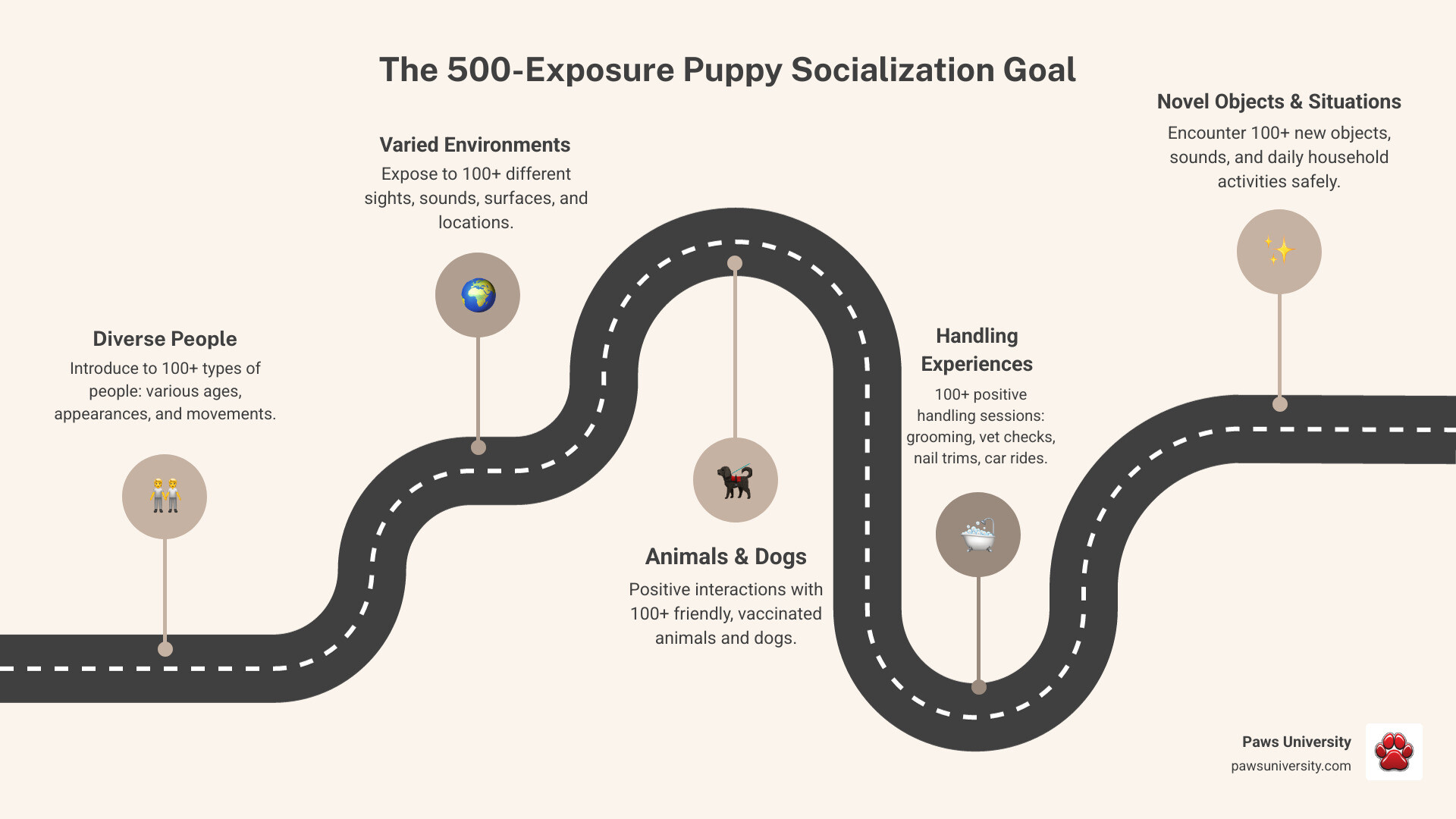
| Exposure Volume | High (The "500-exposure" goal). | Low to Moderate (Quality over quantity). |
| Focus Area | Novelty: meeting "everything" for the first time. | Confidence: feeling safe in known "scary" environments. |
| Key Outcome | Prevention of fear and aggression. | Management and reduction of reactivity. |
| Social Style | Learning how to play and read cues. | Learning to ignore distractions and stay calm. |
Building an Effective Socialization Plan
A successful plan for dog training for socialization relies on three pillars: gradual exposure, positive reinforcement, and reading body language. You cannot simply "throw your dog into the deep end" and hope they swim. That is called flooding, and it often results in more trauma, not less.
Instead, we use a "stepladder" approach. If your dog is afraid of the vacuum, don't turn it on right next to them. Start with the vacuum in the corner of the room, turned off. Feed your dog high-value treats near it. Gradually move closer over several days. Only when they are relaxed do you turn it on in another room, slowly decreasing the distance while maintaining a stream of rewards.
Sound, Surface, and Household Activities
Socialization happens in your living room just as much as it happens at the park. We want to expose dogs to:
- Surface Variety: Walking on grass, gravel, concrete, tile, and even crinkly plastic tarps.
- Sound Desensitization: Playing recordings of fireworks, sirens, or thunderstorms at a very low volume while the dog eats or plays.
- Household Items: Umbrellas opening, brooms sweeping, and hair dryers blowing.
- Handling Exercises: Gently touching their paws, ears, and tail to prepare them for the vet or groomer.
One of the most overlooked aspects of home training is resource guarding prevention. You can practice this by approaching your dog's food bowl while they eat and dropping a piece of "jackpot" chicken inside. This teaches the dog that a human approaching their food is a good thing, not a threat. For more structured guidance, you can explore our training services which cover these foundations in detail.
Safe Dog Training for Socialization Before Full Vaccinations
A common myth is that puppies must stay indoors until they are fully vaccinated (usually around 16 weeks). However, the AVSAB notes that the risk of behavioral death is far higher than the risk of contracting a disease in a controlled environment.
You can safely start dog training for socialization as early as 7-8 weeks, provided you follow these steps:
- Controlled Environments: Avoid public dog parks or high-traffic grassy areas where unknown dogs frequent.
- Car Rides: Take your puppy through drive-thrus or just sit in the back of the car in a busy parking lot to watch the world go by.
- Home Visits: Invite vaccinated, healthy "dog-friendly" adult dogs over for playdates.
- Sanitized Facilities: Enroll in classes at facilities like Paws University that require vaccination records and maintain strict cleaning protocols.
- Social Distancing: Even during times of restricted contact, you can follow the AKC guide on socializing during social distancing by focusing on environmental exposures and watching people from a distance.
Achieving Neutrality Through Dog Training for Socialization
The ultimate goal of socialization isn't a dog that wants to meet every person and animal. That often leads to "frustrated greeters" who lung and bark because they must say hello.
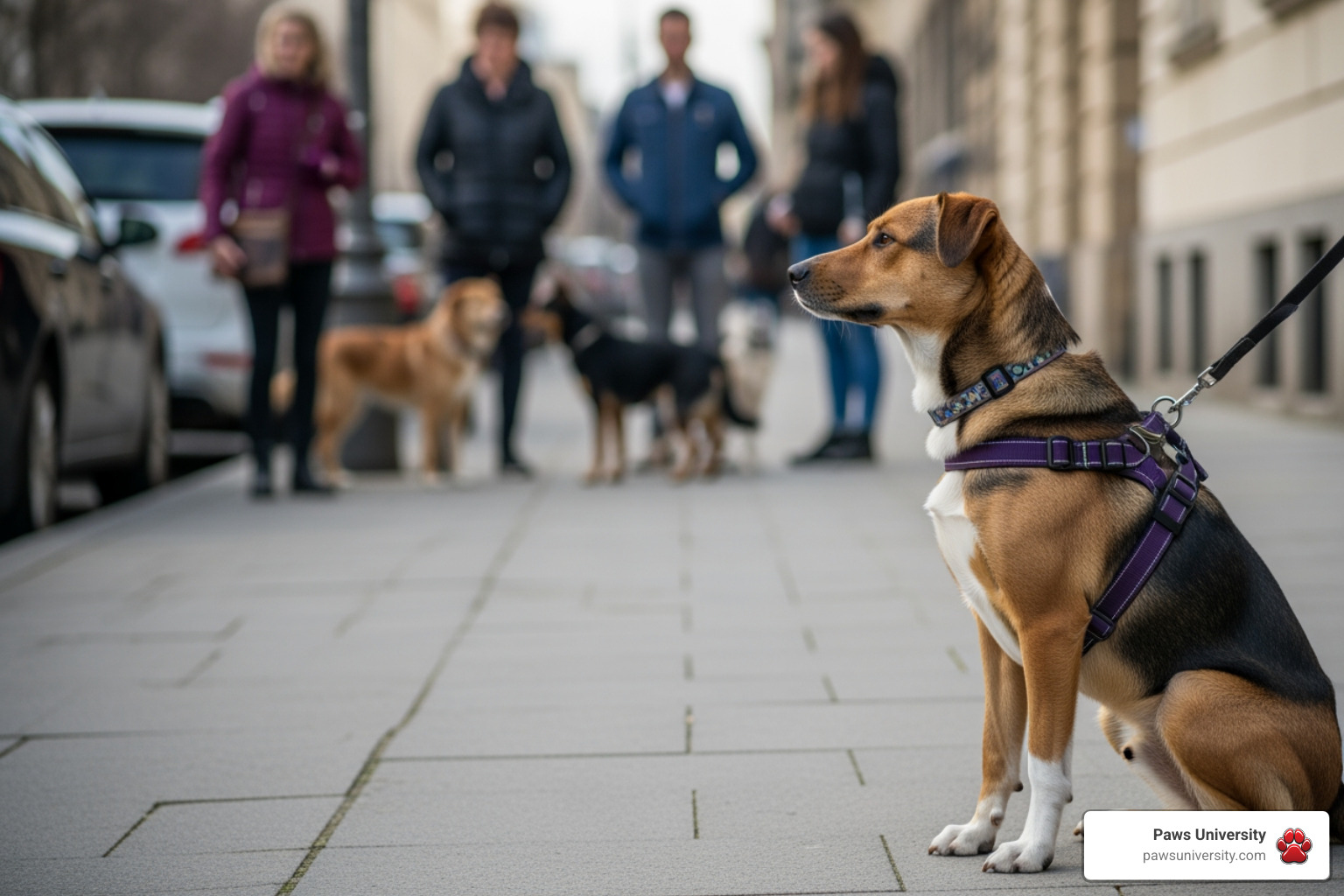
True success is neutrality. We want our dogs to look at a skateboarder, another barking dog, or a group of children and think, "Whatever, I'm with my human." We achieve this by rewarding the dog for disengaging from the distraction and focusing back on us. Distance is your best friend here; if your dog can't focus on you, you are too close to the "trigger." Move back until they can successfully take a treat.
Socializing Adult Dogs and Rescue Pets
If you’ve adopted a rescue dog or missed the puppy window, don't panic. While you can't "reopen" the critical window, dogs are capable of learning throughout their lives. The process just requires more patience and a focus on counter-conditioning.
For an adult dog, the goal is often "peaceful coexistence" rather than "best friends with everyone." If your rescue dog is reactive, we focus on small wins. Maybe today they walked past a fence with a barking dog without lunging. That is a massive victory.
Consistency is key. If your dog is struggling with significant reactivity or fear, Private Training for reactive dogs is often the safest and most effective route. A professional can help you implement muzzle training—not as a punishment, but as a "safety belt" that allows your dog to experience the world without the risk of a bite. This lowers the stress for everyone involved.
Beyond the Dog Park: Better Alternatives for Social Skills
Many owners think the dog park is the gold standard for socialization. In reality, it is often the worst place for it. Dog parks are uncontrolled environments where high arousal levels can quickly turn into aggression. Statistics show that 9 out of 10 dog fights are predictable because one dog is showing stress signals that the other (or the owner) is ignoring.
One bad experience at a dog park can undo months of dog training for socialization. If a puppy is bullied or attacked, they may develop lifelong fear-aggression toward other dogs.
Better Alternatives for Socialization:
- Supervised Puppy Classes: These are mediated by professionals who ensure play stays balanced. If one puppy is being too rough, the trainer intervenes before a fight happens.
- Controlled Playdates: Meet with a friend's dog whose temperament you know. This allows for safe, predictable interaction.
- Pack Walks: Walking near other dogs without direct interaction is a fantastic way to build neutrality.
- Professional Facilities: Daycares like Paws University provide supervised play on a 7-acre campus where dogs are grouped by size and temperament.
- AKC S.T.A.R. Puppy Program: This program focuses on Socialization, Training, Activity, and Responsibility, providing a structured path to a well-adjusted pet. You can find more tips on How to Socialize a Dog from leading animal welfare organizations.
Common Mistakes in Dog Training for Socialization
- Flooding: Taking a fearful dog to a busy festival or a crowded beach and forcing them to "deal with it."
- Rushing the Process: Expecting a dog to be "fixed" in one weekend.
- Ignoring Stress Signs: Thinking a dog is "happy" because their tail is wagging (a stiff, fast wag can actually indicate high arousal or impending aggression).
- Forced Interactions: Allowing strangers to pet your dog when the dog is clearly backing away. You must be your dog's advocate.
- Human Interference: Using "baby talk" or picking up a dog unnecessarily can sometimes escalate tension or resource guarding.
Frequently Asked Questions about Dog Socialization
Why are dog parks often not recommended for socialization?
Dog parks are "free-for-alls." You have no control over the health, vaccination status, or temperament of the other dogs. High arousal leads to "predatory drift," where normal play suddenly turns into a hunt. Furthermore, many owners at dog parks are distracted by their phones and fail to act as a "referee" when their dog is being a bully.
How do I know if my dog is overwhelmed during training?
Dogs speak with their bodies. Watch for these "red flag" signals:
- Lip Licking: When there is no food involved.
- Whale Eye: Seeing the whites of the dog's eyes.
- Tucked Tail: Indicates fear or submission.
- Panting: Heavy breathing when it isn't hot.
- Avoidance: Turning the head away or trying to hide behind you.
- Freezing: A stiff body is a warning that a bite may be coming.
Can I socialize my dog if they are already showing aggression?
Yes, but the approach changes from "socialization" to "rehabilitation." Safety is the priority. You must manage the environment to prevent incidents while working with a professional behaviorist. The goal shifts to neutrality—teaching the dog to be calm at a distance rather than expecting them to play with others.
Conclusion
At Paws University, we believe that every dog in West Hawaii deserves the chance to be a "Social Star." Whether you are working with a new puppy or a seasoned rescue, the journey of dog training for socialization is about building a bond of trust.
Our premier 7-acre campus in Kailua-Kona is designed to provide the supervised, safe environment your dog needs to thrive. By focusing on science-backed methods and reading your dog's unique cues, you can prevent behavioral issues and enjoy a lifetime of adventures together. Ready to get started? Start your journey at Paws University and see the difference that professional, supervised play can make.