Understanding the Benefits of a Puppy Playpen
When we talk about playpen training puppy success, we aren't just talking about keeping your shoes from being chewed—though that is a major perk! A playpen serves as a "safety oasis." Think of it like a nursery for a toddler; it’s a controlled environment where they can explore safely while you attend to other tasks. In a sprawling environment like our seven-acre campus in Kailua-Kona, we understand that puppies can easily become overwhelmed by too much space. A playpen provides the necessary boundaries that help a young dog feel secure rather than lost in a large home.
One of the most significant advantages is the prevention of separation anxiety. By providing a space where your puppy learns to be calm and entertained while you are in another room or busy nearby, you are building their confidence. Scientific research on canine separation anxiety suggests that early, positive experiences with being alone can significantly reduce the risk of developing panic-based behaviors later in life. This is especially important in Hawaii County, where our active lifestyles often mean transitioning between indoor and outdoor activities. Teaching your pup that being alone in their "premium suite" is a positive experience is a gift that lasts a lifetime.
Furthermore, a playpen is a vital tool for housebreaking. Because puppies naturally avoid soiling the area where they sleep and play, the playpen helps them develop bladder control. It also serves as a fantastic socialization tool. If you have older dogs or cats, the playpen allows them to sniff and observe the new addition safely, ensuring everyone stays relaxed during those first few weeks. This controlled interaction is a cornerstone of the supervised play philosophy we pioneered as the first doggie daycare in the state. If you find yourself needing extra help with these early stages, you can find more info about puppy training services at our Kona facility, where we focus on building a strong foundation for your pet's future.
Setting Up Your playpen training puppy Zone
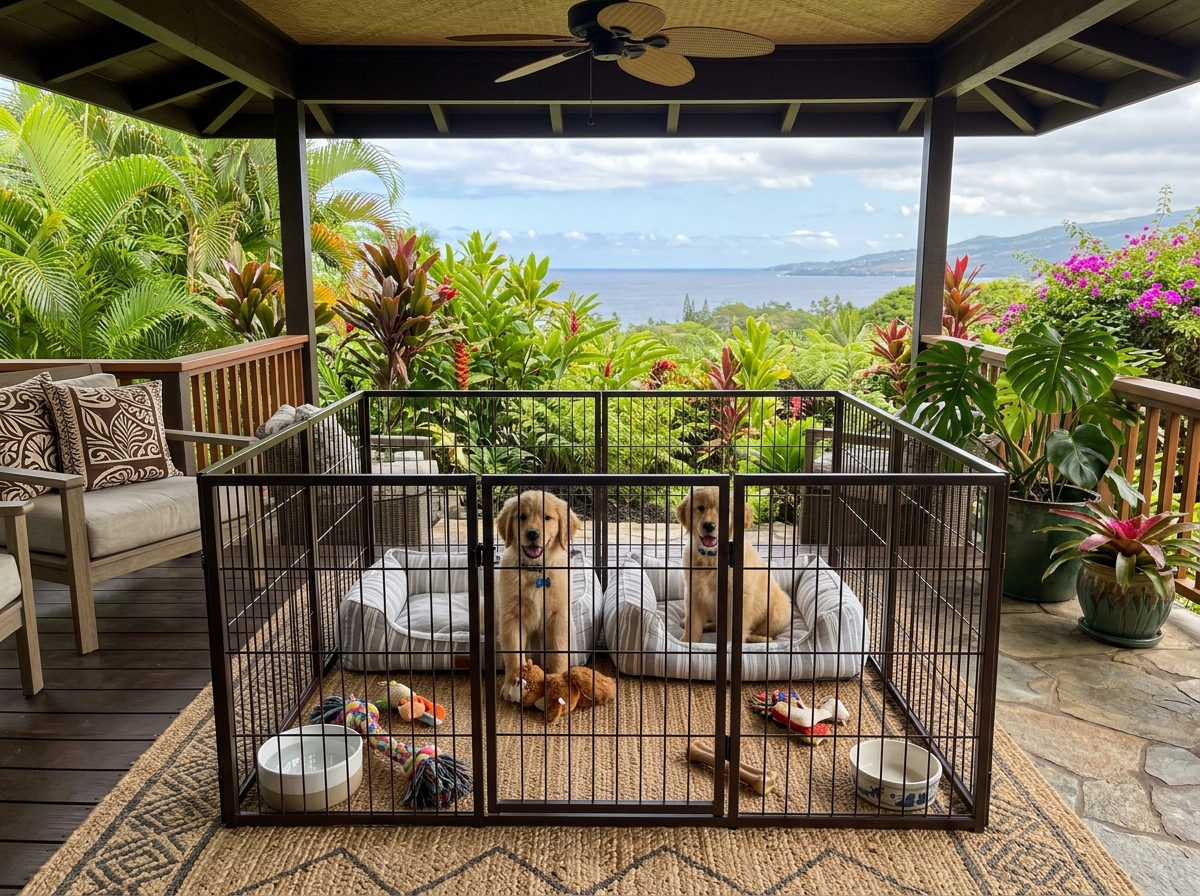
Location is everything. We recommend placing the playpen on a hard, non-porous surface like tile, stone, or a specialized floor protector. In our warm Hawaii County climate, ensure the area has excellent tropical ventilation—a shaded lanai or a room with a steady breeze is ideal. You want your puppy to be able to see you occasionally so they don't feel isolated, but the spot should be out of the main "traffic jams" of the house to allow for quality naps. Proper airflow is critical in West Hawaii to keep your pup cool and comfortable during their training sessions.
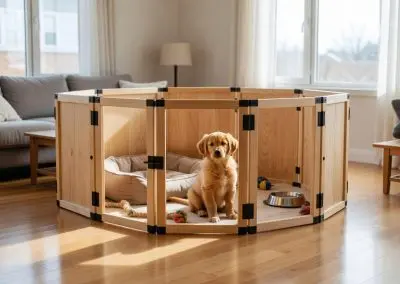
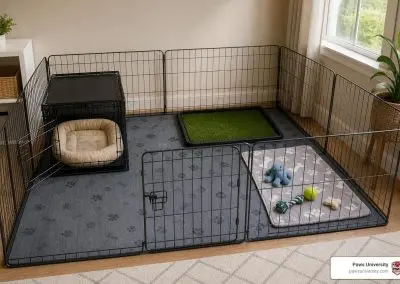
To make the space effective, we suggest a "zone-based" setup. This organizes the pen into functional areas, much like a tiny studio apartment. This structure helps the puppy understand the different purposes of their environment, which aids in cognitive development and house manners:
- Rest Zone: A comfortable bed or a crate with the door fixed open. This should be the coziest part of the pen.
- Play Zone: An area with safe, age-appropriate toys. Focus on items that encourage independent play, like food-stuffed rubber toys.
- Hydration Zone: A heavy, non-spill water bowl. In our tropical heat, constant access to fresh, cool water is non-negotiable.
- Potty Zone: A designated area with puppy pads or artificial turf, placed as far from the bed as possible. This teaches the puppy to move away from their sleeping area to relieve themselves.
Playpen vs. Crate: Which Do You Need?
Many owners ask if they should choose one or the other. In our experience, they work best as a team. While a crate is excellent for short-term safety and sleeping, the playpen offers the freedom of movement necessary for longer periods during the day.
| Feature | Puppy Playpen | Puppy Crate |
|---|---|---|
| Primary Use | Play, long-term confinement, potty training | Sleeping, travel, short-term safety |
| Space | Plenty of room to move and stretch | Enough to stand, turn, and lie down |
| Potty Area | Included (for young pups) | Not included (teaches "holding it") |
| Duration | Longer periods (2–4 hours) | Shorter periods (naps/overnight) |
When selecting your hardware, look for sturdy panels that can be securely latched. In our premium facility, we prioritize equipment that stands up to both the playful energy of a puppy and the unique environmental factors of West Hawaii, such as salt air and humidity. Ensuring the pen is tall enough to prevent climbing is also a key safety consideration for more adventurous breeds.
How to Master Positive Playpen Training Techniques

At Paws University, we are strictly rewards-based. This means we focus on teaching the puppy what to do rather than punishing them for what they shouldn't do. This positive reinforcement builds a bond of trust between you and your new companion. If you're looking for personalized guidance, you can find more info about private training to help tailor these steps to your specific breed and lifestyle.
Introducing the playpen training puppy concept
Start by making the pen part of the furniture. Keep the door wide open and let your puppy wander in and out at their own pace. Toss high-value treats (like small pieces of boiled chicken or premium freeze-dried liver) inside when they aren't looking. When they "discover" the treats, they begin to associate the pen with "magical food appearances." This casual introduction prevents the pen from feeling like a trap or a place of exile. You want them to view the playpen as the best place in the house.
Using rewards for playpen training puppy success
Consistency is your best friend. Every time your puppy enters the pen voluntarily, give them enthusiastic verbal praise and a treat. Feed all their meals inside the pen; this creates a powerful positive association with the space. If they eat their breakfast and dinner there, the pen becomes a source of life-sustaining resources, making it a very high-value area in their mind.
If your puppy whines initially, it is vital to remain calm. Wait for a three-second gap of silence before approaching or letting them out. This teaches them that calm behavior is the key to your attention. If you open the door while they are barking or whining, you’ve just taught them that making noise is the "open sesame" command! For more on managing these early stages and ensuring your pup remains happy and relaxed, the Dogs Trust offers great advice on Playpen and Crate Training A Puppy. The goal is to build a positive emotional response to the pen, so never use it as a place for time-outs or punishment.
Combining Crates and Playpens for Optimal Results
The "Gold Standard" for playpen training puppy success is attaching a crate directly to the playpen. This gives your puppy the best of both worlds: the security of a den for sleeping and the freedom of a yard for playing. This setup mimics a natural canine environment where a mother dog would have a small den for her pups that opens into a larger, safe exploration area.
When you are home and can supervise, the puppy can be out with you, learning the ropes of your household. When you are busy—doing laundry, cooking, or working from home—the puppy goes into the pen. This prevents them from getting into trouble or developing bad habits like chewing on baseboards. At night, we recommend the puppy sleeps in the crate. This helps them learn to settle and aids in nighttime potty training, as they are less likely to soil their immediate sleeping quarters. You can read more about making the crate a positive space in our guide, Crate Training: Teaching Your Dog to Love Their Space.
Using this combination prevents the "trapped" feeling that can lead to excessive noise and stress. It allows the puppy to choose where they feel most comfortable at any given moment. If you are struggling with a vocal pup who seems to protest their confinement, our article on The Great Crate Escape from Nonstop Barking provides excellent troubleshooting tips. By integrating these two tools, you are providing a structured environment that supports both physical safety and emotional well-being.
Frequently Asked Questions about Playpen Training
How long can a puppy safely stay in a playpen?
While a playpen offers more freedom than a crate, puppies are social creatures and shouldn't spend the entire day confined. A good rule of thumb for maximum confinement time is the puppy's age in months converted to hours (e.g., a 3-month-old can stay for up to 3 hours). However, they still need frequent breaks for exercise, social interaction, and outdoor potty opportunities. Even in a premium playpen, a puppy needs to stretch their legs and engage with their human family to develop proper social skills. Always prioritize quality time over confinement whenever possible.
What items are essential for a puppy playpen?
Safety is the priority. Only include indestructible toys—avoid anything with small parts that could be swallowed or plush toys that can be easily shredded. Comfortable bedding is a must, but if your puppy is in a heavy teething phase, stick to durable blankets rather than plush beds that can be shredded and ingested. Always provide fresh water in a non-spill bowl; a hydrated puppy is a happy puppy, especially in our tropical climate. You might also include a "puzzle toy" to provide mental stimulation, which can help tire out a high-energy pup.
When should I stop using the playpen?
Most puppies are ready to transition out of the playpen between 6 and 12 months of age, depending on their individual maturity and breed. The markers for "graduation" include being fully potty trained, responding reliably to basic commands, and showing no interest in chewing "forbidden" items like furniture or cords. Transition slowly by giving them access to one room at a time under supervision. If they backslide, don't be afraid to return to the playpen for a few weeks to reinforce those boundaries.
Can I use a playpen for multiple puppies?
If you have two puppies, they can share a playpen, but it is vital that they also have individual time. Puppies can become overly dependent on one another, which can lead to "littermate syndrome." Ensure each puppy has their own crate for sleeping and receives individual training sessions. The playpen should be large enough that they can play without constantly bumping into each other, and you should always supervise their interactions to ensure play remains polite and rewards-based.
Conclusion
Playpen training a puppy requires patience, consistency, and a lot of positive reinforcement, but the payoff is a well-adjusted, confident adult dog. By creating a premium, safe environment and using rewards-based techniques, you are setting your furry friend up for a lifetime of success and happiness in your home.
At Paws University, we’ve seen how a structured start leads to a much happier home life for both the pet and the owner. Our seven-acre campus in Kailua-Kona is designed to support these early developmental stages, providing the space and expertise needed for puppies to thrive. Whether you need help with the basics of playpen training or are looking for a safe, premium place for your pup to stay while you’re away, we are here to support the Hawaii County community. For more info about our training and boarding services, reach out to our team today. We look forward to helping you and your puppy start your journey together on the right paw. Happy training!