
Why Crate Training Works — And How to Get Started

Crate training is a rewards-based method that teaches your dog to see their crate as a safe, comfortable den — not a punishment. Here’s a quick overview of how it works:
- Choose the right crate — big enough to stand, turn, and lie down
- Introduce it gradually — let your dog explore at their own pace with treats and toys
- Build positive associations — feed meals inside, reward calm behavior
- Keep sessions short — start with just a few minutes and build up slowly
- Never use the crate as punishment — it should always feel like a safe retreat
- Limit crate time — puppies and adult dogs need regular breaks, play, and exercise
A crate isn’t a cage. When introduced the right way, most dogs choose to rest in their crate on their own — even with the door wide open.
Dogs are natural den animals. A properly sized crate satisfies that instinct. It gives your dog a quiet, predictable space that’s entirely their own — which matters especially for dogs dealing with anxiety, destructive behavior, or a new home environment.
For busy West Hawaii pet parents, crate training is also one of the most practical tools you have. It supports housebreaking, keeps your dog safe when you can’t supervise, and makes travel and emergencies far less stressful — for both of you.
I’m Allen Daniels, co-founder of Paws University in Kailua-Kona, and I’ve spent over 25 years applying rewards-based operant conditioning — first with marine mammals, then with dogs — to help owners build real trust with their pets, including through crate training. The same science-backed, force-free approach I used training dolphins is what I bring to every crate training session on our campus.
Let’s walk through everything you need to know.
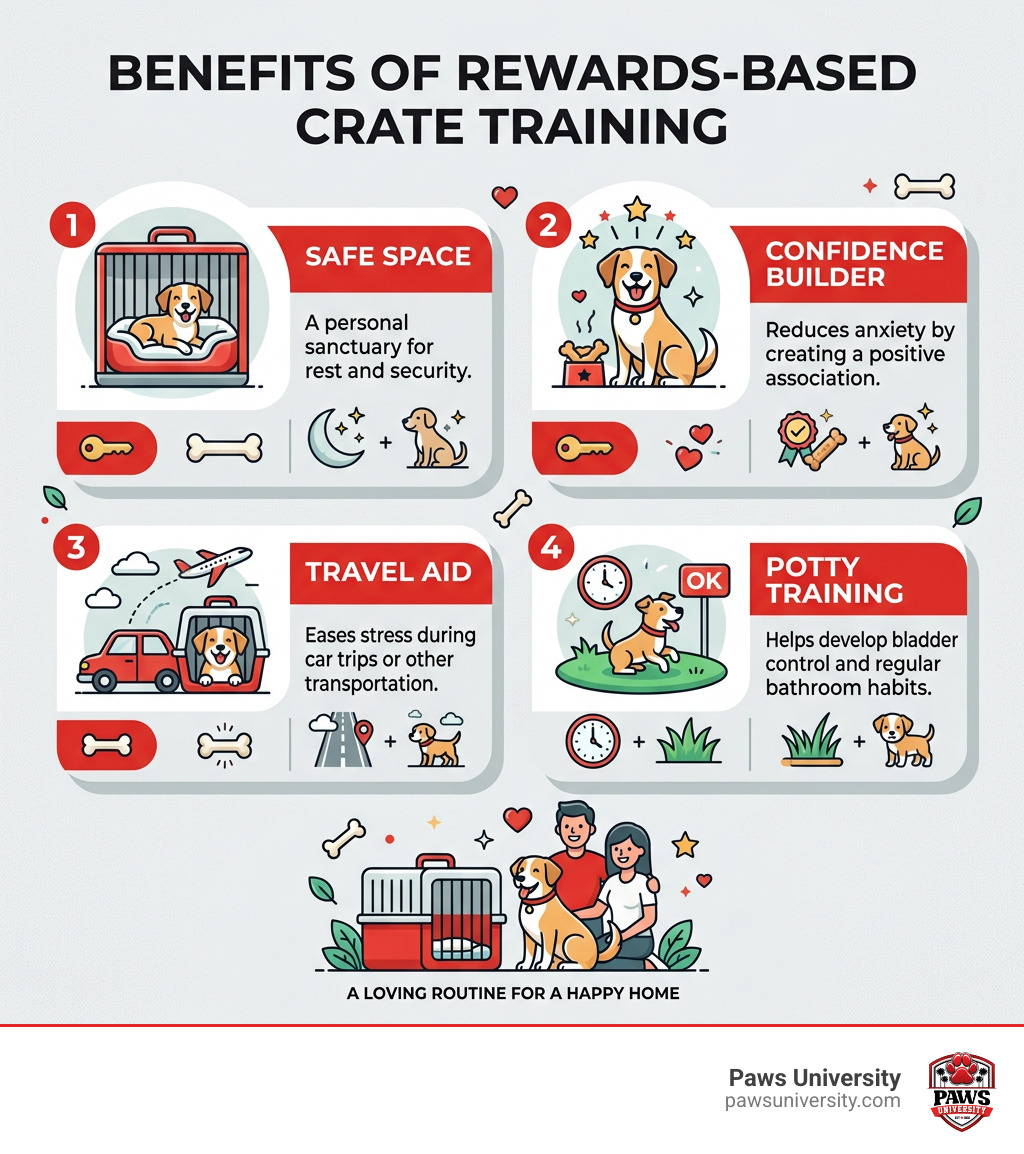
The Benefits of Crate Training for Every Life Stage
At Paws University, we see dogs of all ages enjoying our seven-acre tropical campus, and we’ve found that those who are crate trained often transition much more smoothly into new environments. Whether you have a brand-new puppy or a senior dog, crate training offers a lifetime of security.
Experts like the American Kennel Club and veterinarians recommend crate training because it taps into a dog’s natural “denning” instinct. In the wild, canines seek out small, enclosed spaces for protection and rest. By providing a crate, we are giving them a modern-day version of that sanctuary.

The benefits go far beyond just having a place for your dog to sleep:
- Security and Anxiety Reduction: During West Hawaii’s occasional thunderstorms or loud community events like fireworks, a crate acts as a safe haven. It reduces the amount of “territory” an insecure dog feels they need to guard, allowing them to relax.
- Safety from Household Hazards: Puppies are notoriously curious. A crate prevents them from chewing on electrical wires or ingesting toxic plants while you are busy with chores.
- Lifelong Management: Crate Training: Benefits of Using a Crate highlights how this skill helps dogs cope with vet visits, grooming appointments, and recovery from surgery. If a dog needs “crate rest” after a medical procedure, having already mastered crate training prevents added stress during healing.
Housebreaking and Potty Training
One of the primary reasons we recommend the crate training method is its effectiveness in housebreaking. Dogs have an instinctual desire to keep their sleeping area clean. By using a crate that is sized appropriately, you utilize this instinct to help them develop bladder and bowel control.
When your dog is in their crate, they are less likely to soil the space. This allows you to set up a predictable schedule: out of the crate, immediately outside to the grass, and then a reward for doing their business. This routine helps puppies understand exactly where “the bathroom” is located. Socialization and supervised play during the day are also important to help burn off energy between training sessions, providing a balance of activity and rest.
Travel and Emergency Readiness
Living on the Big Island, we know that being prepared for the unexpected is vital. Whether it’s an emergency evacuation or simply a trip to the vet, a crate-trained dog is much easier to transport safely.
According to AKC Reunite, crate training plays a massive role in emergency preparedness. In the event of a natural disaster, many emergency shelters require pets to be crated. If your dog is already comfortable in their “den,” they will be significantly less stressed in a high-pressure situation.
For those traveling off-island, the American Veterinary Medical Association notes that crates are essential for airline travel. A crate-trained dog can lie down and sleep during a flight or car ride without distracting the driver or becoming a safety hazard.
Selecting the Perfect Crate for Your Dog
Choosing the right equipment is the first step toward successful crate training. You want a space that feels like a cozy bedroom, not a cramped closet. In our warm Hawaiian climate, ventilation is one of the most important factors to consider.
Determining the Right Size
The golden rule of crate sizing is that your dog must be able to stand up, turn around in a full circle, and lie down comfortably. If the crate is too small, it’s uncomfortable; if it’s too large, your dog might use one corner as a bedroom and the other as a bathroom, which defeats the purpose of housebreaking.
For puppy owners, we suggest buying a crate sized for their expected adult weight and using a divider panel. This allows you to adjust the living space as they grow.
| Feature | Wire Crates | Plastic (Airline) Crates |
|---|---|---|
| Ventilation | Excellent; best for Hawaii’s heat | Moderate; more enclosed |
| Visibility | High; dog can see everything | Low; provides more privacy |
| Portability | Often folds flat for storage | Sturdier but bulkier |
| Cleaning | Easy with removable trays | Easy to hose down |
| Best For | Dogs who like to see their family | Dogs who prefer a dark, den-like space |
A Step-by-Step Guide to Positive Reinforcement Training
At Paws University, we exclusively use rewards-based training. This means we focus on making the crate a place where “good things happen.” We never want to force a dog into a crate, as this creates a negative association that can take months to undo.
Step-by-Step AKC Crate Training Instructions
Following the How to Crate Train Your Dog in Nine Easy Steps guide from the AKC, here is how we recommend introducing the space:
- Preparation: Place the crate in a central, breezy area where the family spends time. Put a soft mat or towel inside (unless your dog is a “shredder”).
- The Treat Trail: Drop small, high-value treats near the door, then just inside, and finally at the very back. Let your dog explore in and out without closing the door.
- Mealtime: Start feeding your dog their regular meals inside the crate. If they are hesitant, place the bowl just inside the door. Over several days, move it further back.
- The “Crate” Cue: Once they are happily going in for treats, add a verbal cue like “Crate” or “Kennel.” Say the word, and as they enter, give them a reward.
- Closing the Door: While they are eating their meal or a treat, gently close the door. Open it as soon as they finish. Gradually increase the time the door stays closed by a few seconds each day.
- Short Sessions: Practice crating your dog for 5–10 minutes while you are in the room. Give them a special toy to keep them occupied.
- Increasing Distance: Start moving out of sight for short bursts—just a minute to grab a cup of Kona coffee in the kitchen—and then return.
- Building Duration: Slowly work up to longer periods. If your dog remains calm, you’re doing it right!
Creating Positive Associations
To make the crate truly feel like a “room of their own,” provide high-value, long-lasting rewards that they only get while in the crate.
- Frozen KONGs: Filling a KONG with dog-safe peanut butter or wet food and freezing it is a fantastic way to keep a dog occupied. It provides mental stimulation and encourages them to settle down.
- Special Toys: Keep a few “crate-only” toys that are safe for unsupervised chewing.
- Calm Praise: When your dog enters the crate on their own to take a nap, give them a quiet “Good dog” and a small treat to reinforce the choice.
If you are finding the process challenging, maintaining a consistent schedule and rewarding small successes is the best way to ensure long-term progress.
Safety First: Best Practices and Common Mistakes
Safety is paramount when it comes to akc crate training. A crate should be a place of total relaxation, and that requires a few ground rules to prevent accidents.
Avoiding Common Pitfalls
- The “Naked” Dog Rule: Never leave a collar or harness on your dog while they are in the crate. Tags can easily get caught in the wire mesh, leading to a dangerous strangulation risk.
- No Punishment: Never use the crate as a “time out” when you are angry. If you use it as a punishment, your dog will learn to fear it, and the training will break down.
- Avoid Emotional Departures: When it’s time to put your dog in the crate and leave the house, keep it low-key. A long, sad goodbye can trigger separation anxiety. Simply give the cue, provide the treat, and walk away calmly, perhaps heading out toward the lanai.
- Ignoring Distress vs. Whining: There is a difference between a “demand whine” and true distress. If your dog is frantic, panting heavily, or trying to bite the bars, they are not ready for that duration. Go back a few steps in your training.
Maintaining a clean and comfortable environment is essential for your dog’s well-being throughout the training process.
Troubleshooting and FAQ
Even with the best plan, you might hit a few bumps in the road. Consistency is the key to overcoming resistance.
Frequently Asked Questions about AKC Crate Training
How long can my dog stay in a crate?
In our tropical West Hawaii climate, we believe in a “less is more” approach. While some sources suggest longer periods, we recommend that an adult dog stay in a crate for no more than 4 to 5 hours at a time during the day. Puppies have much smaller bladders and typically follow the “one hour per month of age” rule (e.g., a three-month-old puppy can stay for about three hours). All dogs need regular breaks for bathroom use, physical exercise in the island sun, and mental engagement.
What should I do if my dog whines?
If your dog starts whining, wait for a brief moment of silence—even just three seconds—before opening the door. This teaches them that quiet behavior gets them what they want, not noise. If you let them out while they are barking, you are accidentally rewarding the barking!
Is crate training cruel?
Absolutely not, provided it is done correctly. When you follow the akc crate training guidelines, you aren’t “locking them up”—you are providing a safe haven. Scientific research on crate benefits shows that crates help reduce overall cortisol (stress) levels by giving dogs a predictable environment where they don’t feel the need to be “on guard.”
Conclusion
At Paws University, we’ve seen thousands of dogs thrive using these exact crate training principles. Our seven-acre campus in Kailua-Kona is designed to provide the ultimate environment for your dog to learn, play, and grow. By investing the time to crate train your dog using a rewards-based philosophy, you are giving them a gift of confidence and security that will last a lifetime.
Whether you need help with the basics or want to take your dog’s skills to the next level, our team is here to support you in helping your dog love their space!