Finding Reliable Dog Boarding on the Big Island of Hawaii
Dog boarding on the Big Island can feel overwhelming — the island is large, options vary widely, and leaving your dog behind is never easy. From cage-free campuses in Kailua-Kona to traditional kennels in more rural areas, the style of care you choose will impact your dog’s experience.
Whether your dog struggles with separation anxiety, needs socialization, or just needs a safe place to sleep while you’re away — not every facility is equipped to handle all of that equally well.
Some facilities focus on basic lodging. Others, like our team at Paws University, offer supervised play, behavior support, and structured routines that actually help anxious or high-energy dogs thrive during your absence. The difference matters — especially if your dog has behavioral challenges.
I’m Allen Daniels, co-founder of Paws University, West Hawaii’s first doggie daycare (est. 2002), and I’ve spent 25+ years applying science-backed training methods to dog boarding on the Big Island. In this guide, I’ll walk you through everything you need to know to find the right fit for your dog.
Choosing the Right Dog Boarding on the Big Island
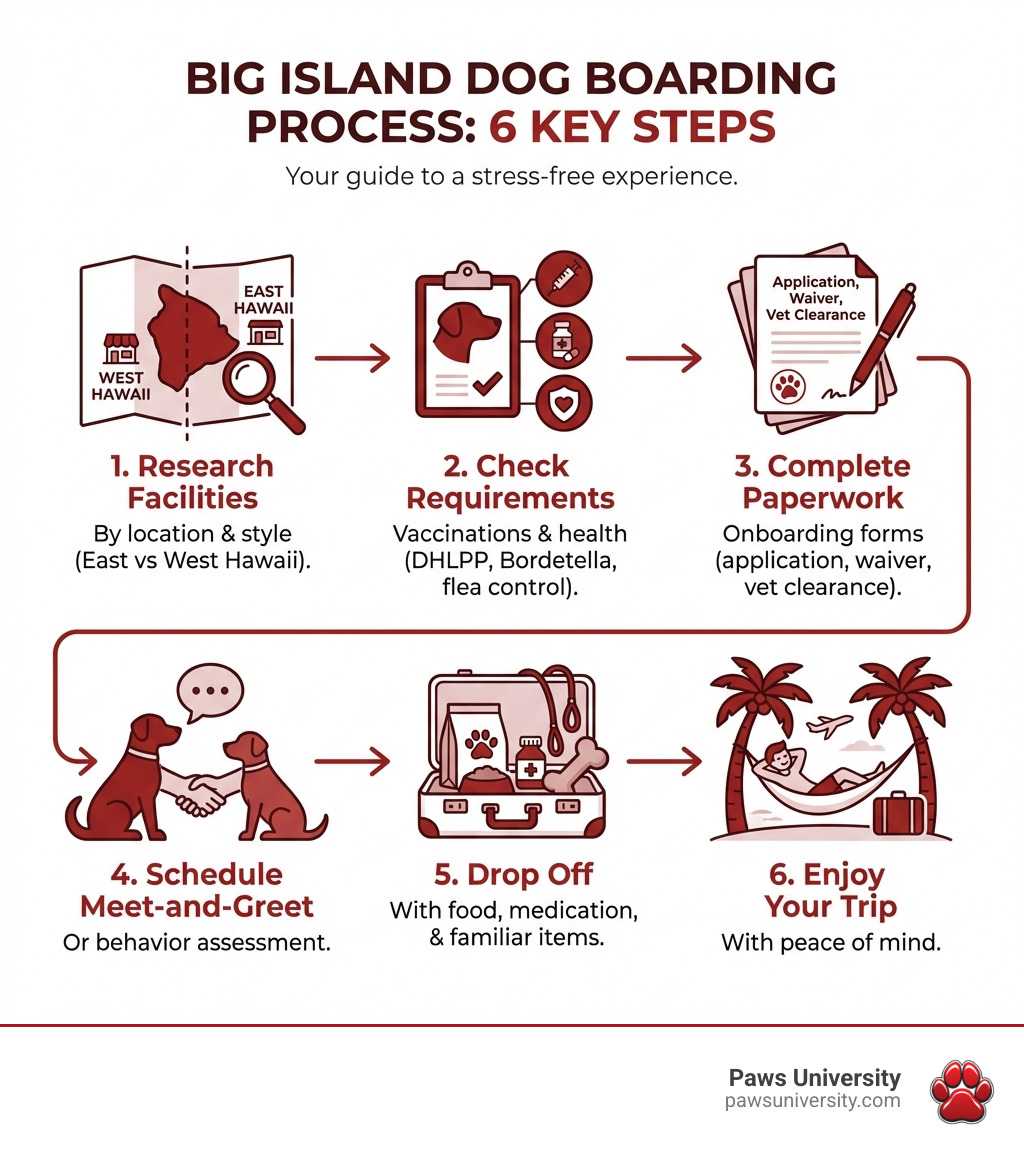
Selecting a temporary home for your four-legged family member involves more than just finding the closest location to the airport. The Big Island’s unique geography means that where you live and where you are flying from—whether it’s Kona (KOA) or Hilo (ITO)—will likely dictate your search.

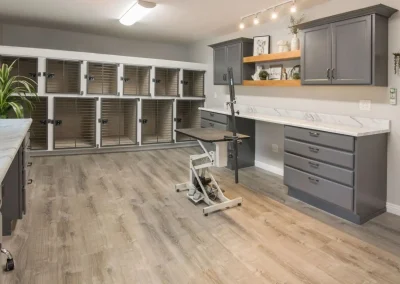
In East Hawaii, you will find several rural retreats that utilize the lush, cooler environment of the Hamakua Coast or the misty mornings of Mountain View. These facilities often feature expansive acreage and open-air designs that take advantage of the natural trade winds. On the West side, particularly around Kailua-Kona, the focus shifts toward resort-style campuses. For example, our Dog Boarding Services are situated on a seven-acre campus designed to provide a structured, “university” feel where learning and play go hand-in-hand.
When evaluating a facility, consider the following types:
- Commercial Boarding Facilities: These are dedicated businesses with professional staff, climate-controlled suites (often found in newer 15,000-square-foot facilities), and standardized safety protocols.
- Traditional Kennels: Often featuring indoor/outdoor runs, these facilities prioritize security and routine.
- In-Home or Cage-Free Boarding: These options aim to mimic a home environment, often with dogs living in a residence or integrated into constant playgroups.
Regardless of the type you choose, ensure the facility has a clear Privacy Policy regarding your personal data and pet records, and look for amenities like climate control or high-end air filtration exchange systems that keep the air fresh and the temperature between 68-72°F.
Traditional Kennels vs. Cage-Free Dog Boarding on the Big Island
The debate between traditional kennels and cage-free environments usually comes down to your dog’s personality. Traditional kennels provide a private, secure space where a dog can relax without the pressure of interacting with others. This is often best for dogs that are reactive or prefer their own company.
However, many modern pet parents prefer cage-free dog boarding on the Big Island. This style focuses on socialization and exercise. At Paws University, we believe in the power of dogs playing outside while boarding to reduce stress. When dogs are integrated into supervised playgroups based on their size and temperament, they burn off energy that would otherwise turn into anxiety.
A home-like environment or a well-managed playgroup ensures that your dog isn’t just “waiting” for you to come back; they are having their own vacation. You can often see the difference in their faces—relaxed ears, wagging tails, and tired, happy eyes.
Specialized Care for Puppies and Seniors
Not all dogs have the same needs. Puppies, for instance, require much higher levels of supervision, more frequent potty breaks, and socialization that doesn’t overwhelm their developing minds.
Seniors or pets with medical needs require a different kind of “specialized” care. This includes:
- Medication Administration: Ensuring heart meds or joint supplements are given on a strict schedule.
- Individualized Care Plans: Adjusting exercise levels so a senior dog doesn’t overexert themselves.
- Dietary Consistency: Maintaining the exact food and portions from home to avoid the “stress tummy” issues common in older dogs.
Essential Services and Amenities for Island Pets
The “standard” for dog boarding on the Big Island has evolved significantly. It’s no longer just about a bowl of water and a concrete floor. Premium facilities now offer a suite of amenities designed for the tropical climate and the comfort of the animal.
Many facilities now include bathing services as an “exit” treat. There’s nothing better than picking up a dog that smells like a spa rather than a kennel. Look for facilities that offer clean, sanitized bathing stations.
In terms of physical construction, the best island kennels utilize:
- Open-Air Construction: To allow for natural ventilation while providing full roof coverage for Hilo’s rain or Kona’s sun.
- Dedicated Drainage: Essential for maintaining hygiene and keeping paws dry.
- Spacious Indoor/Outdoor Runs: Often sized around 8×10 feet to give large breeds room to stretch.
- Triple-Layer Fencing: For maximum security, ensuring that even the most determined “escape artist” stays safe within the perimeter.
Before booking, always review the facility’s Terms of Service to understand their liability policies and what happens in the event of an emergency.
Health and Vaccination Requirements for Boarding
To keep all “students” and guests safe, reputable boarding facilities enforce strict health protocols. You shouldn’t view these as hurdles, but rather as a shield protecting your dog from communicable diseases like kennel cough or leptospirosis.
| Requirement | Why It Matters |
|---|---|
| DHLPP | Protects against Distemper, Hepatitis, Leptospirosis, Parainfluenza, and Parvovirus. |
| Bordetella | The primary defense against “Kennel Cough,” usually required every 6-12 months. |
| Flea & Tick Control | Essential in Hawaii’s year-round flea season to prevent infestations. |
| Microchipping | A critical safety net for identification. |
| Spay/Neuter | Most cage-free facilities require this for dogs over 6-7 months to maintain group harmony. |
| Fecal Testing | Ensures no intestinal parasites are introduced to the play yards. |
Our Policies page details exactly which documents you need to have ready. Most facilities will require you to upload these to a digital portal or have your vet email them directly before your stay is confirmed.
Planning Your Stay: Booking and Onboarding
If you are planning a trip during the winter holidays, Spring Break, or Merrie Monarch week, you need to book early. Dog boarding on the Big Island fills up months in advance for peak dates.
For new clients, the process isn’t instant. Some facilities have a 3-4 week onboarding lead time. This isn’t just “red tape”—it’s a safety measure. You will typically need to complete:
- Application Forms: Detailing your dog’s history, triggers, and habits.
- Waiver Agreements: Outlining the risks of group play and medical authorizations.
- Vet Clearance: Proof of the vaccinations mentioned above.
Once your paperwork is in order, you can Book Your Stay and start preparing your dog for their “staycation.”
The Onboarding Process for Dog Boarding on the Big Island
The most important part of onboarding is the Meet-and-Greet or Behavior Assessment. During this time, staff will observe your dog’s body language as they are introduced to new people and, eventually, other dogs.
This temperament testing ensures that every dog in a playgroup is safe to be there. Some facilities also suggest a “trial stay”—a single day of daycare or one overnight—to see how the dog settles in before a long two-week vacation. Creating a “Pet Parent Profile” helps the staff understand if your dog prefers belly rubs over ball-tossing, or if they need a quiet corner during thunderstorms.
Frequently Asked Questions about Big Island Pet Care
How do facilities ensure pet safety and exercise?
Safety is a multi-layered approach. It starts with physical infrastructure like rubberized flooring to protect joints and size-separated play areas so a Great Dane doesn’t accidentally trample a Chihuahua.
Modern facilities often use digital health tracking, where staff logs food/water intake and bathroom habits every few hours. In the event of an emergency, the best facilities have protocols to ensure a vet assessment within minutes and owner notification shortly thereafter.
What should I pack for my dog’s boarding stay?
Keep it simple but familiar:
- Food: Bring their regular kibble or wet food in a sealed container. Changing diets suddenly can cause major stomach upset.
- Medication: Provide clear instructions and keep meds in their original bottles.
- Familiar Items: A small blanket or a t-shirt that smells like you can provide immense comfort. (Note: Some facilities discourage toys as they can cause “resource guarding” in group settings).
- Emergency Contacts: Ensure the facility has a local contact who can make decisions if you are unreachable.
Conclusion
At the end of the day, the best dog boarding on the Big Island is the one that allows you to enjoy your vacation without a second thought about your pet’s safety. Whether you choose a traditional kennel in Hilo or a high-activity campus in Kona, the goal is the same: a happy, healthy dog waiting for you when you return.
As West Hawaii’s premier facility since 2002, Paws University has spent decades refining the art of the “dog staycation.” Our seven-acre campus and status as the first in the state for Doggie Daycare mean your pet is getting more than just a room—they are getting supervised play, behavior management, and a whole lot of aloha.
Ready to secure your dog’s spot? Contact Paws University today or Book Your Dog Boarding Stay online to get started!