Your First Nights With a New Puppy Don't Have to Be Exhausting
Overnight puppy care is the practice of managing your puppy's sleep, potty breaks, and comfort through the night — and it's one of the hardest parts of bringing a new dog home.
Here's what you need to know right away:
- Most puppies cannot sleep through the night at first. An 8-week-old can only hold their bladder for about 2-3 hours.
- Expect potty breaks every 2-4 hours in the first weeks, dropping to once or none by around 16 weeks.
- A crate in your bedroom is the single best starting setup — it keeps your puppy close, calm, and easier to monitor.
- Crying is normal. Your puppy just left their mother and littermates. It's not a problem to fix immediately — it's a phase to manage with patience.
- By about 4 months (16 weeks), most puppies will sleep through the night without a potty break.
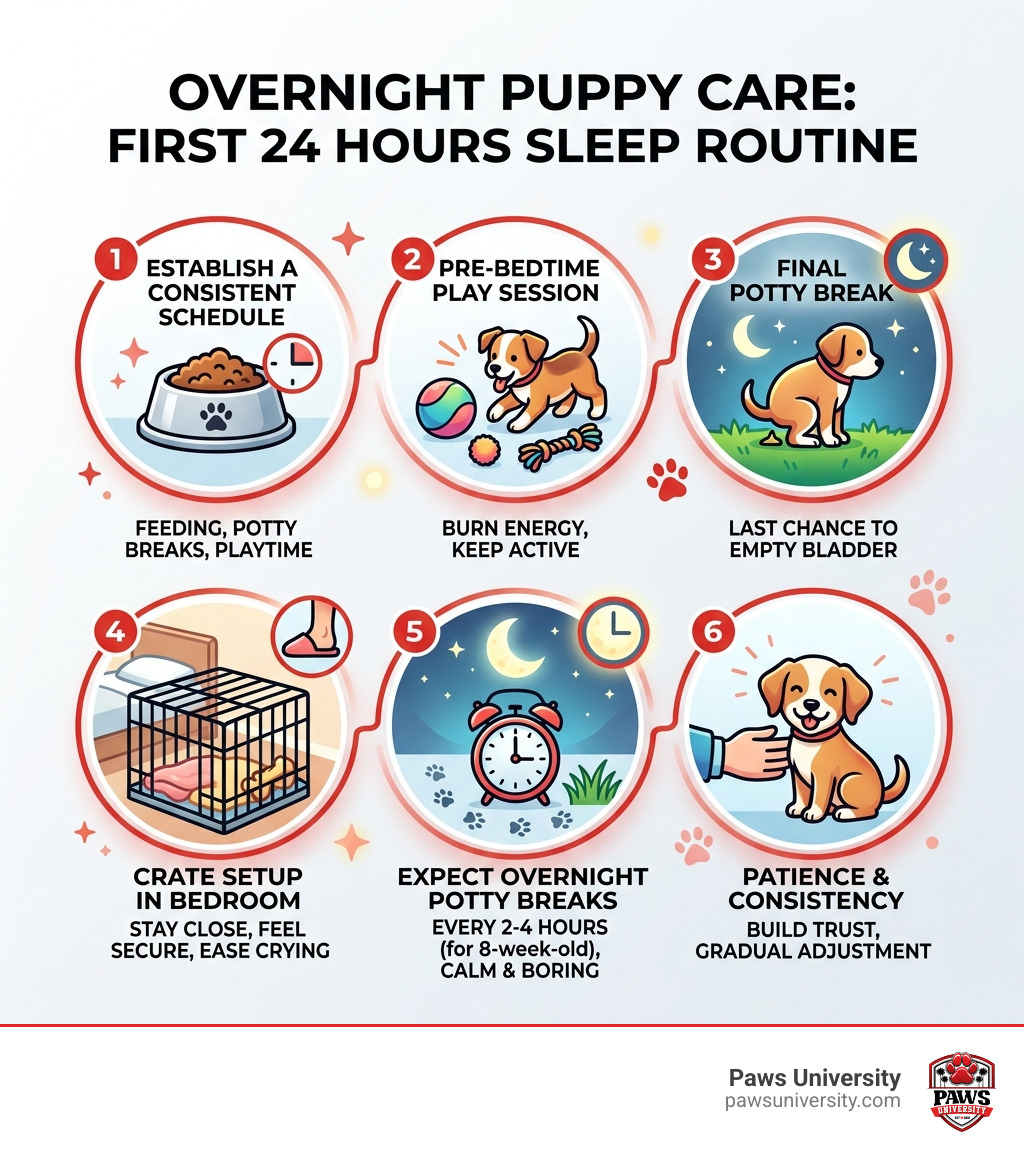
The first few nights feel brutal. But with the right routine — consistent feeding times, a pre-bedtime play session, a final potty break, and a cozy crate — things improve faster than you think.
Puppies are also going through a massive adjustment. They've left everything familiar: their mother, their littermates, their smells. That first night in a new home can feel frightening for a small dog. Understanding that helps you respond with calm and consistency rather than frustration.
This guide walks you through everything — from crate setup and potty schedules to calming tools and professional boarding — so you and your puppy can both get some sleep.
I'm Allen Daniels, co-founder of Paws University in Kailua-Kona, and I've spent over 25 years helping Hawaii County families navigate overnight puppy care using the same science-backed, rewards-based methods I developed as a professional dolphin trainer. In the sections below, I'll share what actually works — no guesswork, no punishment, just practical steps you can start tonight.
Understanding the Basics of Overnight Puppy Care
When we talk about overnight puppy care, we are really talking about biological development. You wouldn't expect a human newborn to sleep twelve hours straight, and your eight-week-old "land orca" — it's no different. Their bodies are simply not physically capable of holding it all night yet.
The foundational rule of "potty math" is that a puppy can generally hold their bladder for one hour for every month of age. This means a two-month-old (8 weeks) puppy has a roughly two-hour limit during the day, though they can often stretch this to 3 or 4 hours at night when their metabolism slows down.

When Do Puppies Start Sleeping Through the Night?
For most owners, the "magic number" is 16 weeks. By four months of age, many puppies can hold overnight for a typical sleep stretch, though individual needs vary and some still need one late-night potty break. However, getting to that point requires proactive training.
If you establish a solid routine early on, you might see results even sooner. Some puppies begin sleeping longer stretches by 10 or 12 weeks, but don't beat yourself up if your pup takes a little longer. Every dog is an individual.
Why Puppies Struggle with Overnight Puppy Care Initially
The primary reason for nighttime fussing isn't "bad behavior" — it's homesickness and biology. Imagine being scooped up from a warm pile of siblings and a mother you've known since birth, then placed in a quiet, strange room in a crate. It's a lot!
- Separation Anxiety: They miss the physical warmth and heartbeat of their littermates.
- Small Bladders: They physically need to go.
- Environment Shock: New sounds, like rustling palms, geckos, or a ceiling fan in a Hawaii County home, can be startling.
- Circadian Rhythms: Puppies don't have a "clock" yet. They nap all day and are ready to party at 2:00 AM.
Setting Up a Safe and Tropical Sleep Environment
In Hawaii County, we have the unique challenge of heat and humidity. A "cozy" crate in a cooler climate might feel far too warm here. When setting up for overnight puppy care, ventilation is your best friend. We recommend wire crates over plastic "airline" styles for our climate because they allow for 360-degree airflow.
Place the crate in your bedroom. This isn't "spoiling" them; it's a strategic move. Being able to hear your breathing and smell your presence significantly reduces their cortisol (stress) levels. You can find More info on crate training to help make this their favorite spot in the house.
Creating a Comfortable Crate for Overnight Puppy Care
Your puppy's crate should be their "den," not a cage. Here is how to optimize it:
- Size it Right: Use a divider panel. If the crate is too big, they might sleep in one corner and use the other as a bathroom. They should have just enough room to stand up, turn around, and lie down.
- Chew-Proof Bedding: Puppies are notorious for shredding soft beds. Use a durable, washable mat or even just a couple of old towels initially.
- The Scent Factor: Put an old t-shirt you've worn (and haven't washed) inside the crate. Your scent is incredibly soothing to a lonely pup.
Calming Tools and Soothing Aids
We are big fans of simple tools that help a puppy settle. Since they miss their littermates' heartbeats, a heartbeat-style plush toy or a gently warmed safe comfort item can be a game-changer.
Other tools include:
- Pheromone Diffusers: These release a synthetic version of the "calming pheromone" mothers produce.
- White Noise: A fan or a dedicated white noise machine can drown out the sound of evening rain or local wildlife.
- Calming Music: There are playlists specifically designed for canine ears that can help lower their heart rate.
The Ultimate Pre-Bedtime Routine for Better Sleep
A tired puppy is a sleeping puppy. However, there is a difference between "physically exhausted" and "mentally settled." If you play a high-intensity game of fetch right before bed, you might just wind them up.
Physical and Mental Stimulation
We recommend a two-part evening routine. About 1-2 hours before bed, engage in some physical play—let them romp in the yard or take a short walk. Then, transition to "brain work." Mental stimulation is often more tiring for a puppy than physical exercise.
Try these calming pre-bed activities:
- Food puzzles: Let your puppy work for part of dinner to gently tire their brain.
- Safe chewing time: A puppy-appropriate chew can help them settle and focus before bed.
- Short training session: Five minutes of cues like "sit" or "touch" adds mental exercise without getting them too excited.
The "Last Call" Potty Protocol
To set your puppy up for success, we suggest "closing the kitchen" early.
- Food: Feed dinner at least 3-4 hours before bedtime.
- Water: Pick up the water bowl about 2 hours before the final tuck-in (unless it’s an exceptionally hot Kona night, in which case, consult your vet).
- The Final Trip: Take them out one last time right before you go to sleep. Make this trip "boring." No playing, no high-pitched talking. Just a quiet walk to their potty spot, a calm "good job" when they go, and then straight back to the crate.
Navigating Nighttime Crying and Potty Breaks
This is where most owners lose their resolve. When your puppy starts crying at 2:00 AM, is it because they need to go, or because they want attention?
| Feature | Potty Need Crying | Anxiety/Attention Crying |
|---|---|---|
| Timing | Often occurs after a period of sleep (middle of night). | Often starts as soon as you close the crate door. |
| Sound | May be more urgent, whining combined with scratching. | Can be high-pitched yapping or prolonged howling. |
| History | It has been 2-4 hours since the last break. | They just went potty 20 minutes ago. |
| Response | Stops immediately once taken outside. | May continue even after a potty break if they aren't back with you. |
Handling the Midnight Whine
If your puppy cries, wait for a brief gap in the noise (even just 5 seconds of silence) before opening the crate. This prevents them from learning that "screaming = door opens."
Follow the "Strictly Business" rule:
- Keep the lights low or off.
- Don't talk to the puppy other than your potty cue (e.g., "go potty").
- Carry them to the spot, let them do their business, and carry them back.
- No treats, no play, no snuggles. We want them to realize that nighttime wake-ups are incredibly boring.
Our Paws University Policies emphasize a rewards-based approach. We never punish a puppy for crying or having an accident. Punishment only creates fear, which actually makes potty training take much longer!
Gradually Extending Sleep Stretches
Once your puppy is consistently staying dry between your scheduled alarms, start stretching the time. If you’ve been waking up at 2:00 AM, move your alarm to 2:15 AM for three nights. If they stay dry, move to 2:30 AM. Proactive alarms are better than reactive ones because they teach the puppy they don't need to cry to get relief—you’re already on it.
Preparing for Professional Boarding and Care
Sometimes, life happens, and you need to travel. Or perhaps you want your puppy to get a head start on socialization. Professional overnight puppy care at a facility like ours can be a supportive experience, provided the puppy is prepared.
Health and Safety Standards for Boarding
In Hawaii County, we take disease prevention very seriously. Because of our year-round warm weather, certain bacteria and viruses can thrive. Before your puppy can join us for Boarding services, they must meet specific health requirements:
- DHPP Series: This protects against Distemper, Hepatitis, Parainfluenza, and Parvovirus. Puppies usually start this at 6-8 weeks, with boosters every 3 weeks.
- Bordetella: Often called "kennel cough," this is essential for any social environment.
- Rabies: Required once the puppy reaches the appropriate age (usually 12-16 weeks).
At Paws University, staff monitors every puppy carefully. Our outdoor spaces are designed for supervised, age-appropriate activity in a warm tropical environment, with puppies separated from older or larger dogs when needed.
Transitioning Back Home After Boarding
When your puppy returns from a stay at a facility, they might be extra tired. They've had lots of stimulation!
- Water Management: Many dogs drink excessively when they first get home due to excitement. Offer water in small amounts to prevent tummy upset or bloat.
- Rest: Let them sleep and decompress.
- Routine: Get back to your home schedule immediately. Consistency is the anchor that helps puppies feel secure.
Frequently Asked Questions about Overnight Puppy Care
How long can an 8-week-old puppy hold their bladder at night?
Typically, 2 to 3 hours. While some might stretch to 4, you should plan for at least two midnight trips during the first week. By following a rewards-based schedule, you'll find these stretches get longer very quickly.
Should I use puppy pads inside the crate?
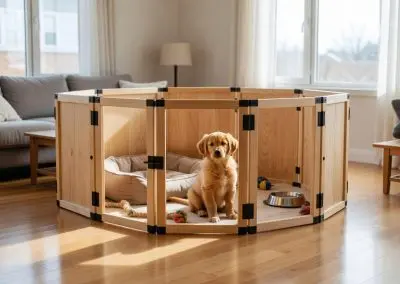
We generally advise against this. A crate is meant to tap into a dog's natural instinct not to soil where they sleep. Putting a pad in the crate confuses this message—it tells them that the crate is a bathroom. If you cannot be home to let them out, an exercise pen with a clear "bathroom" area (pads) and a "bedroom" area (the crate with the door open) is a much better setup.
When should I consult a professional trainer for overnight puppy care issues?
If your puppy is over 16 weeks and still having frequent nighttime accidents, or if the crying is so intense that the puppy is harming themselves (clawing at the crate until paws bleed), it’s time to call in the pros. We offer Private training options to help troubleshoot specific behavioral hurdles and get your household back to sleep.
Conclusion
Mastering overnight puppy care is a marathon, not a sprint. There will be nights when you're standing outside at 3:00 AM wondering why you thought a puppy was a good idea. Hang in there! The effort you put in nowthe consistency, the boring potty trips, and the rewards-based trainingwill pay off for the next 15 years.
At Paws University, we believe that every puppy deserves a foundation of trust and clear communication. Whether you need a safe place for them to stay while you're away or help refining their "settle" command, we are here to support you.
If you need more help, explore our Boarding services.