Understanding Why Your Puppy Is Growling and Biting
To effectively answer the question, "how do i stop my puppy from growling and biting," we first have to understand the "why" behind the behavior. For a puppy, the mouth is the primary tool for exploration. Much like a human infant uses their hands to grab and feel, a puppy uses their 28 needle-sharp baby teeth to interact with their environment.
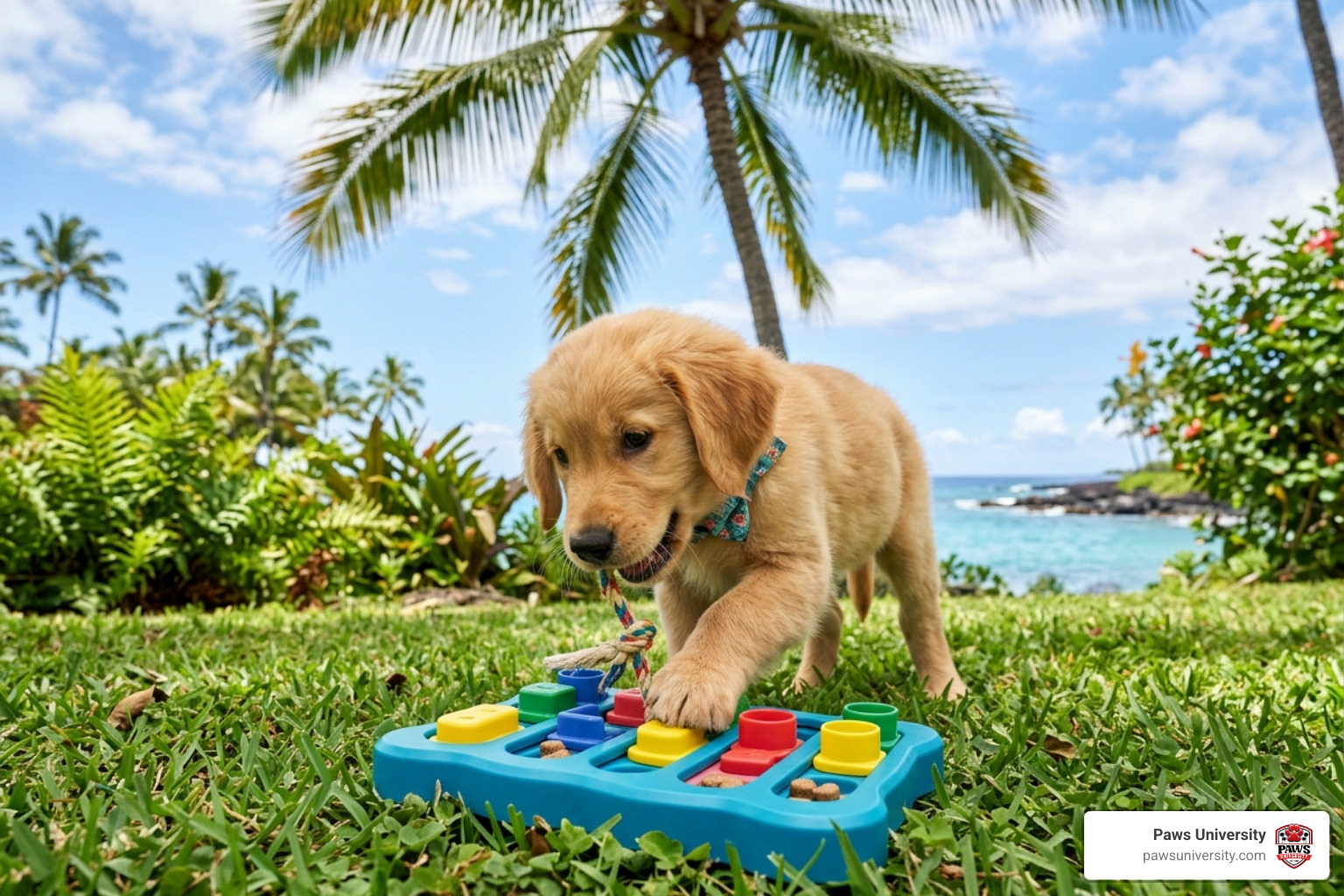
In the vast majority of cases, this behavior is a normal developmental stage. Puppies are biologically programmed to play-fight. In the litter, they spend hours pouncing, tumbling, and nipping at their siblings. This is how they learn social boundaries and motor skills. According to PetMD, these pediatric behavior problems are often just a lack of education on what is appropriate in a human household versus a canine litter.
Is it Play or Aggression?
Distinguishing between a "play growl" and "aggression" is the most important skill you can develop as a pet parent. At Paws University, we teach owners to look at the "flow" of the dog.
- Playful Behavior: Look for "rounded" and fluid movements. A puppy in play mode often has a "play bow" (front end down, back end up), a wagging tail (or even a wagging whole body), and a relaxed, open mouth. The growling might sound fierce—like a tiny chainsaw—but if the body is wiggly, it’s just part of the game.
- Signs of Fear or Discomfort: This looks very different. The puppy’s body will become stiff, straight, or frozen. You might see a "hard stare," lip curling, or the whites of their eyes (whale eye). WebMD notes that fear-based growling is a warning. If a puppy is backed into a corner or held against their will and they stiffen up, they are asking for space.
How do I stop my puppy from growling and biting when they are teething?
If your puppy is between 12 and 16 weeks old, they are likely hitting the peak of teething. This is a physically uncomfortable time when baby teeth are falling out and adult teeth are pushing through the gums. This discomfort often leads to an increase in "mouthy" behavior as they seek relief.
To help them through this phase, provide appropriate outlets for their sore gums. We recommend frozen washcloths or rubber toys specifically designed for teething. By providing these, you redirect the urge to bite away from your skin and onto something soothing. For more tips on managing these early months, check out our puppy training category.
How Do I Stop My Puppy From Growling and Biting During Play?
The goal isn't to stop your puppy from playing; it's to teach them how to play with humans. Puppies don't inherently know that human skin is much thinner than puppy fur.
The most effective way to manage play biting is through consistent redirection. The moment those teeth touch your skin or clothing, the "fun" should stop. Have a toy ready at all times. If the puppy goes for your hand, gently slide a toy into their mouth instead. If they continue to target you, stand up, tuck your hands into your armpits, and walk away. This sends a clear message: "Biting ends the game." Consistent responses from everyone in the household are vital, as the American Kennel Club emphasizes.
Teaching Bite Inhibition
Bite inhibition is a dog’s ability to control the force of their mouth. A dog with good bite inhibition knows how to use their mouth gently, which is a critical safety skill for the rest of their life.
Puppies naturally learn this from their littermates. If Puppy A bites Puppy B too hard, Puppy B will let out a high-pitched yelp and stop playing. Puppy A learns, "If I bite hard, the fun stops." You can simulate this:
- When your puppy bites your hand, let out a high-pitched "Ow!" or "Yelp!"
- Let your hand go limp (don't pull away quickly, as this triggers their prey drive to chase).
- If they stop and back off, praise them and resume play.
- If they continue to bite, use a "time-out" by leaving the room for 30 to 60 seconds.
The ASPCA suggests that once your puppy has learned to bite softly, you can then move to the next stage: teaching them that no teeth should touch skin at all.
How do I stop my puppy from growling and biting when they are overexcited?
Sometimes, a puppy gets "the zoomies" or becomes over-stimulated, and their brain essentially "short-circuits." This often happens in the evening or after a long period of activity. An overexcited puppy is much more likely to growl and bite because they have lost their self-control.
When you see the intensity rising, it’s time for a "calm-down" period. This isn't a punishment; it’s a biological necessity. Much like a cranky toddler needs a nap, an over-aroused puppy needs a quiet space to settle. Removing your attention entirely is the most powerful tool here. If they are too far gone to settle on their own, a short, calm stay in a crate or a puppy-proofed area with a chew toy can help them reset. Our training programs focus heavily on teaching these "off-switches" to help puppies manage their energy.
Positive Strategies to Prevent Puppy Biting and Growling
Prevention is always easier than correction. A puppy who has had their physical and mental needs met is much less likely to act out. In our tropical West Hawaii climate, we have the advantage of beautiful outdoor spaces where puppies can burn off energy safely.

How do I stop my puppy from growling and biting during grooming?
Many puppies growl or nip when being handled—whether it’s having their paws wiped, being brushed, or getting their collar put on. This is usually due to fear or sensitivity.
To fix this, use "low-stress handling" techniques. Pair every touch with a high-value treat. Touch a paw, give a treat. Pick up a brush, give a treat. If the puppy growls, you are moving too fast. Back up to a level where they are comfortable and move slower. This "counterconditioning" changes their emotional response from "I'm scared of this brush" to "I love when the brush comes out because I get treats!" For personalized help with these skills, our private training sessions are an excellent resource.
Managing Resource Guarding
Does your puppy growl when you approach their food bowl or a favorite toy? This is called resource guarding. It’s a natural instinct to protect "treasures," but it can become dangerous if not addressed.
The golden rule is: Never just take things away. This teaches the puppy that you are a "thief," which increases their need to growl and bite to protect their stuff. Instead, practice "trading up." If they have a toy, offer them a piece of chicken or a high-value treat. When they drop the toy to take the treat, praise them, and then give the toy back. This teaches them that your approach means something better is coming, not that they are losing their prize. You can find more in-depth strategies in our guide on how to stop your dog from growling at you.
What to Avoid When Training Your Puppy
When owners ask "how do i stop my puppy from growling and biting," they are often frustrated and tempted to use "quick fixes" like alpha rolls, scruff shaking, or yelling. However, research shows that up to 80% of dogs who are punished by their owners are likely to develop further behavioral problems and aggression.

The Danger of Suppressing the Growl
One of the biggest mistakes you can make is punishing a growl. Think of a growl as a "themostat" or a "warning light" on your car's dashboard. If you punish the growl, you aren't fixing the underlying fear or discomfort; you are simply removing the warning signal. A dog who has been taught not to growl may eventually "bite without warning" because they feel they have no other way to communicate their distress. We want to listen to the growl so we can address the root cause of the puppy's unhappiness.
Why Physical Corrections Fail
Physical corrections—like hitting or "nipping" the puppy back—damage the bond of trust between you and your pet. Puppies often interpret physical "corrections" as either a challenge to fight or a scary attack. This either escalates the aggression or creates a fearful dog. At Paws University, we strictly use a rewards-based approach. We focus on telling the puppy what to do (e.g., "sit" or "chew this toy") rather than just punishing them for what they shouldn't do.
Frequently Asked Questions about Puppy Biting
At what age do puppies stop biting?
Most puppies begin to settle down and stop the "land shark" phase by 5 to 6 months of age, coinciding with the end of teething. However, if the behavior hasn't been managed with consistent redirection and bite inhibition training, it can persist into adulthood. Consistency in the first few months is the fastest way to reach the finish line.
Why does my puppy bite my ankles when I walk?
This is often a manifestation of herding instincts or a response to movement. To a puppy, your moving feet look like exciting prey. To stop this, keep a toy in your pocket. When you start walking, offer the toy as a target instead of your ankles. If they nip, stop moving immediately. Movement is the reward; when you stop, the "game" becomes boring.
Is growling always a sign of aggression?
No! As we've discussed, growling is a multifaceted form of communication. Puppies growl during tug-of-war, during wrestling, and even sometimes when they are being particularly vocal and happy. Always look at the "whole dog"—if the body is loose and the tail is wagging, it’s likely just play.
Conclusion
Teaching a puppy how to interact with the world without using their teeth is a journey that requires patience, consistency, and a lot of treats. Your puppy isn't trying to be "bad" or "dominant"; they are simply learning a new language. By focusing on rewards-based training and providing plenty of appropriate outlets for their energy, you can turn your "land shark" into a well-mannered companion.
At Paws University, our seven-acre campus in West Hawaii is designed specifically to support this journey. From our premier doggie daycare—the first of its kind in the state—to our expert-led training programs, we provide a supervised environment where puppies can learn vital social skills from their peers. If you're struggling with how do i stop my puppy from growling and biting, we're here to help you and your pup find a peaceful path forward.