Your Dog Isn't Being Bad — Here's How to Stop the Growling
If you're wondering how do you get a dog to stop growling, here's the short answer:
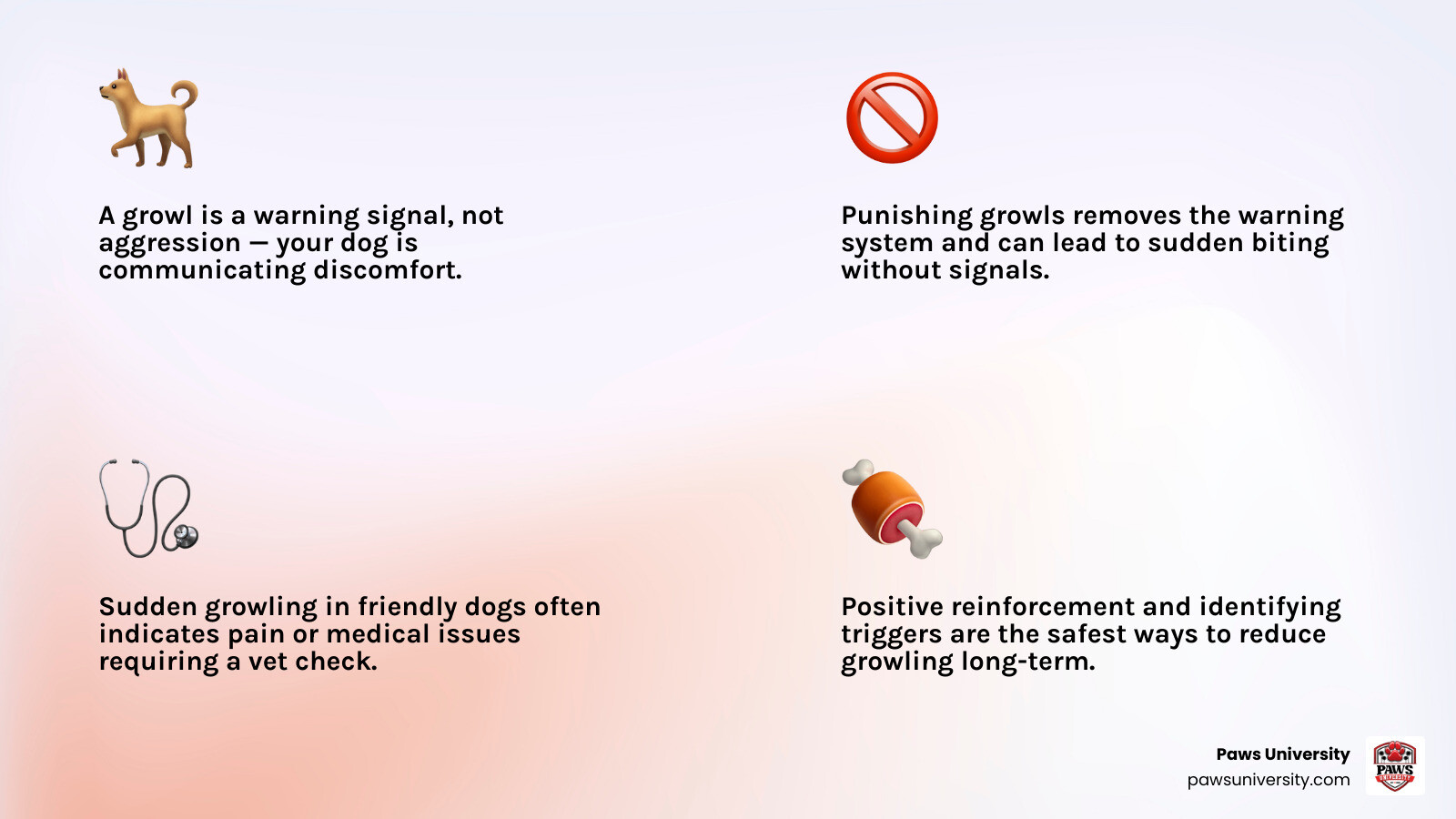
- Stop whatever is triggering the growl — immediately and calmly
- Never punish the growl — it removes your dog's warning system and increases bite risk
- Identify the cause — fear, pain, resource guarding, or discomfort
- Use positive reinforcement — redirect attention and reward calm behavior
- Rule out medical issues — sudden growling in a friendly dog often signals pain
- Seek professional help if growling is frequent, escalating, or paired with snapping
That's the core of it. The sections below explain why each step matters and how to do it properly.
A growl feels alarming. Your first instinct might be to correct it — to tell your dog "no" or pull them away. That reaction is completely understandable.
But here's what most owners don't realize: a growl is not aggression. It's communication. Your dog is telling you something is wrong, and silencing that signal without addressing the cause is where things get genuinely dangerous.
Research consistently shows that dogs punished for growling may stop growling — and go straight to biting next time, with no warning at all.
Understanding what your dog is trying to say is the first step toward actually solving the problem.
I'm Allen Daniels, co-founder of Paws University in Kailua-Kona, and I've spent over 25 years applying operant conditioning — the same trust-based methods I developed training marine mammals — to help hundreds of dogs work through behavioral issues, including growling and aggression. Everything I share on how do you get a dog to stop growling is grounded in that hands-on experience and the latest behavioral science.
How do you get a dog to stop growling terminology:
- how do i stop my dog from growling at me
- how do i stop my dog growling at other dogs
- how to correct leash reactivity
Understanding the Growl: What Your Dog is Trying to Tell You
Before we can address how to stop the behavior, we have to understand what it actually means. In the canine world, growling is a normal, healthy, and highly functional part of communication. It is a distance-increasing signal—a polite way of your dog saying, "I am uncomfortable, please back up and give me some space."

Too often, we expect our dogs to show unconditional compliance and tolerate any touch, sound, or intrusion. But just like humans, dogs have personal boundaries. When a dog growls, they are trying to avoid physical conflict. It is a ritualized way to resolve a problem without anyone getting hurt. If we ignore this signal, we leave our dogs with very few options: they can freeze, flee, or defend themselves.
As explained in What Dog Growling Means and What To Do | PetMD, growling can happen in a variety of contexts, including play, greetings, resource guarding, and fear. To understand what your dog is trying to say, you must look at the whole picture—especially their body language.
Play Growl vs. Warning Growl: Reading the Body Language
Not all growls are warnings. If you’ve ever played a spirited game of tug-of-war on our sunny, tropical campus in Hawaii County, you know that play growling is incredibly common.
So, how do you tell the difference? It all comes down to the rest of the dog's body. A play growl is accompanied by loose, bouncy movements, soft facial expressions, and often a "play bow" (where the front legs are down and the rear end is up).
A warning growl, on the other hand, is characterized by tension. The dog's body will stiffen, their eyes may become fixed in a hard stare, and their ears may pin back or forward. You might also notice raised hackles (the hair along their spine standing up) or a slightly curled lip.
| Body Part | Play Growling | Warning Growling |
|---|---|---|
| Body Posture | Loose, wiggly, bouncy, play bows | Stiff, frozen, tense, weight shifted forward or back |
| Eyes | Soft, blinking, relaxed gaze | Hard stare, wide eyes showing the whites (whale eye) |
| Mouth | Open, relaxed "smile," tongue loose | Tight lips, curled lip showing teeth, air snapping |
| Tail | Loose wagging, sweeping side-to-side | Stiff wagging (only the tip), tucked tight, or held high and rigid |
How Do You Get a Dog to Stop Growling? The Golden Rule of Canine Communication
If there is one absolute rule when learning how do you get a dog to stop growling, it is this: Respect the growl.
When your dog growls, they are communicating discomfort. The most effective immediate response is to step back, stop whatever you are doing, and give them space. This is not "giving in" to your dog or letting them "win." Instead, it is acknowledging their polite warning and preventing the situation from escalating into a bite.
By respecting the growl, you preserve your dog's trust in you. You teach them that they do not need to use physical force (like snapping or biting) to protect themselves because you will listen to their gentler warnings. For a deeper look at this dynamic, check out our guide on how to stop your dog from growling at you.
Why Punishing a Growl is Dangerous: How Do You Get a Dog to Stop Growling Safely?
It is incredibly tempting to scold, yell at, or physically correct a dog for growling. We worry that if we don't correct it, the dog will become dominant or aggressive. However, using punishment or physical corrections is the most dangerous thing you can do.
As highlighted in Why We Shouldn't Punish Our Dogs for Growling | Psychology Today, punishing a growl simply suppresses the symptom without fixing the underlying emotional state. If you punish your dog for growling, they learn that communicating their discomfort results in bad things happening.
The next time they feel scared, painful, or threatened, they won't growl. Instead, they will skip the warning entirely and go straight to biting. A dog who has been punished for growling is a silent, unpredictable, and highly dangerous dog.
Furthermore, punishment increases fear and anxiety. If a dog is already afraid of a stranger, and their owner punishes them when they growl, the dog learns that the stranger's presence predicts scary, unpredictable behavior from their owner. This ruins the human-animal bond and escalates future aggression.
Common Triggers: Fear, Pain, and Resource Guarding
To stop growling permanently, we must identify and address the root cause. Here are the most common triggers:
- Fear and Anxiety: This is the root cause of most defensive aggression. The dog feels threatened by a person, another dog, or a novel object, and growls to keep the threat at a distance.
- Resource Guarding: Dogs naturally value food, high-value treats, toys, and resting spots. A dog may growl when approached while enjoying a bone or sleeping on a favorite couch cushion. Read more about managing these behaviors in young dogs in our guide on how do I stop my puppy from growling and biting.
- Pain and Medical Conditions: A sudden onset of growling in a previously friendly, easygoing dog is a major red flag. Conditions like arthritis, dental disease, or ear infections can make a dog highly sensitive to being touched or moved.
- Overstimulation and Frustration: During intense play or when restricted by a leash, a dog's arousal levels can skyrocket, leading to frustrated growling or barking.
7 Proven Methods to Stop Dog Growling
Now that we know why dogs growl and why punishment is off the table, let's dive into the practical, reward-based methods to address and resolve this behavior.

At Paws University, we rely strictly on positive reinforcement and behavior modification to help dogs build confidence and learn that their world is safe. For more general tips on managing unwanted behaviors, check out reducing dog behavior issues without pulling your hair out.
Method 1: Immediate De-escalation and Giving Space
The moment your dog growls, pause and create space. If you are brushing their fur, trimming their nails, or trying to move them off the bed, stop immediately. Back away slowly and use a calm, soothing tone.
You can also use a neutral, non-threatening noise—like a gentle finger snap or a soft whistle—to interrupt their focus, and then redirect them to a different space using a happy voice. By de-escalating the situation, you keep everyone safe and prevent the dog's stress levels from spiking further.
Method 2: Desensitization and Counterconditioning
Once you know what triggers the growl (for example, nail clippers), you can use systematic desensitization and counterconditioning. This means exposing your dog to the trigger at a very low, non-threatening level and pairing it with high-value treats (like boiled chicken or hot dogs).
Start by simply showing your dog the clippers from across the room and tossing them a treat. Gradually, over days or weeks, bring the clippers closer, rewarding calm behavior at every step. If your dog growls, you have gone too fast; back up to the previous step where they were comfortable. The goal is to change their emotional response from "Oh no, the clippers!" to "Yay, clippers mean delicious treats!"
Method 3: The Treat and Retreat Game
For dogs who growl at visitors or strangers due to defensive fear aggression, the "Treat and Retreat" game is a fantastic, pressure-free tool.
Instead of having a visitor approach your dog or try to hand-feed them (which actually forces a fearful dog to get closer than they are comfortable with), have the visitor toss high-value treats behind the dog.
When the dog retreats to eat the treat, they get a break from the social pressure of the stranger. When they choose to step forward again, another treat is tossed behind them. This builds a positive association with strangers while respecting the dog's need for physical distance.
Method 4: Teaching Alternative Behaviors
Instead of physically forcing your dog to do something—which often triggers defensive growling—teach them alternative, highly rewarded behaviors.
For example, teach a reliable "off" cue by throwing a treat on the floor, rather than grabbing your dog's collar to pull them off the couch. Teach "leave it" and "drop it" using a trade-up system (trading a toy for a piece of chicken) rather than prying open their jaws. You can also use redirection cues like "look" or "touch" to guide their focus back to you when they start to tense up.
Method 5: Managing the Environment and Resources
Management is about setting your dog up for success by preventing them from practicing the growling behavior in the first place.
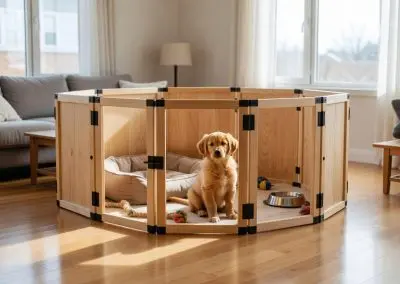
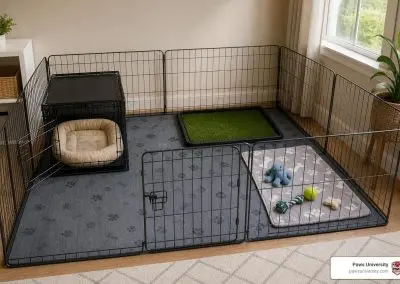
If your dog growls when eating, let them eat in peace. Feed them in a separate room, behind a baby gate, or inside a secure pen where they know no one will disturb them. If they guard toys, keep high-value items put away when visitors or other pets are around. Using physical barriers keeps everyone safe while you work on behavior modification.
Method 6: Addressing Pain and Medical Triggers
If your dog’s growling started suddenly, your very first step should be a thorough veterinary exam. Dogs are masters at hiding physical discomfort.
An older dog who suddenly growls when you touch their lower back might be suffering from silent arthritis pain. A puppy growling during play might have a painful cracked tooth. Addressing the underlying medical issue with your vet is often enough to stop the growling entirely.
Method 7: Building Confidence Through Structured Play
A confident dog is a relaxed dog. You can help reduce fear-based growling by providing plenty of mental stimulation, physical exercise, and structured play.
At Paws University, our supervised play programs on our seven-acre campus in Hawaii County are specifically designed to help dogs learn healthy canine social skills in a safe, structured environment. Interactive games, puzzle toys, and confidence-building activities can significantly lower your dog’s overall anxiety levels. If you are struggling with dog-to-dog interactions, explore our guide on how do I stop my dog growling at other dogs.
Professional Intervention and Long-Term Prevention
Working with a growling dog can be stressful and, at times, overwhelming. Knowing when and how to seek professional help is essential for keeping your household safe and happy.
When to Call a Behaviorist: How Do You Get a Dog to Stop Growling for Good?
While minor growling issues can often be managed with consistent, positive training at home, you should seek professional help immediately if:
- The growling is frequent, unpredictable, or escalating in intensity.
- The growling is accompanied by lunging, snapping, or biting.
- Your dog is guarding resources from children or other vulnerable family members.
- You feel fearful or anxious around your own dog.
When looking for help, always choose a professional who uses positive-reinforcement, reward-based methods. For tips on finding the right expert in West Hawaii, check out our resource on finding aggression training in your area.
Preventing Aggression from Escalating
To prevent growling from turning into more serious aggression, keep the concept of "trigger stacking" in mind. Just like humans have bad days when multiple minor stressors pile up, dogs can experience trigger stacking.
A dog might tolerate a quick groom in the morning, but if they also encounter a loud lawnmower, a stressful vet visit, and then a visiting child tries to hug them later that afternoon, their stress threshold will be breached. Recognizing when your dog is overwhelmed and giving them a quiet place to decompress is key to long-term prevention.
Frequently Asked Questions About Dog Growling
Why does my dog growl at me when I try to move them?
This is incredibly common, especially when a dog is sleeping or relaxing on a cozy bed or couch. When you physically prod or pull a sleeping dog, they may growl out of startle or annoyance.
To resolve this, avoid physical contact. Instead, call your dog's name in a cheerful voice and offer a high-value treat to entice them to move on their own.
Why has my friendly dog suddenly started growling at other dogs?
A sudden change in social behavior is often linked to physical pain or a negative experience you might not have noticed (such as a subtle, tense encounter on a leash).
Schedule a veterinary exam first to rule out medical issues. If they get a clean bill of health, work on gentle counterconditioning to rebuild their confidence around other dogs.
Is a wagging tail a sign that a growling dog is happy?
No. This is one of the most common and dangerous misconceptions in dog training. A wagging tail simply indicates emotional arousal, not necessarily happiness.
A stiff, fast-wagging tail held high in the air, paired with a tense body and a growl, is a clear warning signal that the dog is highly stressed and ready to react. Always look at the whole dog, not just the tail.
Conclusion
At the end of the day, learning how do you get a dog to stop growling isn't about silencing their voice—it's about listening to what they are trying to tell you. By treating your dog's growl as a valuable, polite warning, and addressing the underlying fear, pain, or discomfort with positive reinforcement, you can build a relationship based on mutual trust and safety.
Since 2002, Paws University has been West Hawaii's premium pet care facility. Located on a beautiful, spacious seven-acre campus in Hawaii County, we offer premium dog training, supervised daycare, and boarding services designed to reduce behavior issues and help your dog thrive in our warm, tropical paradise.
If you need hands-on, expert guidance to help your dog overcome growling or reactivity, we are here to help. Explore our reward-based training programs and book a session today on our Paws University Dog Training page.