Understanding Why Dogs Chew on Their Leash
Before we can effectively stop dog from chewing leash, we have to look at the "why" behind the "chomp." In our experience at our premium seven-acre campus in Hawaii County, we’ve seen that leash biting is rarely about being "bad." Instead, it is a form of communication or a biological need.
Teething and Exploration
For puppies, the world is explored through the mouth. Just like human infants, puppies go through a teething phase that can last until they are about six months old. Chewing on a leash—which often has a satisfying texture like nylon or leather—provides relief for sore gums. It’s a natural behavior, but one that needs redirection to stop your dog's chewing of essential equipment.
Boredom and Lack of Exercise
A dog that hasn't had enough mental or physical stimulation is a dog looking for a job. If the walk isn't providing enough "work," they might create their own game: Leash Tug-of-War. This is especially common in high-energy breeds that thrive on our tropical island trails but find a slow neighborhood stroll a bit dull.
Overstimulation and Anxiety
Sometimes, the great outdoors is just too much. The sights and sounds of Hawaii County—from rustling palm fronds to the scent of the ocean—can overstimulate a dog. When a dog’s "arousal bucket" overflows, they often resort to displacement behavior. Grabbing the leash is a way to self-soothe or burn off excess nervous energy. It’s their version of pacing or biting their nails.
Frustration and Displacement
Leashes are restrictive by nature. If a dog wants to go sniff a specific fern or greet another pup and the leash stops them, that frustration has to go somewhere. Since the leash is the thing holding them back, they might turn around and bite it. This is why reducing dog behavior issues without pulling your hair out often starts with understanding the emotional state of the dog at the other end of the line.

The Dangers of Persistent Leash Biting
It might seem like a harmless, if annoying, habit, but there are real risks involved when you can't stop dog from chewing leash.
- Choking and Ingestion: Nylon and rope leashes can fray. If your dog swallows these fibers, it can lead to choking or, worse, intestinal blockages that require emergency veterinary care.
- Equipment Failure: A partially chewed leash is a ticking time bomb. It might look fine, but the structural integrity is compromised. The last thing you want is for the leash to snap while you’re walking near a busy road or in a public space.
- Dental Health: While leashes feel good on teething gums, persistent chewing on metal clips or heavy-duty materials can lead to chipped teeth or worn enamel over time.
- Loss of Control: According to Vet Explains Pets, a damaged leash compromises the owner's physical control. In a moment of excitement, a chewed leash can break, leaving your dog loose in an unsafe environment.
Comparing Leash Materials for Durability
| Material | Durability | Chew Appeal | Best For |
|---|---|---|---|
| Nylon | Moderate | High (Soft and textured) | General walking, but easy to destroy |
| Leather | High | High (Tastes/smells like animal) | Long-lasting, but very tempting for chewers |
| Chain | Extreme | Very Low (Cold and hard) | Immediate deterrent for persistent biters |
| Biothane | High | Moderate | Hawaii County's climate (waterproof and easy to clean) |
How to Stop Dog From Chewing Leash Using Positive Reinforcement
At Paws University, we strictly follow a rewards-based approach. Punishing a dog for biting the leash usually backfires—it either increases their anxiety or, if you pull back on the leash, turns the whole thing into a fun game of tug. To stop dog from chewing leash, we want to make not biting the leash much more rewarding than biting it.
The Power of "Leave It" and "Drop It"
These two commands are the foundation of a well-behaved walker.
- Leave It: This tells your dog to ignore the leash before they even grab it.
- Drop It: This tells them to release the leash once it's already in their mouth.
Start training these in a low-distraction environment (like your living room) using high-value treats like small pieces of chicken or liver. When your dog chooses the treat over the leash, give them calm, happy praise. You can find more info about dog training on our blog to help master these basics.
Redirection and Clicker Training
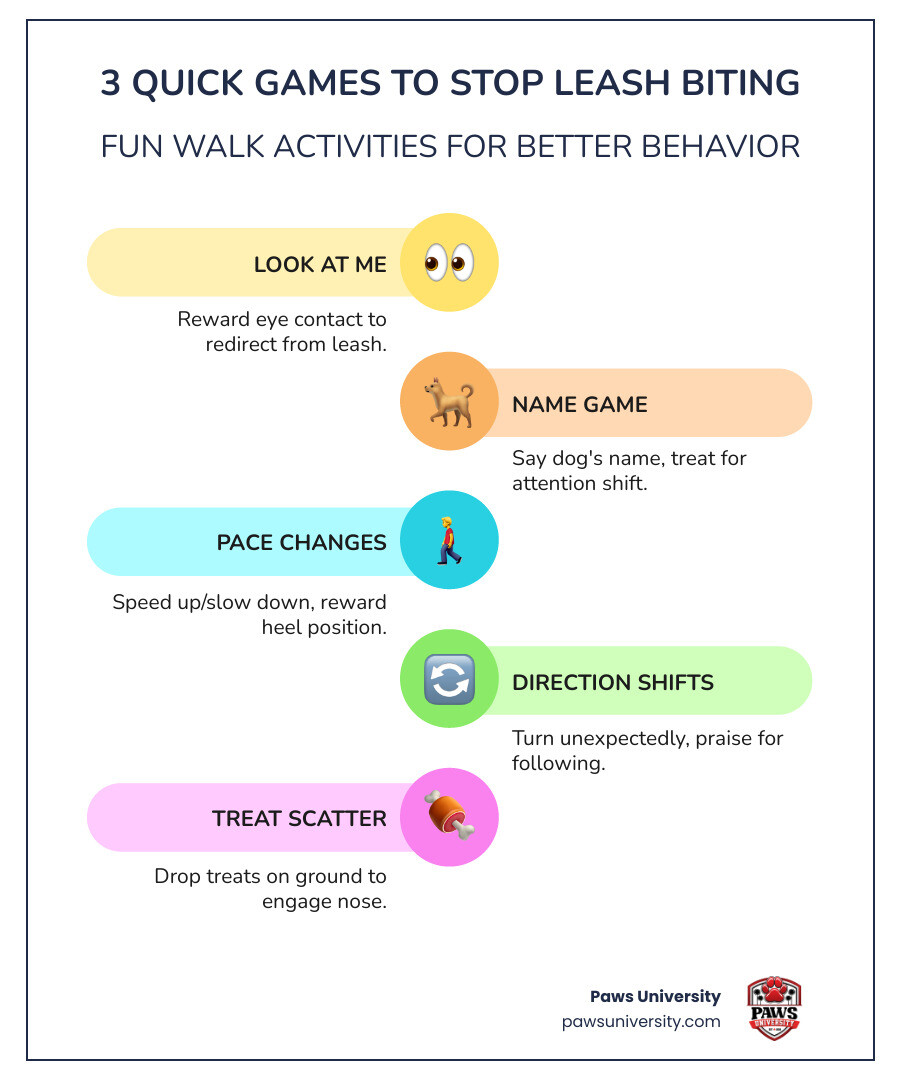
If you see your dog eyeing the leash with that "I'm about to chomp" look, redirect their attention immediately. Use a clicker or a marker word ("Yes!") the second they look at you instead of the leash, then deliver a treat. This builds a new habit: looking at the handler for rewards rather than looking at the leash for entertainment.

Step-by-Step Training to Stop Dog From Chewing Leash
If you're currently in the middle of a "leash-eating" crisis, follow this protocol:
- The Stop-and-Wait Method: The moment the dog grabs the leash, stop moving. Become a statue. Do not yell, and do not pull the leash out of their mouth (which mimics a tug game). When the dog gets bored because the "toy" isn't moving and lets go, mark the behavior ("Yes!") and reward them with a treat or by continuing the walk.
- Strategic Treat Dropping: If your dog usually bites the leash the second you head out the door, beat them to the punch. As you walk through the doorway, drop a few treats on the ground. This keeps their nose down and their mouth busy with food rather than the lead.
- The Two-Leash Technique: This is a pro-tip for persistent tuggers. Attach two leashes to the harness. When the dog grabs one, simply drop that leash (while still holding the other). The "dead" leash is no longer fun to play with. When they drop it, pick it back up and keep moving.
- The "Heel" Command: Engaging your dog's brain reduces the urge to chew. Practice frequent changes in pace and direction, rewarding your dog for staying in the "heel" position. This turns the walk into an engagement game.
Managing the Environment to Stop Dog From Chewing Leash
Sometimes, success is about management as much as it is about training.
- Proper Storage: Don't leave the leash where your dog can get it between walks. If they chew it for fun in the house, they'll chew it for fun on the trail.
- Pre-Walk Enrichment: If your dog is a "mouthy" walker, give them a high-quality chew toy or a stuffed puzzle toy 15 minutes before the walk. This satisfies the biological urge to chew and calms the nervous system.
- Non-Toxic Deterrents: You can apply a small amount of bitter apple spray or diluted lemon juice to the section of the leash your dog usually targets. Most dogs find the taste unpleasant and will stop biting after one or two tries.
- Biothane Equipment: For our tropical Hawaii County climate, Biothane is a fantastic choice. It is a polyester webbing with a TPU or PVC coating that makes it waterproof, easy to clean, and slightly less "satisfying" to chew than traditional fabric. For more tips on starting young, check out our puppy training guides.
Frequently Asked Questions about Leash Biting
Is leash chewing a normal behavior for puppies?
Yes, it is completely normal. Puppies are essentially toddlers with fur; they use their mouths to learn about textures and to soothe teething pain. However, just because it is normal doesn't mean it should be ignored. Addressing it early prevents it from becoming a lifelong habit.
Should I punish my dog for biting the lead?
We strongly advise against punishment. Yelling, "popping" the leash, or using physical corrections can increase a dog's fear and anxiety. In many cases, the dog thinks your "big reaction" is just part of the game, which actually reinforces the biting. Stick to rewards-based redirection to stop dog from chewing leash.
When should I consult a professional trainer or vet?
If your dog’s leash biting is accompanied by growling, snapping, or other signs of aggression, it’s time to call in the experts. Similarly, if the chewing is so frantic that the dog cannot be redirected even with high-value treats, there may be an underlying anxiety issue. At Paws University, our private training sessions are designed to handle these persistent issues in a calm Hawaii County environment.
Conclusion
Ending the cycle of leash biting requires three things: consistency, patience, and a bit of "island style" calm. By understanding that your dog is likely just excited, bored, or teething, you can move away from frustration and toward effective training.
Remember to keep your sessions short and positive. Every walk is an opportunity to strengthen your bond and practice those essential "Leave it" and "Drop it" cues. If you find yourself struggling to stop dog from chewing leash, don't go it alone. Our premium facilities and expert staff are here to help your pup become the best walking companion they can be.

Ready to transform your Hawaii County walks from a tug-of-war into a tropical breeze? Start your training journey today with Paws University.