
Finding the Right Dog Daycare or Daily Care Alternative
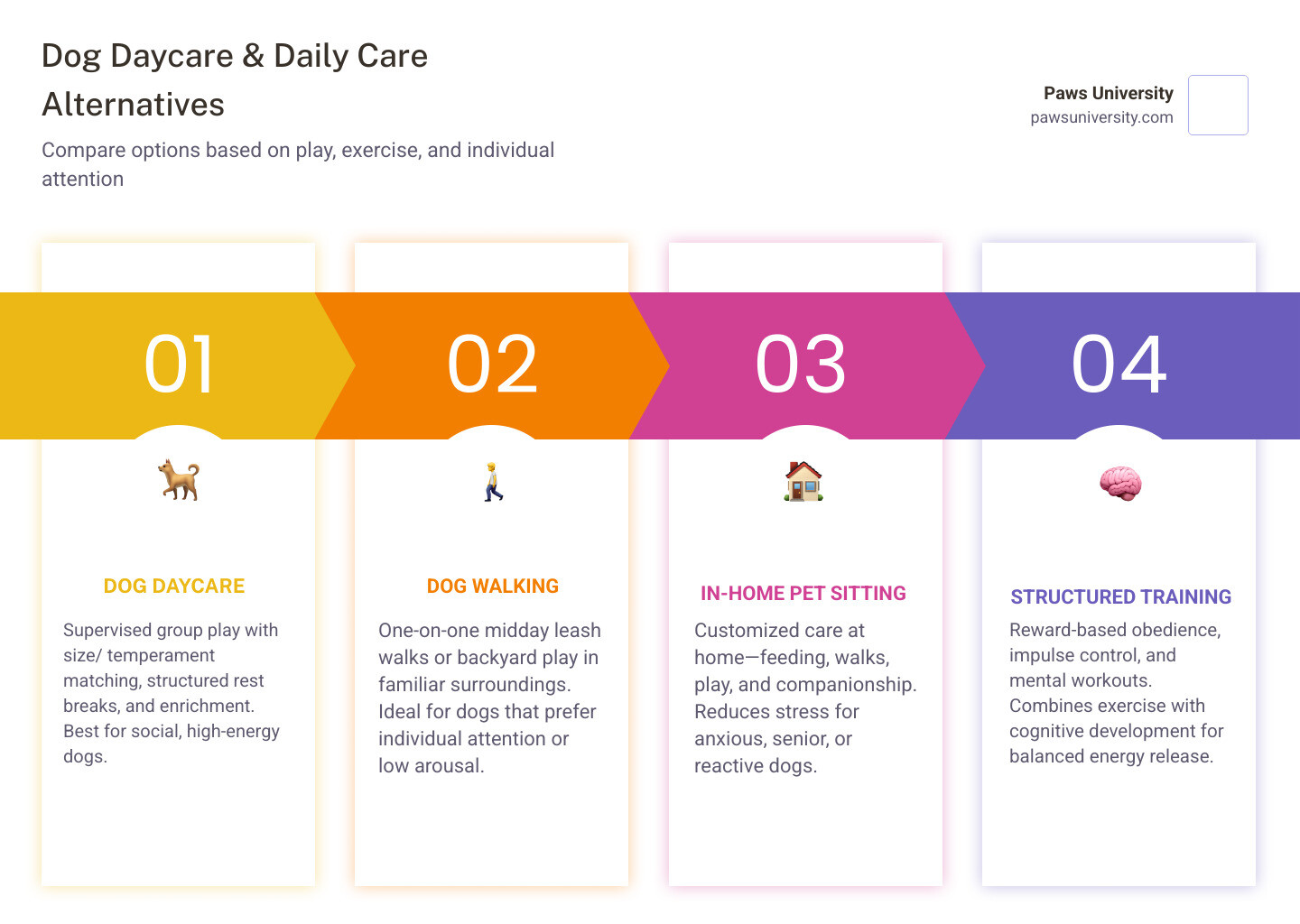
Dog daycare gives dogs supervised play, exercise, and rest while their owners are away. To find a reliable fit, ask how staff supervise play, match dogs by size and temperament, handle emergencies, and provide breaks. If your dog finds groups stressful, a quieter option such as a dog walker, in-home care, or structured training may suit them better.
The right choice depends on your dog's health, behavior, and comfort around other dogs. A visit and a short trial day can help you see how they respond.
I'm Allen Daniels, co-founder of Paws University in Kailua-Kona, where I've worked with dogs through training and dog daycare for more than 25 years. I draw on that experience to help West Hawaii pet parents choose care that fits the dog in front of them.
When Traditional Dog Daycare May Not Fit Your Pet
Group play is wonderful for many social dogs, but it is not a universal solution for every canine personality. Traditional environments bring high energy, continuous social negotiation, and constant sensory stimulation. For some dogs, this environment supports healthy socialization and physical conditioning. For others, the sights, sounds, and active playgroups can lead to overstimulation and emotional fatigue.
Pet parents must evaluate canine temperament, life stage, and social comfort. A high-energy setting that delights an outgoing adolescent dog may overwhelm an older pet, a shy rescue, or a dog managing physical limitations. When group settings create friction, exploring tailored options for reactive dogs ensures your pet receives appropriate stimulation without unnecessary stress. Understanding your dog's social threshold protects their behavioral health and preserves their trust in everyday environments, especially when addressing back-to-work pet anxiety.
Canine Stress and Social Fatigue
Just like people, dogs experience social exhaustion when placed in active group environments without adequate downtime. Prolonged high-arousal play can cause elevated cortisol levels, making it difficult for a dog to settle, listen, or disengage from playmates.
When playgroup overarousal occurs, a dog may display subtle stress signals:
- Lip licking and frequent yawning outside of rest periods
- Stiff body posture or avoidance of other dogs
- Hyper-vigilance and an inability to settle during down times
- Excessive vocalization or frantic, non-stop movement
Without structured rest intervals, social fatigue can turn into irritability or behavioral regression. Providing calm, quiet spaces with predictable daily routines helps prevent chronic stress and keeps play healthy.
Health and Temperament Considerations
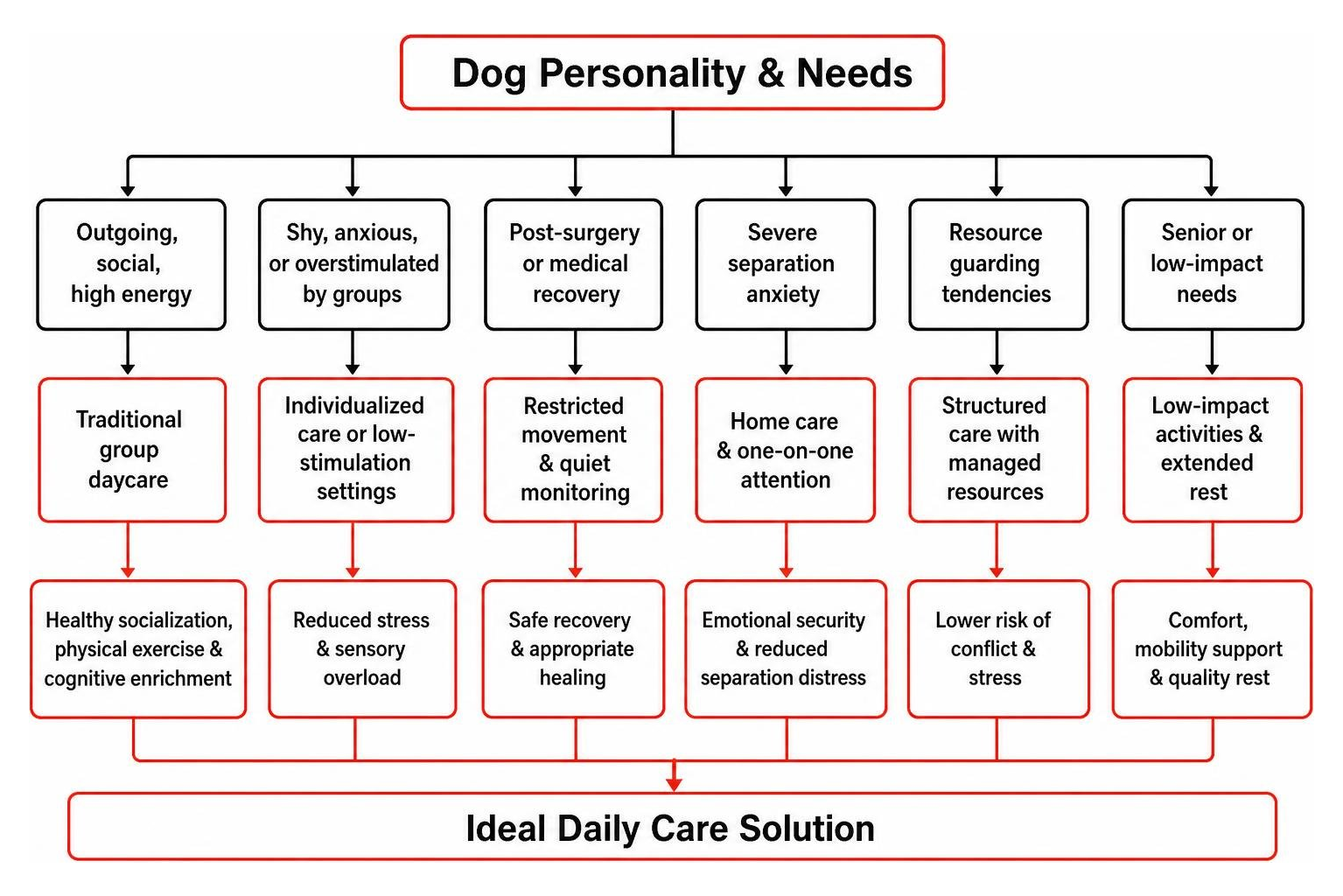
Certain life stages and behavioral profiles require specialized care outside of standard group daycare:
- Post-Surgery Recovery & Medical Rehabilitation: Dogs recovering from orthopedic procedures or minor surgeries need restricted movement and quiet monitoring rather than active group play.
- Severe Separation Anxiety: Dogs with acute attachment distress often need familiar home surroundings and dedicated one-on-one attention rather than busy multi-dog facilities.
- Resource Guarding: Dogs that guard toys, food bowls, or resting spots can struggle in open group settings where resources trigger defensive behaviors.
- Senior Canines: Aging dogs often have arthritis or sensory decline and need shorter, low-impact exercise sessions with extended sleep periods.
For these dogs, finding individualized care arrangements or boutique settings with low dog-to-caregiver ratios provides a safer, more supportive experience.
Top Dog Daycare Alternatives for Active and Social Pets

When standard group daycare is not the best match, several alternative care models provide physical exercise, social interaction, and cognitive enrichment tailored to your dog's comfort level.
| Care Option | Best For | Socialization Level | Physical Exercise | Mental Structure |
|---|---|---|---|---|
| Professional Dog Walking | Independent dogs, senior pets | One-on-one with handler | Moderate (leash walks) | Moderate (sniffing, manners) |
| In-Home Pet Sitting | Anxious dogs, post-op recovery | Solo handler interaction | Gentle to moderate | Low to moderate |
| Private Playdates | Selective socializers | Small, matched pairs | High (tailored play) | Moderate |
| Structured Day Training | High-drive, working breeds | Controlled, educational | Moderate to high | High (skill building) |
| Supervised Enrichment Programs | Inquisitive, low-arousal seekers | Low to moderate | Moderate (agility/puzzles) | Very high (scent/brain games) |
Professional Dog Walking and In-Home Dog Daycare Sitting
Professional dog walking offers focused, one-on-one care in familiar surroundings. A midday walk breaks up long hours, provides a bathroom opportunity, and delivers sensory enrichment through focused sniffing.
In-home pet sitting keeps your pet in their own home, maintaining their normal feeding times, resting spots, and backyard play routines. This model prevents the anxiety associated with transportation and new environments, making it ideal for dogs recovering from illness, nervous rescues, and pets that prefer human companionship over canine playgroups.
Private Playdates and Small Group Outings
If your dog loves other dogs but gets overwhelmed in large play yards, private playdates or small group outings provide a balanced middle ground. Rather than navigating a yard with dozens of unfamiliar dogs, your pet interacts with one or two well-matched play partners.
Organizing small-group outings allows pet parents to select companions with complementary play styles, such as gentle wrestlers or running buddies. This structured approach helps dogs practice positive socialization skills without the chaotic energy often found in crowded dog parks, serving as a reliable way to enjoy alternatives to crowded dog parks while keeping play safe and controlled.
Specialized Care and Training Alternatives

Physical exercise alone does not always satisfy an active dog. High-drive working breeds and energetic adolescents often need cognitive challenges to channel their energy constructively. Specialized care programs combine exercise with rewards-based learning to build confidence and calm behavior.
Structured Day Training as a Dog Daycare Alternative
Structured day training replaces open free-play with purposeful, rewards-based learning sessions throughout the day. Under the guidance of skilled handlers, dogs work on foundational manners, impulse control, loose-leash walking, and calm settling behaviors.
Instead of returning home physically exhausted yet mentally overstimulated, dogs in day training develop valuable life skills. Utilizing comprehensive daycare training packages allows busy owners to address problem behaviors like jumping, pulling, or general distractibility while ensuring their dog receives balanced mental and physical workouts.
Supervised Enrichment Day Programs
Enrichment-focused day programs emphasize sensory exploration, puzzle problem-solving, and scent work over continuous running. These programs rotate dogs through varied stations designed to challenge their natural foraging and scenting instincts:
- Scent Trails & Snuffle Mats: Engaging the canine olfactory system to promote calm focus and lower heart rates.
- Novel Texture & Sensory Agility Walks: Building body awareness and confidence over varied surfaces and gentle obstacles.
- Cognitive Food Puzzles: Encouraging problem-solving persistence and mental stamina.
- Scheduled Decompression Periods: Quiet rest intervals in private resting suites to build emotional balance.
Enrichment-based care models, such as doggie daycare with training and safe play, provide an ideal balance of engagement and rest for dogs that thrive on cognitive stimulation.
How to Choose the Right Daily Care Solution
Selecting the right care option requires careful observation of your dog's physical needs, social style, and daily energy levels. Taking time to evaluate facilities or individual caregivers ensures your dog stays safe, happy, and well cared for.
Evaluating Pet Personality and Needs
To determine the best daily care route, assess your dog across four main areas:
- Social Tolerance: Does your dog actively seek play with unfamiliar dogs, prefer familiar dog friends, or focus primarily on human interaction?
- Arousal Management: How quickly does your dog calm down after excitement? Dogs that struggle to settle often benefit from structured training or in-home care rather than open playgroups.
- Physical Thresholds: Consider your dog's age, joint health, and stamina. A young, growing puppy and an arthritic senior have very different physical limits.
- Routine Consistency: Some dogs handle changing environments with ease, while sensitive dogs need consistent daily schedules to feel secure. Understanding structured boarding playgroups can help you identify how your dog handles group transitions and structured environments.
Questions to Ask Any Pet Care Provider
Before enrolling your dog with any daycare facility, walker, or day trainer, ask these essential operational questions:
- What are your staff-to-dog ratios during active play and resting times?
- How are dogs evaluated and grouped by size, play style, and temperament?
- What rewards-based methods are used to manage group dynamics and guide behavior?
- What are your emergency veterinary response procedures and safety protocols?
- How are resting intervals structured throughout the day to prevent over-exhaustion?
- What sanitation and hygiene practices are followed in indoor and outdoor play spaces?
Frequently Asked Questions About Dog Daycare Alternatives
What is the best alternative to dog daycare for an anxious dog?
The best alternative for an anxious dog is professional in-home pet sitting or a dedicated one-on-one dog walker. Staying in a familiar home setting minimizes stress triggers like strange noises, unfamiliar dogs, and travel anxiety. One-on-one care provides predictable routines and customized attention tailored to your dog's comfort level.
Can daily training replace the exercise provided by dog daycare?
Yes. Structured, rewards-based training engages a dog's brain, which can be just as satisfying as physical running. Working on impulse control, scent games, and new behaviors burns mental energy and leaves dogs relaxed, calm, and fulfilled without the risk of physical overexertion or overarousal.
How do I know if my dog prefers small playgroups over large group daycare?
Watch your dog's body language. Dogs that prefer smaller groups often show stress in large crowds by lingering near fences, avoiding interactions, or displaying stiff postures and defensive snaps when approached by multiple dogs. In small, matched playgroups, these same dogs display relaxed body movements, loose tail wags, balanced give-and-take play, and easy disengagement.
Conclusion
Every dog is unique, and their daily care should reflect their individual personality, health, and social preferences. While standard group daycare is an excellent match for many active, social pets, alternatives like professional dog walking, in-home sitting, small playgroups, and structured day training offer fantastic solutions for dogs needing a different pace.
At Paws University, we understand that great pet care is built on understanding canine behavior and providing balanced routines. Located on our expansive seven-acre campus in Kailua-Kona, our premier facility has supported West Hawaii pet parents since 2002. Whether your dog excels in carefully supervised group play or needs structured enrichment and rewards-based learning, our team provides thoughtful, personalized care. Explore our Paws University premium dog daycare and specialized training programs to find the perfect fit for your four-legged companion.