Why Dog Play in Hawaii Deserves More Than a Backyard
Dog play in Hawaii dog exercise options are more varied and accessible than most pet owners realize. Here's a quick overview:
| Exercise Type | Examples | Best For |
|---|---|---|
| On-leash walking areas | Kamakoa Nui Dog Park, local county parks | Daily walks, calm dogs |
| Private enrichment facilities | Outdoor daycare campuses | Structured play, behavior support |
| Indoor activities | Snuffle mats, stair recall, food games | Rainy days, mental stimulation |
More than half of Hawaii County households share their lives with a pet — and across the Hawaiian Islands, that number tells a bigger story. Dogs here aren't just companions. For many families in local neighborhoods, a dog's daily exercise depends entirely on what's available outside the front door.
That matters more than most people think.
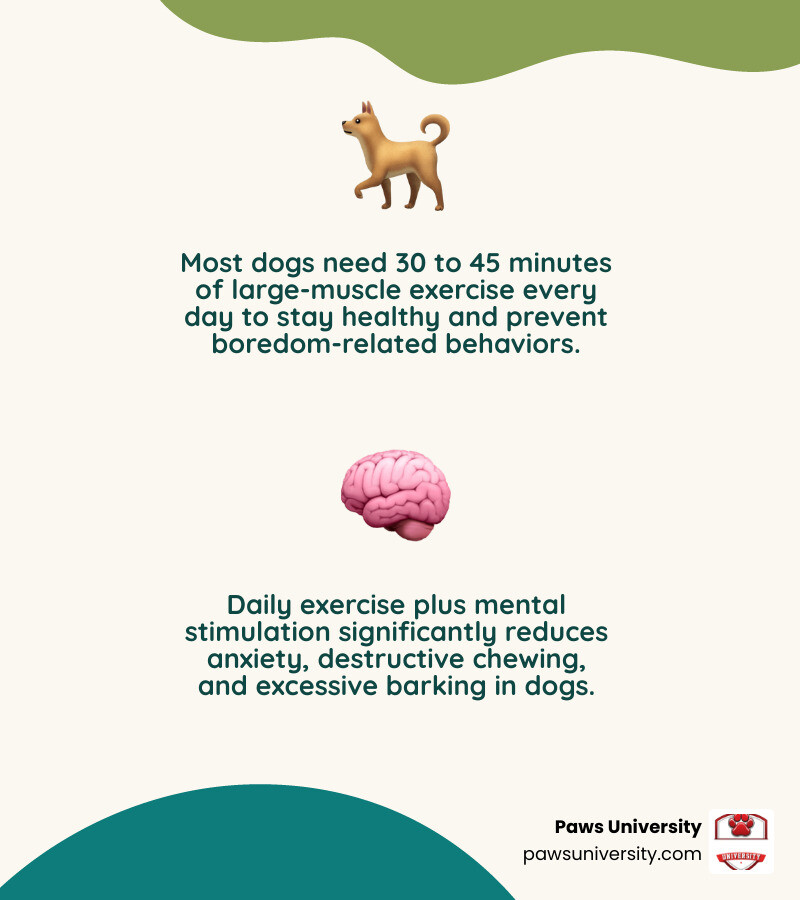
Most dogs need 30 to 45 minutes of large-muscle exercise every day — plus meaningful mental stimulation on top of that. Without it, boredom sets in fast. And boredom often looks a lot like barking, destructive chewing, or anxiety.
The good news? Hawaii County offers a growing range of options — from free public dog parks to premium private facilities — to keep your dog moving, socialized, and mentally sharp.
I'm Allen Daniels, co-founder of Paws University in Kailua-Kona, and I've spent over 25 years applying rewards-based training methods — first with marine mammals, then with hundreds of dogs across West Hawaiʻi — to help owners find the right balance of dog play, Hawaii dog exercise, and structured enrichment. In this guide, I'll walk you through every option worth knowing about, from Hawaii County's best off-leash parks to indoor games you can run in your own hallway.
The Best Public Off-Leash Dog Parks in Hawaii County
For many island residents, public off-leash dog parks serve as essential extensions of their living spaces. This is especially true for those living in homes with minimal yard space. When you need to let your dog stretch their legs and run at full tilt, Hawaii County has dedicated spots and community-supported areas maintained by passionate volunteers and county resources.
- Kamakoa Nui Dog Park (Waikoloa): This is a fantastic dedicated off-leash dog park in Hawaii County. It offers a secure, fenced space for high-energy breeds to sprint, fetch, and play safely. The park features double-gated entries and separate areas for large and small dogs, making it a safe option for dogs of all sizes.
- Kona Dog Park Initiatives: Community groups in West Hawaii have long advocated for dedicated spaces, helping to establish volunteer-supported areas where dogs can socialize safely.
- Hilo and East Hawaii Community Spaces: While East Hawaii features fewer fenced off-leash parks, local dog owners utilize designated county park areas and open spaces where dogs can enjoy structured, leashed exercise.
Navigating On-Leash Walking Areas in Hawaii County
If your dog prefers a structured walk over the chaotic energy of an off-leash park, navigating Hawaii County requires a bit of planning. In popular areas like Kailua-Kona and Hilo, public spaces are regulated to balance the needs of residents, tourists, and pets.
Leashed dogs are welcome on county sidewalks and designated paths, such as the walking areas around Old Kona Airport Park or the perimeter of Liliʻuokalani Gardens in Hilo. These walks offer beautiful views and plenty of grassy patches for sniffing. However, keep in mind that dogs are strictly prohibited on certain beach shorelines and protected marine conservation areas.
When walking in these environments, keeping your dog close on a standard leash (rather than a retractable one) ensures safety and control. For more tips on setting up a successful daily walking routine, check out our guide on The Daily Grind: Exercise Routines to Keep Your Dog Fit.
Cultural Connections and Rules for Dog Play Hawaii Dog Exercise
Hawaii County Parks – Cultural Connections
Public parks in Hawaii County often do more than provide open grass; they connect us to the history of the land we share. From the volcanic landscapes of West Hawaii to the lush valleys of East Hawaii, these spaces carry deep historical significance.
Rather than being simple fenced enclosures, our local parks integrate Hawaiian cultural values. By visiting, dog owners are reminded of the cultural virtues of stewardship (mālama ʻāina) and community connection. Whether walking near historical pathways or along the coast, it stands as a beautiful reminder that our dogs are playing on land with deep historical roots, prompting us to treat the space with the utmost respect.
Essential Guidelines for Dog Play Hawaii Dog Exercise
To keep these public spaces safe, clean, and welcoming, every dog owner must follow established guidelines. Public and private parks maintain strict rules to prevent injuries and the spread of disease.
- Vaccination & Health Requirements: Your dog must be fully vaccinated before visiting any public play area. Core vaccines like Distemper, Parvovirus, and Bordetella are standard requirements.
- Microchipping & Identification: Ensuring your dog is microchipped and wears a collar with up-to-date tags is essential in case they slip out of a collar or gate.
- Spay and Neuter Policies: Many community dog parks prohibit unaltered dogs or dogs in heat to prevent behavioral conflicts and accidental breeding.
- Size Separation: Always use the designated area matching your dog's weight. Small dog sections are specifically designed to protect petite pups from the high-impact play of larger breeds.
- Double-Gated Entries: When entering, open only one gate at a time. This prevents dogs already inside the park from escaping into the parking lot.
Public Parks vs. Private Enrichment Facilities
While public dog parks are fantastic resources for free play, they are not always the right fit for every dog. Public parks are unsupervised, meaning you are at the mercy of whatever dogs and owners happen to be there. Private enrichment facilities, however, offer a highly structured, safe alternative.
| Feature | Public Dog Parks | Private Enrichment Facilities (e.g., Paws University) |
|---|---|---|
| Supervision | Unsupervised (owner's responsibility) | Trained professional handlers |
| Health Verification | Honor system (usually unenforced) | Strict vaccination and health checks required |
| Structure | Free-for-all play styles | Grouped by compatibility, size, and play style |
| Amenities | Basic grass/dirt, benches, shared water | Premium play yards, shade structures, clean water |
| Behavioral Benefits | Risk of overstimulation or fear | Supervised play that reduces behavior issues |
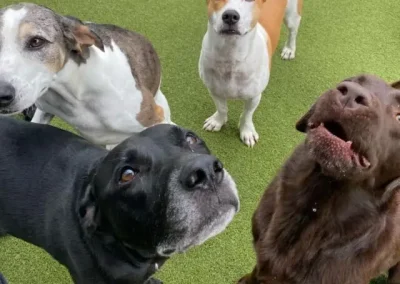
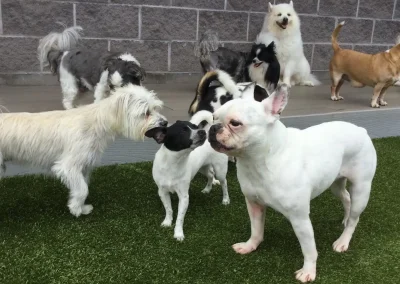
At Paws University, located on our premium seven-acre campus in Hawaii County, we focus heavily on structured play. Rather than letting dogs run in an unregulated "free-for-all," we maintain a low handler-to-dog ratio. Our trained staff groups dogs based on compatibility, energy level, and play style rather than size alone. This structured approach provides valuable social bonding and sensory stimulation while ensuring that no dog becomes overwhelmed or fearful.
Preparing Your Dog for Safe Play and Socialization
Before taking your dog to any group play environment, it is crucial to evaluate their temperament. Not every dog is a "dog park dog," and that is perfectly okay!
- Assess Temperament: Does your dog have a positive social history with other dogs? If they have shown resource guarding, extreme fear, or reactivity on-leash, a public dog park can worsen these behaviors.
- Read Body Language: Learn to recognize the difference between healthy play and stress. Loose, wiggly bodies, play bows, and taking turns chasing are signs of good play. Stiff postures, tucked tails, lip licking, or hard stares mean it is time to pack up and leave.
- Use Rewards-Based Training: We advocate for a strictly rewards-based approach to training. Use high-value treats to reward your dog for checking in with you, coming when called amidst distractions, and remaining calm around other dogs. Never use pinch, prong, or shock collars in play environments, as these can cause pain that your dog may associate with other dogs, leading to increased aggression.
For a deeper dive into choosing the right environment for your pup, explore The Ultimate Guide to Doggie Daycare with Training and Safe Play.
Indoor Exercises and Mental Enrichment for Rainy Days
We all love the sunny Hawaiian climate, but tropical downpours and humid afternoons are part of island life. When the weather keeps you indoors, you can still meet your dog's daily exercise needs. Mental exercise is just as tiring as physical exercise!
- Stair Recall: If you have stairs, stand at the top with high-value treats while a family member stands at the bottom. Take turns calling your dog's name. This builds a reliable recall while burning physical energy.
- Snuffle Mats & Food Games: Dogs love to use their noses. Hide kibble or dry treats inside a snuffle mat, or scatter them around a room for a "find it" game. This stimulates their natural foraging instincts.
- Clicker Training & Behavior Shaping: Use rainy days to teach a new trick or polish basic cues. Clicker training is a highly effective, rewards-based way to challenge your dog's brain.
- Cardboard Box Destruction: Save your delivery boxes! Hide treats inside a closed cardboard box and let your dog tear it open to find them. This satisfies their natural urge to shred in a safe, approved way.
You can find more ideas to keep your pup active by browsing our Category: Dog Exercise & Health resources.
Indoor Activities to Boost Dog Play Hawaii Dog Exercise
If you live in a single-level home or apartment, you can adapt these games to fit smaller spaces. Use a long hallway for low-impact fetch using soft toys, or set up a simple indoor agility course using couch cushions to climb over and broomsticks to step over.
Combining physical movement with problem-solving games keeps your dog's mind active and prevents the behavioral issues that stem from pent-up energy. If you are looking for private spaces on the Big Island where your dog can enjoy structured play in any weather, take a look at our guide on Where Your Dog Can Play All Day on the Big Island.
Frequently Asked Questions
Where can I legally walk my dog on a leash in Hawaii County?
You can legally walk your leashed dog on public county sidewalks and designated paths, such as the walking areas around Old Kona Airport Park or the perimeter of Liliʻuokalani Gardens in Hilo. Dogs are generally not allowed on designated sandy beach areas or protected marine conservation shorelines unless specified by county signs.
What vaccinations are required for Hawaii dog parks?
Most public and private facilities require dogs to be current on their core vaccinations, including Distemper, Parvovirus, and Bordetella. Many private facilities and structured community parks also require proof of flea/tick prevention, microchipping, and spay/neuter status.
How much daily exercise do dogs actually need?
Most dogs benefit from 30 to 45 minutes of large-muscle physical exercise every day, combined with mental stimulation. High-energy sporting or working breeds may require significantly more, while senior dogs or brachycephalic (flat-faced) breeds may need shorter, low-impact sessions.
Conclusion
Finding the perfect balance of dog play Hawaii dog exercise is all about understanding your dog's unique needs, personality, and energy levels. Whether you are exploring the volunteer-supported public parks of Hawaii County, practicing indoor enrichment games on a rainy day, or seeking a premium, structured environment, there is an option that fits your lifestyle.
If you are on the Big Island, we invite you to experience Paws University. Since 2002, our premier seven-acre campus in Hawaii County has provided West Hawaii families with first-class doggie daycare, boarding, and rewards-based training. Our focus on supervised play helps reduce common behavior issues, giving your dog the physical outlet and social structure they need to thrive.
Ready to give your dog the ultimate play day? Book a premium daycare session today and let your pup experience the Paws University difference!