Essential Hawaii Basic Obedience Skills for Island Dogs
Living in Hawaii means sharing our everyday routines with vibrant outdoor environments. From ocean breezes to busy community markets, our dogs encounter a rich sensory world every time they step outside. Developing reliable core cues helps them navigate these experiences with confidence rather than overwhelm. When we focus on clarity and positive reinforcement, obedience becomes a language of teamwork rather than a list of rigid demands.
Establishing a solid foundation starts with everyday routines. Whether your dog is joining you for an outdoor meal or waiting by the front door, foundational behaviors keep interactions calm and predictable. Mastering loose-leash walking, reliable recall, and steady impulse control ensures that outdoor outings remain enjoyable for everyone. For an in-depth breakdown of these fundamental mechanics, explore the ultimate guide to dog obedience training to build your knowledge.
Why Hawaii Basic Obedience Matters for Beach and Trail Safety
Outdoor life across the islands presents unique situations that require dependable canine manners. Rocky lava trails, sensitive coastal ecosystems, and public beach parks mean our dogs share space with protected native wildlife, including basking honu (sea turtles) and resting monk seals. A sudden dash toward wildlife can disrupt fragile habitats or lead to dangerous terrain hazards.
Trail etiquette also plays a huge role in keeping shared recreational spaces open and enjoyable. When hikers, cyclists, and other dogs cross your path on narrow forest trails, having a dog that can calmly yield the right-of-way prevents startled reactions. Starting with a quick puppy obedience training routine early on helps young dogs understand boundaries before they ever set foot on a challenging hiking path.
Beach outings add another layer of responsibility. Loose dogs can disturb nesting shorebirds, approach unfamiliar families, or run toward active roadways near coastal parking areas. A dog who can hold a sit or down while you set up towels, rinse off sandy paws, or secure a water bowl is far easier to manage in these shared spaces. Practicing short, calm sessions near the shoreline also helps your dog learn to focus despite moving waves, passing joggers, and the scent of nearby picnics.
Core Commands Every Island Dog Needs
To keep outdoor adventures safe, every island canine benefits from five foundational cues:
- Sit: The universal starting point for polite greetings, mealtime manners, and pause points during outdoor walks.
- Down: A grounding behavior that encourages relaxation when resting at outdoor cafes or during family gatherings.
- Stay: Essential impulse control that prevents dogs from bolting through open gates or darting toward moving vehicles.
- Leave It: A life-saving cue that steers your dog away from discarded picnic scraps, toxic plants, or shoreline debris.
- Emergency Recall: The most critical cue in your toolkit, bringing your dog immediately back to your side in unexpected situations.
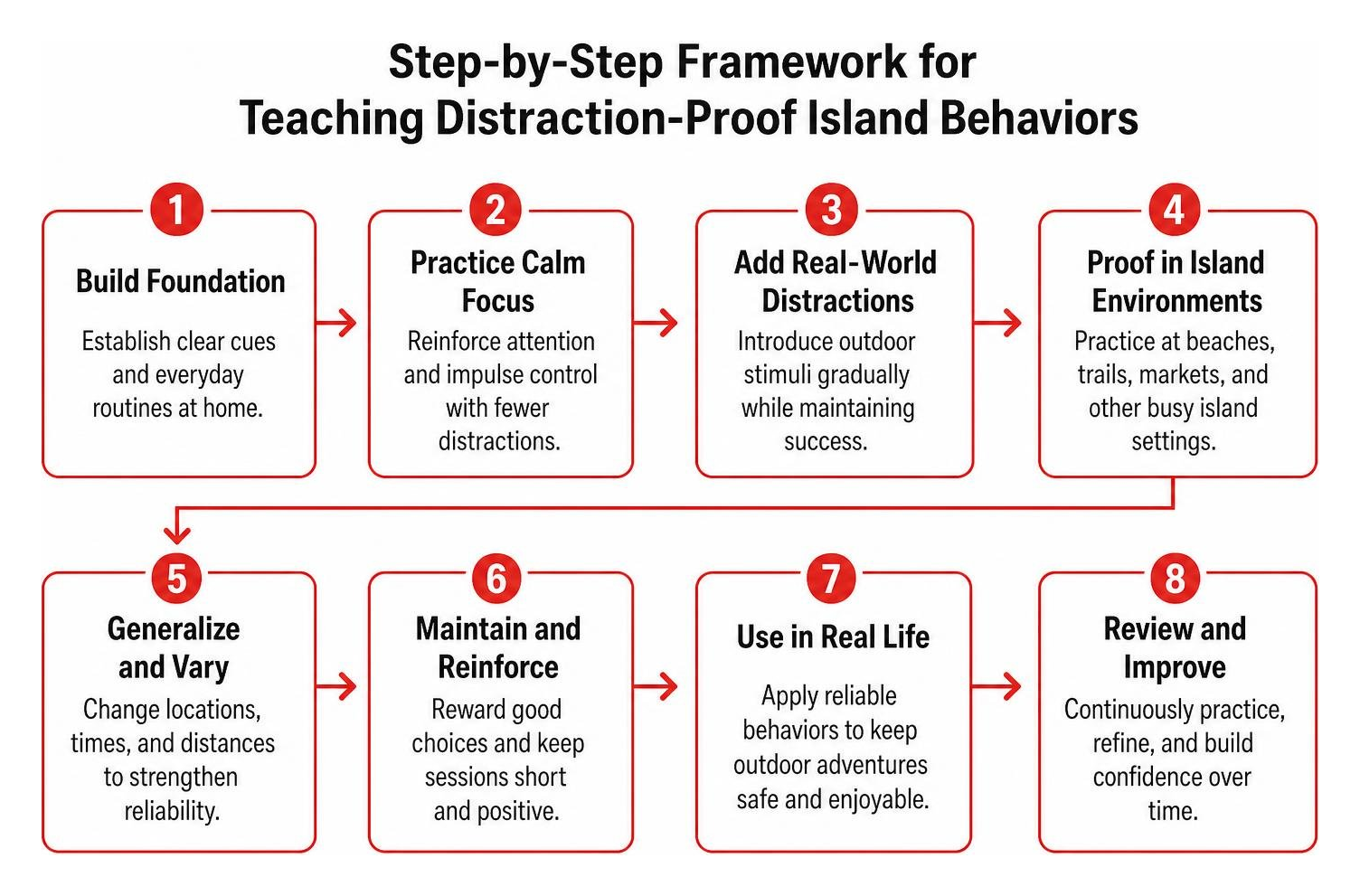
These cues become even more useful when practiced in short, positive sessions across different island settings. A dog who can sit calmly at a farmers market, settle on a mat at an outdoor restaurant, or wait at a trailhead is not just well trained but also more relaxed. The goal is not robotic compliance. It is a shared understanding that helps your dog feel safe, included, and clear about what you are asking in each new environment.
Proven Training Methods Recommended in Hawaii
Positive reinforcement is the gold standard for canine education across Hawaii. Leading animal welfare organizations advocate strictly rewards-based learning because it builds confidence, preserves trust, and produces lasting behavioral change without fear or intimidation.
By rewarding desired actions with high-value treats, engaging toys, and enthusiastic praise, dogs learn to think and problem-solve. This cooperative dynamic is central to humane standards throughout the state. For guidance on humane methods, you can review the Hawaiian Humane Society dog trainer resource list. To better understand why modern science favors these techniques, visit our positive reinforcement trainers guide for practical insights.
Humane Training Standards Across the Islands
Reward-based handling relies on clear communication markers. When a dog performs a desired behavior, marking the exact moment with a clicker or a consistent verbal marker tells them precisely what earned the reward. This clarity accelerates learning while keeping the experience fun.
Force-free handling respects a dog's emotional well-being. Rather than using physical pressure or corrections, trainers focus on managing environments to set the dog up for success. This humane philosophy ensures that dogs become eager, willing partners in their own learning journey.
Consistency matters as much as the reward itself. Dogs learn best when the same cue means the same thing in the living room, on a neighborhood walk, and at a busy beach park. Short, frequent practice sessions help your dog build fluency without becoming tired or frustrated. Over time, you can gradually add distance, duration, and real-world distractions while keeping the experience positive and rewarding.
Early Socialization and Puppy Foundations
Early learning shapes how young dogs perceive the world around them. Exposing puppies to novel textures, tropical sounds, unfamiliar scents, and varied surfaces in a controlled, positive manner prevents fear-based behaviors later in life.
Socialization is about quality, not just quantity. Positive, calm introductions to different people and safe environments build resilience. To structure these early weeks effectively, check out our guide on puppy obedience basics to give your young companion a head start.
Puppyhood is also the ideal time to introduce gentle handling and cooperative care routines. Brief, pleasant experiences with paw touches, ear checks, and brushing help your puppy feel comfortable during grooming and veterinary visits. Pairing these moments with treats and calm praise teaches your dog that human handling is safe and predictable, which supports a lifetime of easier care.
Finding the Right Training Format for Your Dog

Every dog and household has distinct learning needs. Selecting the right format depends on your dog's current socialization level, your daily schedule, and whether you are teaching basic manners or addressing specific habits.
Choosing Group Classes vs Private Hawaii Basic Obedience Sessions
Group classes offer a realistic social setting where dogs practice focusing in the presence of everyday distractions. Learning alongside other dogs mirrors the energy of real-world island environments, helping dogs generalize their cues around natural movement and scent triggers. If you want a structured environment where learning feels like play, check out these engaging obedience classes designed to keep dogs focused and motivated.
Private sessions, on the other hand, provide dedicated one-on-one attention. They are ideal for addressing specific behavioral hurdles like leash reactivity, barrier frustration, or excessive barking. Private coaching allows trainers to tailor exercises directly to your living space and unique lifestyle.
Many families benefit from a combination of both formats. A few private sessions can establish strong foundation skills and address household-specific challenges, while group classes provide valuable practice around other dogs and people. This blended approach helps your dog learn in a quiet setting and then generalize those skills in more stimulating environments.
Islandwide In-Person and Remote Training Solutions
For families in rural areas or those with demanding schedules, modern training options extend beyond traditional classroom settings. In-home lessons bring professional guidance directly to your neighborhood, allowing you to work through challenges right where they happen.
Virtual consultations offer an accessible way to receive expert feedback without travel. Video coaching sessions can help you establish training foundations, troubleshoot problem behaviors, and refine your handling mechanics from the comfort of home.
Remote training also works well for follow-up support. After an in-person session, a short video check-in can help you fine-tune timing, adjust your reward delivery, or plan the next step in your dog's training plan. This flexibility makes it easier to maintain steady progress even when schedules are busy or travel is inconvenient.
Frequently Asked Questions About Hawaii Dog Training
When should a puppy begin basic obedience training?
Puppies can begin learning foundational manners as early as eight weeks old. Early training focuses on simple, positive exercises like name recognition, following a food lure, gentle handling, and crate comfort. Keeping sessions short—around three to five minutes—matches their brief attention spans while creating a joyful association with learning.
At this age, the goal is not perfection. Puppies are building confidence, coordination, and trust in their people. A few calm repetitions of a simple behavior, followed by play or rest, are far more valuable than a long training session. As your puppy grows, you can gradually increase the length and complexity of practice while continuing to use rewards and encouragement.
What should owners look for when choosing an island trainer?
Look for professionals who rely exclusively on rewards-based, humane training methodologies. A quality trainer explains the reasoning behind each exercise, demonstrates patience, and adapts techniques to fit your dog's individual personality. Transparent communication and an emphasis on force-free handling are the best indicators of a healthy training environment.
It is also helpful to observe how a trainer interacts with dogs and their families. A good trainer celebrates small successes, keeps sessions upbeat, and gives owners clear homework they can practice between lessons. The right fit should leave you feeling informed, supported, and more connected to your dog.
Can older rescue dogs learn basic obedience?
Yes! Adult and senior rescue dogs are entirely capable of learning new cues and routines. While rescue dogs may need extra time to decompress and build trust in a new home, consistent rewards and predictable daily structures help them thrive. Reward-based training boosts their confidence and strengthens the bond with their new family.
For older dogs, patience and observation are especially important. Some rescue dogs may need a quieter introduction to new environments, while others are ready for busier outings right away. By moving at your dog's pace and celebrating each small step, you can help an adult or senior dog build the same reliable skills as a puppy raised with early training.
Conclusion
Life in Hawaii is best enjoyed when our canine companions can safely join us on our daily journeys. Through clear communication, consistent practice, and rewards-based techniques, basic obedience transforms everyday walks into relaxing shared adventures. At Paws University, we believe in nurturing the bond between dogs and their families using gentle, effective methods on our spacious campus. When you are ready to take the next step in your dog's learning journey, explore our professional dog training programs and discover how enjoyable island life can truly be.
Every training session is an opportunity to strengthen trust and build a calmer, more confident companion. Whether you are working on a reliable recall for beach days, a polite settle for outdoor dining, or a steady stay for trail safety, small consistent steps create lasting results. With the right guidance and a rewards-based approach, Hawaii basic obedience becomes less about managing problems and more about enjoying a fuller life together across the islands.