Why Hawaii Dog Positive Reinforcement Is the Gold Standard for Training
If you're looking for Hawaii dog positive reinforcement trainers, here's a quick overview of what to know:
- What it is: A rewards-based method that uses treats, praise, and play to encourage good behavior — never punishment or fear.
- What it helps with: Separation anxiety, aggression, destructive behavior, basic obedience, puppy socialization, and more.
- Where to find it: In Hawaii County, Paws University in Kailua-Kona offers positive reinforcement training on a seven-acre campus, alongside other local resources.
- Why it matters: Training done with your dog — not to them — builds a stronger human-animal bond and leads to lasting behavior change.
Professionally facilitated training between dogs and their owners is one of the most effective ways to strengthen the human-animal bond. That idea sits at the heart of everything positive reinforcement training is about.
Whether your dog is newly adopted, struggling with anxiety, or just needs better manners, the right trainer — using the right methods — makes all the difference.
I'm Allen Daniels, co-founder of Paws University in Kailua-Kona, and I've spent over 25 years applying the same science-backed Hawaii dog positive reinforcement methods I first learned training dolphins at the Hilton Waikoloa Village to help hundreds of dogs and their owners build real, trust-based relationships. In this guide, I'll walk you through everything you need to find the right trainer, verify their methods, and get results that last.
Understanding Hawaii Dog Positive Reinforcement
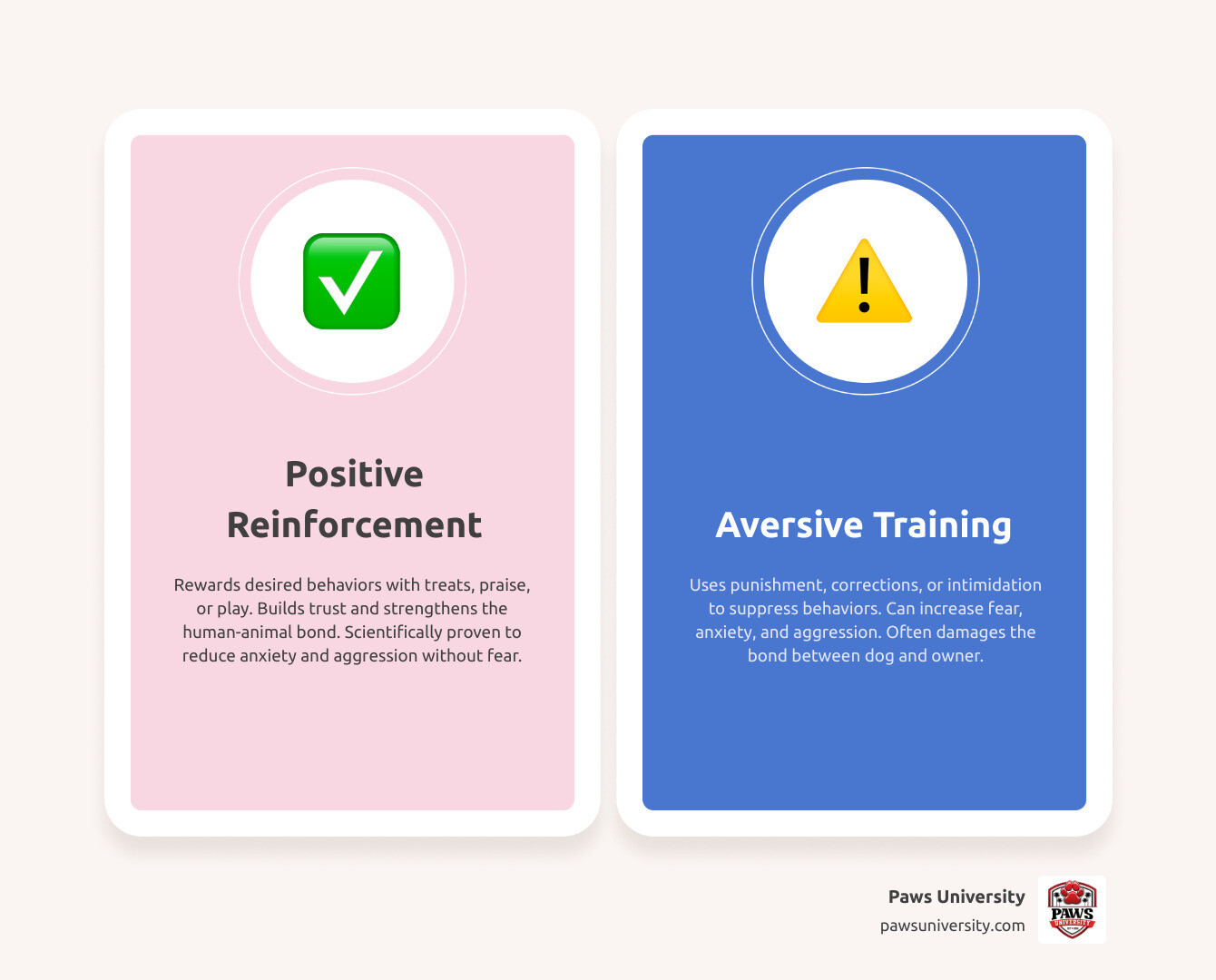
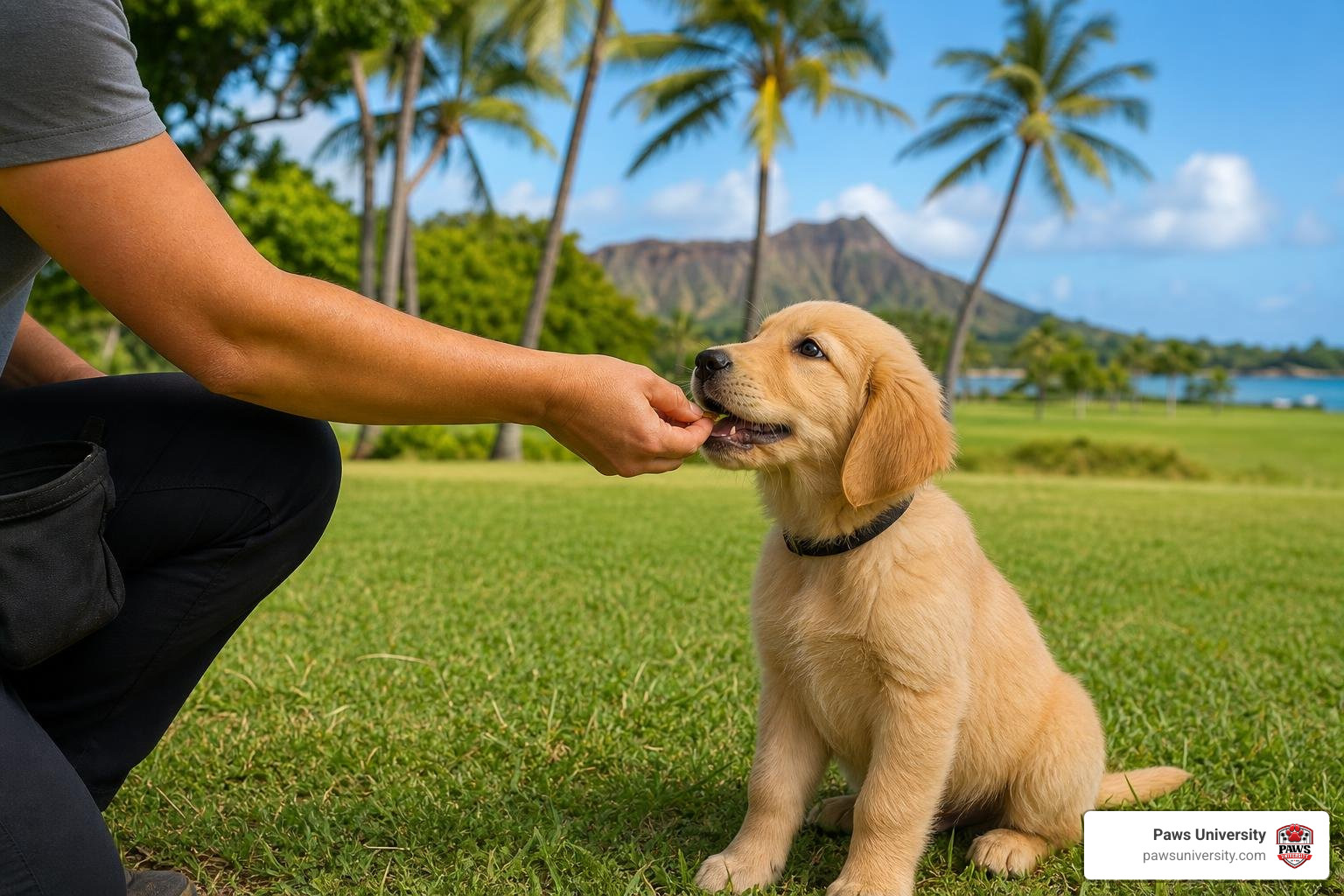
To understand why hawaii dog positive reinforcement is so effective, we have to look at how dogs naturally learn. At its core, positive reinforcement is a rewards-based training system grounded in operant conditioning. When a dog performs a desired behavior and is immediately followed by a high-value reward (such as a tasty treat, verbal praise, or a favorite toy), they are highly likely to repeat that behavior in the future.
Conversely, traditional aversive training styles rely on physical corrections, fear, or discomfort to stop unwanted behaviors. Science has repeatedly shown that these punitive methods do not teach a dog what to do; they merely teach the dog how to avoid pain or intimidation, which often results in hidden anxiety, confusion, and broken trust.
Decades of veterinary science support this shift toward force-free training. According to the Scientific research on positive reinforcement efficacy, training methods that rely on punishment carry significant welfare risks, including elevated stress levels, physical injury, and increased aggression. By choosing positive reinforcement, we work with our dogs' natural motivations, creating an environment where learning is stress-free, cooperative, and highly successful.
Why We Recommend This Method
Shelter environments can be incredibly stressful for dogs. When a dog is adopted and transitions into a new home, they are often overwhelmed by their new surroundings, unfamiliar sounds, and a brand-new routine. We support positive reinforcement training techniques exclusively because these methods are designed to build confidence, reduce environmental stress, and establish a clear channel of communication between the dog and their new family.
Aversive techniques can easily shatter a newly adopted dog's fragile sense of security, potentially triggering defensive behaviors or severe shutdown. By focusing on rewards-based behavior modification, we can gently guide shelter dogs through their transition period. This approach focuses on strengthening the human-animal bond from day one, ensuring that the dog associates their new owners with safety and good things. For a deeper look at establishing these foundational behaviors, check out The Ultimate Guide to Dog Obedience Training.
Addressing Behavioral Issues with Hawaii Dog Positive Reinforcement
A common misconception is that positive reinforcement is only useful for teaching simple tricks like "sit" or "shake." In reality, rewards-based training is highly effective at resolving complex, deep-seated behavioral issues, including:
- Basic Obedience: Building reliable cues for loose-leash walking, coming when called, and staying in place under real-world distractions.
- Introducing a New Baby: Helping a resident dog build positive associations with the sights, sounds, and smells of a new infant to prevent resource guarding or anxiety.
- Reactivity and Aggression: Desensitizing a dog to their triggers (such as other dogs or strangers) by gradually changing their emotional response from fear to calm anticipation. To learn more about managing these challenging situations safely, read our guide on How to Train Dog Aggression in 7 Simple Steps.
- High Anxiety and Separation Distress: Teaching dogs how to self-soothe and build independence through structured, step-by-step confidence-building exercises. For comprehensive strategies, refer to The Ultimate Guide to High Anxiety Dog Training.
Finding the Right Positive Reinforcement Trainer in Hawaii
Because the dog training industry is currently unregulated, anyone can call themselves a "professional trainer" regardless of their background or methods. For pet parents in Hawaii County, this means the responsibility falls on us to carefully vet potential trainers to ensure they truly practice force-free, rewards-based training.
How to Verify a Trainer Uses Only Hawaii Dog Positive Reinforcement
When searching for a trainer, look for professionals who actively adhere to the LIMA (Least Intrusive, Minimally Aversive) protocol. This framework requires trainers to use the least intrusive, most positive strategy to achieve training goals successfully before even considering other alternatives.
To verify a trainer's commitment to positive reinforcement, ask them the following questions:
- "What happens when my dog does something right?" (The answer should involve immediate rewards like high-value treats, praise, play, or access to something they want.)
- "What happens when my dog does something wrong?" (The answer should focus on redirecting the dog to an alternative, desirable behavior, managing the environment to prevent the mistake, or briefly removing the reward—never physical corrections, collar pops, or yelling.)
- "What tools do you use in your training?" (A positive reinforcement trainer will utilize flat collars, front-clip harnesses, long lines, clickers, and treat pouches. Red flags include the use of prong collars, choke chains, slip leads used for corrections, or electronic shock collars.)
If a trainer uses terms like "pack leader," "dominance," or "commanding respect," they are likely utilizing aversive methods that do not align with a purely positive reinforcement philosophy.
Hawaii County Training Resources and Shelter Adoption Support
For residents in Hawaii County, local animal welfare organizations and shelters maintain resources to help connect owners with local dog trainers who have committed to using positive reinforcement methods. These resources serve as an excellent starting point for finding professionals who prioritize canine welfare.
Additionally, many local positive reinforcement trainers offer special post-adoption support for families who have adopted their dogs from local shelters. This support is designed to make professional training accessible right when the dog needs it most, helping to prevent behavioral issues before they start and reducing the likelihood of shelter re-surrender.
Early socialization is a critical component of this post-adoption phase. To ensure your new companion grows into a well-adjusted family member, explore our comprehensive resource on How to Socialize a Dog The Ultimate Guide and keep our handy A Bomb Proof Dog Starts with This Socialization Checklist close by.
Types of Positive Reinforcement Training Services Available
Every dog and owner dynamic is unique, which is why positive reinforcement trainers offer a variety of service formats to fit different lifestyles, schedules, and learning needs.
| Training Format | Best For | Key Benefits |
|---|---|---|
| Private Behavior Consultations | Specific behavioral issues (aggression, anxiety, fear), complex home setups, or highly distracted dogs. | One-on-one attention, customized training plans, and sessions held in your dog's natural environment. |
| Group Classes | Basic obedience, puppy socialization, and learning to focus around distractions. | Controlled exposure to other dogs, structured curriculum, and opportunities for social learning. |
| Board and Train / Daycare Training | Busy owners, foundational skill building, or intensive behavior shaping. | Professional, high-repetition training sessions throughout the day, combined with structured socialization. |
Puppy Socialization and Manners Classes
Puppyhood is a golden window of development. During the first few months of life, a puppy's brain is highly receptive to new experiences. Positive reinforcement puppy classes focus on safe, controlled exposure to novel sights, sounds, surfaces, and other dogs.
By conducting these classes in tropical outdoor environments with real-world distractions—such as rustling palm fronds, gentle island breezes, and outdoor sounds—puppies learn to remain calm and attentive in any setting. For a step-by-step roadmap, see our Kona Dog Training Guide from Puppies to Pros and learn how to set your pup up for success with Mastering Manners with Kona Pet Training Classes.
Advanced Obedience and Specialized Training
Once your dog has mastered the basics, advanced training keeps their minds active and sharp. Specialized classes can prepare your dog for therapy work, introduce them to the physical and mental challenges of agility, or refine their focus under high-distraction environments.
For dogs that need a more intensive learning structure while you are at work or away, premium overnight training programs provide professional instruction in a structured environment. Discover the joy of learning with Fun Obedience Classes Kona Dogs Actually Enjoy or explore our Professional Overnight Dog Training for Busy Owners to see how overnight care can accelerate your dog's learning.
Frequently Asked Questions About Hawaii Dog Training
What should I do if my dog shows aggression or high anxiety?
If your dog exhibits signs of aggression, severe reactivity, or high anxiety, it is crucial to seek professional guidance immediately. Avoid using any training tools or methods that rely on punishment, as these will likely escalate your dog's fear and worsen the behavior. A qualified positive reinforcement trainer will work with you to develop a customized behavior modification plan that focuses on desensitization, counter-conditioning, and building your dog's confidence safely.
Are there positive reinforcement training options on the Big Island?
Yes! For dog owners in Hawaii County, Paws University in Kailua-Kona offers premium positive reinforcement training, daycare, and boarding services. Our spacious, seven-acre campus provides a beautiful, tropical setting where dogs can learn, play, and grow under professional supervision.
Conclusion

Choosing hawaii dog positive reinforcement training is one of the greatest gifts you can give to your canine companion. By focusing on rewards, clear communication, and mutual respect, you aren't just teaching commands—you are building a deep, lifelong bond based on trust and joy.
At Paws University, we have been proud to serve Hawaii County as West Hawaii’s premier pet care facility since 2002. Situated on a beautiful seven-acre campus in Kailua-Kona, we were the first in the state to introduce structured Doggie Daycare, offering supervised play designed to keep dogs socially fulfilled and significantly reduce common behavioral issues.
Whether you are looking to start a new puppy on the right paw, resolve challenging behaviors, or give your dog a fun, active place to stay while you're away, we are here to support you every step of the way.
Ready to transform your relationship with your dog? Read The Ultimate Guide to Doggie Daycare with Training and Safe Play to see how we combine fun and learning, or Learn more about premium training services at Paws University today!