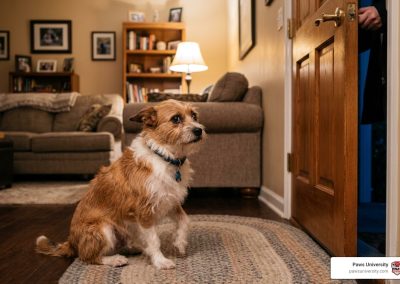
Why Dogs Bark in the Crate When Alone — And How to Fix It
Barking in crate when alone is one of the most common struggles dog owners face — and the good news is, it’s almost always fixable with the right approach.
Quick answers to stop crate barking:
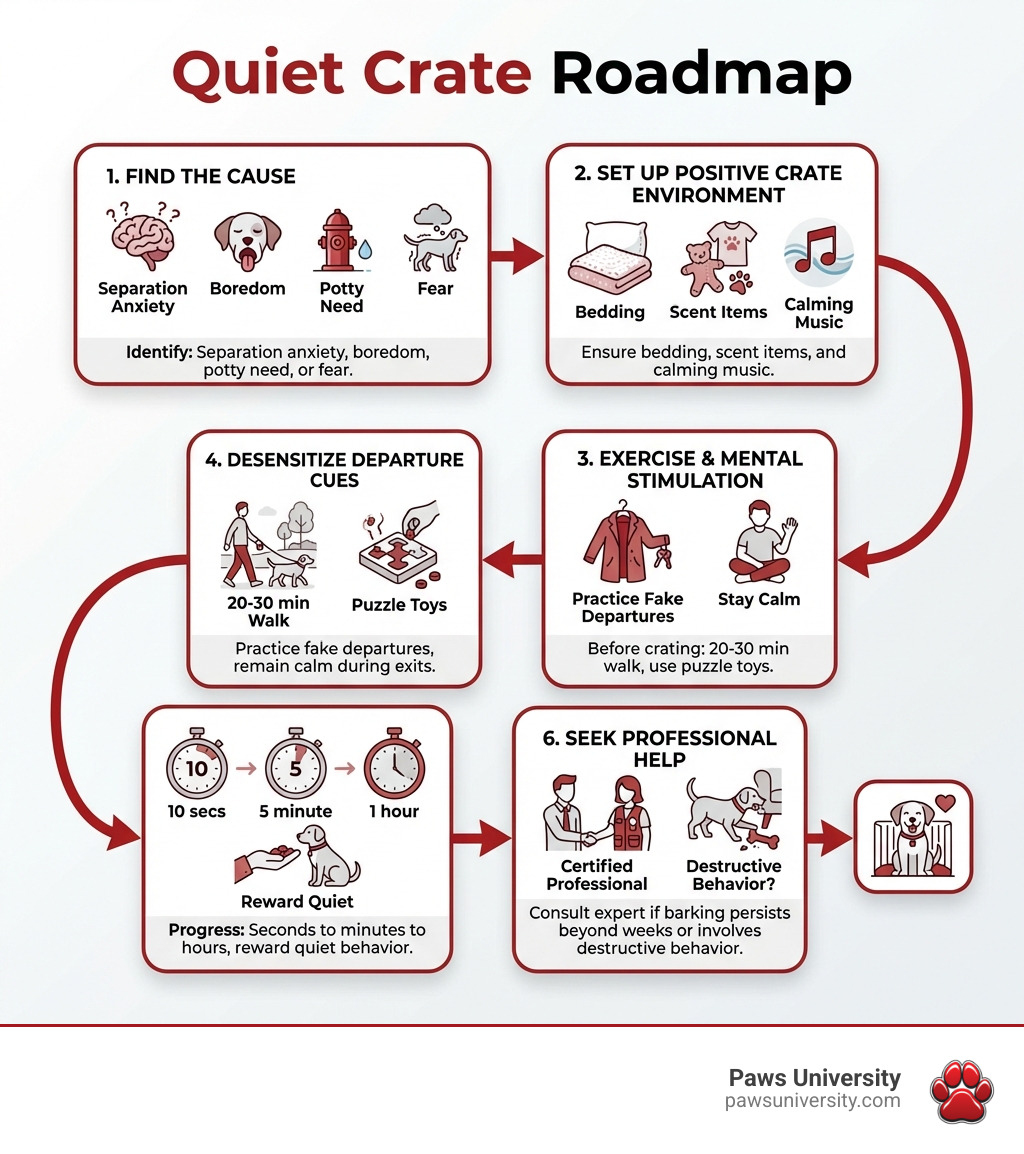
- Identify the cause — separation anxiety, boredom, potty needs, or fear
- Build a positive crate association — treats, familiar scents, cozy bedding
- Exercise before crating — a 20–30 minute walk or play session helps
- Desensitize departures — practice short absences and stay calm when leaving
- Reward quiet behavior — never release your dog while they’re barking
- Increase alone time gradually — start with seconds, build to minutes, then hours
- Seek professional help — if barking is intense, persistent, or paired with destructive behavior
Dogs are social animals. Being left alone in a confined space goes against their instincts — especially for puppies or newly adopted dogs still adjusting to their environment. That discomfort shows up as barking, howling, whining, or worse.
But barking in the crate isn’t always about anxiety. Sometimes it’s boredom. Sometimes it’s a full bladder. Sometimes it’s simply a dog that hasn’t learned yet that the crate is a safe, comfortable place.
The cause matters — because the fix depends on it.
This guide walks you through everything: how to read your dog’s signals, set up their crate for success, train them step by step, and know when to call in a professional.
I’m Allen Daniels, co-founder of Paws University in Kailua-Kona, and I’ve spent over 25 years applying operant conditioning — the same trust-based, reward-driven methods I used training dolphins — to help hundreds of dogs overcome barking in crate when alone and other behavioral challenges. Whether you’re dealing with a brand-new puppy or a rescue with deep-rooted anxiety, the principles that work are the same: patience, consistency, and building genuine trust.
Understanding Why Your Dog is Barking in Crate When Alone
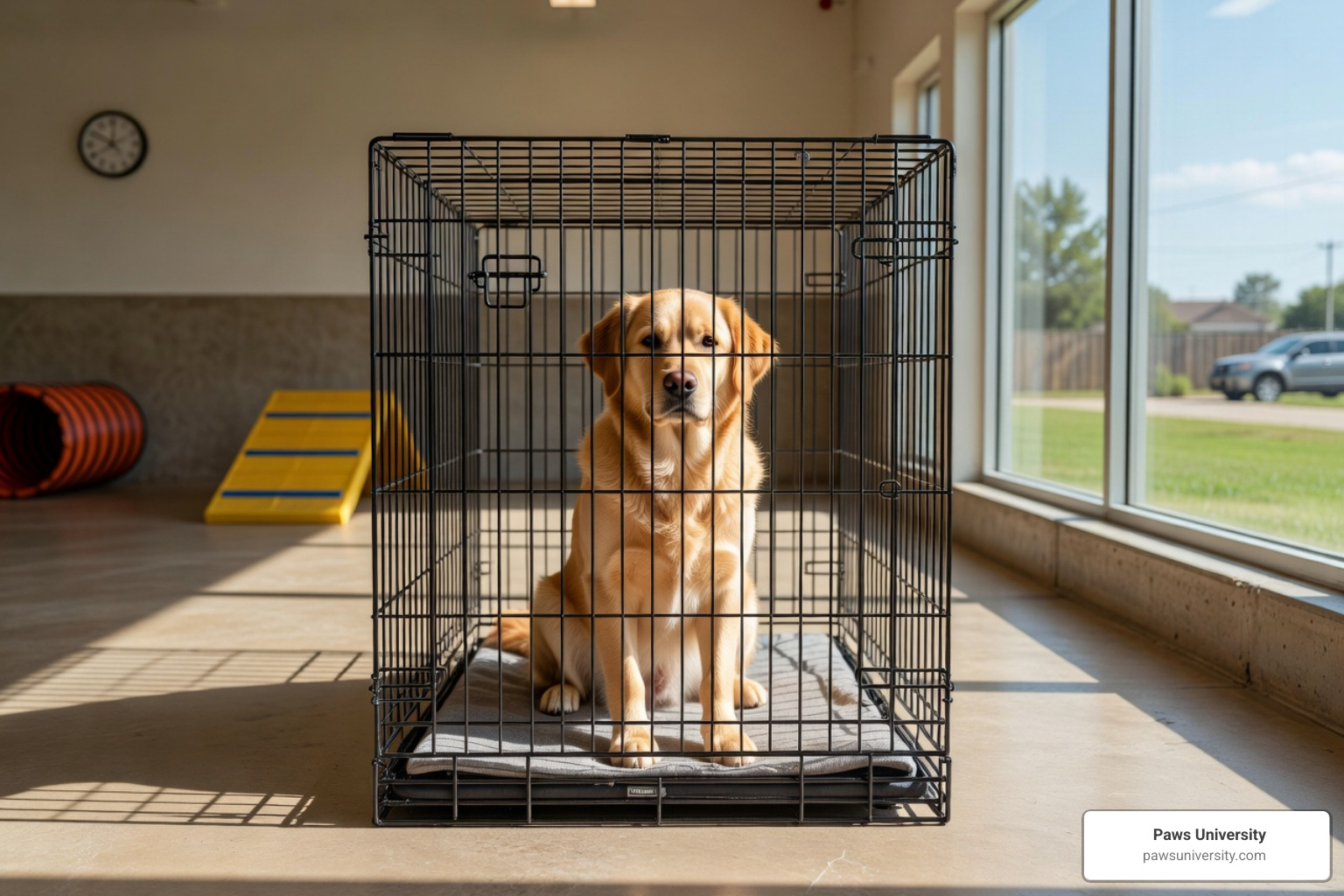
Before we can stop the noise, we have to understand the “why.” Dogs don’t bark just to annoy us or test our patience. In their world, vocalization is a primary tool for communication. When your dog is barking in crate when alone, they are trying to tell you something specific about their internal state.
Common triggers include:
- Separation Anxiety: This is a panic-based response where the dog feels genuine terror at being separated from their “pack” (you).
- Boredom: A high-energy dog with nothing to do will often bark to create their own entertainment or release pent-up energy.
- Fear/Environmental Triggers: External noises like a delivery truck or a neighbor’s lawnmower can startle a crated dog, leading to defensive barking.
- Lack of Crate Conditioning: If the crate hasn’t been properly introduced, the dog may view it as a “puppy jail” rather than a safe den.
Understanding these causes and solutions for crate barking is the first step toward a quieter home.
Separation Anxiety vs. Boredom: Spotting the Signs
It is crucial to distinguish between a dog that is simply “complaining” because they’re bored and a dog experiencing a full-blown panic attack.
Separation Anxiety usually manifests within minutes of your departure. You might see:
- Panic behaviors: Heavy panting, drooling, or dilated pupils.
- Destructive chewing: Specifically directed at the crate door or exit points.
- Rhythmic barking: High-pitched, repetitive barks or long, mournful howls.
- Self-injury: Broken nails or teeth from trying to escape the crate.
Boredom, on the other hand, often starts later in the day. The barking might be intermittent. The dog might bark for a few minutes, chew on a toy, nap, and then bark again. This dog isn’t in a state of terror; they are simply under-stimulated.
Differentiating Potty Needs, Discomfort, and Attention-Seeking
Sometimes, the barking is purely functional. A puppy with a tiny bladder has physical limits. As a general rule, a puppy can hold their bladder for about one hour for every month of age, plus one. An 8-week-old puppy may only be able to go three hours before needing a break.
Discomfort can also play a role. Is the crate in a drafty area? Is it too close to a hot sunlit window? We must ensure the physical environment is neutral before assuming the issue is behavioral.
| Signal | Likely Cause | Typical Sound |
|---|---|---|
| Urgent scratching/circling | Potty Need | Short, sharp yips or whining |
| Panic/Heavy Panting | Separation Anxiety | Constant, high-pitched howling |
| Intermittent “Woof” | Attention-Seeking | Single barks followed by silence (waiting for a reaction) |
| Chewing on Bars | Boredom/Frustration | Growling mixed with barking |
Creating a Positive Crate Environment
The goal is to transform the crate into a “five-star retreat.” If the only time your dog goes into the crate is when you are leaving for eight hours, they will quickly learn to associate the crate with isolation. We want them to view it as their personal sanctuary.
One of the best ways to do this is by adding familiar scents. An unwashed T-shirt that smells like you can provide immense comfort to an anxious dog. Additionally, calming a puppy at night often involves using white noise machines or fans to mask outside sounds that might trigger a barking episode.
The Role of Exercise and Mental Stimulation
A tired dog is a quiet dog. This is a mantra we live by at Paws University. If your dog has spent the morning running and playing, their natural instinct when put in a crate will be to rest and recover.
We recommend a vigorous 20–30 minute walk or play session immediately before crating. However, physical exercise isn’t enough; mental stimulation is just as important. Providing “work” inside the crate can prevent barking in crate when alone by keeping the brain occupied.
Consider using:
- Puzzle toys: Interactive feeders that require the dog to solve a problem to get a treat.
- Lick mats: Spreading peanut butter or plain yogurt on a silicone mat encourages licking, which is a naturally soothing behavior for dogs.
- Frozen treats: A frozen KONG stuffed with wet food can take 30 minutes or more to finish, providing a long-lasting distraction.
For high-energy breeds that need more than a morning walk, our dog daycare services provide the perfect outlet for social play and supervised exercise on our seven-acre campus.
Essential Tools for a Quiet Crate Experience
The physical setup of the crate can make or break your training.
- Crate Size: The crate should be large enough for the dog to stand up, turn around, and lie down comfortably, but not so large that they can use one corner as a bathroom.
- Bedding: Use soft, orthopedic bedding if your dog is older, or durable, chew-resistant pads for younger pups.
- Crate Covers: Many dogs settle better when the crate is covered with a breathable blanket or a custom cover. This creates a “den” feel and limits visual triggers.
- Calming Aids: Pheromone sprays or diffusers (like Adaptil) mimic the soothing scents a mother dog produces, which can help lower stress levels.
If you are traveling or need a consistent environment while you’re away, our dog boarding options ensure your pet stays in a structured, comfortable environment that reinforces good habits.
Step-by-Step Training to Stop Barking in Crate When Alone
Training a dog to be quiet in a crate is a marathon, not a sprint. We use positive reinforcement to build a “bank account” of good associations. You can explore our full range of training services to see how we implement these techniques.
The In-and-Out Game:
Start by tossing high-value treats (like chicken or cheese) into the crate. Let the dog go in, eat the treat, and come right back out. Do not close the door yet. Repeat this until the dog is happily running into the crate in anticipation of the reward.
Desensitizing Departure Cues and Alone Time
Dogs are masters of observation. They know that when you pick up your car keys or put on your “work shoes,” you are about to disappear. These “departure cues” can trigger anxiety before you even walk out the door.
To break this association, practice “fake departures”:
- Pick up your keys, then sit on the couch and watch TV.
- Put on your shoes, then go into the kitchen and make a sandwich.
- Open the front door, then close it and go back to your desk.
By performing these actions without actually leaving, you desensitize your dog to the triggers. Once the dog remains calm during these cues, you can move on to short-duration stays in the crate while you are still in the house.
Building Confidence Through Gradual Alone-Time Progression
Start by closing the crate door for just five seconds while you stand right there. Reward the dog for being quiet. Gradually increase this to 30 seconds, then one minute.
The next step is “out-of-sight” training. Leave the room for ten seconds, then return. If the dog is quiet, reward them. If they are barking in crate when alone, wait for a three-second gap of silence before returning. You never want to return while they are barking, as this teaches them that barking “calls” you back.
For dogs with more complex behavioral needs, our private training sessions allow us to create a customized plan tailored to your dog’s specific temperament and your home environment here in West Hawaii.
Strategies for Managing Persistent Barking in Crate When Alone
What do you do when you’ve done everything right, but the barking persists? This is where management strategies come into play.
The 15-Minute Rule:
In many cases, a dog will bark for 5 to 10 minutes as a form of “protest” before settling down. If the barking is not panic-based, it is often best to ignore it. If you intervene, you are giving the dog exactly what they want: attention. However, if the barking continues past the 15-minute mark or escalates in intensity, you may need to reassess the situation.
Should You Use Anti-Bark Collars or Correction Sprays?
At Paws University, we prioritize reward-based methods. While tools like “shake cans” (a soda can filled with pennies) or Pet Corrector sprays can provide a quick interruption, they are often short-term fixes that don’t address the underlying cause of the barking.
Aversive tools like shock collars or spray bottles can actually increase anxiety. If a dog is already terrified of being alone, adding a painful or startling correction can make the crate feel even more like a place of punishment. We generally advise against these tools unless under the direct supervision of a professional trainer who can ensure they are used humanely and correctly.
Common Mistakes to Avoid During Training
- Releasing During Barking: This is the #1 mistake. It reinforces the behavior and tells the dog, “If I scream loud enough, the door opens.”
- Using the Crate as Punishment: Never send your dog to the crate because they did something “bad.” The crate must remain a neutral or positive space.
- Inconsistent Routines: Dogs thrive on predictability. If the rules change every day, the dog will feel insecure.
- Over-Reacting to Noise: Yelling “Quiet!” at a barking dog is often perceived by the dog as you barking along with them. It adds energy to the situation rather than diffusing it.
Establishing a Daily Routine for Success
A structured day leads to a confident dog. By creating a predictable schedule, you reduce the “unknowns” that lead to anxiety.
A successful routine should include:
- Morning Exercise: Burn off the “overnight” energy.
- Feeding Schedule: Feed your dog in the crate to build a positive association.
- Scheduled Naps: Use the crate for short naps while you are home so it isn’t only associated with your absence.
- Cool-Down Periods: After a walk, give the dog 10 minutes to settle before putting them in the crate.
For more deep dives into canine behavior, visit our blog where we share tips on everything from house training to socialization.
A Sample Daily Schedule to Minimize Barking
This schedule is designed to balance physical activity, mental work, and rest.
- 7:00 AM: Potty break and 20-minute brisk walk.
- 7:30 AM: Breakfast served inside the crate (door open or closed depending on training level).
- 8:00 AM: 10 minutes of “brain games” or basic obedience practice.
- 8:30 AM: Final potty break, then into the crate with a frozen treat or puzzle toy.
- 12:30 PM: Mid-day break (potty, play, and water).
- 1:00 PM: Back into the crate for afternoon rest.
- 5:00 PM: Evening walk, dinner, and social time.
Consistency is key, and adhering to our policies on structured care can help maintain these habits even when your dog is away from home.
Frequently Asked Questions about Crate Barking
How long should I let my dog bark in the crate?
If the dog is not in physical distress or panicking, it is common to let them “demand bark” for 10–15 minutes. However, if the dog is showing signs of separation anxiety (drooling, frantic digging), you should intervene and return to an earlier step in your training.
When should I seek professional help for persistent barking?
If your dog is injuring themselves, destroying the crate, or barking for hours without stopping, it is time to call a professional. Persistent barking that doesn’t improve after two weeks of consistent training usually indicates a deeper issue like severe separation anxiety.
Can I crate my dog if they have severe separation anxiety?
For some dogs with severe anxiety, a crate can actually increase their panic (confinement distress). In these cases, we often recommend using a “dog-proofed” room with a baby gate or working with a behaviorist to determine if a crate is the right tool for that specific animal.
Conclusion
Solving the problem of barking in crate when alone requires a blend of empathy and discipline. By understanding your dog’s needs, providing ample exercise, and using positive reinforcement, you can turn the crate into a place of peace rather than a place of protest.
At Paws University, we’ve been West Hawaii’s premier facility since 2002. Our seven-acre campus in Kailua-Kona is designed to provide dogs with the supervised play and professional training they need to thrive. Whether you need help with a vocal puppy or a rescue dog that needs a confidence boost, we are here to support you.
Ready to start your journey toward a quieter, happier home? Book Now for professional training and let us help you and your dog find your “Crate Harmony.”