Is Boarding Safe for Anxious Dogs? (And How to Make It Work)
Boarding for anxious dogs is absolutely possible — but it requires more planning than a standard drop-off. Here's what to know upfront:
- In-home boarding or small-group home-based care is almost always better than a traditional kennel for dogs with separation anxiety
- Gradual acclimation matters — plan 2 to 4 weeks of trial visits before a full stay
- Familiar scents help — send an unwashed shirt or familiar blanket with your dog
- Brief, calm goodbyes reduce stress more than long emotional farewells
- Talk to your vet before boarding if your dog has moderate to severe anxiety — medication options exist
- Choose caregivers trained in rewards-based methods who will give you honest updates
Leaving your dog behind when you travel is hard enough. When your dog struggles with anxiety, it can feel genuinely stressful — for both of you. The unfamiliar smells, sounds, new faces, and broken routines can push an already-nervous dog into a state of real distress. And unlike a confident dog who bounces back quickly, an anxious dog can take days to settle — or may not settle at all in the wrong environment.
The good news? With the right facility, the right preparation, and a smart acclimation plan, most anxious dogs can board successfully. The key is understanding what actually drives their stress — and removing as many of those triggers as possible before day one.
I'm Allen Daniels, co-founder of Paws University in Kailua-Kona, and after 25+ years working with dogs on behavioral issues including separation anxiety, I've seen what makes boarding for anxious dogs go smoothly — and what makes it go sideways. In this guide, I'll walk you through everything you need to know to set your dog up for a calm, safe stay.
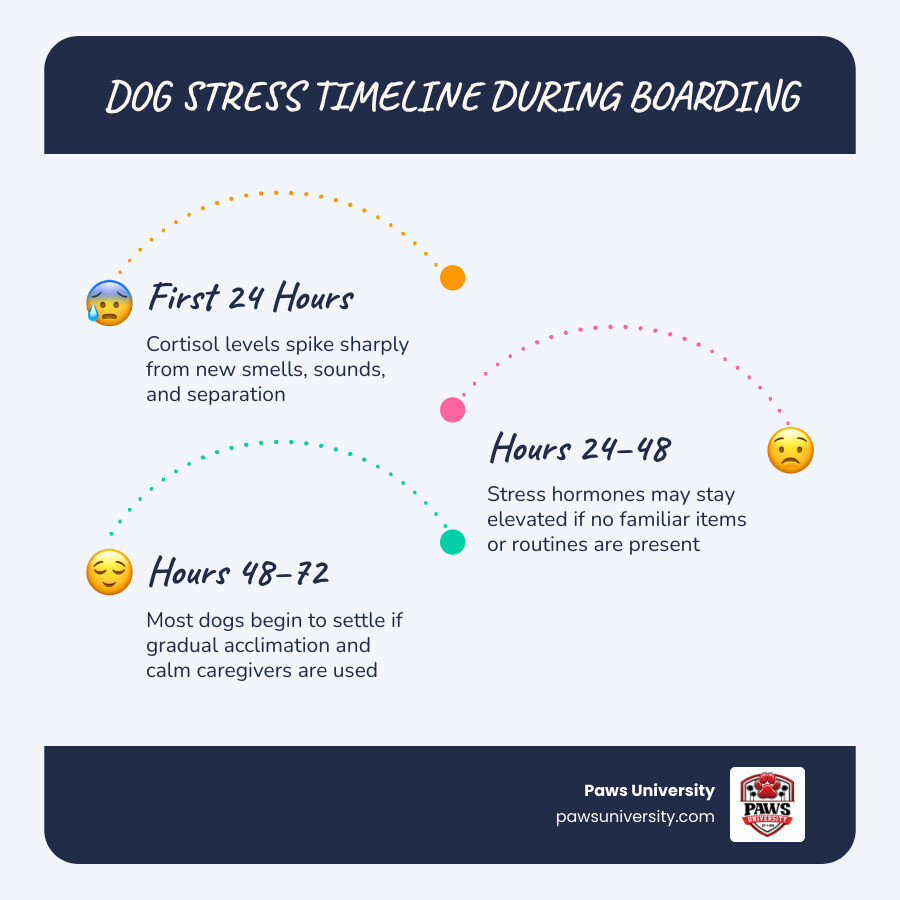
Simple guide to boarding for anxious dogs:
Understanding the Impact of Boarding for Anxious Dogs
When a dog with a nervous disposition is placed in an unfamiliar environment, their nervous system goes into overdrive. For dogs dealing with generalized anxiety or severe separation anxiety, the transition is not just a minor disruption—it is a physiological event.
According to veterinary research, dogs with separation anxiety show elevated cortisol levels for up to 72 hours after being left in unfamiliar boarding environments. This 72-hour stress window means that for the first three days of your trip, your dog is operating in a state of high physiological arousal. Their fight-or-flight system is active, making it incredibly difficult for them to settle, sleep, or digest their food properly.
This prolonged state of stress can quickly lead to sensory overload. Unlike healthy, confident dogs who can filter out background noises, anxious dogs struggle to down-regulate. The physical symptoms of this distress are often easy to spot if you know what to look for:
- Constant pacing or restlessness: Inability to find a comfortable spot to lie down.
- Excessive panting and drooling: Even in cool, temperature-controlled indoor spaces.
- Vocalizations: High-pitched whining, howling, or repetitive barking.
- Dilated pupils and sweaty paws: Leaving damp paw prints on dry floors.
- Extreme food refusal: Rejecting even high-value treats or their favorite wet food.
This last symptom is particularly dangerous. Dogs who refuse food for more than 72 hours during boarding are at risk of developing hepatic lipidosis (fatty liver disease), a serious medical condition that requires immediate veterinary intervention, often involving appetite stimulants or fluid therapy.
Understanding these physiological responses is the first step in protecting your pet. By reviewing scientific research on canine stress, we can see that anxiety isn't just "bad behavior"—it is a involuntary physical response to a perceived threat.
Evaluating Your Options: Kennel vs. In-Home Care
When deciding where your anxious dog should stay, the environment you choose will make or break their experience.
Traditional boarding kennels are often the most difficult environments for a nervous pup. These facilities typically combine six simultaneous stressors that can overwhelm a sensitive dog:
- Constant, high-volume noise (dozens of dogs barking at once).
- An entirely unfamiliar environment filled with clinical smells.
- Limited individual human attention due to high dog-to-staff ratios.
- Rigid, unfamiliar schedules for feeding and potty breaks.
- Confinement in a small run or cage for long stretches.
- The complete absence of familiar items or home-like comforts.
When an anxious dog is exposed to all six of these stressors at once, they do not "get used to it." Instead of habituation (becoming desensitized to the stimuli over time), they experience sensitization—also known as flooding. Each loud bark or passing stranger makes them more reactive, more terrified, and more traumatized. They may return home with worse separation anxiety than before.
In contrast, premium home-style boarding or specialized in-home pet sitting isolates and reduces these triggers. By matching your dog with a caregiver who watches them in a quiet, home-like setting, you reduce those six simultaneous stressors down to just one or two (primarily the temporary absence of you).
| Stressor Category | Traditional Kennel | Premium Home-Style / Low-Stress Care |
|---|---|---|
| Noise Level | High & Constant (barking, metal doors) | Low (typical household sounds) |
| Schedules | Rigid, shift-based | Flexible & tailored to your dog's routine |
| Attention | Limited (often 15 mins of direct contact/day) | High (frequent human presence and cuddles) |
| Environment | Concrete runs, clinical odors | Grassy yards, couches, quiet corners |
| Stress Load | 6 simultaneous triggers (Flooding risk) | 1-2 isolated triggers (Manageable) |
If you are trying to figure out which environment will keep your peace of mind intact, take a look at our guide on how to pick a doggy care overnight without losing sleep.
How to Choose the Right Caregiver or Facility
If you decide that a specialized boarding facility is the best route, you must vet them thoroughly. Anxious dogs cannot be handled the same way as easygoing, social dogs.
First, ask about their staff-to-dog ratio. A lower ratio means the team actually has the time to sit with your dog, offer gentle reassurance, and monitor their behavior closely.
Second, ensure the facility operates strictly on fear-free principles and uses a rewards-based approach to care. If a staff member uses loud corrections, physical force, or punishment-based methods to handle a dog who is cowering or growling out of fear, they will permanently damage that dog's trust. Anxious dogs need patience, soft voices, and positive reinforcement to feel safe.
For dogs in tropical climates like Hawaii County, outdoor access is a massive stress-reliever. Look for a facility with spacious, secure, grassy play yards where dogs can sniff and decompress under the shade of tropical palm trees. Sniffing grass and feeling the warm island breeze releases endorphins that naturally lower a dog's heart rate.

Key Features of Premium Boarding for Anxious Dogs
When touring a potential facility, keep an eye out for these essential design features:
- Dedicated Quiet Zones: Areas physically separated from the main high-traffic boarding wards, designed specifically for senior or highly anxious dogs.
- Visual Barriers: Solid doors or privacy panels between suites so dogs do not have to make constant, stressful eye contact with unfamiliar dogs across the aisle.
- Trained Behavioral Staff: Caregivers who are educated in canine body language and can recognize the subtle, early signs of stress (like lip-licking, yawning, or a tucked tail) before it escalates to panic.
- Written Emergency Protocols: Clear plans for handling extreme panic attacks, escape attempts, or medical emergencies, including a direct line to a local veterinary hospital.
To help you prepare your checklist for a facility visit, check out the paw-fect staycation guide for overnight dog boarding.
Preparing Your Dog for a Stress-Free Stay
Preparation for boarding for anxious dogs should begin weeks before your suitcase is packed. Dogs are incredibly intuitive; they recognize the signs of an impending departure—like suitcases coming out of the closet or changes in your morning routine—and can start worrying days in advance.
To make the transition easier, focus on building a comfort kit centered around scent anchors. A dog's sense of smell is their primary way of understanding the world. By packing an unwashed t-shirt you've slept in for a few nights, a familiar blanket, or their favorite bed, you provide a powerful chemical anchor of safety. When they smell you, it triggers a release of comforting hormones that help soothe their nervous system.
On the morning of drop-off, prioritize physical exercise. Take your dog for a long, slow "sniffari" walk or engage in some light, fun yard play. This physical activity releases endorphins and tires them out, naturally lowering their overall stress levels and helping them settle into sleep shortly after arrival.
For more detailed prep tips, you can read our list of dog anxious when leave tips. Additionally, if your dog's anxiety is severe, you might want to explore a professional therapeutic board & train program to build long-term confidence before you plan any major travel.
Step-by-Step Acclimation and Boarding for Anxious Dogs
To prevent flooding and ensure your dog associates the boarding environment with positive outcomes, follow this gradual 2-to-4-week acclimation timeline:
- Week 1: The Meet-and-Greet: Bring your dog to the facility just to walk around the lobby, sniff the grass, meet a staff member, and eat some high-value treats. Then, leave immediately. This teaches them that the facility is a place where good things happen and they always get to go home.
- Week 2: The Trial Daycare Session: Schedule a half-day or full-day stay. This allows them to experience the routine of the facility, go out for supervised play, and learn that you will return to pick them up at the end of the day.
- Week 3: The Single Overnight Stay: Book a one-night stay over a weekend. This introduces them to the nighttime routine, sleeping in a new space, and eating breakfast in the morning.
- Week 4: The Actual Boarding Stay: By the time your real trip arrives, the environment is no longer a scary mystery—it is a familiar part of their routine.
When drop-off day arrives, practice a brief, neutral departure protocol. Keep your goodbye under 30 seconds. A long, emotional, tearful goodbye signals to your dog that something massive and scary is happening, which spikes their anxiety. Instead, hand the leash to the caregiver with a cheerful, confident smile, say "See you later!", and walk away without looking back. Your dog will feed off your calm, confident energy.

If you are currently dealing with a pup who starts trembling the moment you reach for your keys, read through these proven anxious dog solutions to help build their baseline confidence.
Managing Your Dog's Needs During and After the Stay
A successful boarding stay relies on clear, detailed communication between you and the pet care team. When dropping your dog off, provide a written checklist that covers:
- Exact Feeding Routines: Times, amounts, and tricks for handling food refusal (such as adding warm water, low-sodium chicken broth, or wet food toppers).
- Medication Administration: Precise dosages, timing, and how your dog prefers to take their pills (e.g., wrapped in a piece of cheese or in a pill pocket).
- Known Triggers: Specific things that frighten them, such as sudden loud noises, brooms, or men with hats.
- Anxiety Warning Signs: How your dog specifically shows stress (e.g., "When he gets nervous, he will sit in the corner and lick his front paws").
While you are away, establish a plan for updates. Rather than calling constantly—which can stress you out—ask the facility for regular photo or text updates. Seeing a photo of your dog relaxing in the shade or enjoying a gentle belly rub from a caregiver will give you the reassurance you need to enjoy your trip.
When you return home, your dog will need a post-boarding readjustment period. Even in the best, most premium facilities, boarding is a lot for an anxious dog to process. They may return home feeling physically tired or behaving in a clingy, shadow-like manner.
Give them 24 to 48 hours of quiet decompression time. Stick strictly to their normal home routine, avoid hosting visitors or taking them to busy parks immediately, and let them catch up on much-needed sleep in their favorite spot.
For more insights on managing separation distress, read our guide on how to stop your dog from panicking when you leave.
Frequently Asked Questions About Dog Boarding
Will boarding make my dog's anxiety worse?
Not necessarily. If a dog is forced into a high-stress, noisy kennel environment without preparation, they may experience sensitization, which can worsen their anxiety. However, if you choose a low-stress facility that uses rewards-based care, and you follow a gradual 2-to-4-week acclimation plan, boarding can actually build your dog's resilience and independence over time.
What should I do if my dog refuses to eat while boarded?
Food refusal is a common response to transition stress. Most premium facilities have tricks to encourage eating, such as mixing in wet food, pouring warm chicken broth over the kibble, or using puzzle feeders to make mealtime interactive. However, if a dog refuses food entirely for more than 72 hours, it puts them at risk for hepatic lipidosis. In these cases, the facility should contact you and arrange for veterinary intervention to administer safe appetite stimulants.
Should I stay and say a long goodbye at drop-off?
No. While it is tempting to hug, kiss, and apologize to your dog for leaving, a prolonged, emotional departure increases transition stress. Dogs are experts at reading human body language and emotional cues. If you act worried and sad, they will assume they are in danger. Keep your drop-off quick, upbeat, and casual to show them there is absolutely nothing to worry about.
Conclusion
Finding the right care for your anxious pup doesn't have to be a source of dread. By choosing a facility that understands canine behavior, prioritizes low-stress environments, and partners with you on a gradual acclimation plan, you can enjoy your travels knowing your pet is safe, understood, and cared for.
At Paws University, we have been Hawaii County’s premier pet care facility since 2002. Located on a beautiful, secure seven-acre campus in Hawaii County, we were the first in the state to introduce supervised Doggie Daycare designed to reduce behavioral issues through structured play. Our experienced team uses a strictly rewards-based approach, ensuring your nervous pup receives the gentle handling, quiet decompression, and loving attention they deserve.
Want to see how we can help your dog feel right at home? Explore our Premium Boarding Services today, and let's design the perfect, stress-free staycation for your furry family member.