Why Daily Dog Exercise Programs Are the Foundation of a Healthy, Happy Dog
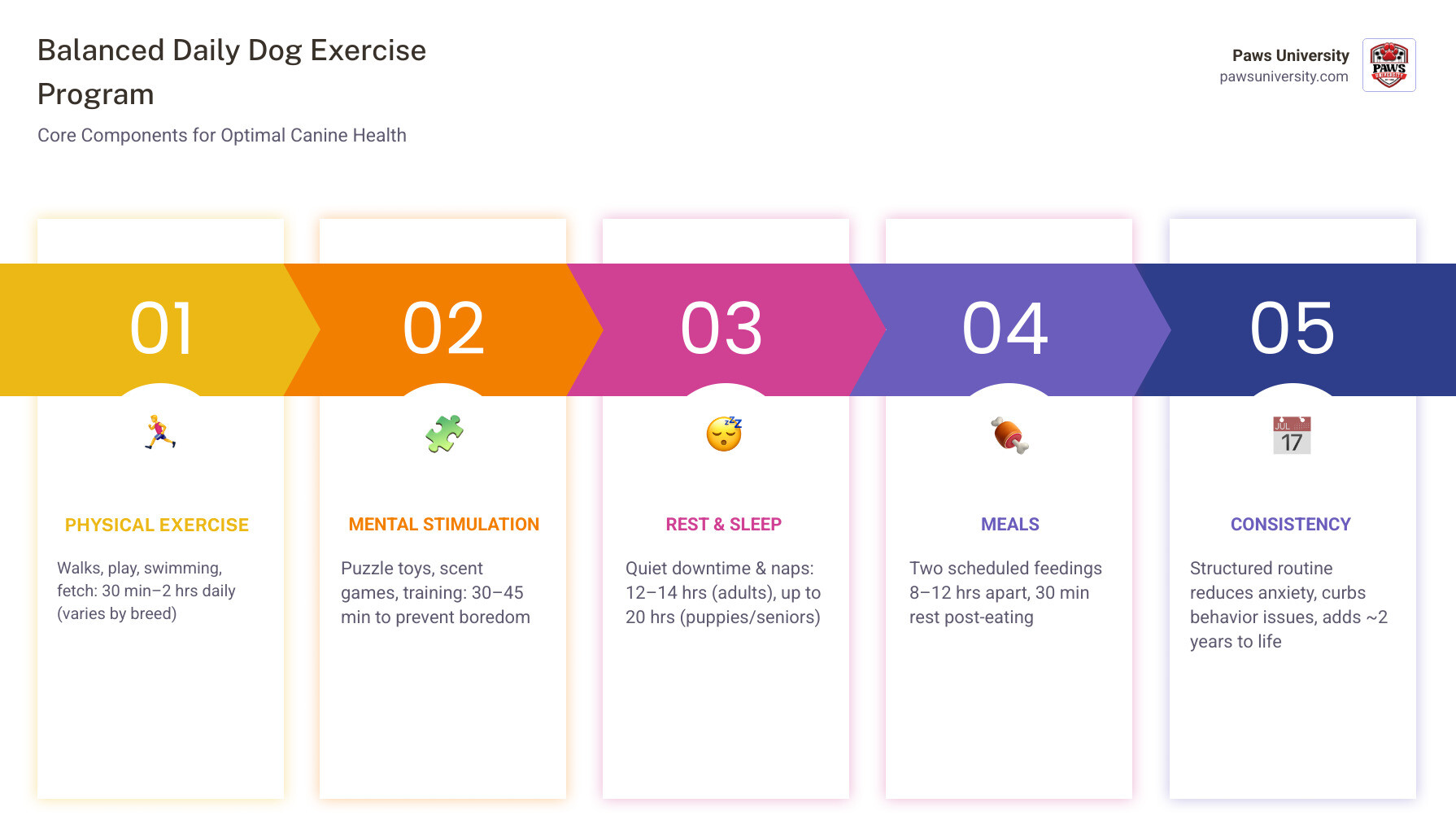
Daily dog exercise programs are structured plans that combine physical activity, mental stimulation, and rest to keep your dog healthy, calm, and well-behaved. Here's a quick overview of what a balanced program looks like:
| Component | What It Involves | Daily Target |
|---|---|---|
| Physical exercise | Walks, play, swimming, fetch | 30 min–2 hrs (varies by breed) |
| Mental stimulation | Puzzle toys, scent games, training | 30–45 min |
| Rest and sleep | Quiet downtime, naps | 12–14 hrs (adults), up to 20 hrs (puppies/seniors) |
| Meals | Two scheduled feedings, 8–12 hrs apart | 30 min rest after eating before exercise |
Most dogs benefit from at least 30–45 minutes of physical activity and an equal amount of mental engagement every day. Small breeds can thrive on 30–60 minutes total. Larger and high-energy breeds may need 1–2 hours or more.
Dogs thrive on structure. A consistent routine doesn't just keep weight in check — it reduces anxiety, curbs destructive behavior, and can add nearly two years to your dog's life. Research from the Purina Lifetime Study found that dogs kept at an ideal body condition lived a median of 1.8 years longer than overweight dogs.
Without a plan, it's easy to either overdo it or fall short — both of which cause real problems.
I'm Allen Daniels, co-founder of Paws University in Kailua-Kona, and I've spent over 25 years developing daily dog exercise programs for dogs of every breed, age, and energy level using the same science-backed, rewards-based methods I refined during a decade of professional dolphin training. In the sections below, I'll walk you through exactly how to build a routine that works for your dog.
Daily dog exercise programs word roundup:
Customizing Daily Dog Exercise Programs by Age and Breed
One of the biggest mistakes we see is applying a "one-size-fits-all" approach to canine fitness. A Border Collie and a Great Dane have vastly different biomechanical needs and energy reserves. In April 2026, we continue to emphasize that a personalized approach is the only way to ensure longevity.

When we look at Exercise Protocols by Breed Size: Longevity-Focused Training, it becomes clear that breed size dictates not just the duration of activity, but the intensity and recovery time required.
| Breed Size | Typical Weight | Session Duration | Daily Frequency |
|---|---|---|---|
| Toy/Small | Under 20 lbs | 20–30 mins | 2 sessions |
| Medium | 20–60 lbs | 30–60 mins | 2 sessions |
| Large/Giant | 60+ lbs | 20–30 mins | 2–3 sessions |
Exercise for Puppies and Seniors
Puppies are bundles of energy, but their bodies are still under construction. Their growth plates—the soft areas at the ends of long bones—don't typically close until they are 12 to 18 months old (and even up to 24 months for giant breeds). Subjecting a puppy to repetitive high-impact exercise, like long runs on pavement, can lead to permanent skeletal trauma. We recommend the "5-minute rule": five minutes of formal exercise per month of age, twice daily.
On the other end of the spectrum, our seniors need to keep moving to prevent muscle atrophy. Dogs can lose 1–3% of their lean muscle mass every year after middle age without targeted strength training. For these older friends, we focus on low-impact, frequent movement. If you are noticing your senior dog slowing down, it might be time for more info about private training services to help adapt their routine.
High-Energy vs. Brachycephalic Needs
In our warm Hawaii County climate, breed anatomy is a critical safety factor. High-energy working breeds like Australian Shepherds or Labs may require up to two hours of activity daily to remain mentally balanced. However, brachycephalic (flat-faced) breeds like Bulldogs or Pugs face significant respiratory challenges. Because their airways are compromised, they struggle to cool themselves through panting. For these dogs, exercise must be restricted to the coolest parts of the day, and heavy exertion should be avoided entirely. Our Kona Dog Training Guide from Puppies to Pros offers deeper insights into managing these specific breed traits.
Designing Daily Dog Exercise Programs for Giant Breeds
Giant breeds like Mastiffs or Great Danes require a delicate balance. Their sheer size puts immense pressure on their joints. For these "gentle giants," we prioritize weight management and muscle maintenance through short, frequent walks rather than one long, exhausting trek. This approach prevents excessive joint loading while keeping the cardiovascular system healthy.
The Pillars of a Balanced Daily Dog Exercise Routine
A successful program is about more than just "tiring the dog out." It’s about aligning their activity with their natural biological rhythms.
According to Building a Daily Fitness Routine for Your Dog - Jolly Pets, consistency is the most important factor. Dogs are creatures of habit; they follow circadian rhythms that govern when they feel most alert and when they need deep rest.
Integrating Mental Stimulation and Play
Did you know that 15 minutes of intensive "brain work" can be as tiring for a dog as a 30-minute walk? Mental stimulation is a non-negotiable part of any daily dog exercise program. This includes:
- Puzzle Toys: Encouraging your dog to "hunt" for their kibble.
- Scent Games: Hiding treats around the yard or house to engage their nose.
- Training: Learning new cues or polishing old ones.
At Paws University, we offer Fun Obedience Classes Kona Dogs Actually Enjoy that focus on rewarding engagement, which provides the perfect mental workout.
Rest and Recovery Requirements
Sleep is where the magic happens. It’s when muscles repair and the brain processes the day's learning. Adult dogs generally need 12–14 hours of sleep, while puppies and seniors can require up to 18–20 hours. Fragmented or insufficient sleep can lead to increased cortisol levels, making a dog irritable or reactive. If your home environment is too busy for your dog to get quality rest, you might consider our information on premium boarding services where we prioritize structured downtime.
Sample Daily Dog Exercise Programs Schedule
To help you get started, here is a sample schedule that balances physical needs with the tropical Hawaii lifestyle:
- 7:00 AM: Morning walk (30 mins) before the heat peaks.
- 7:30 AM: Breakfast, followed by a mandatory 30-minute rest to prevent bloat.
- 12:00 PM: Indoor mental stimulation (puzzle toy or 10-minute training session).
- 4:00 PM: Supervised play or a short sniff-walk.
- 6:30 PM: Evening walk or fetch session as the sun sets.
- 8:00 PM: Wind down and quiet time.
Consistency is key to success. You can learn more about how early structure impacts behavior in our guide, The Early Bird Gets the Best Behaved Dog.
Safe Indoor Alternatives and Tropical Weather Precautions
In West Hawaii, we have to respect the sun. Heat stress is a real danger, especially when humidity is high.
When developing a routine, as noted in Developing a Dog Exercise Routine - Whole Dog Journal, you must have a "Plan B" for days when it's too hot or rainy to be outside.
Indoor Boredom Busters for Rainy Days
When the tropical rains move in, you can still meet your dog's needs indoors:
- Stair Recall: If you have stairs, stand at the top and call your dog up for a treat, then toss one to the bottom.
- Hide and Seek: Hide yourself or a favorite toy and encourage your dog to find it.
- Box Shaping: Give your dog a cardboard box and reward any interaction with it—stepping in, touching it with a nose, or sitting inside.
- Indoor Agility: Use cushions as hurdles and chairs as tunnels.
For many dogs, having a designated "safe spot" helps them transition from high-energy play to calm indoor time. See our tips on Crate Training Teaching Your Dog to Love Their Space for creating that sanctuary.
Monitoring for Over-Exertion in the Heat
It is vital to recognize the signs of heat exhaustion before they become an emergency. Watch for:
- Heavy, frantic panting.
- Discolored (bright red or very pale) gums.
- Excessive drooling.
- Lethargy or wobbliness.
If you see these signs, stop activity immediately, provide cool (not ice-cold) water, and move to a shaded or air-conditioned area. Socializing in a supervised environment can also help you learn your dog's limits; check out How to Turn Your Lone Wolf into a Social Star for more on social exercise safety.
Building Strength: Progressive Overload and Injury Prevention
Just like human athletes, dogs benefit from "progressive overload"—gradually increasing the difficulty of their workouts to build resilience.
According to the Canine Fitness and Conditioning Guide: Building Strength, Endurance, and Resilience, a structured program should focus on five domains: cardio, strength, flexibility, balance (proprioception), and core stability.
Low-Impact Conditioning for Longevity
Swimming is perhaps the best exercise for dogs in Hawaii. Buoyancy reduces joint loading by 60–85% while still providing a massive cardiovascular workout. It is particularly beneficial for dogs with arthritis or hip dysplasia.
When walking, surface choice matters. Hard asphalt can be brutal on joints and paw pads. Whenever possible, choose grass, sand, or soft trails. For those looking for the best environment for their dog's daily activity, read about Big Island Dog Daycare Finding the Best Spot for Your Furry Friend.
Preventing Common Orthopedic Injuries
The most common injuries we see are soft tissue strains and cruciate tears, often caused by the "weekend warrior" syndrome—where a sedentary dog is suddenly taken on a grueling five-mile hike on Saturday.
To prevent these:
- Warm-Up: 5–10 minutes of gentle walking before any running or jumping.
- Cool-Down: Gradually slow the pace at the end of a session to allow the heart rate to drop.
- Gait Symmetry: Regularly watch your dog walk toward and away from you. Any slight limp or change in rhythm is a signal to rest.
Our professional training programs can help you identify these subtle physical cues.
Frequently Asked Questions about Daily Dog Exercise Programs
How do I know if my dog is getting enough exercise?
A well-exercised dog is generally calm and relaxed at home. If your dog is pacing, barking excessively, or chewing furniture, they likely need more physical or mental stimulation. Additionally, keeping them at a lean body weight is a great indicator.
When should I consult a vet about my dog's fitness?
Always consult a vet before starting a new program, especially if your dog is a senior, overweight, or a brachycephalic breed. You should also seek professional advice if you notice persistent limping, excessive panting that doesn't stop with rest, or a sudden reluctance to exercise.
Can I over-exercise a puppy?
Yes. Forced exercise (where the human sets the pace, like jogging or biking) is dangerous for developing joints. Stick to "free play," where the puppy can stop and rest whenever they choose.
Conclusion
Creating and maintaining daily dog exercise programs is one of the most impactful things you can do as a pet parent. At Paws University, our seven-acre campus in West Hawaii is designed to support every aspect of your dog’s fitness—from supervised social play that reduces behavior issues to premium boarding that ensures proper rest.
We believe in a rewards-based approach that makes exercise a highlight of your dog's day, not a chore. Whether you are looking for a place for them to burn energy while you're at work or need expert guidance on conditioning, we are here to help. Book a session at our premier daycare today and let's get your dog on the path to a longer, healthier life!