
What Dog Boarding Means for Your Dog
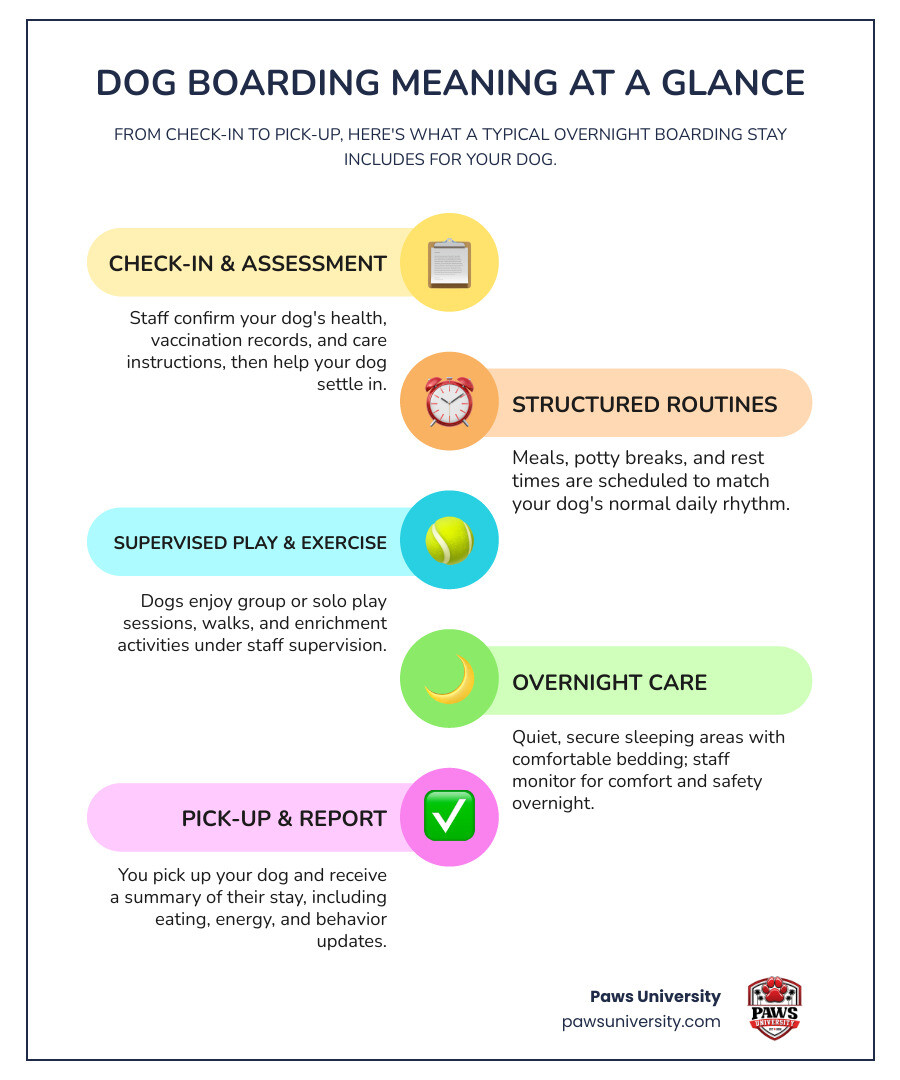
Dog boarding means your dog stays overnight in a safe care setting while you are away. Professional pet hospitality facilities provide dedicated accommodations where staff handle meals, rest, exercise, enrichment, and supervision based on your dog's needs.
For a busy West Hawaii pet parent, boarding can be a helpful option for travel, home repairs, or other times when overnight care is needed. The best fit depends on your dog's comfort with new places, other dogs, routines, and separation from family. A visit before booking can help you see whether the environment feels clean, calm, secure, and right for your dog.
At Paws University, dogs can enjoy a supervised setting designed around exercise, routine, and animal welfare in Hawaii County's warm, outdoor-friendly climate.
I am Allen Daniels, co-founder of Paws University, and I have worked with animal behavior and dog care for more than 25 years. My experience with dog boarding meaning comes from helping dogs with socialization, separation anxiety, destructive habits, and other behavior needs feel safer away from home.
Discover more about dog boarding meaning:
The Complete Dog Boarding Meaning and Core Concepts
To grasp the full picture of modern pet hospitality, looking at the formal definition of Dog boarding shows how dramatically overnight canine care has evolved. Historically, overnight care often meant basic housing in a standard kennel. Today, comprehensive boarding blends comfortable overnight lodging, structured daily routines, and professionally supervised play that caters to a dog's mental and physical health.
The pet care sector reflects this shift toward specialized care. Globally, pet boarding services have grown significantly, driven by pet parents who treat their companions like family and seek environments that offer both physical safety and enrichment. Across the United States, thousands of boarding facilities operate with a focus on dedicated animal care, offering dogs a safe home away from home.

At its heart, quality boarding revolves around a balanced daily structure:
- Consistent feeding and hydration: Meals are served according to your dog's specific home schedule, maintaining dietary consistency and preventing digestive upset.
- Structured physical exercise: Regular turnout sessions in outdoor yards give dogs the opportunity to stretch their legs, play, and engage with their environment.
- Mental enrichment: Puzzle activities, sensory walks, and supervised group play help prevent boredom and destructive behaviors.
- Dedicated rest periods: Quiet, temperature-regulated private suites allow dogs to decompress, sleep peacefully, and recharge between activities.
The Legal and Operational Dog Boarding Meaning
From an operational standpoint, a standard reference such as the BOARDING KENNELS definition and meaning | Collins English Dictionary defines these establishments as commercial operations where dogs are cared for while their owners are away. Yet, reputable operations adhere to rigorous welfare frameworks that go well beyond simply providing shelter.
Operating a high-caliber facility requires meticulous attention to animal husbandry, safety protocols, and sanitation. Facilities should maintain strict environmental hygiene protocols, daily health record tracking, temperature moderation, secure physical containment, and continuous monitoring. Comprehensive welfare guidelines—such as the principles outlined in standard Providing home boarding for dogs guidance documentation—emphasize providing adequate space, strict disease prevention measures, structured outdoor relief opportunities, and well-trained staff capable of reading subtle canine body language.
Dog Boarding Meaning Compared With Staying Home
When pet parents plan time away, they frequently weigh the choice between a dedicated overnight facility and leaving pets at home alone with periodic check-ins. While staying at home keeps a dog in a familiar space, remaining by themselves for extended stretches can leave active dogs under-stimulated and prone to stress.
By contrast, an established boarding campus integrates professional oversight, interactive social outlets, and reliable routines. Dogs who attend structured doggie daycare during their stay enjoy regular interaction and supervised group dynamics, which channel natural energy and help mitigate anxiety.
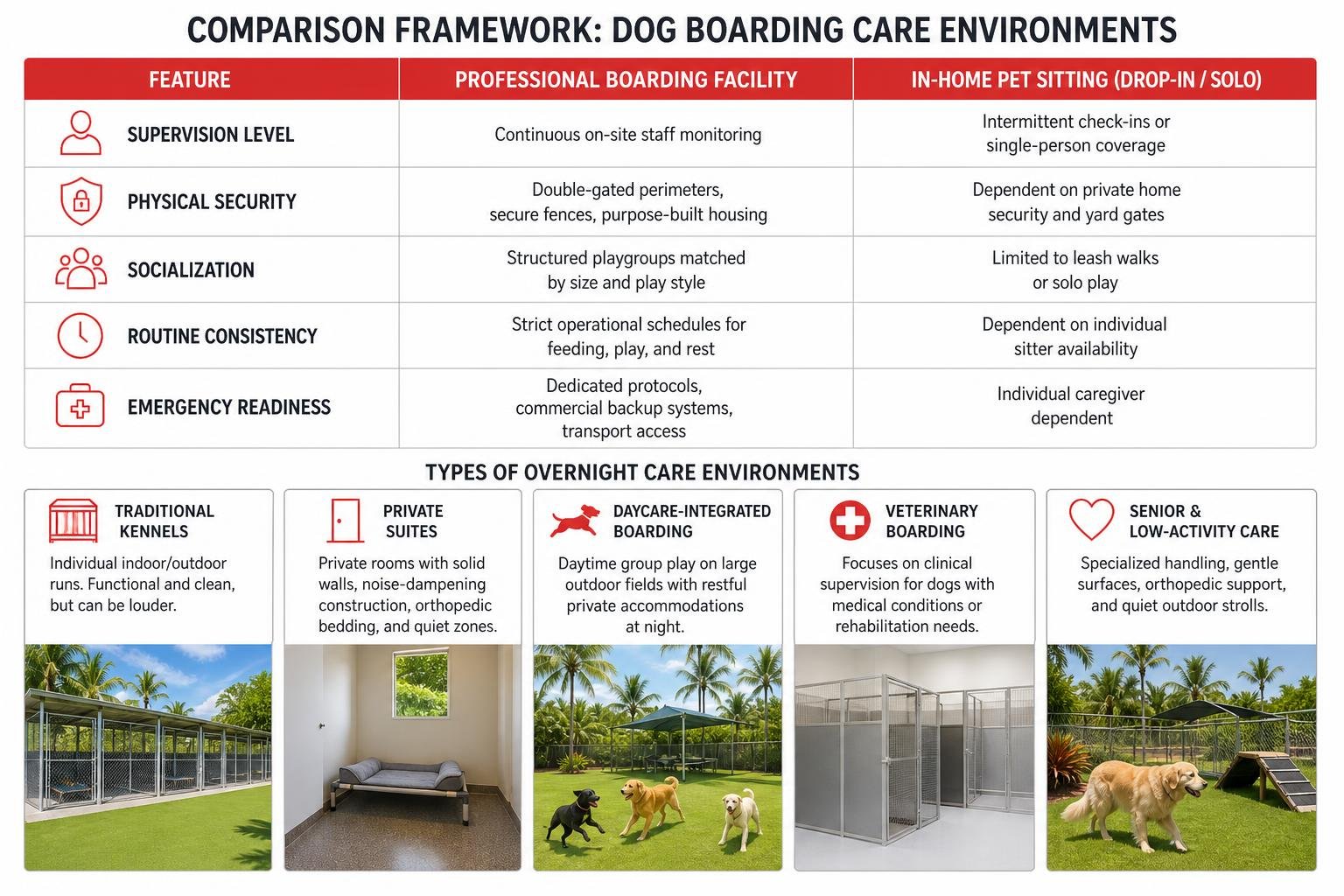
| Feature | Professional Boarding Facility | Staying Home (Solo Check-ins) |
|---|---|---|
| Supervision Level | Continuous on-site staff monitoring | Intermittent check-ins |
| Physical Security | Double-gated perimeters, secure fences, purpose-built housing | Dependent on standard residential security and yard gates |
| Socialization | Structured playgroups matched by size and play style | Limited to solo yard time or leashed walks |
| Routine Consistency | Strict operational schedules for feeding, play, and rest | Variable daily schedule |
| Emergency Readiness | Dedicated protocols, commercial backup systems, transport access | Limited solo emergency response resources |
Types of Overnight Care: Kennels, Suites, and Home-Like Environments
Not all boarding facilities operate the same way. As canine husbandry has advanced, facilities have created diverse housing styles and enrichment programs to suit various personalities, ages, and temperaments.

Traditional Kennels vs. Private Boarding Suites
- Traditional Boarding Kennels: These configurations often feature individual indoor/outdoor runs separated by solid partitions or chain-link fencing. While practical and functional for maintaining clean environments, they can sometimes be louder, which may feel overwhelming for sensitive or nervous dogs.
- Private Boarding Suites: Premium boarding facilities often utilize dedicated private rooms or suites. These spaces feature solid walls to minimize visual stress, noise-dampening construction, raised orthopedic bedding, and quiet zones that allow resting dogs to enjoy calm, undisturbed sleep.
Specialized Boarding Environments
- Daycare-Integrated Boarding: Ideal for energetic and social dogs, this setup pairs daytime group play on large outdoor fields with restful private accommodations at night.
- Senior and Low-Activity Care: Tailored for aging pets, these spaces offer specialized handling, gentle traction surfaces, orthopedic support, and quiet outdoor strolls away from boisterous younger pups.
- Enrichment-Focused Boarding: Designed for dogs who thrive with extra mental stimulation, these programs incorporate focused one-on-one activities, puzzle work, and sensory exploration alongside standard boarding routines.
Preparing Your Pet and Safety Standards for a Boarding Stay
Proper preparation ensures a smooth, relaxing visit for both you and your dog. Establishing a health and behavioral baseline well before departure allows your dog to settle into their new surroundings with confidence.
Health, Diet, and Behavioral Preparation
- Vaccination Protocols: Reputable facilities require current vaccinations to maintain a safe, disease-free environment. Essential core vaccines include Rabies, DHPP (Distemper, Hepatitis, Parvovirus, Parainfluenza), and Bordetella (kennel cough protection). Many facilities also require or strongly suggest canine influenza vaccination and a recent negative fecal screening.
- Trial Visits: Introducing your pet to the facility through a short daycare day or a single overnight trial stay helps them become familiar with the sights, sounds, and staff, building positive associations before an extended visit.
- Consistent Nutrition: Abrupt diet changes can cause gastrointestinal distress. Always package your dog's regular food in pre-measured, sealed containers with clear feeding instructions.
- Behavior and Routine: If your pet exhibits mild separation anxiety or nervous tendencies, foundational positive-reinforcement dog training helps build independence and resilience in unfamiliar settings.
Choosing the Right Facility: Welfare and Safety Protocols
When evaluating a boarding facility, schedule an in-person tour to assess their day-to-day operations. Look for the following safety and welfare markers:
- Ventilation and Climate Moderation: Well-ventilated indoor spaces with reliable temperature controls protect pets from heat stress and maintain fresh air circulation.
- Sanitation Standards: Clean, odor-free suites, non-porous surfaces that can be thoroughly sanitized, and fresh water bowls available at all times.
- Secure Containment: Double-gate entry systems, tall perimeter fencing, and durable latches prevent unexpected escapes.
- Trained, Attentive Staff: Knowledgeable team members who understand canine body language, use rewards-based handling techniques, and provide regular behavioral monitoring.
- Clear Emergency Procedures: Transparent protocols for veterinary care, severe weather plans, and routine owner updates throughout the stay.
Frequently Asked Questions About Dog Boarding
What is the true dog boarding meaning for first-time owners?
For a first-time owner, dog boarding means partnering with a professional facility that takes full responsibility for your dog's safety, daily care, nutrition, exercise, and emotional well-being while you are away. Rather than leaving your pet alone for long stretches at home, boarding provides a secure, structured setting filled with healthy activity, routine care, and attentive human companionship.
How far in advance should a boarding stay be scheduled?
For standard off-peak reservations, booking two to four weeks in advance is generally sufficient. However, for peak travel periods—such as major summer holidays, spring break, Thanksgiving, and winter celebrations—it is wise to reserve your dog's suite two to three months ahead of time. Facilities often fill quickly during these busy travel seasons, and booking early allows adequate time to complete trial visits and verify veterinary records.
Can dogs with special medical needs stay at a boarding facility?
Yes, many professional boarding facilities accommodate pets with special medical routines, dietary regimens, or mobility considerations. When booking, discuss your dog's specific needs with the team. Ensure all prescription medications are provided in their original pharmacy packaging with explicit instructions, and confirm that staff are comfortable administering scheduled oral or topical treatments throughout your pet's stay.
Conclusion
Understanding what overnight pet care entails gives you confidence that your companion is safe, engaged, and well-cared for while you travel. A structured environment that balances enriching outdoor play, balanced daily routines, and calm, private lodging ensures your dog enjoys their stay just as much as you enjoy your trip.
At Paws University, we have welcomed pets across West Hawaii since 2002 on our beautiful seven-acre campus. With expansive outdoor play yards, supervised activities, and dedicated animal care professionals, we provide your furry family members with a safe, rewarding experience. If you are preparing for upcoming travel, explore our premium overnight dog boarding options to ensure complete peace of mind while you are away.