How to Make Dog Boarding Safer for a Dog With Separation Anxiety
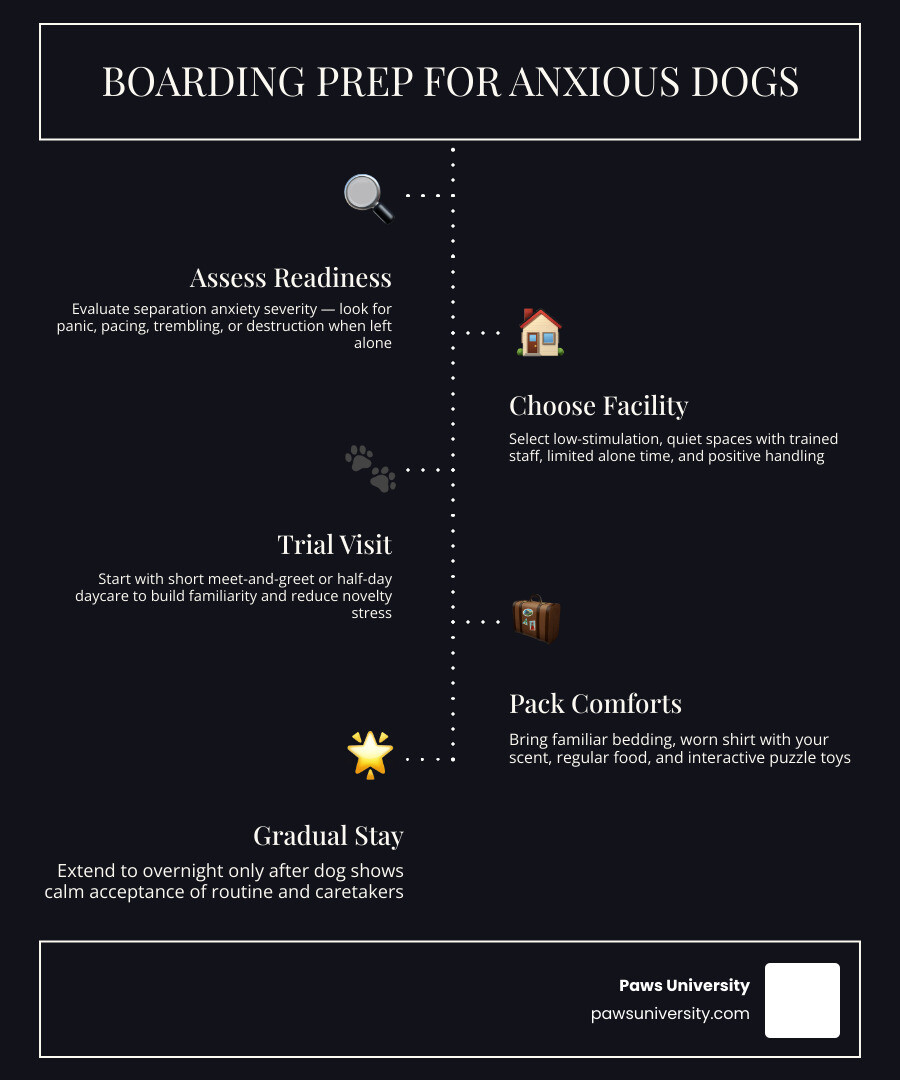
Dog boarding for separation anxiety can work when you match the care setting to your dog's needs and prepare well before your trip. Start with a short visit or daycare trial, choose a calm facility with trained supervision and limited alone time, and send familiar items such as your dog's regular food, bedding, or a worn shirt with your scent.
A dog who paces, trembles, will not eat, destroys barriers, panics when left alone, or reacts strongly to unfamiliar people or dogs may need a more individualized boarding plan. For these dogs, quiet rest areas, gradual introductions, predictable routines, one-on-one care, and positive handling matter far more than busy group play.
At Paws University in Kailua-Kona, our premium seven-acre campus gives dogs access to supervised outdoor space in Hawaii County's warm tropical setting. The goal is not to force a nervous dog to socialize quickly. It is to give them time, structure, exercise, and supportive care so they can settle at their own pace.
I am Allen Daniels, co-founder of Paws University, and I have spent more than 25 years using trust-based, reward-driven training methods with dogs facing behavior challenges. In this guide to dog boarding for separation anxiety, I will walk you through how to judge readiness, select appropriate care, and help your dog arrive more prepared.
Assessing Dog Boarding for Separation Anxiety: Is Your Dog Ready?
Leaving a dog who struggles with being away from you is never easy. Understanding the full scope of your companion's distress is the first step toward choosing the right care plan. While some dogs simply experience brief, mild uncertainty when their owners walk away, others undergo genuine panic responses. Exploring our ultimate guide to managing separation anxiety in dogs can help you evaluate baseline stress triggers before deciding on an overnight stay.
When evaluating readiness, look closely at how your dog handles unfamiliar environments, brief periods of confinement, and interactions with novel caretakers. Dogs experiencing true separation anxiety in dogs often exhibit elevated physiological stress markers, such as dilated pupils, heavy panting without physical exertion, sweaty paw pads, and hyper-vigilance.
Recognizing Severe Isolation Distress vs. Mild Boarding Nerves
It is essential to distinguish between standard boarding jitters and severe isolation distress. Mild nerves often look like a slight hesitation at drop-off, soft whining that resolves within minutes, or cautious exploration of a new suite.
Severe isolation distress, however, involves sustained distress behaviors:
- Continuous, frantic vocalization (howling, barking, or screaming) that does not abate after thirty minutes.
- Relentless pacing or inability to settle down to sleep.
- Complete anorexia (refusing even high-value treats and fresh water).
- Destructive attempts to dig through kennel floors or bite door latches.
- Trembling, drooling, or spontaneous gastrointestinal upset.
If your dog displays severe physical symptoms, you can explore proven anxious dog solutions to help build baseline coping mechanisms before booking an extended stay away from home.
Evaluating Boarding Facility Options
Not every facility is equipped to handle fearful behaviors. Standard high-volume kennels often operate in noisy, indoor environments with high dog turnover, which can trigger sensory overload. In contrast, specialized facilities emphasize routine preservation, physical separation between suites to avoid barrier frustration, and low-stimulation outdoor environments.
Before making a reservation, consider determining if dog boarding is right for your dog by comparing standard setups against specialized care models:
| Feature | Standard Kennel Setup | Specialized Low-Stress Boarding |
|---|---|---|
| Noise Level | Frequent barking; high echo | Sound-dampened suites; quiet zones |
| Daily Routine | Rigid, group-focused schedules | Flexible, individualized care routines |
| Staff Oversight | High dog-to-staff ratios | Low ratios with behavioral monitoring |
| Play Dynamics | Large, high-arousal playgroups | Controlled, small groups or solo outdoor enrichment |
| Alone Time | Extended unmonitored overnight periods | Structured companionship and regular checks |
Choosing the Right Facility and Environment
A nervous dog needs an environment designed around psychological safety. Reviewing a comprehensive dog kennel guide for anxious dogs highlights why physical facility design plays such a vital role in reducing daily cortisol levels.
Choosing the Right Dog Boarding for Separation Anxiety Setup
The physical architecture of a boarding suite directly impacts an anxious dog's emotional state. Solid visual barriers between suites prevent reactive fence-running and barking wars between neighbors. Sound-buffering acoustic panels or continuous, gentle ambient sounds help mask sudden noises that might startle a resting pet.
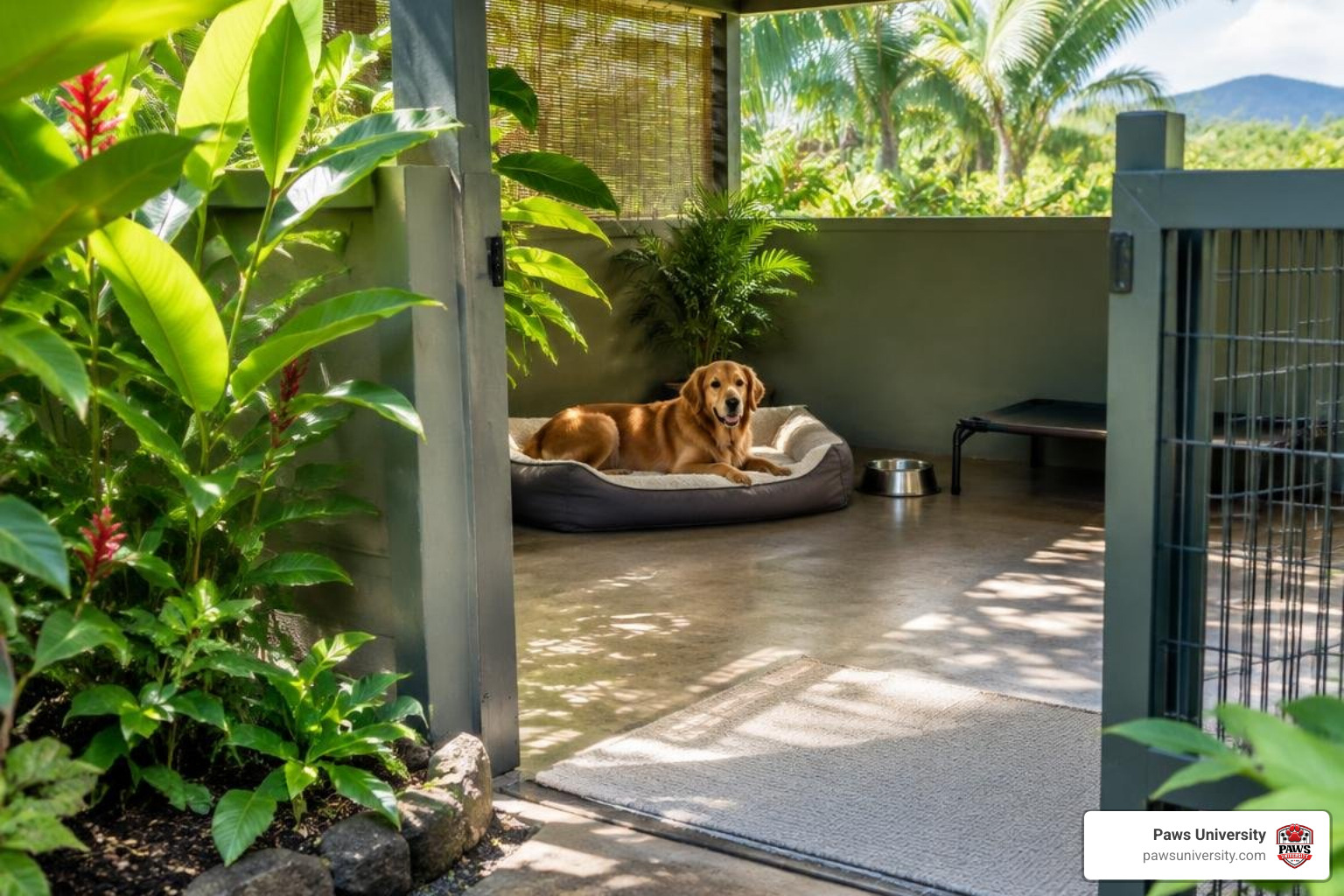
Look for suites that provide natural daylight, soft non-slip flooring, and direct access to secure outdoor runs. Having access to expansive, open-air green spaces allows dogs to decompress through natural sniffing and gentle movement rather than feeling confined indoors.
Staff Ratios, Routine Consistency, and Positive Handling
If the ratio of staff to dogs is too great, attendants cannot keep up with individual sanitation, hygiene, and nuanced body language monitoring. Anxious dogs thrive under predictable daily rhythms where meals, enrichment, potty breaks, and rest happen at consistent times each day.
Staff should utilize exclusively rewards-based handling techniques. Fearful dogs must never face harsh verbal corrections, physical intimidation, or forced interactions. Implementing practical ways to relieve dog separation anxiety through patient, treat-based relationship building helps dogs feel safe with their new caretakers.
Accommodations for Reactive, Aggressive, or Extremely Fearful Dogs
Most boarding facilities turn away reactive, aggressive, anxious, and nervous dogs because their environments cannot accommodate individualized space requirements. Specialized facilities provide dedicated, secure suites that offer complete visual shielding and separate outdoor turnout yards.
For pets needing minimal direct physical handling during peak panic periods, specialized layouts like double-door entryways or guillotine doors allow caretakers to feed and clean without causing unnecessary confrontation. For complex cases involving extreme reactivity alongside separation anxiety, look for a facility with dedicated secure setups that prioritize stress reduction and behavioral management.
Essential Questions to Ask Boarding Facilities Before Booking
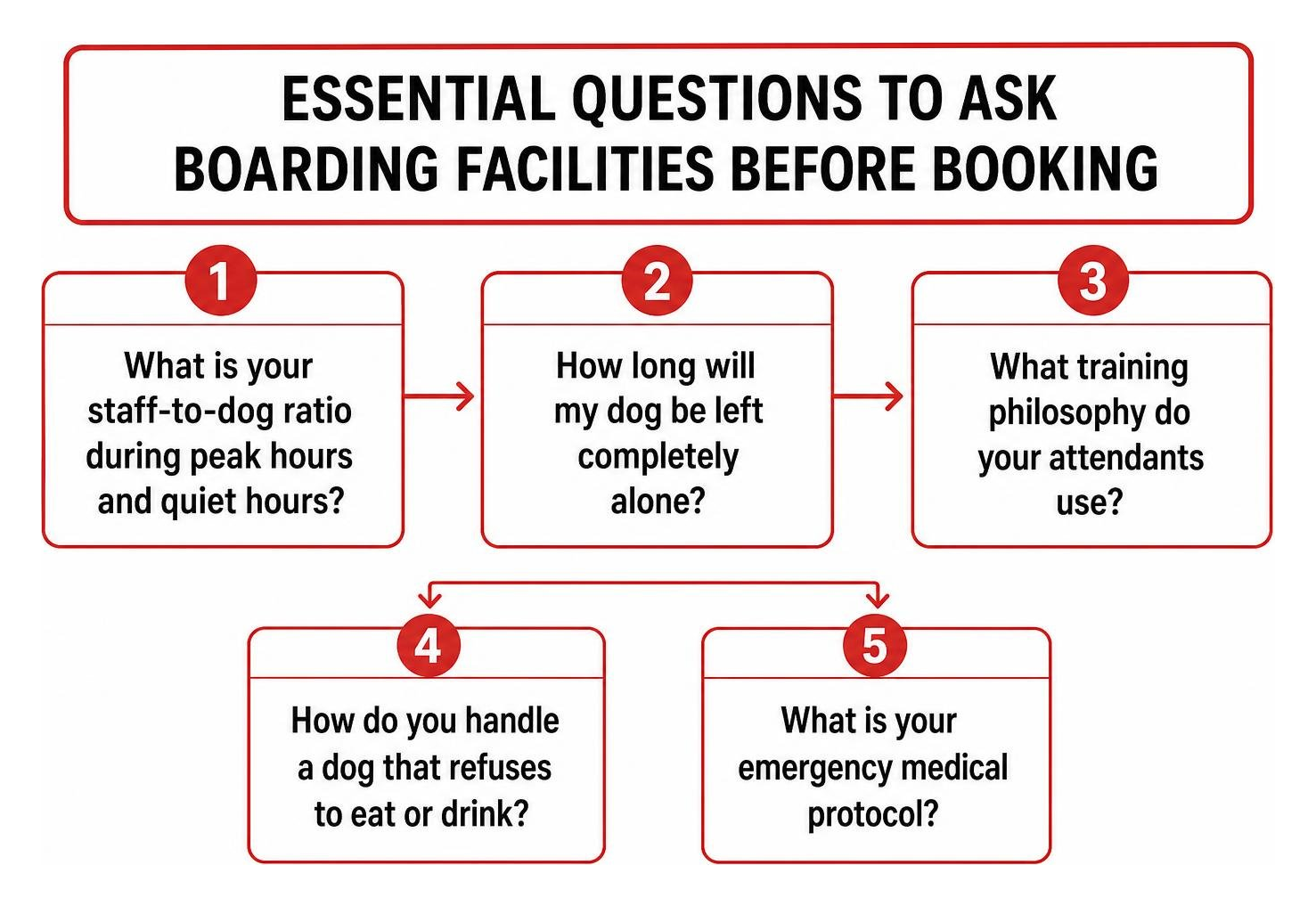
Before entrusting your pet to any facility, conduct a thorough interview. Asking detailed operational questions ensures you are vetting reliable pet boarding options effectively:
- What is your staff-to-dog ratio during peak hours and quiet hours? Lower ratios ensure attendants have time to sit with anxious pets and monitor subtle appetite changes.
- How long will my dog be left completely alone? For dogs with separation anxiety, prolonged stretches of unmonitored isolation can trigger acute distress episodes.
- What training philosophy do your attendants use? Ensure all team members adhere strictly to positive reinforcement and rewards-based handling.
- How do you handle a dog that refuses to eat or drink? Ask about their protocols for hand-feeding, offering high-value toppers, and monitoring hydration.
- What is your emergency medical protocol? Verify how they contact your veterinarian if stress-induced gastrointestinal symptoms arise.
Actionable Steps to Prepare Your Dog for a Successful Stay
Preparing an anxious dog for boarding is an incremental process. Working through in-depth strategies for dog attachment issues well in advance of your departure builds emotional resilience.
Pre-Trip Protocol: Dog Boarding for Separation Anxiety Checklist
Acclimation should begin several weeks prior to your travel dates:
- [ ] Initial Meet-and-Greet: Bring your dog to the facility just to walk around the perimeter, sniff the grounds, and receive treats from the team without being left behind.
- [ ] Half-Day Daycare Session: Book a short morning session to gauge how your dog reacts to the sights, sounds, and staff in your absence.
- [ ] Single Overnight Trial: Schedule a one-night trial stay when you are still in town. Following a guide on preparing for overnight dog boarding stays helps test how your pup settles during evening hours.
- [ ] Detailed Behavior Profile: Write out a clear summary of your dog's specific fear triggers, favorite resting spots, and comfort signals for the care team.

What to Pack: Comfort Items, Scent Aids, and Familiar Staples
Packing familiar sensory anchors brings home comforts directly into your dog's boarding suite. Reviewing essential tips for leaving anxious dogs can help you assemble an effective comfort kit:
- Unwashed Clothing: An unwashed t-shirt or pillowcase carrying your natural scent provides a powerful calming anchor.
- Familiar Bedding: Bring their regular crate pad or blanket rather than relying entirely on facility-provided beds.
- Pre-Portioned Food: Sudden diet shifts cause stomach upset; pack your dog's standard food in pre-measured bags along with favorite treats.
- Lick Mats and Food Puzzles: Repetitive licking releases endorphins that naturally lower heart rates; provide durable puzzle toys the staff can fill during rest periods.
Frequently Asked Questions About Boarding Dogs with Separation Anxiety
What should I do if my dog panics during an extended boarding stay?
If a dog enters an acute panic state during an extended stay, the facility staff should immediately transition the dog to a quiet, low-stimulation rest suite away from all activity. Caretakers should offer soothing, low-pressure enrichment like frozen lick mats, avoid forced physical handling, and implement the emergency contact protocol agreed upon with the owner and their veterinarian.
How long does it take for an anxious dog to settle in boarding?
Decompression varies by individual temperament. Some dogs begin to settle within the first hour as they explore their suite. Others may take a few days—especially during longer boarding stays. Establishing a predictable daily routine of quiet rest, gentle outdoor exercise, and regular reward-based interactions helps accelerate this adjustment period.
Can dog daycare help prepare my dog for overnight boarding?
Yes. Regular, positive visits for supervised daycare allow your dog to form trust-based bonds with the care staff and become familiar with the environment. Building positive associations during short daytime visits is an excellent way of teaching dogs confidence when away from home, making the eventual overnight transition far smoother.
Conclusion
Boarding a dog with separation anxiety requires thoughtful planning, patient acclimation, and an environment tailored to emotional comfort. By prioritizing low-stimulation spaces, rewards-based handling, and gradual trial visits, you can ensure your dog feels secure and supported while you are away. At Paws University, we provide individualized, supervised care on our spacious seven-acre campus in Kailua-Kona, offering peace of mind for pet parents across Hawaii County. When you are ready to plan your pup's next stay, explore low-stress overnight dog boarding services designed to help every dog relax at their own pace.