Why Individual Dog Training Near Me Gets Real Results — and How to Find It
If you're looking for individual dog training near me, here's a quick answer:
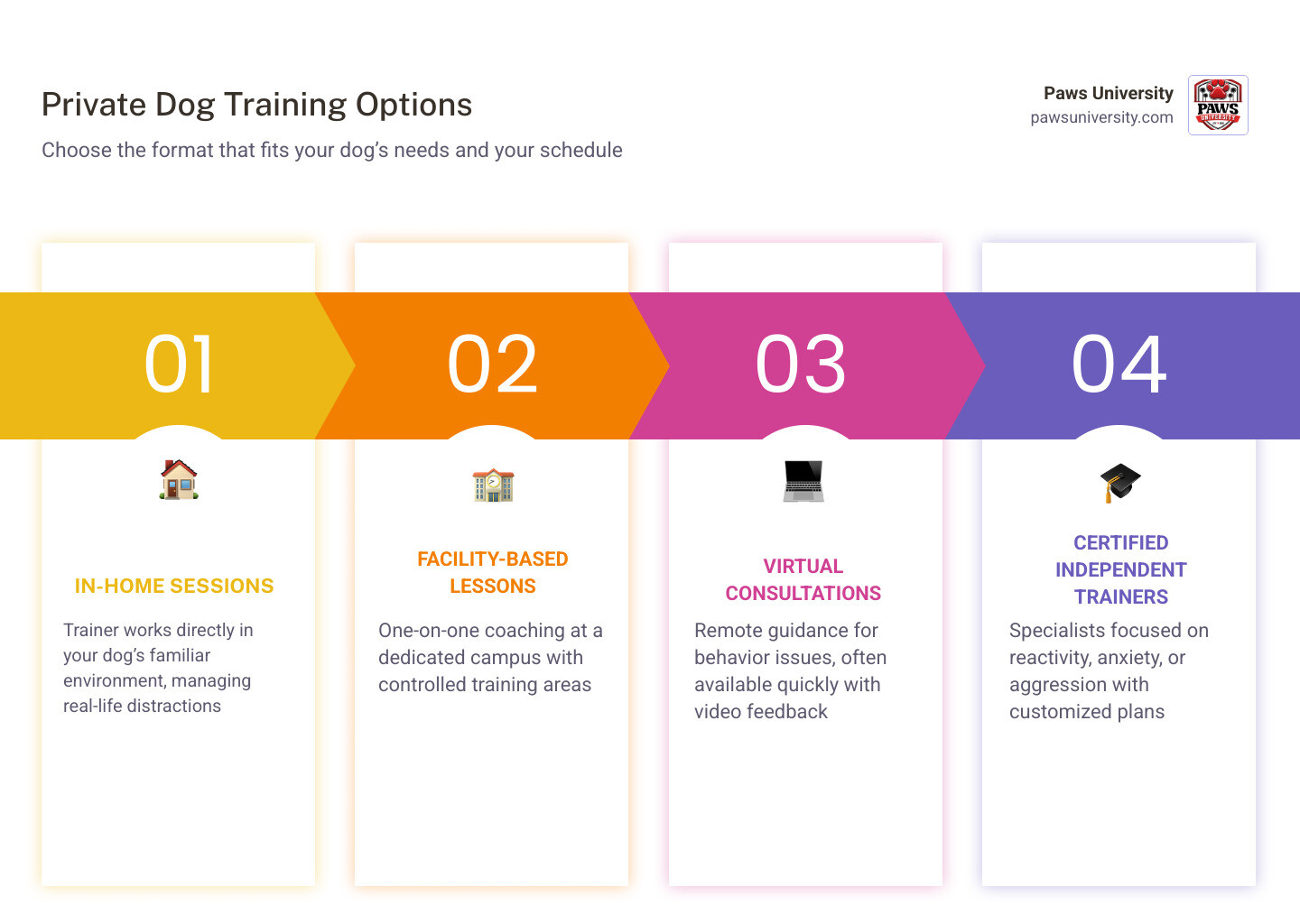
Your best options for private dog training typically include:
- In-home training — a trainer comes to your house and works with your dog in their own environment
- Facility-based private sessions — one-on-one lessons at a dedicated training campus
- Virtual consultations — remote sessions for guidance on behavior issues, often available quickly
- Humane society or shelter programs — private lessons offered by certified staff
- Independent certified trainers — private practitioners specializing in specific issues like reactivity, anxiety, or aggression
The key difference from group classes: you get the trainer's full attention, and the plan is built around your dog — not a curriculum designed for six different dogs at once.
Living with a dog that barks constantly, destroys furniture, or lunges at strangers on a walk is exhausting. Group classes can help with basic manners, but they aren't built for dogs with real behavioral challenges. When a dog is anxious, reactive, or struggling with something specific, a one-on-one approach changes everything.
Private training puts the focus entirely on your dog's history, temperament, and triggers — and on you as the handler. Research consistently shows that early, personalized intervention leads to better long-term outcomes for dogs with fear, aggression, or separation anxiety.
I'm Allen Daniels, co-founder of Paws University in Kailua-Kona, and my background in individual dog training near me spans over 25 years — starting with operant conditioning techniques I developed as a professional dolphin trainer before applying them to dogs. That science-backed, trust-first approach is the foundation of everything we do at Paws University.
What is Individual Dog Training and How Does It Differ from Group Classes?
When you begin searching for individual dog training near me, it is helpful to understand exactly what you are getting compared to a standard group class.
Group classes are fantastic for basic socialization and teaching foundational manners in a highly distracting environment. However, they operate on a fixed curriculum. In a typical group class—which often hosts four to six dogs—the instructor must divide their time equally among all participants. If your dog struggles with a specific issue like resource guarding, severe leash pulling, or extreme shyness, a group class can quickly become overwhelming, overstimulating, and counterproductive.
Individual dog training, often referred to as private dog training, is a one-on-one learning experience. In this format, a dedicated behavioral coach works directly with you and your dog.
Here is how the two formats compare:
- Customized Curriculum: Instead of following a rigid week-by-week lesson plan, individual training is designed around your dog’s specific behavioral profile and your personal lifestyle goals. If your dog already knows how to sit but loses their mind when the doorbell rings, we skip the basics and focus entirely on doorbell desensitization.
- Distraction Management: In a group class, distractions are constant and uncontrollable. In private sessions, we control the environment. We start in a low-distraction setting—such as your living room or a quiet corner of our training facility—and slowly introduce distractions only when your dog is ready.
- Pace of Learning: Every dog learns at a different rate. Private training allows us to move as quickly or as slowly as your dog needs. We won’t rush past a behavior your dog is struggling to grasp, nor will we waste time lingering on a command they mastered in five minutes.
- Handler Education: Private training is as much about teaching you as it is about training your dog. You get real-time feedback on your leash handling, timing, and body language, which builds your confidence as a handler.
If you want to explore how customized, one-on-one coaching can help you and your canine companion, you can learn more about our specialized Private Training services designed to build a harmonious relationship.
Key Benefits of Choosing Individual Dog Training Near Me
Opting for a private trainer offers several distinct advantages that can fast-track your dog's progress and make the training journey much more enjoyable for both of you.

Tailored Solutions for Real-World Scenarios
No two dogs are identical, even within the same breed. A behavior plan that works for an energetic young Golden Retriever might completely fail when applied to a sensitive rescue dog. Private training allows us to analyze your dog’s unique personality, history, and home environment to create a highly targeted plan.
Flexible Scheduling to Fit Your Busy Life
Group classes require you to commit to the same day and time for several consecutive weeks. If you miss a class, catching up can be difficult. Individual training offers the flexibility to schedule sessions around your personal and professional calendar.
Building Handler Confidence
Many dog owners feel embarrassed or stressed when their dog misbehaves in a group setting. This anxiety travels right down the leash, making the dog even more reactive. Private training provides a safe, judgment-free zone where you can ask questions, make mistakes, and practice your skills under the supportive eye of a professional coach.
To gain a deeper understanding of how structured learning can transform your dog's behavior, check out The Ultimate Guide To Dog Obedience Training for expert tips on building a solid behavioral foundation.
What Behavioral Issues are Best Addressed with One-on-One Training?
While basic obedience commands like "sit," "down," and "stay" can easily be learned in a group setting, more complex behavioral challenges require the precision of private training. Trying to address deep-seated behavioral issues in a busy group class can actually worsen the behavior by flooding the dog with too many stressors at once.
The following issues are best addressed through dedicated, one-on-one training:
- Resource Guarding: If your dog growls, snaps, or freezes when you get close to their food bowl, toys, or favorite sleeping spots, this is resource guarding. It is a fear-based behavior that requires careful, systematic desensitization in a controlled environment to ensure safety.
- Severe Leash Pulling: Walking down the street shouldn't feel like a game of tug-of-war. Private sessions allow us to focus on leash mechanics, handler focus, and loose-leash walking patterns without the constant distraction of other neighborhood dogs.
- Fear and Aggression: Dogs that display aggressive tendencies—such as growling, lunging, or snapping at people or other animals—need a highly structured, low-stress rehabilitation plan.
If you are dealing with a dog showing signs of reactivity or aggression, read our guide on Barking Up The Right Tree To Find Aggression Training In Your Area to learn how to safely address these serious concerns.
Addressing Reactivity and Anxiety Through Individual Dog Training Near Me
Reactivity and anxiety are among the most common reasons pet parents seek out individual dog training near me. A reactive dog isn't necessarily an aggressive dog; rather, they are overreacting to normal stimuli in their environment due to fear, frustration, or lack of socialization.

In a private setting, we utilize rewards-based techniques like systematic desensitization and counter-conditioning.
- Desensitization involves exposing your dog to their trigger (such as another dog or a stranger) at a distance where they notice it but remain completely calm.
- Counter-conditioning means pairing the sight of that trigger with something incredibly valuable, like a piece of fresh chicken or a favorite toy.
Over time, this changes your dog’s underlying emotional response from fear and anxiety to positive anticipation. Because we prioritize your dog's emotional wellbeing, we never use force, pain, or intimidation. Aversive tools like prong, shock, or choke collars can actually increase anxiety and trigger-association, making reactive behaviors worse in the long run.
How to Find and Evaluate Qualified Private Trainers
The dog training industry is currently unregulated, which means anyone can print a business card and call themselves a dog trainer. Because of this, it is crucial to do your homework and carefully evaluate a trainer's credentials and philosophy before trusting them with your beloved pet.
When searching for a qualified professional, look for the following key indicators:
- Professional Certifications: Look for trainers who hold credentials from respected, independent certifying bodies. Examples include the Certification Council for Professional Dog Trainers (CCPDT). These organizations require trainers to pass rigorous exams, log hundreds of hours of hands-on experience, and adhere to a strict code of ethics.
- Rewards-Based Philosophy: Ensure the trainer uses positive reinforcement, science-backed methods. A great trainer should be able to explain the behavioral science behind their techniques without relying on outdated "alpha dog" or dominance theories.
- Continuing Education: Behavior science is constantly evolving. Ask potential trainers how they keep their skills sharp. Do they attend workshops, conferences, or specialized seminars?
For example, if you are looking for certified professionals, you can research credentialed individuals through independent directories such as the Certification Council for Professional Dog Trainers to find qualified practitioners who adhere to high standards of humane training.
Selecting the Right Program for Individual Dog Training Near Me
Private training comes in several different formats, and the right choice depends on your dog's specific needs, your schedule, and your location.

| Training Format | Best For | Key Advantages | Considerations |
|---|---|---|---|
| In-Home Lessons | Territorial behaviors, house training, separation anxiety, doorbell manners | Training occurs in the dog's natural environment; highly convenient for the owner | Higher potential distractions in the home; trainer must travel to you |
| Facility-Based Sessions | Reactivity, obedience under controlled distractions, socialization | Access to specialized equipment, controlled environments, and neutral territory | Requires transporting your dog to the facility |
| Virtual Consultations | Urgent behavior advice, separation anxiety, initial history taking | Rapid access to experts; low-stress for extremely fearful dogs | No direct, hands-on physical intervention by the trainer |
If you are looking for specialized virtual training support for issues like separation anxiety, virtual consultations with certified behavior consultants can provide science-based guidance and structured plans tailored to your home environment.
7 Local Training Programs and Formats to Consider in Hawaii
For pet parents living in Hawaii County, finding the right format for individual dog training near me is all about matching your lifestyle with our unique tropical environment. Whether you are navigating the bustling streets of Kailua-Kona or enjoying a quiet life in Hilo, here are seven highly effective local training programs and formats to consider:
1. Premium Facility-Based Private Lessons
Taking place at a dedicated, secure pet campus, facility-based private lessons offer a controlled environment where we can systematically introduce distractions. This is the gold standard for teaching focus, loose-leash walking, and polite greetings on neutral ground.
2. In-Home Private Coaching
For behaviors that only happen at home—such as guarding the sofa, barking at the delivery person, or struggling with potty training—in-home private coaching is incredibly effective. A trainer working with your dog in their everyday environment can identify subtle environmental triggers you might miss.
3. Daycare-Integrated Training Packages
If you have a busy work schedule, daycare-integrated training allows your dog to receive professional, one-on-one training sessions during their daycare stay. This combines the benefits of supervised socialization with structured learning, ensuring your dog goes home both physically tired and mentally satisfied. You can read more about how these work in our In-Depth Guide To Dog Daycare Training Packages.
4. Board-and-Train / Overnight Training Camps
For intensive behavioral foundation building, overnight training camps are a popular option. Your dog stays at a premium facility and receives multiple daily individual training sessions, followed by supervised play and structured relaxation. To see if this immersive format is right for your dog, explore The Ultimate Guide To Overnight Dog Training Camps And What To Expect.
5. Private Puppy Foundation Lessons
Puppies have short attention spans and delicate immune systems, making traditional group classes tough for very young pups. Private puppy lessons focus on critical early socialization, crate training, house training, and basic manners in a clean, safe environment tailored to their developmental stage. Check out our comprehensive Kona Dog Training Guide From Puppies To Pros to set your young pup up for a lifetime of success.
6. Specialized Reactivity and Anxiety Private Programs
If your dog barks, lunges, or panics when they see other dogs or strangers, a specialized private program focusing on desensitization and counter-conditioning is essential. These programs are designed to slowly build your dog's confidence and teach them alternative, calmer coping mechanisms.
7. Virtual Behavior Consultations
For urgent behavioral issues, virtual consultations offer rapid access to expert advice. This format is incredibly valuable for initial history-taking, mapping out management plans, and addressing separation anxiety without adding the stress of a stranger entering your home.
Frequently Asked Questions about Private Dog Training
What should I expect during a private training session?
During your first private session, your trainer will conduct an in-depth behavioral assessment. We will discuss your dog's history, daily routine, diet, and your specific training goals. Once we establish a baseline, we will guide you through hands-on exercises, demonstrating proper timing, reward delivery, and leash mechanics. At the end of each session, you will receive customized homework and practical exercises to practice with your dog before the next meeting.
To see how we structure our behavioral lessons to set both you and your pet up for success, read about Mastering Manners With Kona Pet Training Classes.
How long does individual dog training take to see results?
While many owners notice positive changes in their dog's focus and responsiveness within the first few sessions, true behavior modification is a journey, not a quick fix. Consistency is the magic ingredient. Spending just 5 to 10 minutes practicing your homework daily will yield far better results than a single marathon training session once a week.
If you want to discover how we keep training engaging, lighthearted, and highly effective, explore Fun Obedience Classes Kona Dogs Actually Enjoy.
What questions should I ask a potential trainer before booking?
Before hiring a private trainer, we highly recommend asking them these three essential questions:
- "What training methods and tools do you use to teach new behaviors or address behavior problems?" Look for answers that focus on positive reinforcement, high-value rewards, and behavioral science. Avoid trainers who rely on physical corrections, dominance, or fear.
- "What is your plan if my dog gets stressed, shut down, or over-aroused during a session?" A professional trainer should have a clear safety and management protocol, which includes taking breaks, lowering the criteria, or increasing the distance from a trigger.
- "What specific experience do you have handling my dog's particular issue (e.g., resource guarding, reactivity, separation anxiety)?" Ensure they have a proven track record of successfully helping other dogs with similar behavioral challenges using humane methods.
Conclusion
Finding the right individual dog training near me is one of the greatest investments you can make in your dog's long-term happiness and your own peace of mind. By choosing a personalized, rewards-based approach, you aren't just teaching your dog to obey commands—you are building a deep bond of trust and mutual understanding that will last a lifetime.
At Paws University, we have been West Hawaii’s premier pet care facility since 2002. Located on a beautiful, spacious seven-acre campus in Kailua-Kona, we provide a warm, tropical setting where dogs can thrive. Our highly trained team specializes in positive reinforcement, supervised play, and individualized care designed to reduce behavioral issues and bring out the absolute best in your canine companion.
Are you ready to transform your relationship with your dog and enjoy calmer, happier days together? Start your training journey today and let our family help yours!