
Is Daycare Safe for Reactive Dogs? Here Are Your Best Options
Daycare for reactive dogs is possible — but only with the right setup. Not every facility is equipped to handle a dog that barks, lunges, or shuts down around other dogs. Here's a quick overview of your safest options:
| Option | Best For |
|---|---|
| Specialized reactive dog daycare | Dogs with mild to moderate reactivity |
| One-on-one enrichment programs | Fear-based or highly reactive dogs |
| Private suites with solo activities | Dogs that need a low-stimulation environment |
| Board-and-train programs | Dogs that need structured behavior modification |
| In-home pet sitters | Dogs that struggle in any facility setting |
Reactive dogs aren't bad dogs. They're simply dogs that respond too strongly to everyday triggers — other dogs, strangers, bikes, or loud sounds. That response might look like barking, lunging, or freezing up entirely. For many West Hawaii pet parents, it means one stressful thing: finding safe, supervised care feels nearly impossible.
The good news is that the right facility — one built around your dog's needs, not a one-size-fits-all group play model — can make a real difference.
I'm Allen Daniels, co-founder of Paws University and a behavioral trainer with over 25 years of experience working with dogs of all temperaments, including hands-on work with daycare for reactive dogs right here on Hawaiʻi Island. My background in operant conditioning, developed during a decade training marine mammals, shapes every protocol we use at our seven-acre Kailua-Kona campus.
Basic daycare for reactive dogs vocab:
- How do I stop my dog from growling at me
- How do I stop my dog growling at other dogs
- How do I stop my puppy from growling and biting
Understanding Reactivity vs. Aggression in Dogs
One of the most common misconceptions we encounter is that a reactive dog is an "aggressive" dog. In reality, reactivity and aggression are two very different things.
Reactivity is an over-the-top reaction to normal stimuli. Imagine a person who shouts in every conversation—they aren't necessarily trying to fight; they just don't know how to regulate their volume. For a dog, this often manifests as leash reactivity. A dog might be perfectly friendly off-leash but turn into a lunging, barking whirlwind the moment a leash is attached. This is usually due to frustration ("I want to go say hi!") or fear ("That dog is scary and I can't get away!").
Aggression, on the other hand, is a deliberate intent to cause harm. Many dogs labeled as aggressive are actually just highly reactive and have never been taught how to manage their big emotions.
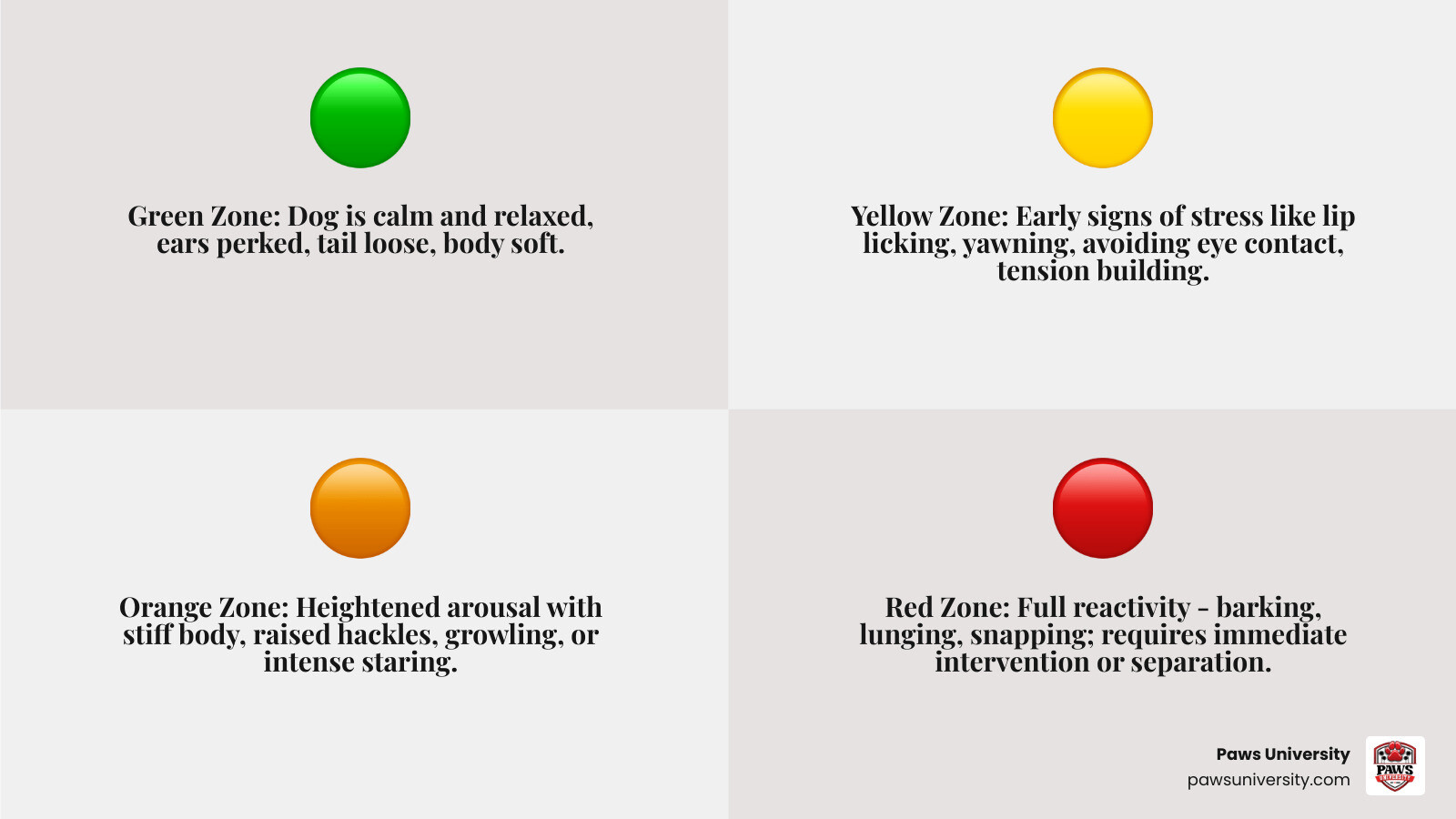
In a daycare environment, "trigger stacking" is a major concern. This happens when a dog experiences multiple stressors in a short period. A loud truck passes (stressor one), they see a dog they don't like (stressor two), and then a stranger tries to touch them (stressor three). Eventually, the dog hits their "red zone" threshold and has a meltdown. Understanding this is key to reducing dog behavior issues without pulling your hair out.
If you’ve noticed your pup getting stiff or vocal, it’s worth exploring how do I stop my dog growling at other dogs to identify if they are reacting out of fear or simple over-excitement. You can also browse our category/dog aggression for deeper insights into behavioral roots.
Choosing the Right Daycare for Reactive Dogs
Not all daycares are created equal. For a reactive dog, a traditional "free-for-all" playroom is often a recipe for disaster. These chaotic environments can actually worsen reactivity by teaching the dog that other dogs are unpredictable and scary.
When looking for daycare for reactive dogs, the facility's physical layout is just as important as the staff's philosophy. Visual barriers are essential. If a reactive dog can see dozens of other dogs playing while they are being moved through a hallway, their stress levels will skyrocket before they even reach their destination.
Low dog-to-staff ratios are another non-negotiable. The Pet Professional Guild typically recommends a ratio of no more than 15 dogs per trained staff member, but for reactive dogs, that ratio should be even lower. This ensures that a human is always present to read body language and intervene before a reaction happens.
At Paws University, we believe in the ultimate guide to doggie daycare with training and safe play. Our staff is trained to recognize the subtle signs of high arousal—like a tucked tail, a hard stare, or a lip lick—so we can redirect the dog to a calmer activity immediately.
Key Features of a Premium Daycare for Reactive Dogs

A premium facility should feel like a retreat, not a high-pressure social club. Here are the features that make a difference:
- Strictly Rewards-Based Reinforcement: We never use punishment, which only increases fear and reactivity. Instead, we use high-value treats (like chicken or cheese) to create positive associations with triggers.
- Decompression Lounges: Every dog needs a break. Mandatory nap times in quiet, low-traffic areas allow a dog's cortisol levels to drop, preventing trigger stacking.
- Visual Fencing: Using solid barriers or tropical foliage to block sightlines helps reactive dogs feel secure in their own space.
- Expert Supervision: Staff should have a deep understanding of category/dog socialization and know how to match playmates based on personality, not just size.
For those in West Hawaii, our safe and supervised pet daycare Kailua Kona guide provides a roadmap for what to expect from a high-quality island facility.
Questions to Ask Prospective Facilities
Before you enroll your "spicy" pup, interview the facility. Don't be afraid to be the "annoying" pet parent—your dog's safety depends on it!
- Do you have quiet, low-traffic areas for sensitive dogs?
- How do you handle entries and exits? (Reactive dogs often struggle most at the front door).
- What is your protocol if my dog has a reaction? (They should mention redirection and decompression, not punishment).
- How often will I receive updates on my dog's behavior?
- Are your staff trained in canine body language?
A transparent facility will be happy to answer these. You can learn more about our specific daycare protocols to see how we handle these challenges.
Specialized Programs and Alternatives to Group Play
If your dog is truly overwhelmed by other dogs, they shouldn't be forced into group play. In fact, forcing a fearful dog to "socialize" is like forcing someone with a fear of heights to go skydiving—it usually just causes trauma.
Instead, look for specialized programs. Some facilities offer "one-on-one" play, where your dog gets exclusive time with a skilled human handler. This allows them to get the exercise they need without the stress of a pack environment.
Solo enrichment activities are another fantastic alternative. Scent work, puzzle toys, and agility hurdles provide mental stimulation that is often more tiring—and more rewarding—than a chaotic wrestling match. This is a core part of reducing dog behavior issues without pulling your hair out.
Customized Daycare for Reactive Dogs and Private Suites
For dogs that need a very specific environment, private suites are a game-changer. These aren't just kennels; they are premium spaces designed for relaxation. Many include calming aids like soft music or pheromone diffusers.
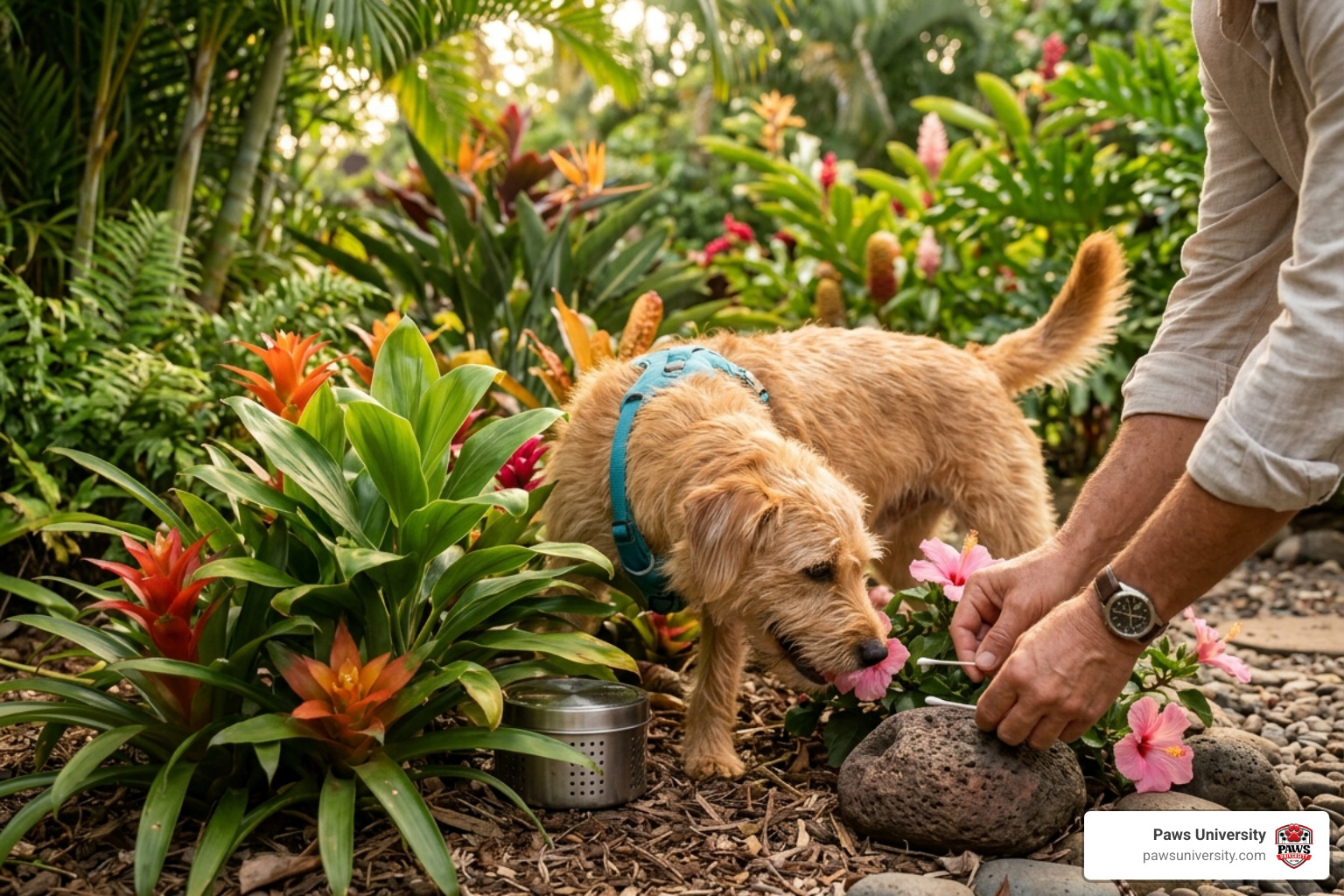
Customized care plans should also be "breed-aware." A reactive Border Collie has different needs than a reactive Bulldog. By matching activities to a dog's natural instincts—like fetching for retrievers or "find it" games for hounds—we can help them find confidence. If your dog is particularly nervous, check out our stop the shakes with these proven anxious dog solutions.
Preparing Your Dog for a Successful Stay
Preparation is the secret sauce to a successful daycare experience. You wouldn't send a child to school without teaching them their ABCs; don't send a reactive dog to daycare without some foundation skills.
| Feature | Traditional Group Daycare | Premium Solo/Small Group Enrichment |
|---|---|---|
| Social Interaction | Constant, high-intensity pack play | Controlled, one-on-one or mentor dog sessions |
| Stress Levels | High risk of trigger stacking | Low, with mandatory decompression |
| Supervision | General monitoring | Training-centric, active engagement |
| Focus | Physical exhaustion | Behavioral wellness and mental stimulation |
Trial Visits are Essential In Hawaii County, the tropical heat can add an extra layer of stress. We always recommend trial visits. Start with a few hours to see how your dog settles in. This allows us to perform a thorough evaluation of their triggers in a controlled setting.
Training at Home Work on "Look" or "Watch Me" commands using high-value treats. This builds a "treat magnet" effect where your dog learns to look at you when they see a trigger, rather than reacting to it. This is a big step in learning how to turn your lone wolf into a social star.
Also, ensure your dog is comfortable in a crate or private suite for short periods. This prevents the "great crate escape" behaviors and helps them see their quiet space as a sanctuary. For tips on this, read the great crate escape from nonstop barking.
Professional Training and Behavior Modification
Sometimes, daycare for reactive dogs needs to be paired with professional training. If reactivity is severe, a board-and-train program might be the best jumpstart. However, be cautious: only choose programs that use strictly rewards-based methods. Punishment-based training can temporarily "shut down" a dog's behavior, but it doesn't change how they feel, which often leads to an even bigger explosion later.
Working with on-site behaviorists allows for a seamless transition. The trainer can work on desensitization (gradually exposing the dog to triggers at a distance) and counter-conditioning (changing the dog's emotional response from "scary!" to "yay, treats!").
If your dog's reactivity is linked to being away from you, you might also find help in our category/separation anxiety resources.
Frequently Asked Questions about Reactive Dogs
Can a reactive dog safely attend a premium daycare?
Yes, provided the daycare offers specialized tracks like solo enrichment, one-on-one play, and visual barriers. A "standard" daycare where all dogs are thrown into one room is usually not safe for a reactive dog.
What is the difference between a temperament test and a first-day evaluation?
A temperament test is often a quick "pass/fail" to see if a dog fits into a group. A first-day evaluation at a premium facility is much more in-depth. We look at specific triggers, recovery time after stress, and what types of activities the dog enjoys most to create a customized care plan.
How does solo enrichment benefit a dog that struggles with leash reactivity?
Solo enrichment focuses on the dog's brain. By engaging in scent work or puzzles, the dog builds confidence and learns to focus on a task despite distractions. This mental "work" lowers overall anxiety, making them less likely to react when they do encounter a trigger later.
Conclusion
Finding the right daycare for reactive dogs doesn't have to be a source of anxiety. At Paws University, we’ve spent over two decades refining our approach to canine behavior on our seven-acre tropical campus in West Hawaii. We understand that every dog is an individual, and some simply need a different kind of "social" experience.
Whether your pup needs a private suite, one-on-one scent work in our gardens, or a structured rewards-based training plan, we are here to help. We believe that with the right environment and a lot of positive reinforcement, even the most "spicy" dogs can thrive.
Ready to see if our premium programs are a fit for your dog? Explore our daycare options and let's start building your dog's confidence together.