Core Elements of Professional Dog Grooming
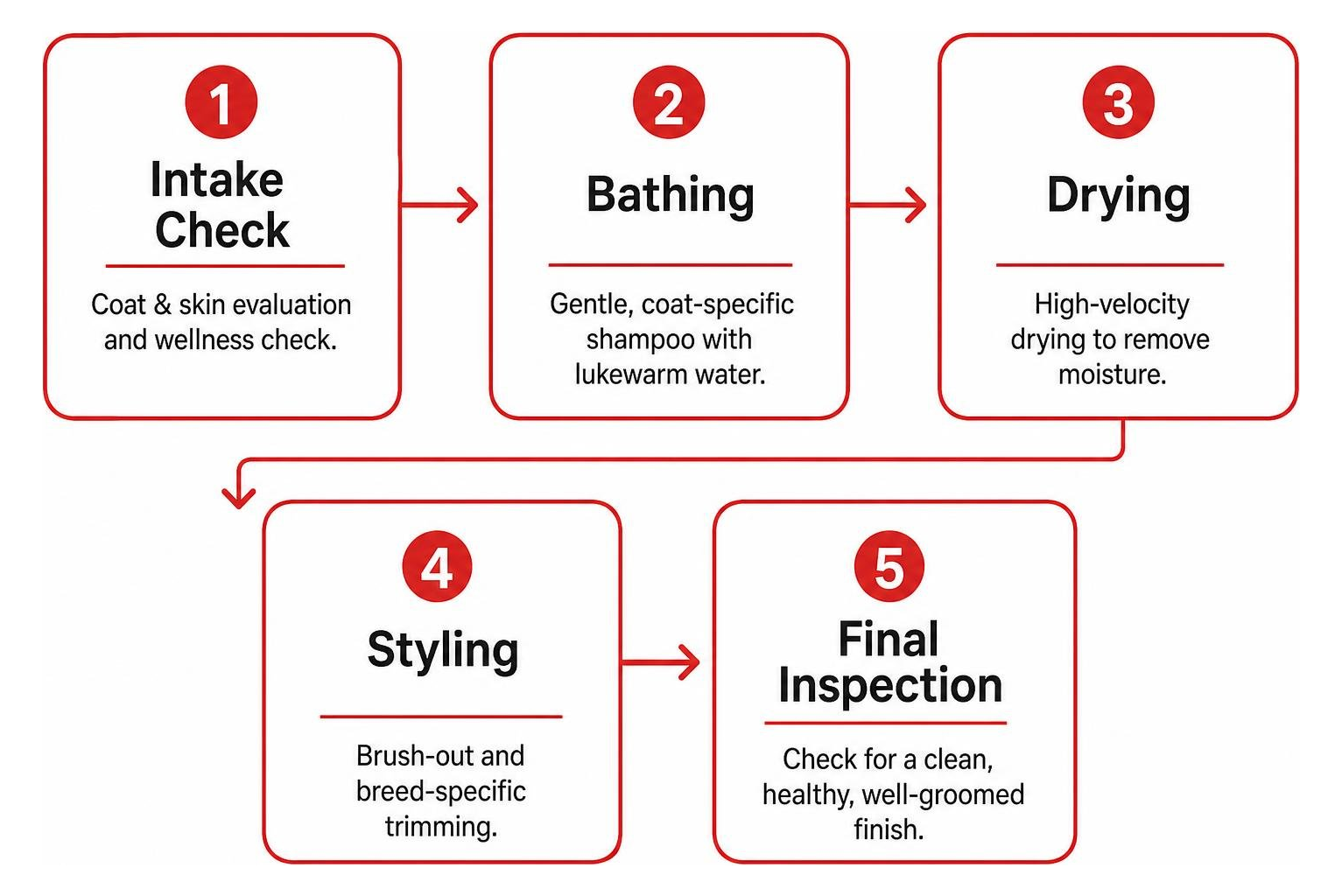
Finding the right care routine for your canine companion means understanding everything that goes into a complete visit. A comprehensive service checklist should always balance aesthetic styling with vital hygiene and wellness checks:
- Comprehensive Coat & Skin Evaluation: Checking for dryness, hot spots, parasites, or underlying irritation before any water touches the coat.
- Thorough De-shedding & De-matting: Removing dead undercoat and gently working through friction tangles before bathing prevents mats from tightening when wet.
- Temperature-Controlled Bathing & Conditioning: Utilizing gentle, coat-specific formulas with lukewarm water to soothe the skin.
- Precision Blow-Drying & Brush-Out: High-velocity moisture removal paired with gentle line-brushing to lift loose fur.
- Hygiene Maintenance: Gentle ear cleaning, dental brushing, sanitary trimming around sensitive areas, and careful nail trims.
- Breed-Specific Styling & Trimming: Scissoring and clipping tailored to your dog's lifestyle and coat structure.
Full-Service Bathing and Skin Health
Bathing is the foundation of coat health, but proper technique is essential. Professional care begins with 3 to 4 inches of lukewarm water, protecting sensitive eyes with a safe ophthalmic ointment and placing cotton in the ears to keep moisture out of the canal. Groomers use pet-formulated shampoos that respect canine skin pH. Human shampoos or harsh chemicals strip natural protective oils, leaving the dermis susceptible to flaking, irritation, and secondary infections.
In a warm, humid environment like Hawaii County, coat care requires dedicated attention. Mats restrict airflow to the epidermis, trapping moisture, heat, and environmental debris. Brachycephalic and wrinkly breeds—such as Pugs or Bulldogs—require specialized hygiene routines: facial skin folds must be cleaned with damp cotton and thoroughly dried to prevent yeast accumulation. For maintaining paw health and preventing slips on smooth floors, learning How to Trim Dog Paw Pads Safely 5 Methods That Guarantee Results ensures steady traction and comfort.
Essential Hygiene and Paw Maintenance
Full-service grooming addresses the delicate areas that require regular attention to support whole-body health:
- Nail Care: Overgrown nails alter the biomechanics of your dog's gait, stressing joints and causing discomfort. Nails should be trimmed or smoothed before they click loudly on hard floors or touch the ground.
- Paw Pad Clearing: Trimming excessive hair between the paw pads eliminates trapped sand, burs, and moisture while preventing indoor slips.
- Gentle Ear Care: Canine ear canals plunge downward and horizontally, making them prone to trapping moisture and debris. Rather than plucking delicate internal canal hair—which veterinary dermatologists advise against because it damages tissue and introduces bacteria—ears are gently wiped clean using veterinary-approved ear cleaner.
- Oral Hygiene: Regular dental brushing with canine-formulated toothpaste prevents plaque accumulation. Many pooches show signs of gum disease by four years old without proper mouth care, making routine oral checks a crucial component of wellness.
- Anal Gland Maintenance: Routine checks ensure glands are draining naturally without impaction, reducing discomfort and scooting behavior.
What to Look for in a Quality Grooming Facility
Selecting a dedicated facility requires an in-person assessment of their workflow, safety protocols, and environment. A professional salon welcomes pet parents to observe the space and ask questions regarding daily operations.
Sanitation and Safety Standards in Dog Grooming
High sanitation and safety protocols protect your dog against infectious illnesses, cross-contamination, and salon accidents. Leading salons align their operational protocols with established National educational standards for pet handling.
When evaluating facilities, look for the following safety benchmarks:
- Medical-Grade Sanitation: Grooming tables, bathing tubs, shears, and clipper blades should be disinfected between every animal using EPA-registered, veterinary-grade bactericidal, virucidal, and fungicidal solutions.
- Double-Barrier Security: Salons should have secure, double-door entryways to prevent startled pets from darting into parking areas or busy roadways.
- Continuous Supervision: Pets on grooming tables or in tubs must remain under constant supervision within arm's reach to prevent slips, falls, or sudden leaps.
- Dryer Safety Protocols: Kennel dryers must maintain steady, cool-to-warm airflow without high heating elements, and pets resting near air movers must be visually checked every 5 to 7 minutes.
- Intake Documentation: Facilities should maintain updated medical histories, emergency veterinary contacts, and verified vaccination records.
For practical advice on choosing experienced providers, consult this guide to finding Top Professional Dog Groomers Near You.
Low-Stress Handling for Anxious Dogs
Grooming should never be an overwhelming ordeal. Fearful, reactive, or senior pets require thoughtful, behavior-aware handling that prioritizes emotional safety alongside coat care.

A positive approach relies strictly on rewards-based desensitization. If a dog shows signs of distress, the groomer pauses, allows the dog to reset, and rewards calm cooperation with praise and high-value treats. Senior pets with joint stiffness or hip dysplasia should receive regular sitting breaks, supportive positioning in the tub, and low-traction rubber matting underfoot.
Sedation should never be used as a routine shortcut for salon grooming; compassionate handling, patient pacing, and progressive appointments allow dogs to build long-term trust in the process.
Evaluating Grooming Packages and Service Options
Professional salons offer service tiers structured around pet size, coat architecture, and specific skin needs. Knowing how these categories are organized helps you choose the right care routine for your dog.
Comparing Dog Grooming Packages and Add-Ons
Grooming needs vary significantly based on your dog's coat type:
- Single-Coated Breeds: Smooth, short coats (such as Boxers or Chihuahuas) benefit from regular bathing, nail care, ear cleaning, and light rubber curry brushing to remove loose hair.
- Double-Coated Breeds: Dogs with dense undercoats (such as Golden Retrievers, Huskies, or German Shepherds) require high-velocity blowouts, undercoat raking, and carding rather than shaving, which can permanently damage their natural thermal insulation.
- Curly & Doodle Coats: Poodles, Bichons, and Doodles require specialized hand scissoring, regular sanitary clearing, and intensive line-brushing to prevent painful matting close to the skin.
| Package Inclusions | Standard Bath & Brush Care | Premium Full Grooming Service |
|---|---|---|
| Coat Bath & Conditioning | Gentle botanical wash & blow-dry | Customized skin-therapy wash & blow-dry |
| Brushing & De-shedding | Baseline 15-minute brush-out | Intensive undercoat de-shedding or dematting |
| Ear & Paw Hygiene | Routine ear wipe & paw pad clearing | Ear flush, paw pad trim, and nail smoothing |
| Styling & Haircuts | Sanitary trim & foot tidy | Full breed-standard scissor cut or custom clip |
| Facial & Dental Care | Basic face wipe | Gentle tearless facial wash & breath freshening |
To learn more about combining regular coat maintenance with day play or overnight stays, explore The Ultimate Guide to Dog Grooming and Boarding Services.
Salon vs Mobile Grooming Formats
Pet owners can choose from several care formats depending on their schedule and pet temperament:
- Brick-and-Mortar Salons: Offer full-scale equipment, spacious drying areas, and complete styling setups. Appointments generally run 2 to 4 hours, incorporating scheduled rests and fresh water breaks.
- Mobile Grooming Vans: Provide one-on-one attention right in your driveway, making them a great option for pets that experience car sickness or struggle in busy environments.
- DIY Self-Wash Bays: Equipped with elevated tubs, professional blowers, and specialized shampoos, self-wash bays let owners bathe their own dogs without the cleanup at home.
Discover additional strategies for choosing the right setup by reviewing tips for Finding the Best Pet Grooming Near You.
Preparing Your Dog for an Appointment
A successful grooming visit starts with preparation at home and clear communication during check-in.
Health Checks and Vaccination Requirements
Before your dog's appointment, ensure all health paperwork is up to date. Professional facilities maintain clear health protocols to protect all guests in their care:
- Core Vaccinations: Proof of Rabies, Distemper (DHPP/DA2PP), and Bordetella is standard across reputable salons, with Leptospirosis recommended for outdoor-active island dogs.
- Wellness & Parasite Checks: Groomers perform a nose-to-tail check at drop-off to inspect the skin for external parasites, unusual lumps, hot spots, or ear irritation.
- Medical Transparency: Always inform the team about pre-existing conditions, past surgeries, arthritis, or skin sensitivities so handling can be customized accordingly.
Home Preparation and Anxiety Reduction
You can help your dog feel confident and relaxed before their appointment with simple home routines:
- Paw and Ear Desensitization: Gently handle your dog's paws, toes, and ears during calm evenings at home, pairing every touch with a favorite treat.
- Regular Home Brushing: Brushing high-friction areas—such as behind the ears, the armpits, and under the collar—prevents tight mats that can make grooming uncomfortable.
- Avoid Heavy Pre-Groom Meals: Excitement and new environments can cause mild digestive upset. Feed your dog a light meal a few hours before drop-off rather than right before walking out the door.
- Pre-Visit Exercise: A calm walk around the grounds allows your dog to relieve themselves and burn off excess energy, encouraging a relaxed mindset during their session.
Frequently Asked Questions
How Often Does a Dog Need a Bath and Haircut?
Most dogs thrive on a bath every 4 to 8 weeks, with the ASPCA recommending a bath at least once every three months. Breeds requiring regular haircuts (like Poodles, Shih Tzus, and Doodles) typically visit the groomer every 4 to 6 weeks to keep their coats tangle-free, while double-coated breeds benefit from seasonal de-shedding appointments during major shedding cycles.
What Vaccinations Are Required Before an Appointment?
Salons require documented proof of Rabies, Distemper (DHPP), and Bordetella vaccinations. Puppies should complete their puppy vaccination series (typically around 16 weeks of age) before booking their first full professional grooming appointment.
How Can You Tell if a Groomer Is Safe?
A safe grooming salon maintains clean, sanitized equipment, clear double-barrier doors, secure table restraints, and well-ventilated drying enclosures. The team will communicate openly, ask detailed questions about your pet's health, and prioritize gentle, rewards-based handling over rushed services.
Conclusion
Routine coat care is an essential part of your dog's lifelong health, comfort, and happiness. From keeping skin clean and free of irritation to maintaining healthy paws and ears, consistent grooming helps your pet thrive in our tropical climate. Choosing a facility that pairs high sanitation standards with patient, rewards-based care ensures your pet looks forward to every visit. At Paws University, our team is proud to provide trusted, low-stress care across our seven-acre West Hawaii campus. Reach out today to discover our professional dog grooming services and schedule your dog's next refreshing spa day.