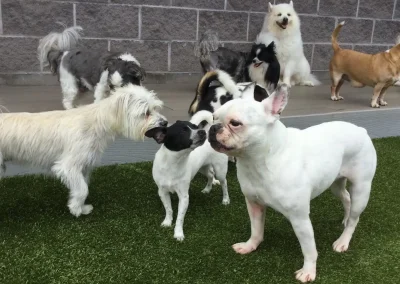
Finding Overnight Dog Boarding on the Big Island
Start with your dog, not the facility's photos. For big island overnight boarding, look for secure spaces, supervised exercise, a comfortable place to rest, and staff who can follow your dog's food and medication routine. Ask how the facility handles anxious dogs, checks health records, and responds to emergencies. If your dog is new to boarding, arrange a meet-and-greet before a longer stay.
I'm Allen Daniels, a Hawaii Island native and co-founder of Paws University. My years in animal behavior shape how I approach big island overnight boarding, starting with the setting that fits each dog.
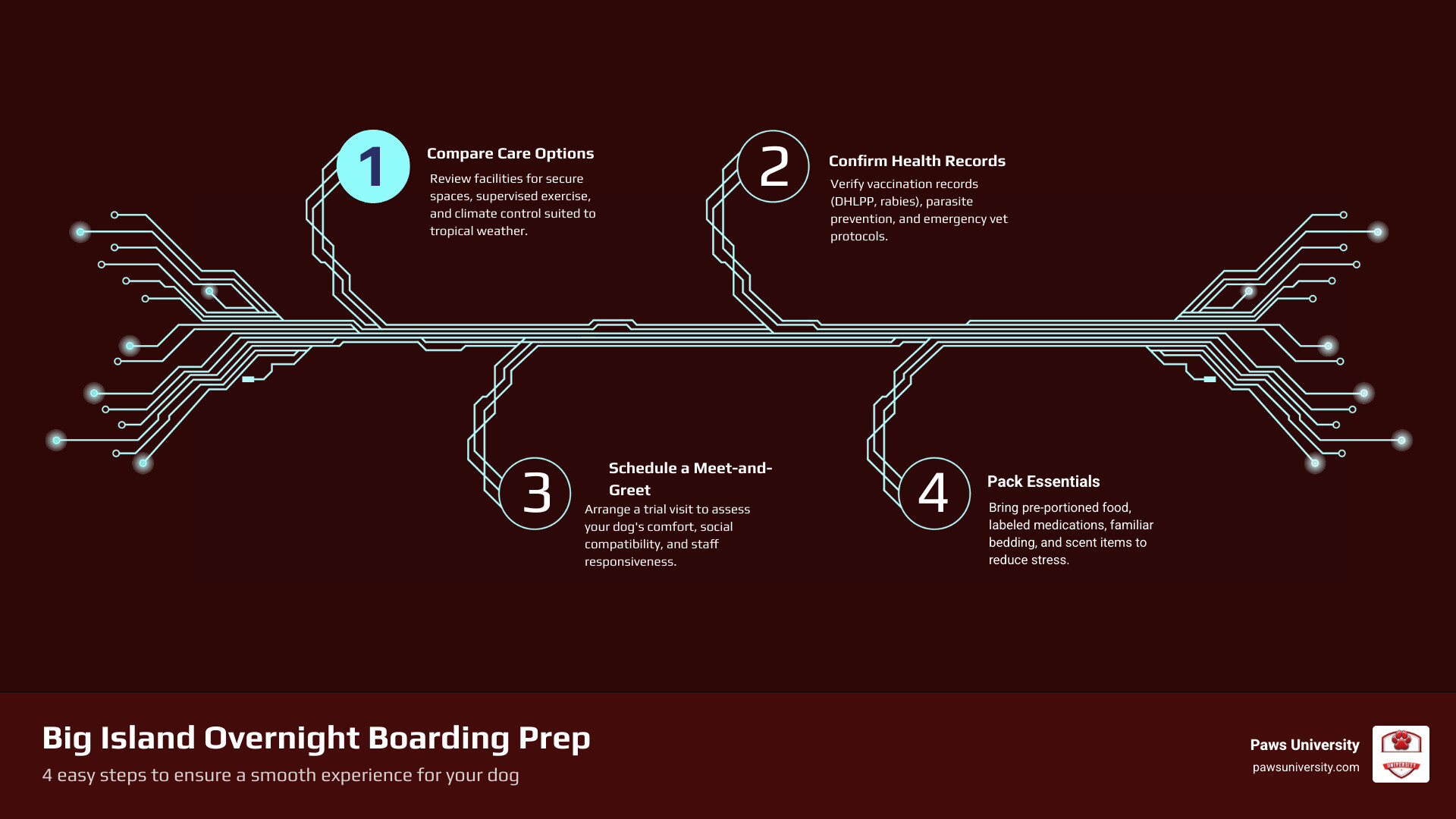
Key big island overnight boarding vocabulary:
Choosing the Right Style of Big Island Overnight Boarding
Planning travel from Hawaii Island involves unique considerations. Whether you are flying off-island or taking a weekend trip across the island, ensuring your dog has a safe, comfortable, and stimulating environment is essential. Island conditions require specialized pet care designs. Our tropical weather brings warm temperatures, coastal humidity, trade winds, and sudden rain showers, which means boarding spaces must be built to keep dogs cool, dry, and relaxed.
When evaluating facilities, look closely at their structural design and environmental controls. In our warm climate, high-quality boarding centers prioritize open-air ventilation paired with sheltered, climate-controlled sleeping suites. Indoor-outdoor runs should provide continuous airflow while shielding pets from strong sun and tropical downpours. Maintaining an ambient indoor temperature between 68°F and 72°F helps dogs rest soundly after active outdoor play, preventing heat stress and humidity-related fatigue. For many pet parents, providing the comforts of premium kennel suites with elevated bedding, quiet acoustic design, and dedicated private quarters makes all the difference in helping a dog settle in smoothly.
Traditional Kennels vs. Cage-Free Big Island Overnight Boarding
The pet care industry offers several models for overnight stays, and choosing between them depends on your dog's individual personality, social confidence, and daily habits.
| Feature | Traditional Boarding Suites | Cage-Free / Daycare-Style Boarding |
|---|---|---|
| Daytime Environment | Individual runs with scheduled solo or small-group yard time | Continuous group play in open yards with size-matched peers |
| Rest Cycles | Predictable, quiet downtime inside private indoor/outdoor suites | Communal resting zones or individual dens during midday naps |
| Best Suited For | Independent, reactive, senior, or easily overwhelmed dogs | Highly social, high-energy dogs that thrive on constant peer play |
| Social Dynamics | Controlled, barrier-separated interactions with staff attention | Dynamic pack play monitored continuously by trained handlers |
| Stress Reduction | Private physical space lowers overstimulation and visual triggers | Physical exertion and social interaction naturally channel energy |
Traditional boarding setups offer private suites that give dogs predictable boundaries, making them ideal for dogs that guard resources, prefer human companionship over canine play, or need undisturbed rest. Conversely, cage-free campuses integrate social playgroups throughout the day, allowing socialized dogs to burn energy naturally before tucking into their private quarters at night.
Specialized Care for Puppies, Seniors, and High-Energy Dogs
No two dogs share the same physical requirements. A developing four-month-old puppy has vastly different physical, emotional, and biological needs than a twelve-year-old senior companion.
- Puppy Development: Growing puppies need frequent, positive reinforcement-based interactions, gentle socialization, and rapid potty-relief cycles. Look for programs that avoid prolonged confinement and instead offer short, engaging play sessions mixed with supervised naps to prevent overtired behavior.
- Senior Dog Mobility: Older dogs often manage arthritis or joint stiffness exacerbated by tropical humidity. Facilities should feature supportive bedding, non-slip rubberized flooring to protect hips and joints, and gentle walking routines that respect their pace without forcing them into rowdy group play.
- High-Energy and Working Breeds: Athletic dogs need mental stimulation alongside physical activity. Structured routines, scent games, agility-style obstacles, and positive reward-based training sessions prevent boredom and destructive behaviors.
- Separation Sensitivity: Dogs prone to distress when away from home require predictable schedules. Establishing structured routines for dogs with separation anxiety helps create a reassuring rhythm of feeding, enrichment, relief walks, and rest.

Key Facility Features and Safety Standards to Look For
Choosing a boarding facility requires looking past cosmetic finishes to inspect safety infrastructure, sanitation practices, and daily management protocols.

When touring and evaluating local kennel boarding options, verify that the facility utilizes commercial-grade, multi-layer security systems. This includes:
- Perimeter Security: High-gauge, escape-proof perimeter fencing designed to prevent digging or climbing, supplemented by secondary security barriers around all play zones.
- Double-Gated Entry Portals: Air-lock style double gates at every entrance and exit ensure a dog cannot slip past an open doorway during transitions.
- Size-Separated Play Yards: Dedicated outdoor yards that physically separate toy breeds from large, exuberant dogs to eliminate accidental impact injuries or predatory drift.
- Digital Health Logs: Rigorous daily tracking sheets recording each dog's water intake, food consumption, stool quality, and physical demeanor.
- Veterinary Protocols: Established relationships with local Big Island veterinary clinics, complete with clear emergency transport plans and 24-hour on-call medical support.
Daily Enrichment, Supervised Exercise, and Playgroup Management
Quality boarding revolves around healthy stimulation balanced with restorative rest. Simply placing dogs together in a yard is not enough; group dynamics must be actively shaped and managed by knowledgeable staff.
When navigating doggy daycare and overnight stays, confirm that the provider assesses dogs by play style rather than just weight. An older, gentle Golden Retriever may prefer lounging near mild-mannered companions, while a young herding breed seeks active games of chase. Staff must monitor body language—watching for loose wagging tails, play bows, and mutual pauses while quickly redirecting stiff posturing or over-arousal using positive, rewards-based redirection. Mental enrichment, including puzzle toys and basic obedience games, rounds out the day so dogs fall asleep naturally satisfied.
Island Health Protocols and Hawaii Island Vaccination Requirements
Because Hawaii enjoys warm weather year-round without a freezing winter to curb insect populations, boarding campuses must enforce strict health protocols to protect all guests.
- Core Vaccinations: Up-to-date DHLPP (Distemper, Hepatitis, Leptospirosis, Parainfluenza, and Parvovirus) and Rabies vaccinations are mandatory across professional facilities.
- Bordetella Protection: Given the social nature of boarding, Bordetella (kennel cough) coverage is typically required every six to twelve months.
- Year-Round Parasite Prevention: Fleas, ticks, and heartworm-carrying mosquitoes thrive in our island environment. Current veterinary-grade flea and tick preventatives are required upon intake.
- Fecal Screening: Regular negative fecal tests protect communal exercise yards from internal parasites like giardia and hookworms.
- Accurate Medication Administration: If your dog requires daily supplements or prescription medication, professional facilities maintain clear administration logs, dispensing exact dosages in original veterinary containers without mixing them loosely into food bags.
Step-by-Step Preparation for Big Island Overnight Boarding
Preparing your dog for boarding begins weeks before your departure date. Following a systematic preparation plan eliminates last-minute stress and ensures your dog steps onto campus feeling confident.
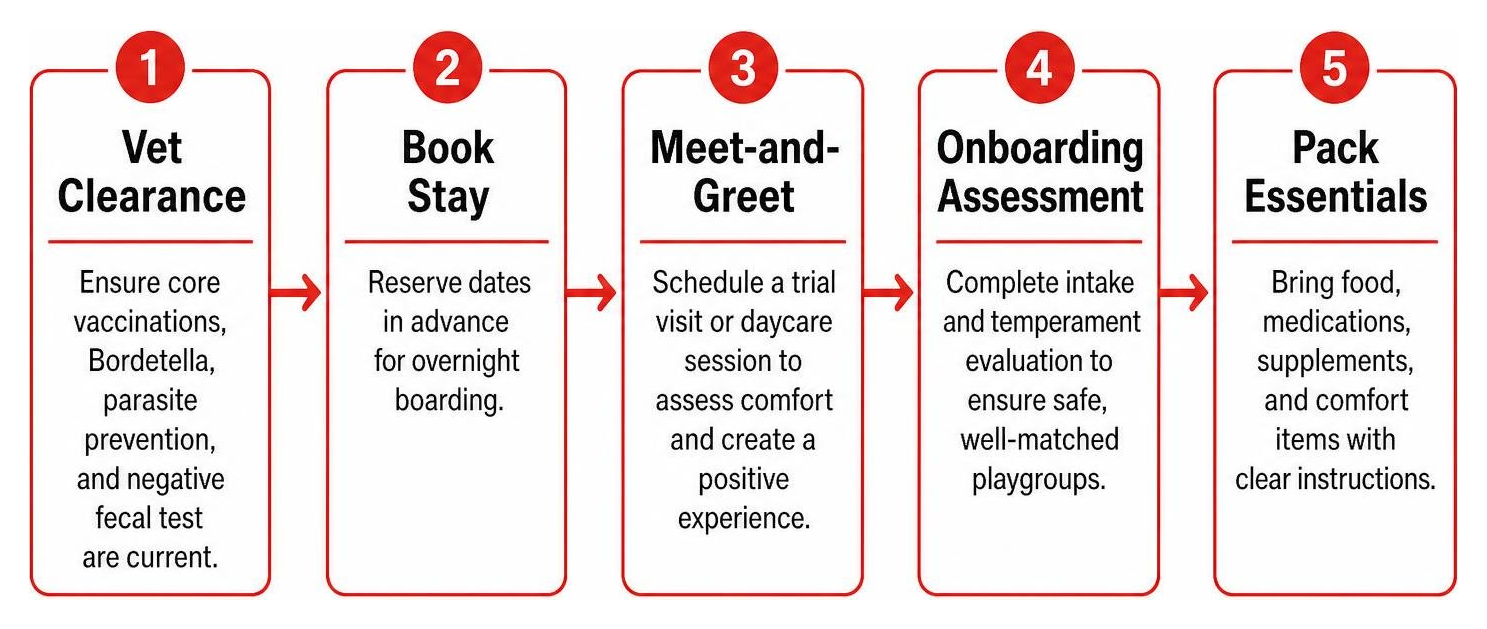
When you are finding the right Kona dog boarding facility, schedule a quick trial visit or single daycare session before booking an extended multi-day stay. This allows your dog to learn that you always return at the end of the visit, creating a positive association with the staff and the campus environment.
The Onboarding Process and Meet-and-Greets for Big Island Overnight Boarding
A professional onboarding process is the cornerstone of safe group boarding. The initial intake should include a comprehensive temperament evaluation and social assessment.
During this assessment, trained staff introduce your dog to neutral territory, observing their response to novel scents, sounds, and staff handling. Next, a calm, neutral "helper dog" is introduced to evaluate greeting behaviors, body language, and social tolerance. Staff review detailed questionnaires covering your dog's bite history, resource guarding tendencies, noise sensitivities (such as island thunder or fireworks), and feeding habits. This thorough screening ensures that every dog admitted to group play is set up for a safe, fulfilling experience.
What to Pack for Your Dog's Island Staycation
Maintaining consistency in your dog's daily routine reduces digestive upset and behavioral stress.
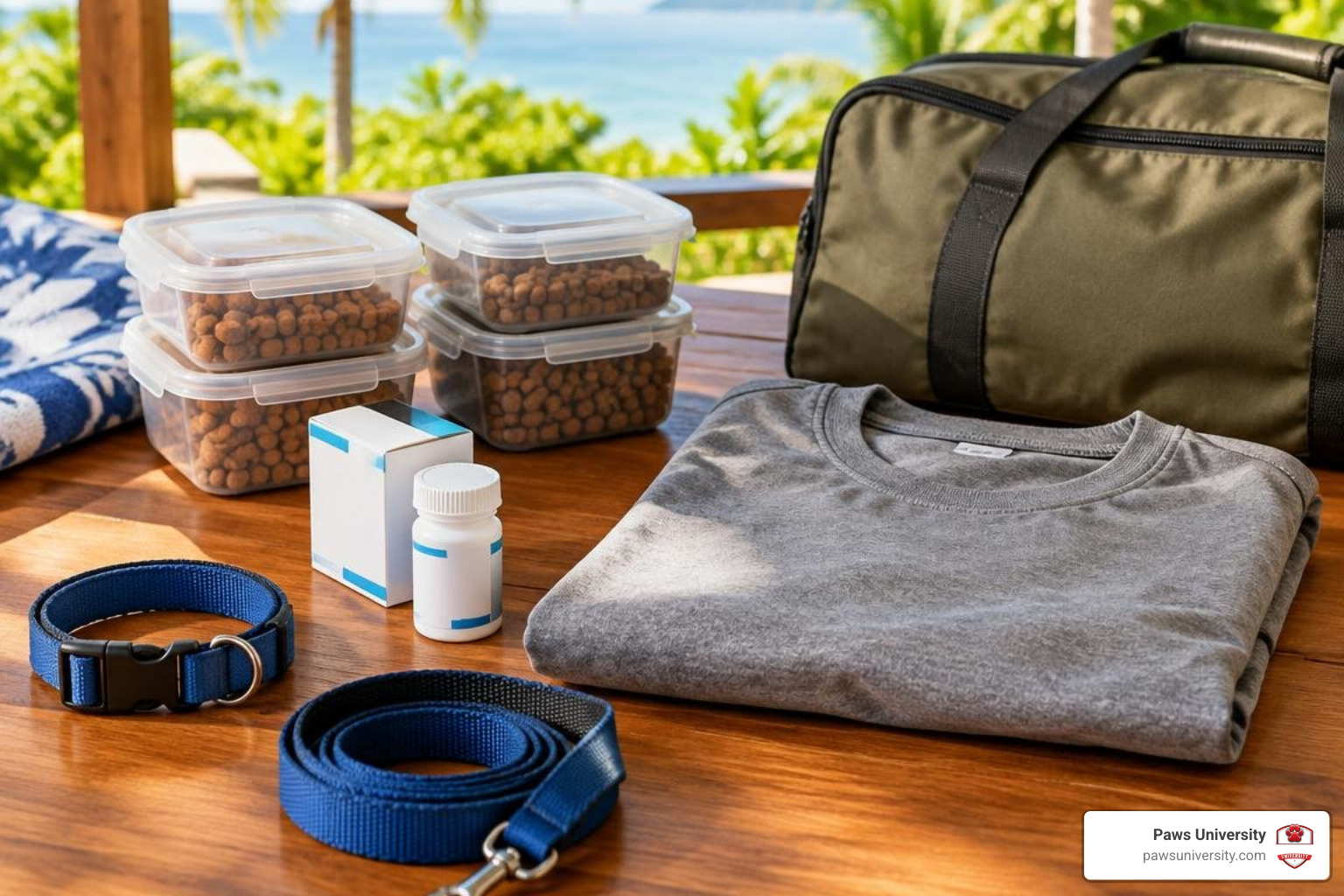
When reviewing your preparation checklist for overnight dog boarding, pack the following essentials:
- Pre-Portioned Food: Pack individual meals in sealed bags or airtight containers, including extra servings in case your travel plans are delayed. Sudden dietary changes combined with an active day can trigger stomach distress.
- Medications in Original Packaging: Bring all prescriptions in their original veterinary bottles with legible labels detailing dosage, frequency, and prescribing doctor information.
- Familiar Comfort Item: An unwashed t-shirt carrying your scent, a favorite washable blanket, or a familiar chew toy provides significant comfort during evening rest hours.
- Secure Walking Gear: A properly fitted flat collar or harness with updated identification tags, along with a sturdy, standard six-foot leash (avoid retractable leashes for boarding hand-offs).
Coordinating Island Adventures and Peak Travel Booking
Hawaii Island pet owners frequently juggle complex schedules, from off-island business trips to local weekend excursions. If you are planning an overnight trek to Hawaii Volcanoes National Park, a camping trip requiring camping reservations with Hawaii County Parks & Recreation, or exploring remote areas governed by Big Island camping guidelines and permits, many protected county, state, and national park trails prohibit dogs to protect native wildlife like the Nēnē goose.
Boarding your dog at a trusted campus ensures they receive attentive care, exercise, and companionship while you complete outdoor island excursions. Peak travel periods—including major winter holidays, Spring Break, summer vacations, and the annual Merrie Monarch Festival in Hilo—see boarding facilities across West Hawaii book to capacity months in advance. Planning your reservations early guarantees your dog a spot without scrambling for last-minute care.
Frequently Asked Questions About Big Island Overnight Boarding
How far in advance should I book overnight boarding during peak seasons?
For peak travel periods such as Thanksgiving, Christmas, New Year's, and school breaks, we recommend reserving your dog's suite two to three months in advance. For standard weekends, booking two to three weeks ahead ensures availability, especially if your dog requires an initial behavioral assessment before their stay.
What health documentation is required before drop-off?
You must provide official veterinary records confirming active DHLPP, Rabies, and Bordetella vaccinations. Additionally, proof of current flea and tick prevention, recent negative fecal screening results, and spay/neuter verification for adult dogs over six to seven months are standard prerequisites across professional boarding campuses.
How do boarding campuses manage anxious or sensitive dogs?
High-quality facilities implement proven support strategies for anxious dogs, such as housing them in quiet suites away from high-traffic zones, providing one-on-one human enrichment, and using positive, rewards-based encouragement. Structured daily routines, soothing background music, and predictable rest periods allow sensitive dogs to decompress comfortably.
Conclusion
Leaving your dog while you travel is much easier when you know they are spending their days in a secure, engaging, and enriching environment. At Paws University, we have provided dependable pet care across West Hawaii since 2002. As the first facility in the state to introduce structured doggie daycare, our sprawling seven-acre campus in Hawaii County is purposefully built for tropical comfort, safe social play, and peaceful overnight rest.
Our team focuses on positive, rewards-based handling, size-separated playgroups, and attentive individual care tailored to puppies, active adults, and seniors alike. When you are planning your next trip, reserve overnight dog boarding early to give your companion a healthy, fun staycation while you travel with complete peace of mind.