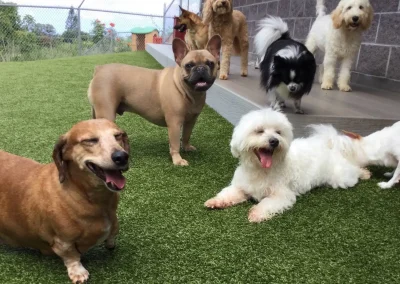
Why Every Dog — and Owner — Needs Dog Manners Training
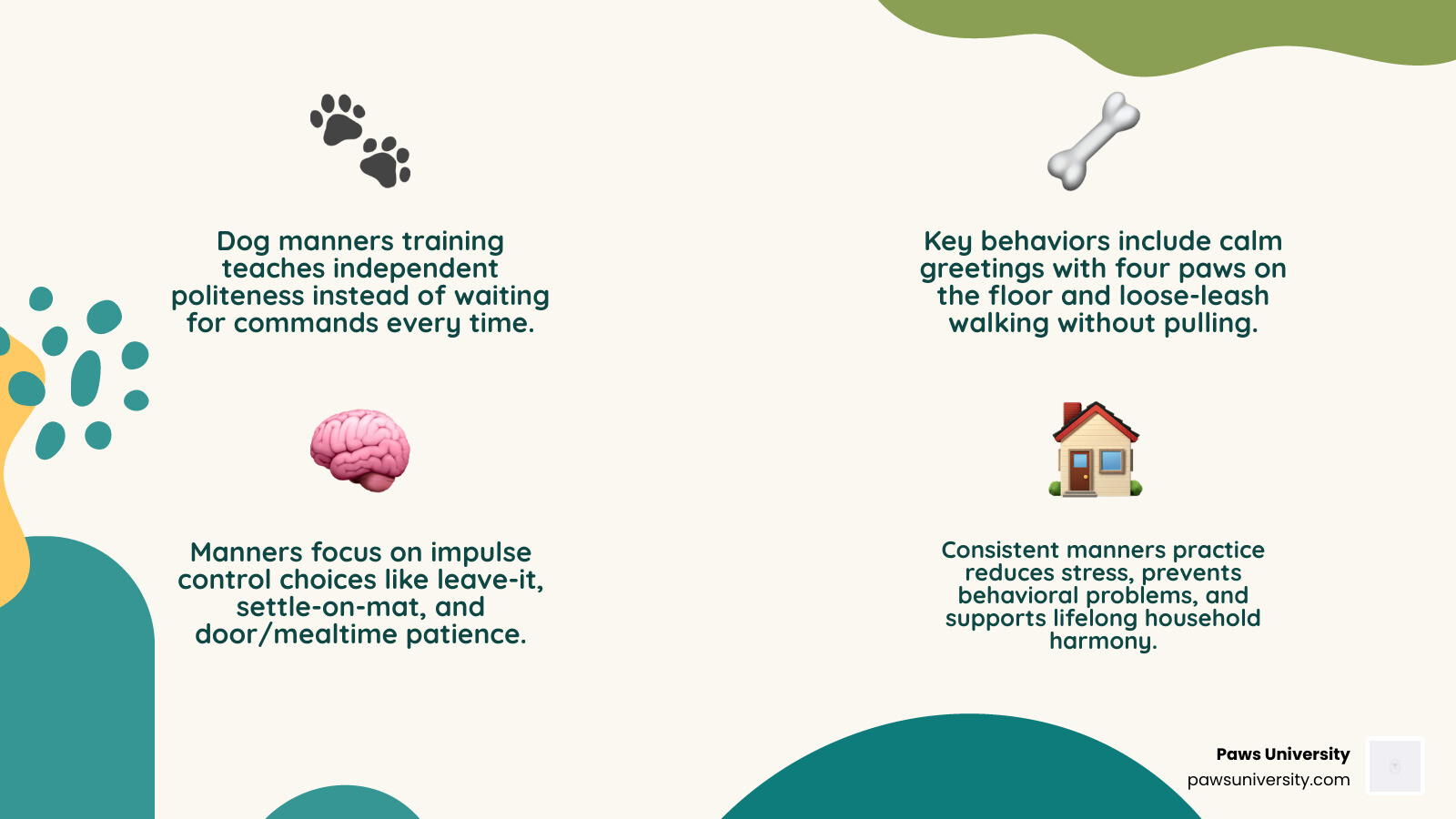
Dog manners training is the process of teaching your dog to make polite choices on their own — without waiting for a command every time.
Here's a quick breakdown of what it covers:
- Sit, down, stay, come — foundational cues that build communication
- Greeting people calmly — four paws on the floor instead of jumping
- Loose leash walking — no pulling toward every distraction
- Door and mealtime manners — waiting instead of rushing or barking
- Leave it / drop it — impulse control around food, toys, and debris
- Settling on a mat — calm, independent behavior at home and in public
Even well-trained dogs can slip into rude habits if their manners aren't practiced consistently. Jumping on guests, pulling on the leash, barking at the door — these behaviors don't mean your dog is bad. They mean your dog hasn't yet learned what you want instead.
The good news? With the right approach, any dog at any age can learn better manners. And the payoff is real: dogs that receive consistent manners training are far less likely to develop the kinds of behavioral problems that lead to stress, frustration, or rehoming.
I'm Allen Daniels, co-founder of Paws University in Kailua-Kona — I've spent over 25 years applying the same reward-based, science-backed methods I first learned training dolphins to help hundreds of West Hawaiʻi dogs master dog manners training. In this guide, I'll walk you through exactly how it works and how to get started.
Obedience Training vs. Dog Manners Training: What is the Difference?
Many pet owners use the terms "obedience training" and "manners training" interchangeably, but they actually represent two very different approaches to canine education. Understanding this difference is key to building a harmonious relationship with your dog.
Obedience training focuses on teaching your dog to respond to specific verbal or physical cues. When you say "sit," "down," or "heel," you are asking for a precise, commanded behavior. This is highly structured and requires you to actively direct your dog’s actions.
Manners training, on the other hand, is all about self-regulation and helping your dog make polite behavioral choices independently. Instead of waiting for you to tell them what to do, a dog with good manners looks at a situation and chooses the polite response on their own.
For example, when a guest walks through your front door:
- An obedient dog will sit only after you loudly command them to "sit!"
- A well-mannered dog sees the person enter and automatically decides to keep all four paws on the ground because they know that is how they earn attention.
Manners training teaches your dog how to "speak basic human" and navigate our daily routines without constant micro-management. As explained in The Manners Manual - Dog Almighty, exercises that focus on manners serve as the essential building blocks for overall behavior training, giving us voice control and a clear line of communication.
Why Dog Manners Training Focuses on Choices
Teaching your dog to make the right choice on their own builds long-term impulse control. When we rely solely on obedience commands, we are doing all the cognitive work for our dogs. If we aren't there to give a command, the polite behavior often falls apart.
Manners training empowers your dog to practice independent politeness. By rewarding them for making desirable choices in everyday scenarios—like waiting calmly at an open door instead of bolting, or lying down while you cook dinner—we help them develop a habit of calm decision-making.
To explore how these concepts are taught in a structured setting, you can read More info about Kona pet training classes, which focus on teaching owners how to guide their dogs toward polite, real-world choices.
Common Dog Manners Issues and How to Prevent Them
Living with a dog is incredibly rewarding, but common behavior struggles can quickly turn household harmony into chaos. Most of these issues stem from natural canine behaviors that simply don't fit well into human environments.
- Jumping on Guests: Dogs naturally want to greet us face-to-face. When they jump, they are looking for interaction.
- Excessive Barking: Whether it's barking at the doorbell, window distractions, or for pure attention, barking is a dog's way of expressing excitement, frustration, or alarm.
- Destructive Chewing: Chewing is a natural, soothing behavior for dogs. If they aren't provided with appropriate outlets, they will find their own—like your favorite shoes or outdoor furniture.
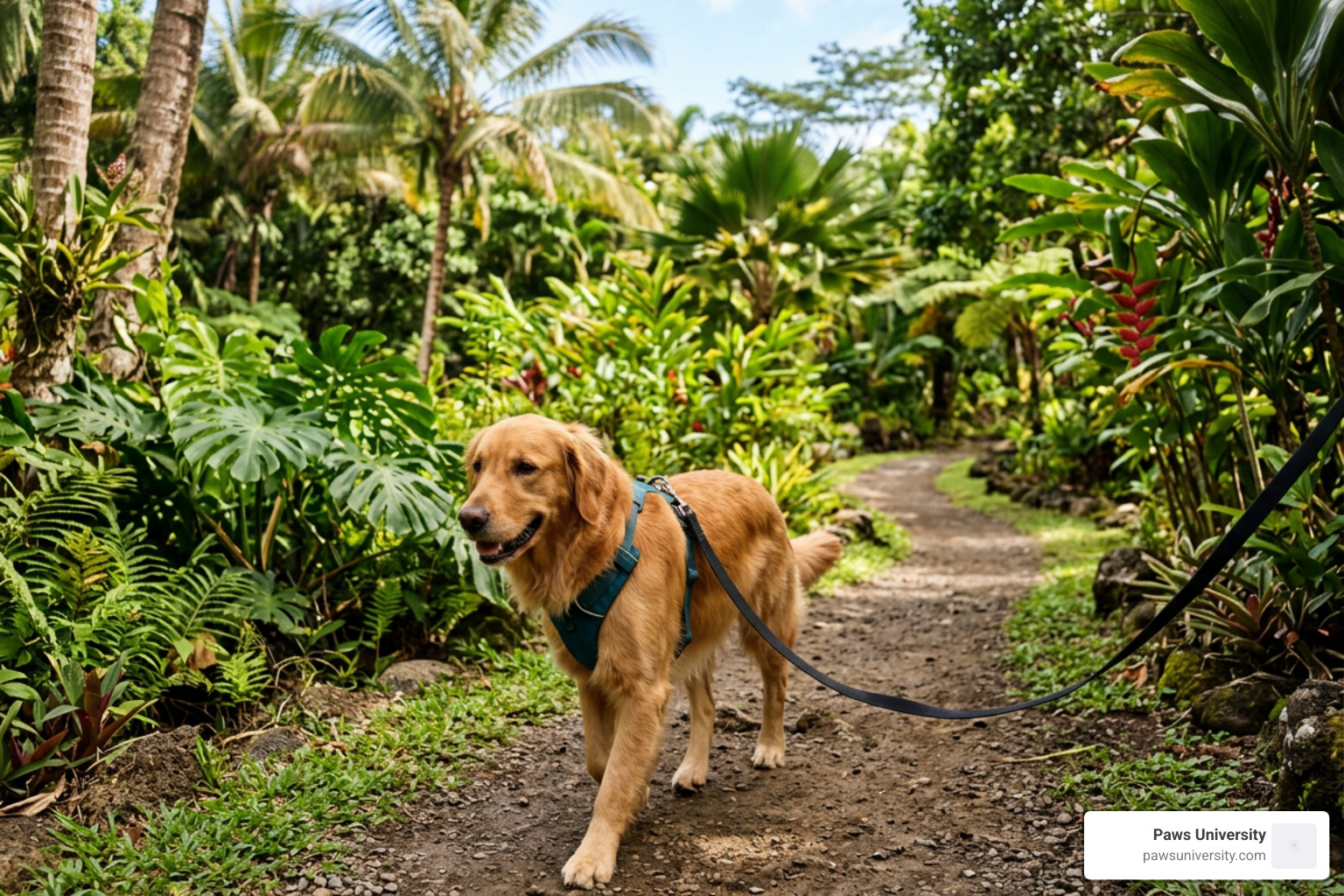
- Sidewalk Scavenging: Dogs experience the world through their noses and mouths. To them, a discarded snack on a tropical trail is a prize, not trash.
The secret to solving these issues lies in proactive management and environmental setup. Instead of waiting for your dog to make a mistake and then correcting them, we must arrange the environment to prevent the unwanted behavior from happening in the first place.
For example, if your puppy constantly chews on your shoes, keep the shoes in a closed closet. If your dog barks at people passing by the living room window, block their view with decorative window film or keep them in another room during high-traffic hours. By preventing the wrong behavior, you stop it from becoming a deeply ingrained habit.
Addressing Jumping, Barking, and Leash Pulling
When bad manners do happen, we can use specific, force-free techniques to redirect our dogs and lower their excitement levels:
- Arousal Reduction & Treat Scattering: High arousal is the root cause of jumping and frantic barking. When guests arrive, instead of letting your dog rush the door, scatter a handful of low-value treats or kibble on the floor away from the entrance. This immediately redirects their focus downward, utilizes their calming sense of smell, and keeps all four paws on the ground.
- Circle Walking for Leash Pullers: If your dog pulls on the leash, it's often because they find the environment far more interesting than you. The moment the leash goes taut, gently walk in a small circle. This naturally redirects your dog's momentum back toward you without any harsh pulling or jerking on the collar.
- The "Go to Mat" Cue: Teaching your dog to go to a designated mat or bed when the doorbell rings is an excellent example of response substitution. They cannot jump on a guest if they are actively enjoying a treat on their bed.
For hands-on practice with these techniques, check out More info about fun obedience classes, where we help local pet owners turn stressful walks and chaotic greetings into calm, enjoyable experiences.
The Science of Positive Reinforcement in Dog Manners Training
Modern dog training is grounded in behavioral science. Decades of research show that reward-based methods are not only more humane, but they are also far more effective for modifying dog behavior and enhancing general obedience compared to aversive methods.
When we use positive reinforcement, we add a desirable reward (like a tasty treat, praise, or play) immediately after the dog performs a polite behavior. This makes the dog much more likely to repeat that behavior in the future.
We also utilize classical conditioning and counterconditioning to change how a dog feels about certain triggers. For example, if a dog barked at the doorbell out of fear or over-excitement, we can pair the sound of the bell with high-value treats. Over time, the dog’s emotional response shifts from "Oh no, a stranger!" to "Great, the doorbell rang, where is my treat?"
According to the Behavior Modification in Dogs - Dog Owners - MSD Veterinary Manual, techniques like habituation, extinction, desensitization, and response substitution are the safest and most reliable ways to resolve behavioral issues without causing fear or anxiety. Dogs trained with positive reinforcement show improved welfare, better coping mechanisms, and significantly stronger bonds with their owners.
How Sensitive Periods and Early Socialization Shape Behavior
A puppy’s brain is incredibly adaptable, especially during early developmental windows. The most critical timeframe is the sensitive period for socialization, which occurs between 4 and 16 weeks of age.
During this time, a puppy's brain is primed to accept new experiences, environments, sounds, and people without fear. Proper, positive exposure during this window is crucial for neophobia prevention (the fear of anything new or unfamiliar).
If a puppy is safely exposed to various sights, sounds, and surfaces during this stage, they are far more likely to grow into a calm, well-adjusted adult dog. However, if they are isolated or experience trauma during this period, they may struggle with fear and reactivity later in life.
To set your young dog up for success, we recommend following the PROTOCOL FOR BASIC MANNERS TRAINING AND HOUSETRAINING FOR NEW DOGS AND PUPPIES, which outlines how to safely introduce puppies to the world while building reliable housetraining habits.
Step-by-Step Protocols for Basic Manners and Housetraining
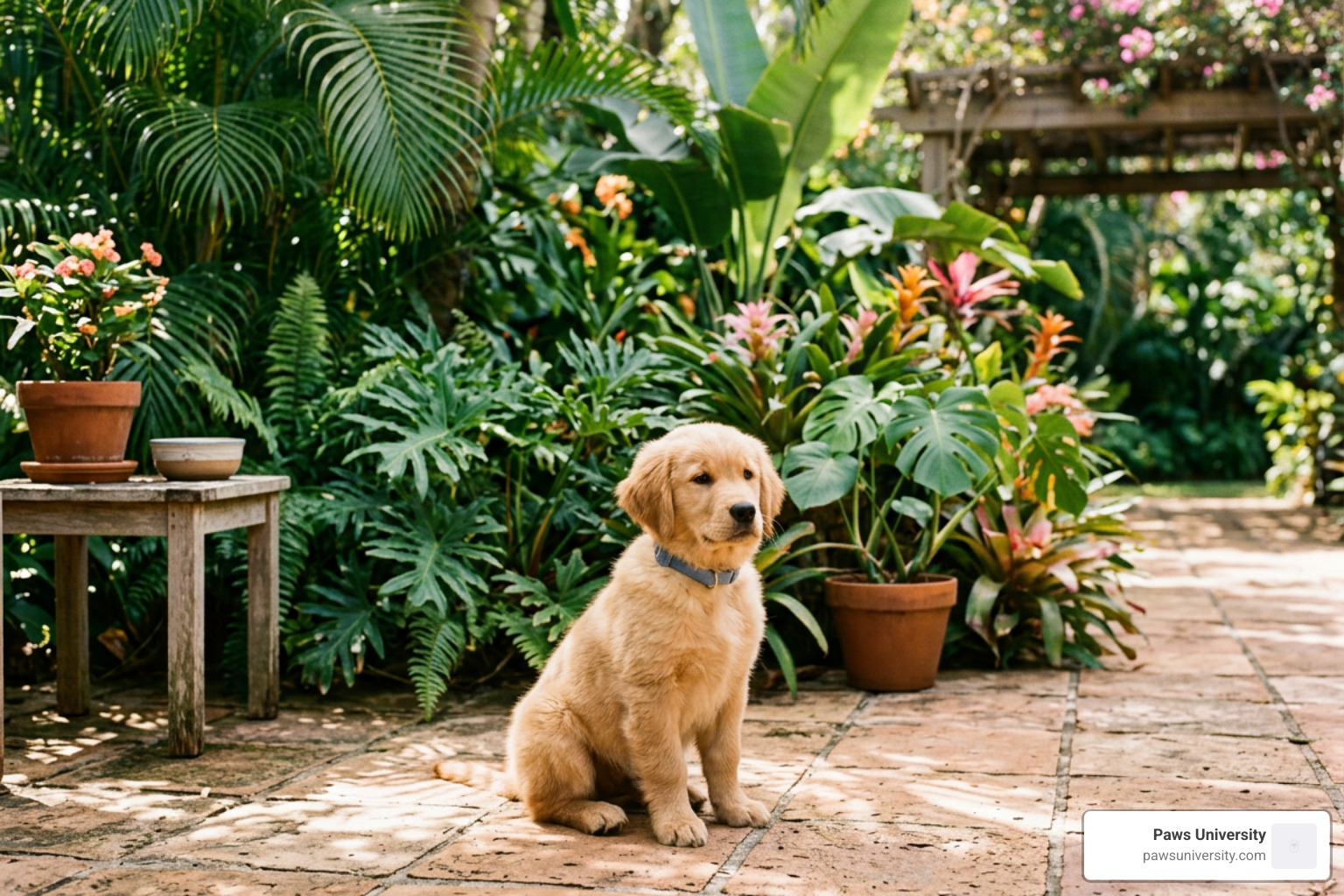
Bringing a new dog or puppy into your home is an exciting milestone, but establishing clear routines from day one is essential.
Step 1: Establish Substrate Preferences for Housetraining
Puppies naturally develop a preference for the surface they eliminate on between 7.5 and 8.5 weeks of age. If they consistently go on grass or dirt, they will seek out those textures.
- Take your puppy outside every 1 to 2 hours, and always 15 to 45 minutes after eating, drinking, sleeping, or heavy play.
- Stand quietly in the designated potty area. The moment they go, reward them immediately with a high-value treat during or immediately after the act.
- Never punish accidents after the fact. Dogs cannot associate delayed punishment with a past action; doing so will only teach them to fear you.
Step 2: Crate Training for Safety and Sanity
A crate is a wonderful tool for housetraining and safety, provided it is used correctly.
- Feed your dog their meals in the crate to build a positive association.
- Keep crate sessions positive and brief to start, gradually increasing the time.
- Note: Avoid leaving your dog in a crate for excessive periods, as this can lead to frustration, joint stiffness, and behavioral regression.
Step 3: Teaching Foundational Manners (Sit, Down, Stay)
Use food-lure training to guide your dog into position:
- Sit: Hold a treat to your dog's nose and slowly move it up and back over their head. As their head goes up, their bottom will go down. Reward immediately.
- Down: From a sit, lower a treat straight down to the floor between their front paws. Once their chest touches the ground, reward.
- Stay: Ask for a sit or down. Take one half-step back, return immediately, and reward. Gradually increase distance and duration over several weeks.
For a deeper dive into structuring these early lessons, take a look at our Kona Dog Training Guide from Puppies to Pros.
Integrating Dog Manners Training into Your Daily Routine
You don't need to carve out hours of dedicated time to train your dog. In fact, long training sessions can be stressful and counterproductive for canine learners.
Instead, leverage the power of daily habits. Approximately 40-43% of daily human actions are driven by habits and routines. This makes our daily schedules the perfect framework for short, 2-to-5-minute training sessions.
- During breakfast prep: Ask your dog to practice a "down-stay" while you scoop their food.
- Before walks: Ask for a polite "sit" before you clip on the leash and open the door.
- While making coffee: Practice "leave it" with a piece of kibble on the floor.
By integrating these quick exercises into your normal transition times, you build real-world manners without burning yourself out. For a structured look at how to build these habits week-by-week, the 20 Weeks of Manners Tutorials - Dogmantics Dog Training Academy offers a fantastic, modular curriculum that you can adapt to your household's immediate needs.
Essential Tools and Enrichment for Polite Behavior
Using the right equipment can make a massive difference in your training progress. We strongly advocate for comfortable, force-free tools that protect your dog's physical health while keeping them secure.
Recommended Tools:
- Flat Collars: Perfect for carrying ID tags and everyday wear.
- Front-Clip Harnesses: These are excellent for dogs that pull. By attaching the leash to the chest ring, the harness gently redirects your dog's forward momentum back toward you whenever they try to pull ahead.
- High-Value Treats: Think soft, smelly treats like small pieces of cooked chicken, liver, or cheese. These keep your dog's focus locked on you, even around distractions.
- Food-Dispensing Toys: Stuffing a tough rubber toy with peanut butter or wet food and freezing it provides hours of calming mental stimulation.
Tools to Avoid:
We strongly discourage the use of aversive tools such as prong collars, choke chains, and electronic collars (e-collars). These tools rely on discomfort or pain to suppress behaviors, which can easily lead to increased fear, reactivity, and defensive aggression.
Furthermore, constant pressure on a dog's throat from a choke or prong collar can cause serious physical damage. This includes injury to the sensitive trachea, esophagus, and thyroid glands, as well as dangerous spikes in intraocular eye pressure. Keeping your dog safe, comfortable, and pain-free is essential for successful, happy learning.
Integrating Mental Stimulation and Physical Exercise
A tired dog is a well-mannered dog, but physical exercise is only half of the equation. If you only provide physical exercise, you will simply end up with an incredibly athletic dog who is still bored and looking for trouble.
Dogs need daily mental stimulation to keep their minds engaged and reduce stress-induced behaviors like destructive chewing and nuisance barking.
- Enrichment: Ditch the food bowl and feed your dog's meals in puzzle toys or scatter kibble in the grass for them to sniff out. Sniffing naturally lowers a dog's heart rate and reduces arousal.
- Structured Play: Games of tug and fetch are wonderful for teaching impulse control. Practice asking your dog to "drop it" or "sit" before you throw the toy or resume the game.
- Arousal Management: Ensure your dog has plenty of downtime to process their learning. Supervised play with other dogs can also help burn off energy in a safe environment.
To learn more about how structured environments and overnight stays can accelerate your dog's manners, read The Ultimate Guide to Overnight Dog Training Camps and What to Expect.
When to Seek Professional Help for Dog Manners Training
While many basic manners can be taught at home, there are times when seeking professional guidance is the best path forward. If you feel overwhelmed, if your dog's behavior is putting anyone's safety at risk, or if you simply aren't seeing progress despite consistent effort, it is time to call in an expert.
When selecting a professional dog trainer, it is crucial to do your research:
- Look for positive reinforcement trainers: Choose professionals who rely on science-based, reward-backed methods and who actively avoid force, fear, or pain.
- Observe a class first: A reputable training facility will welcome you to watch a class (without your dog) before you register. Look for happy dogs, relaxed owners, and clear, supportive instruction.
- Avoid red flags: Walk away from any trainer who offers absolute guarantees (animals are living beings, and guarantees are unrealistic) or who objects to using food rewards.
If you are looking for personalized, one-on-one coaching tailored to your home and lifestyle, exploring Private Training can provide you with the exact tools and support you need to succeed.
Frequently Asked Questions about Dog Manners Training
What is the ideal age to start dog manners training?
You can—and should—begin training your puppy the very moment you bring them home! Puppies can start learning simple, positive manners and basic cues as early as 7 to 8 weeks of age. Early intervention is key to preventing bad habits from forming. However, dogs are lifelong learners; older dogs can absolutely learn new manners with patience and consistency.
How do I handle regression or setbacks during training?
Setbacks are a completely normal part of the learning process. Sometimes, a behavior you thought was fully resolved might suddenly reappear—a phenomenon known as spontaneous recovery. If your dog experiences a setback, don't panic. Simply reduce your criteria (make the task easier), go back to basics for a few sessions, and reward generously. Consistency and patience will get you right back on track.
Why is my dog well-behaved at home but loses manners in public?
This is due to a concept called generalization. Dogs are highly situational learners; a "sit" in your quiet living room does not automatically mean they understand "sit" at a busy park or on a tropical trail. When you take training public, the distraction levels skyrocket. You must build up to these environments gradually, starting in low-distraction outdoor areas before asking for polite manners in highly stimulating public settings.
Conclusion
Teaching dog manners training is one of the greatest investments you can make in your dog's happiness and your own peace of mind. By focusing on polite choices, utilizing positive reinforcement, and managing your dog's environment, you build a foundation of trust and mutual respect that lasts a lifetime.
At Paws University, we have been West Hawaiʻi’s premier pet care facility since 2002. Situated on a beautiful seven-acre tropical campus in Hawaii County, we were the first in the state to offer structured Doggie Daycare. Our focus on supervised play and positive, reward-based training helps reduce behavioral issues while keeping your dog happy, healthy, and engaged.
Whether you are starting with a brand-new puppy or looking to polish the manners of an adult dog, we are here to help. Explore our premium Paws University Training Programs to find the perfect fit for your four-legged family member today!