Is Your Dog Struggling Socially? Here's What to Look For
The most common signs of a poorly socialized dog include:
- Fearfulness or cowering around strangers, new places, or everyday objects
- Unexpected aggression — growling, snapping, or snarling — often rooted in fear
- Reactivity on walks — lunging, barking, or backing away from people or other dogs
- Excessive barking or vocalization in unfamiliar situations
- Sound sensitivity — overreacting to loud noises, traffic, or household sounds
- Avoidance of eye contact and withdrawn, shut-down behavior
- Overdependence on their owner, including clinginess and separation anxiety
- Grooming struggles — wriggling, snapping, or panicking when touched
If your dog shows several of these behaviors, inadequate early socialization is likely a contributing factor.
Dogs learn how to interpret the world during a narrow developmental window — roughly between 3 and 14 weeks of age. During this period, puppies are naturally curious and relatively fearless, making it the ideal time to build positive associations with people, animals, sounds, and environments. Miss that window, and the brain's wiring for "new = safe" simply doesn't form the same way.
That doesn't mean all hope is lost. But it does mean the behaviors you're seeing — the fear, the reactivity, the clinginess — aren't bad manners. They're your dog communicating the only way it knows how.
Behavior problems from poor socialization are one of the leading reasons dogs end up in shelters. The good news is that with the right approach, real progress is possible at any age.
I'm Allen Daniels, co-founder of Paws University in Kailua-Kona, Hawaii County, and over 25 years of working with dogs — using the same operant conditioning methods I developed training dolphins — I've helped hundreds of owners recognize and address the signs of a poorly socialized dog before they become serious behavioral problems. Let's walk through what to look for and what you can do about it.
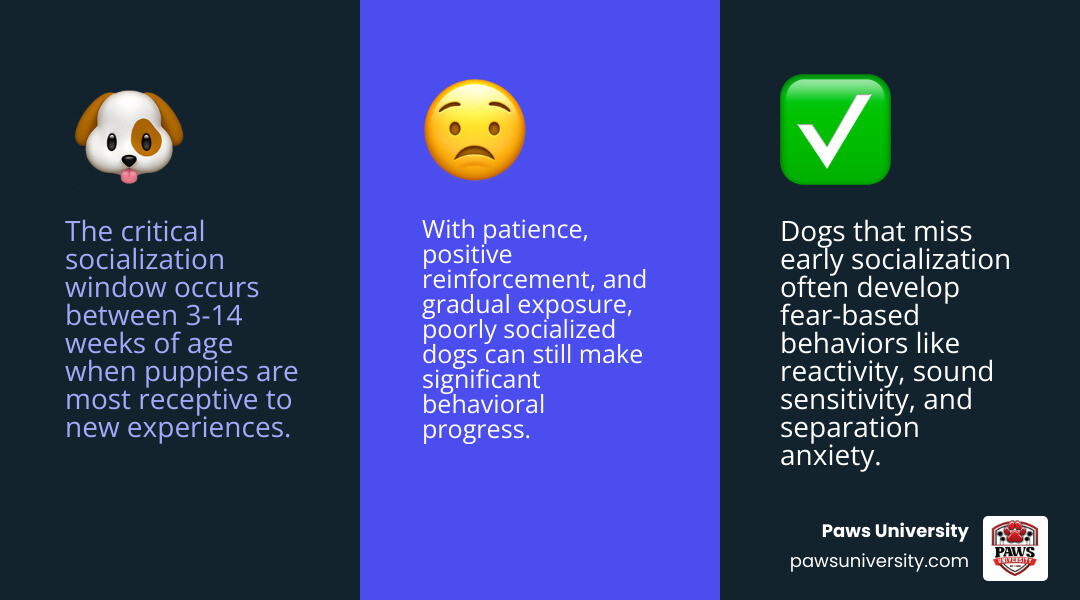
Simple guide to signs of poorly socialized dog:
8 Common Signs of Poorly Socialized Dog
Recognizing the signs of a poorly socialized dog is the first step toward helping them feel safe in our human-centric world. While some dogs are naturally more introverted than others, under-socialization manifests in specific, often disruptive ways.

1. Unexpected Aggression
One of the most misunderstood signs of a poorly socialized dog is aggression. When a dog growls, snaps, or snarls at a stranger or another dog, it’s rarely because they are a "bully." In most cases, this is fear-based aggression. Because the dog doesn't know how to interpret a new person’s intentions, they use aggression as a "keep away" signal.
2. Pervasive Fear and Anxiety
A well-socialized dog is generally curious about new things. A poorly socialized dog, however, may view every new object—a trash can on wheels, a person wearing a hat, or a fluttering tarp—as a potential threat. You might see them cowering, tucking their tail, or trying to hide behind your legs.
3. Reactivity on Walks
Does your dog turn into a lunging, barking mess the moment they see another dog across the street? Reactivity is a classic sign of under-socialization. These dogs haven't learned the "doggy etiquette" required to remain calm during passing encounters. They may also raise their hackles (the hair along their spine) as a defensive reflex.
4. Severe Sound Sensitivity
While many dogs dislike thunder, a poorly socialized dog may panic at everyday sounds. The clatter of a dropped spoon, the hiss of air brakes, or even the sound of a neighbor’s lawnmower can trigger a flight response. This happens because they weren't exposed to a variety of auditory stimuli during that critical puppyhood window.
5. Grooming and Handling Struggles
Grooming involves close, personal touch and the use of strange-smelling or vibrating tools. For an under-socialized dog, being touched on the paws, ears, or tail can feel like an assault. They may wiggle excessively, bolt from the table, or even get "snippy" with the groomer because they lack the "handling comfort" that comes from early positive touch.
6. Avoidance of Eye Contact
In the canine world, direct eye contact can be a challenge. Well-socialized dogs understand the nuance of a friendly glance, but an anxious, under-socialized dog will often look away entirely. This avoidance is a clear signal that they are uncomfortable and trying to de-escalate a situation they find threatening.
7. Overdependence on the Owner
We all love a loyal companion, but "Velcro dog" behavior can actually be a sign of poor socialization. If a dog refuses to leave your side, displays extreme clinginess, or suffers from severe separation anxiety, it may be because they view you as their only "safe harbor" in a world they find terrifying.
8. Hyperactivity or Poor Impulse Control
Some under-socialized dogs don't shut down; instead, they rev up. They might become hyperactive or "over the top" when they meet new people or dogs because they don't know how to regulate their emotions. This lack of social "brakes" often leads to play that is too rough or interactions that end in conflict.
How Lack of Early Socialization Impacts Long-Term Behavior
The impact of missing the socialization window isn't just "bad manners"—it actually changes how a dog's brain processes information. Research into how lack of socialization affects behavior suggests that dogs deprived of early experiences may have genuine neurological differences compared to their well-socialized peers.
Brain Plasticity and Fear-Based Communication
During the first few months of life, a puppy’s brain is incredibly plastic. Every positive encounter with a new surface, sound, or person builds neural pathways that categorize those things as "normal." Without these pathways, the adult dog’s default setting for anything unfamiliar is "danger." This results in fear-based communication, where the dog uses barks, growls, or flight to manage their overwhelming anxiety.
Resource Guarding and Defensive Habits
In many cases, poorly socialized dogs come from backgrounds like puppy mills or hoarding situations where resources were scarce. This can lead to intense resource guarding of food, toys, or even their favorite human. Without early intervention to teach them that "people near my bowl means good things happen," these dogs may become defensive. Understanding these triggers is essential for reducing dog behavior issues without pulling your hair out.
The Difficulty of Adapting
Life is full of changes—moving houses, welcoming a new baby, or visiting the vet. A well-socialized dog takes these in stride. However, a dog that missed early socialization lacks the "resiliency" to handle change. Every shift in their environment becomes a major stressor, which can lead to chronic health issues and a reduced quality of life.
Helping Your Dog Overcome Socialization Deficits
If you’ve recognized the signs of a poorly socialized dog in your own pet, don’t panic. While we can’t go back in time to their puppyhood, we can use rewards-based training to help them navigate the world more comfortably.

Systematic Desensitization
This is the process of gradually exposing your dog to the thing they fear, but at a very low intensity. If your dog is afraid of other dogs, you don't take them to a dog park. Instead, you might stand 100 yards away from a dog and reward your pet for staying calm. Over weeks or months, you slowly decrease that distance.
Counter-Conditioning
Counter-conditioning goes hand-in-hand with desensitization. The goal is to change the dog’s emotional response to a trigger. If your dog fears men with beards, every time they see a man with a beard (at a safe distance), they get a high-value treat like boiled chicken. Eventually, the dog thinks, "Hey, every time I see a beard, chicken happens! Beards are great!" For more specific strategies, check out these proven anxious dog solutions.
Managing a Poorly Socialized Dog on Walks
Walks can be a minefield for an under-socialized dog. Here is how we recommend managing them:
- Use a Shorter Leash: This gives you better control and prevents your dog from lunging toward triggers.
- Safety Muzzles: If your dog has a history of snapping when scared, a basket muzzle is a fantastic tool. It keeps everyone safe and, contrary to popular belief, can be associated with very positive things (like treats!) when introduced correctly.
- Distance is Your Friend: Always try to keep enough space between your dog and their trigger so they don't "react." If they are barking, you are too close.
- Calm Modeling: Dogs are incredibly sensitive to our energy. If you tighten the leash and hold your breath when you see another dog, your dog will think, "My human is scared, I should be too!" Try to remain loose and calm.
Rehabilitating an Older Poorly Socialized Dog
It is a myth that you can't socialize an older dog. While it takes more patience than with a puppy, older dogs can absolutely learn to be "social stars." The key is turning your lone wolf into a social star through low-stress interactions. Start with one-on-one "parallel walks" with a calm, neutral dog rather than throwing them into a chaotic playgroup.
The Role of Professional Training and Prevention
At Paws University, we’ve seen how a structured environment can transform a nervous dog. Our seven-acre campus in West Hawaii, Hawaii County is designed to provide the space and supervision necessary for safe socialization.
Supervised Play and Professional Guidance
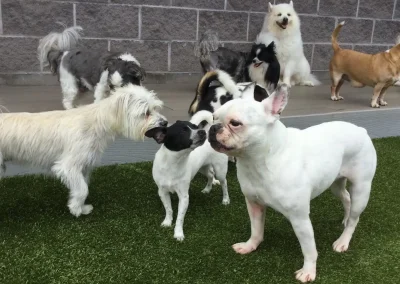
For a poorly socialized dog, "unsupervised" play can be dangerous. They may miss social cues from other dogs, leading to fights. In a professional setting, trained staff can intervene at the first sign of tension, ensuring that every interaction remains a positive learning experience. This controlled exposure is vital for preventing the behavioral spirals that often lead to shelter surrender.
Preventing Issues Before They Start
The best way to handle socialization issues is to prevent them. If you have a new puppy, follow a comprehensive socialization checklist. This involves exposing them to at least 100 different people, surfaces, and sounds before they are 16 weeks old.
| Feature | Puppy Socialization (3-14 Weeks) | Adult Rehabilitation (1+ Year) |
|---|---|---|
| Primary Goal | Prevention of fear | Management and desensitization |
| Pace | Rapid exposure to new things | Very slow, controlled exposure |
| Brain State | High plasticity, "sponge-like" | Ingrained patterns, slower change |
| Success Rate | Very high for "bomb-proof" behavior | High for significant improvement |
| Key Tool | Curiosity and play | High-value rewards and distance |
Frequently Asked Questions about Dog Socialization
Can an adult dog still be socialized?
Yes! While the "critical window" has closed, dogs remain capable of learning throughout their lives. Rehabilitation for an adult dog focuses on building trust and creating new, positive associations with things that previously caused them fear. It requires more time and patience, but the results are worth it.
Is aggression always a sign of poor socialization?
Not always, but it is a very common cause. Aggression can also be caused by medical pain, genetics, or a specific traumatic event. However, if a dog shows general reactivity toward a wide range of people or animals, poor early socialization is the most likely culprit.
How do I prevent socialization issues in a new puppy?
The key is "positive variety." Don't just take your puppy to the same park every day. Take them to the beach, walk them on different surfaces like gravel and sand, introduce them to people in hats, people with umbrellas, and friendly dogs of all sizes. Always ensure the puppy can move away if they are scared—never force an interaction.
Conclusion
Understanding the signs of a poorly socialized dog allows us to move from frustration to compassion. Whether your dog is a rescue from a tough background or a "pandemic puppy" who missed out on early adventures, there is a path forward.
At Paws University, our West Hawaii, Hawaii County campus offers a premium environment where dogs can learn at their own pace. From our supervised daycare to our rewards-based training programs, we are dedicated to helping every dog become the most confident version of themselves. If you're ready to start your dog's journey toward better social skills, we're here to help.