Stop Puppy Nipping With Calm, Consistent Feedback
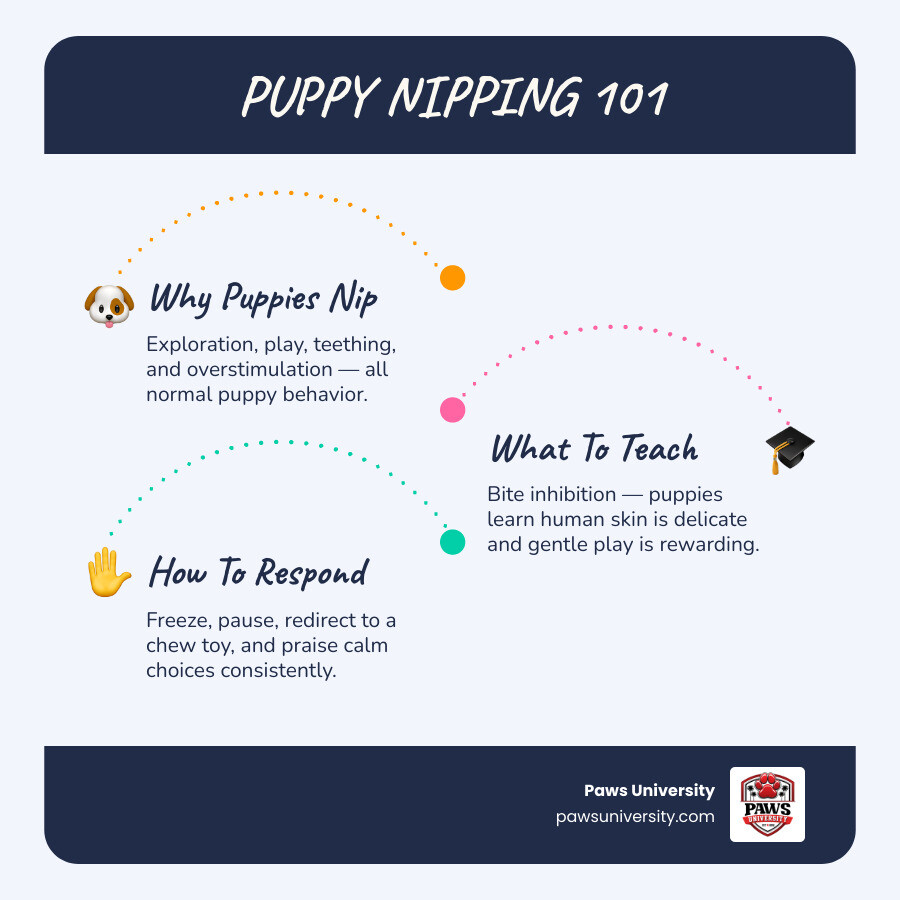
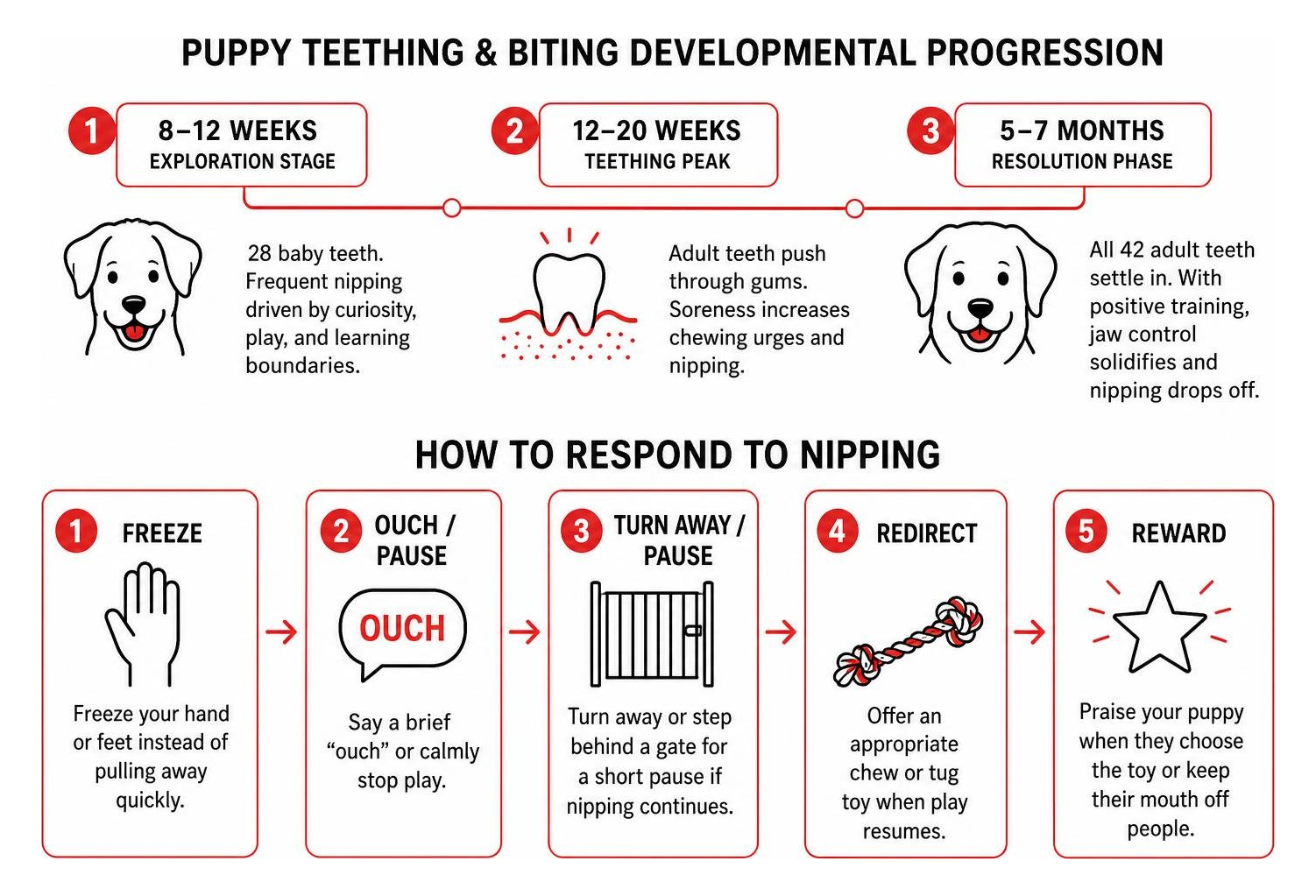
To stop puppy nipping, end attention the moment teeth touch skin, redirect your puppy to a chew toy, and reward calm, gentle play. Keep your response short and the same every time:
- Freeze your hand or feet instead of pulling away quickly.
- Say a brief "ouch" or calmly stop play.
- Turn away or step behind a gate for a short pause if nipping continues.
- Offer an appropriate chew or tug toy when play resumes.
- Praise your puppy when they choose the toy or keep their mouth off people.
Puppies nip because they explore, play, teethe, and get overstimulated. It is usually normal, especially while adult teeth are coming in. The goal is not only to stop biting, but to teach bite inhibition: your puppy learns that human skin is delicate and that gentle choices keep the fun going.
I am Allen Daniels, a Hawai'i Island native and co-founder of Paws University, with more than 25 years of reward-based animal training experience. In this guide, I will show you how do you stop a puppy from nipping using clear boundaries, safe outlets, and trust-based training that fits real life with a busy puppy.
Why Do Puppies Bite and What Is Bite Inhibition?
Welcoming a puppy into your home brings endless joy, but it also means dealing with a mouth full of needle-sharp teeth. Puppies do not have hands to grab, hold, or inspect objects. Instead, they use their mouths to interact with their environment, test textures, and explore everything from your slippers to your fingers.
Nipping is an instinctive part of play and communication. When puppies tumble around with their littermates, they bite each other constantly. If one puppy bites too hard, the playmate lets out a sharp yelp and abruptly stops playing. This feedback loop is essential because it teaches the puppy an invaluable lesson: biting hard brings an immediate end to all the fun.
This learned control is known as bite inhibition. As highlighted in bite inhibition research by the ASPCA, teaching a dog to moderate the force of their jaw is crucial before attempting to extinguish mouthing entirely.
Teaching jaw control ensures that if an adult dog is ever startled, injured, or frightened in the future, their natural reflex is to inhibit their bite force rather than clamp down with full power. By allowing gentle mouthing during early development while giving clear feedback on painful bites, you teach your puppy that human skin is fragile and must be treated with care.
The Puppy Teething Timeline and Natural Mouthing
Puppy biting evolves as your dog grows, shifts teeth, and matures physically. Understanding this developmental timeline helps set realistic expectations:
- 8 to 12 Weeks (The Exploration Stage): Puppies have around 28 sharp deciduous (baby) teeth. Nipping is frequent, energetic, and driven by curiosity, social play, and the search for boundaries.
- 12 to 20 Weeks (Teething Peak): Adult teeth begin pushing through the gums, causing swelling, soreness, and intense chewing urges. Nipping often increases during this period as puppies seek pressure relief for their aching mouths.
- 5 to 7 Months (Resolution Phase): All 42 adult teeth typically settle into place. With consistent positive training, jaw control solidifies and play biting drops off significantly.
How Do You Stop a Puppy From Nipping: Step-by-Step Techniques
Managing puppy nipping requires a step-by-step strategy centered on clear communication, rewarding positive choices, and emotional regulation. When you replace chaos with predictable patterns, your puppy quickly learns that gentle behavior pays off.

Step 1: How Do You Stop a Puppy From Nipping by Teaching Bite Inhibition?
When your puppy’s teeth touch your skin with uncomfortable pressure, you must provide immediate, unemotional feedback.
- Emit a Clear Signal: The moment you feel pressure, give a high-pitched "Ouch!" or yelp. This mimics the sound a littermate makes and briefly interrupts the action.
- Go Limp and Freeze: Let your hand go completely limp. Do not jerk your arm back or wave your hands around, which can trigger your pup's chase drive.
- Pause Interaction: Stop all play, eye contact, and talking for 10 to 15 seconds.
- Resume Gently: When your puppy backs off or softens their mouth, offer calm praise and continue interacting.
Practicing these bite inhibition techniques from UC Davis Veterinary Medicine helps your puppy systematically learn to reduce their bite pressure until teeth on skin disappear altogether.
Step 2: Redirecting Biting to Chew Toys
Puppies have a biological need to chew. Rather than simply telling them what not to do, show them what to do by redirecting their energy toward appropriate chew items.
- Keep Toys Handy: Place durable rubber chew toys, rope toys, and safe chew sticks in every room where your puppy spends time.
- The Quick Swap: When you see your puppy moving toward your hands, sleeves, or pant legs, present an attractive toy before teeth make contact.
- Engage Their Interest: Wiggle the toy across the floor to make it mimic prey. Once your puppy bites the toy instead of your skin, offer enthusiastic verbal praise and keep the game going.
- Soothe Sore Gums: Provide frozen rubber chew toys filled with dog-safe purees or chilled wet food to provide numbing relief for teething gums.
Step 3: Using Time-Outs and Structured Rest
When a puppy bites harder and ignores redirection, they are rarely being stubborn. In most cases, they are overstimulated or severely overtired. Just like human toddlers, puppies throw physical tantrums when they miss their nap times.
If your puppy continues to clamp down after a yelp, calmly step out of their reach or walk behind a baby gate for 30 to 60 seconds. This brief pause removes your attention entirely without any harshness.
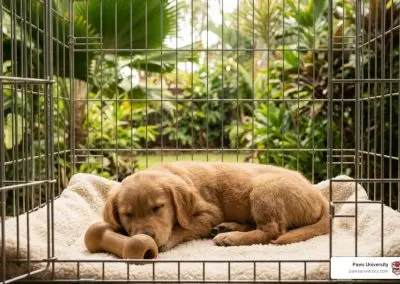
Ensure your puppy receives between 16 to 18 hours of quality sleep each day. Implementing scheduled, quiet nap times in an exercise pen or safe rest area reduces overstimulation and keeps bite levels low.
How Do You Stop a Puppy From Nipping During Walks and Grooming?
Nipping often surfaces during movement or handling routines:
- Ankle Biting on Walks: Fast-moving feet and flowing pant legs naturally attract a puppy's attention. Keep a long tug toy or a target treat near your side while walking. If your puppy targets your feet, stop walking immediately. Stand still like a tree, ask for a "Sit," reward them with a treat, and resume walking with their attention focused on a toy lure.
- Biting During Grooming: Brushes, nail clippers, and towels can feel unfamiliar. Pair touch with high-value rewards. Offer a lick mat smeared with wet food while gently running a soft brush across their coat. If your pup reaches for the brush with their teeth, remove the brush, wait for calm posture, and reintroduce it slowly.
Common Training Mistakes That Make Nipping Worse
Well-meaning responses can accidentally reinforce the exact behaviors you want to avoid.

| Training Reaction | Why It Fails | Better Alternative |
|---|---|---|
| Jerking hands away | Triggers chase drive and increases biting intensity | Let hands go limp and freeze movement |
| Physical corrections or scolding | Generates fear, confusion, and defensive arousal | Use calm 30-second time-outs and withdraw attention |
| Rough hand-wrestling | Teaches the pup that human hands are toys | Use tug ropes, balls, and puzzle toys for active play |
| Inconsistent family rules | Confuses the pup about what boundaries exist | Ensure all household members use identical cues |
| Ignoring overtired behavior | Leads to manic arousal and hard, painful clamping | Provide scheduled naps in a calm, secure space |
Normal Mouthing vs. Early Signs of Aggression
Play mouthing is relaxed, bouncy, and accompanied by soft eyes, loose tail wags, and brief pauses. However, you should consult a professional trainer or veterinarian if you observe:
- Rigid body posture, hard eye stares, or deep snarling when approached
- Intense growling paired with lunging over food bowls, toys, or sleeping spots
- Clamping down without letting go, accompanied by frantic, thrashing movements
Frequently Asked Questions About Puppy Nipping
At what age does puppy nipping typically stop?
Most puppies show significant improvement between 4 to 5 months of age as they develop better impulse control. Once all adult teeth have fully emerged by 6 to 7 months, consistent positive redirection and bite inhibition training resolve mouthing for the vast majority of dogs.
Why does my puppy bite harder when I say no or yelp?
While a high-pitched yelp works well for many pups, high-drive or easily aroused puppies may perceive loud squeals or vocal reprimands as exciting prey noises. If yelping winds your dog up, switch to silent management: go completely still, turn your body away, or step behind a boundary until your puppy calms down.
How should I manage puppy biting around young children?
Children tend to run, make high-pitched sounds, and move their hands quickly, which can turn them into puppy magnets. Always supervise interactions directly. Teach children to stand like a tree (arms crossed, feet planted, looking at the sky) if the puppy jumps or nips, and give kids safe toys to redirect the puppy's attention before play begins.
Conclusion
Teaching your puppy not to nip requires patience, predictable routines, and positive encouragement. By helping them build bite inhibition, offering great chew outlets, and managing their energy levels, you lay the foundation for a gentle, well-mannered companion.
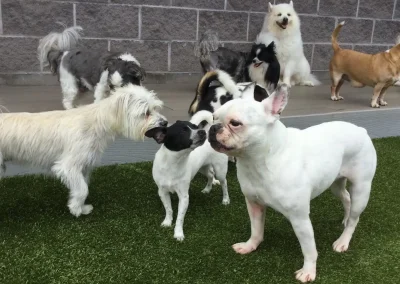
At Paws University, our structured puppy training programs and supervised doggie daycare socialization on our spacious seven-acre Hawaii County campus give growing pups the ideal environment to practice social manners, burn off energy, and thrive alongside expert guidance.