Can an Aggressive Adult Dog Learn Safer Responses?
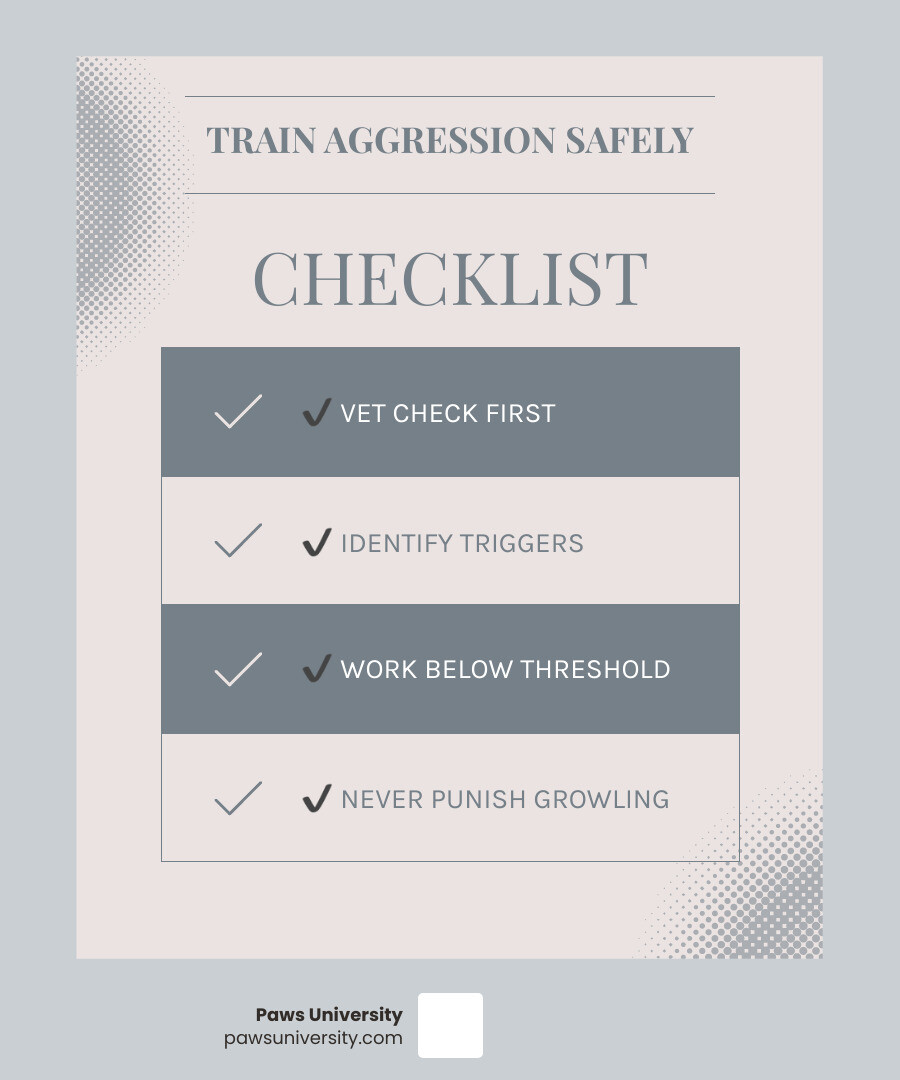
Yes, an aggressive dog can be trained to make safer, calmer choices. The first steps are to prevent situations where a bite could happen, schedule a veterinary exam to rule out pain or illness, and identify the specific triggers that push your dog over threshold.
Training does not promise that every dog will become social or comfortable with every person, dog, or situation. The realistic goal is usually better emotional control, fewer reactions, and a safe management plan. A dog that barks and lunges on walks may learn to notice another dog from a safe distance, then look back to you for a reward instead.
Aggression is often communication, not a sign that your dog is "bad." Fear, pain, guarding food or space, frustration behind a leash or fence, and past learning can all play a role. Do not punish growling. It is an important warning signal, and suppressing it can leave a dog frightened without a safe way to communicate. Researchers continue to study dog behavior to better understand how stress, environment, and learning shape canine responses.
I am Allen Daniels, a Hawai'i Island native who has spent more than 25 years using trust-based, reward-driven training with dogs and other animals. If you are asking can a aggressive dog be trained, this guide will help you understand what progress can look like and how to pursue it safely.
Discover more about can a aggressive dog be trained:
Can a Aggressive Dog Be Trained: Management vs Complete Cure
When families ask whether an aggressive dog can be completely "cured," we must look at the science of animal behavior. Aggression is a symptom of an underlying internal state—often panic, pain, or conflict—rather than a fixed character flaw. Because the brain possesses neuroplasticity, dogs of any age can build new neural pathways, develop coping mechanisms, and learn alternative responses to their environment.
However, treating aggression is more like managing chronic anxiety than curing an infection. While many dogs make massive progress and reach a point where aggressive outbursts are a thing of the past, lifelong vigilance remains essential. A responsible plan focuses on two parallel tracks:
- Emotional Reconditioning: Changing how the dog feels when exposed to a specific trigger so the urge to act defensively disappears.
- Environmental Control: Structuring your dog's daily world to prevent bite risks and stop the rehearsal of unwanted habits.
Every time a dog lunges, snaps, or bites, that behavioral pathway becomes stronger. By setting up strict management routines—such as using privacy window films, keeping safe buffer zones on walks, and managing visitor protocols—we stop the cycle. When paired with deliberate behavior modification, reducing dog behavior issues becomes an achievable, low-stress reality for the entire household.
Common Drivers of Aggressive Behavior in Adult Dogs
To modify aggressive displays, we must pinpoint the root cause driving the behavior. Aggression is rarely random; it serves a specific functional purpose for the animal.
- Fear and Self-Defense: Accounting for roughly 60% to 70% of clinical cases, fear-based aggression occurs when a dog feels cornered or threatened. The display is an attempt to make the scary stimulus move away.
- Territorial and Protective Behavior: Dogs may guard their perceived home perimeter, yard, or family members from approaching unfamiliar people or animals.
- Resource Guarding: A survival-rooted instinct where a dog guards food bowls, high-value chews, toys, sleeping spots, or favorite people.
- Frustration and Barrier Reactivity: Often seen on leash or behind fences, barrier frustration happens when a dog wants to investigate or escape but cannot, causing their arousal to spill over into barking, snapping, or redirection.
- Maternal Protection: Female dogs naturally guard nursing litters or nesting spaces from perceived disruption.
Aggression vs. Reactivity
Owners frequently confuse reactivity with genuine aggression. While a reactive dog and an aggressive dog might look identical at the end of a leash, their underlying intent differs:
| Trait / Behavior | Leash Reactivity | True Aggression |
|---|---|---|
| Primary Driver | Frustration, social excitement, or mild unease | Deep fear, defense, or intent to create distance/harm |
| Warning Signals | Whining, pulling, frantic barking | Hard staring, freeze, guttural growling, snapping |
| Off-Leash Response | Often diffuses into normal greeting or play | Persists in defensive postures, charging, or biting |
| Recovery Time | Calms down shortly after trigger passes | Remains hypervigilant and aroused for extended periods |
| Distance Needed | Moderate distance allows redirection | Requires significant space to drop below threshold |
Understanding subtle warning cues—such as stiffening, lip licking, "whale eye" (showing the whites of the eyes), or low rumbles—is crucial. Rather than correcting vocal expressions, understanding dog growling helps you recognize that your dog is actively asking for space before feeling forced to snap.
Medical Rule-Outs and Pain Assessment
Before implementing any behavioral protocol, a thorough veterinary examination is mandatory. Studies show that between 28% and 82% of dogs evaluated for behavior problems show underlying signs of physical discomfort or pain. Pain dramatically lowers a dog's tolerance threshold, turning an otherwise patient companion into an irritable, defensive pet.
Common medical contributors include:
- Orthopedic Discomfort: Hip dysplasia, cranial cruciate ligament tears, spinal spondylosis, and osteoarthritis (which affects approximately 20% of adult dogs).
- Endocrine Imbalances: Hypothyroidism and atypical adrenal conditions that influence mood and impulse regulation.
- Sensory Decline: Cataracts, progressive retinal atrophy, or hearing loss that causes dogs to startle easily when approached.
- Dermatological and Dental Disease: Chronic ear canal infections, fractured teeth, or inflamed gums.
If an adult dog displays a sudden shift in temperament, treats normal physical handling with suspicion, or shows localized sensitivity around the hips or neck, treat it as a medical priority. Training an animal that is in active physical pain will only lead to frustration and stalled progress.
Can a Aggressive Dog Be Trained When Triggered by Fear?
When a dog experiences fear, their nervous system enters an involuntary fight-or-flight state. Cortisol and adrenaline surge, shutting down the cognitive brain responsible for problem-solving. In this physiological state, learning cannot take place.

Successful training hinges on working sub-threshold—the distance at which your dog notices the trigger but remains relaxed enough to eat treats, respond to cues, and look away voluntarily. If your dog encounters too many stressors in a short period (such as a sudden delivery truck followed by a barking neighbor dog and a close stranger pass), they experience "trigger stacking." This compound stress leaves their nervous system flooded for up to 72 hours.
By using positive behavior protocols, you build absolute emotional safety, giving your dog the space and time they need to decompress without feeling forced to defend themselves.
Evidence-Based Training and Safety Protocols
Modifying aggressive responses requires systematic, science-backed learning protocols that alter the dog's involuntary emotional reflexes.
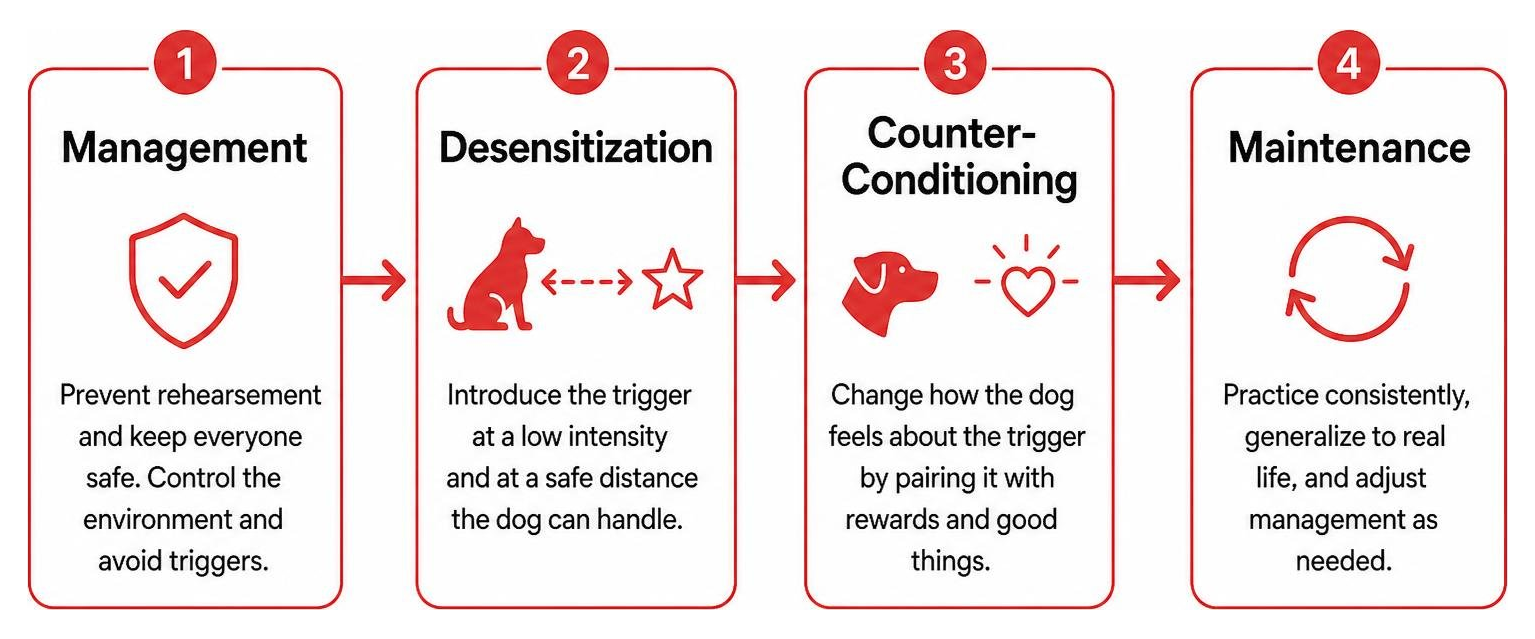
- Systematic Desensitization: Exposing the dog to a very low-intensity version of their trigger (often achieved via generous physical distance) so no defensive response is provoked.
- Classical Counter-Conditioning: Pairing the sight or presence of the trigger with an ultra-high-value reward (such as roasted chicken, string cheese, or liver paste). Over repeated repetitions, the dog shifts from thinking "Here comes a stranger, I must protect myself" to "Here comes a stranger, amazing snacks happen!"
- Differential Reinforcement of an Alternative Behavior (DRA): Teaching and heavily rewarding a functional behavior that is physically incompatible with aggression. For example, a dog cannot lunge at a passing runner if they are eagerly maintaining eye contact while catching treats in a sustained heel.
To explore this step-by-step foundation further, utilizing positive behavior modification ensures that new habits are rooted in trust rather than stress.
Can a Aggressive Dog Be Trained Without Aversive Methods?
There is an old, debunked myth that aggressive dogs require "dominance," physical corrections, or harsh tools like prong and shock collars to regain control. Research clearly demonstrates that obedience and reliable behavior are highest in dogs trained exclusively with reward-based methods and lowest in dogs trained with aversive techniques.
Using physical pressure or pain on an already fearful, defensive dog creates dangerous behavioral fallout:
- Suppressed Communication: Punishing a growl teaches a dog not to give fair warning. The internal panic remains, resulting in a dog that bites seemingly out of nowhere.
- Conditioned Negative Association: If a dog looks at an approaching child and receives a neck correction, they associate the child with pain, increasing their hostility toward children.
- Learned Helplessness: A shut-down dog may look quiet and compliant, but their chronic stress levels skyrocket, eventually causing an explosive behavioral rebound down the road.
True rehabilitation transforms internal emotions rather than just temporarily masking outer symptoms.

Essential Safety Tools and Management
Maintaining zero-incident protocols protects both the public and your dog while learning takes place.
- Bite-Free Conditioning with Basket Muzzles: A properly sized, comfortable basket muzzle allows your dog to pant, drink water, take treats, and yawn while entirely eliminating the risk of a bite. Condition the muzzle positively over several weeks with peanut butter so your dog views it like a fun harness.
- Visual Boundaries: Apply opaque window films to front-facing windows and install solid gate barriers to prevent fence fighting.
- Secure Leash Systems: Utilize a sturdy, front-clip harness paired with a secondary backup connection or double-ended leash attached to a secure belt to prevent accidental drops.
- Proactive Walking Strategies: Walk during quiet hours and cross streets early to preserve comfortable safety margins. For detailed guidance on walk management, our guide on managing leash reactivity offers practical tools for daily outings.
When to Seek Specialized Professional Guidance
While basic barrier frustration can sometimes be handled with careful handling and patience, severe aggression requires immediate, qualified assistance.
You should consult a behavioral professional immediately if:
- Your dog has inflicted a puncture wound or bite that broke human or animal skin.
- The aggressive behavior is directed toward young children or vulnerable family members.
- The dog exhibits sudden, unpredictable outbursts without discernible body language warnings.
- Intra-household fighting between resident dogs is escalating.
- You feel unsafe or overwhelmed managing daily interactions.
When selecting assistance, prioritize professionals who rely on force-free, evidence-based methodologies. Working with an experienced professional through structured private dog training guidance will provide an individualized risk assessment, safety mapping, and controlled exposure setups that protect everyone involved.
Frequently Asked Questions About Aggressive Dog Training
How long does it typically take to see improvement in an aggressive dog?
Behavior modification is an incremental process that moves at the dog's emotional pace. In general:
- Weeks 1 to 2: Focus is placed on safety management, medical exams, and preventing trigger exposure to allow stress hormone levels to drop.
- Weeks 3 to 8: Sub-threshold counter-conditioning begins; owners often observe clearer focus, faster recovery from mild surprises, and improved handler engagement.
- Months 3 to 6: Noticeable improvements in distance tolerance and reliable alternative responses become established habits.
- 6 to 12+ Months: Deeply rooted triggers are steadily generalized across varied environments.
Expect occasional plateaus or temporary setbacks after unexpected stressful events; consistency over time is what builds enduring resilience.
Can genetics or specific breeds prevent a dog from being trained?
Genetics provide the biological framework for a dog's temperament, arousal levels, and sensitivity to the environment, but breed alone does not prevent an animal from learning. Large-scale canine bite studies reveal that environmental conditions—such as neglect, lack of positive human interaction, absence of neutering, and poor supervision—play a far greater role in bite incidents than breed labels.
Every dog is an individual shaped by genetics, early maternal stress, developmental socialization, and life experiences. Any dog, regardless of background, can learn calmer responses within their physiological limits.
Is it safe to train an aggressive dog at home without guidance?
If your dog displays mild frustration or low-level reactivity, structured home routines, mental enrichment, and reward-based games are generally safe and effective starting points.
However, if your dog demonstrates hard freezes, snapping, resource guarding that escalates to lunging, or a history of bites, attempting DIY training without an expert safety plan is dangerous. A single misjudgment of your dog's threshold can result in an injury, making professional guidance the safest path forward.
Conclusion
Living with a dog that shows aggressive behavior can feel overwhelming, isolating, and exhausting. Yet, with patience, empathy, and evidence-based methods, adult dogs can make tremendous strides toward calm, reliable behavior. By prioritizing safety management, addressing physical health, and rewarding desired choices, you build a lasting bond based on mutual trust.
At Paws University, our spacious, peaceful seven-acre campus in Hawaii County provides an ideal setting for dogs to decompress, build confidence, and thrive. If you are looking for support, our compassionate team is here to help you develop the right path forward through our structured dog training programs. Take a breath, celebrate every small victory, and let positive guidance lead the way.