Why a Puppy Socialization Program Can Change Your Dog's Life
A puppy socialization program is one of the most important investments you can make in your dog's long-term health and happiness. Here's what it involves at a glance:
| Element | Details |
|---|---|
| What it is | Structured exposure to people, animals, sounds, surfaces, and environments |
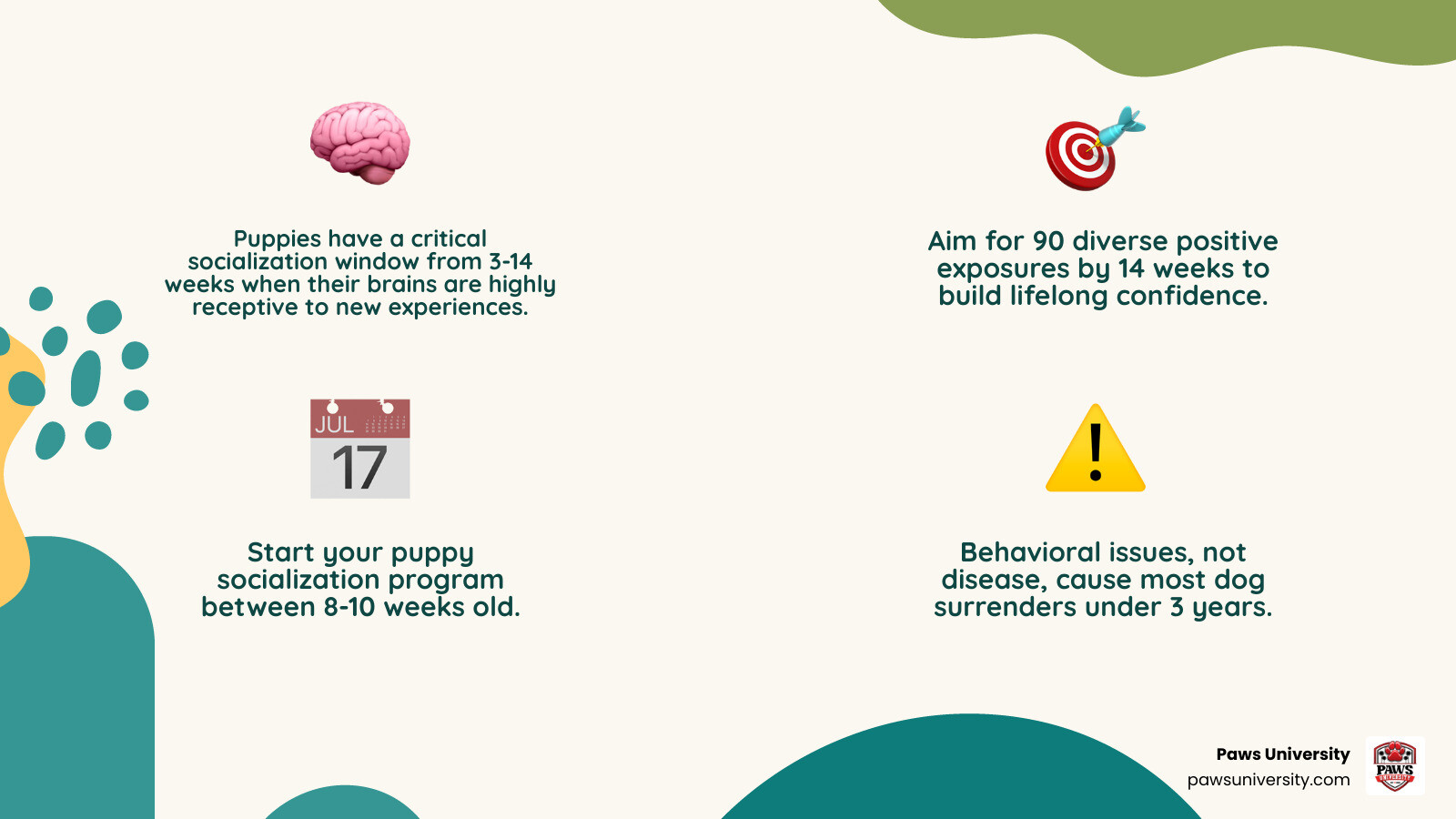
| Critical window | 3 to 14 weeks of age |
| When to start | 8 to 10 weeks old |
| Goal | 90 positive experiences by 14 weeks |
| Why it matters | Behavioral issues — not disease — are the leading cause of death in dogs under 3 years |
| Core method | Positive reinforcement: treats, praise, and choice |
Most people think a puppy's first year is about vaccines and basic commands. But what happens between those vet visits matters just as much — maybe more.
The truth is, puppies have a narrow window in early life when their brains are wide open to new experiences. Miss that window, and the habits formed by fear, uncertainty, or under-exposure can stick for years. That's how a sweet puppy becomes a dog with separation anxiety, leash aggression, or destructive behavior — not because something went wrong, but because something important was skipped.
The good news? A structured socialization routine during those early weeks can set your puppy up for a lifetime of confidence and calm.
I'm Allen Daniels, co-founder of Paws University in Kailua-Kona, and I've spent over 25 years developing and refining a puppy socialization program rooted in the same operant conditioning principles I first learned training dolphins at the Hilton Waikoloa Village. If there's one thing working with 500-pound marine mammals taught me, it's that trust and positive experience — not pressure — are what build lasting behavioral results.
Common puppy socialization program vocab:
Understanding the Critical Socialization Window

In canine development, timing isn't just everything—it’s the only thing. The most influential period of a dog's life occurs between 3 and 14 weeks of age. This is known as the critical socialization window. During this time, a puppy’s brain is like a sponge, specifically designed to accept new sights, sounds, and smells as "normal" parts of their world.
By the time a puppy reaches 16 to 20 weeks, this window begins to close. The brain shifts from a state of curious acceptance to one of natural caution. This transition is an evolutionary survival mechanism; in the wild, an older puppy needs to be wary of things it hasn't encountered before to stay safe. In our modern Hawaii homes, however, that same caution can manifest as fear of the delivery truck, the neighbor’s lawnmower, or even different floor textures.
Research shows that properly socializing young puppies is imperative to their future well-being. Behavioral issues, rather than infectious diseases, are actually the number one cause of death for dogs under three years of age. This is often because dogs that weren't socialized properly develop severe anxiety or aggression, leading to them being surrendered or euthanized.
At Paws University, we emphasize that The Early Bird Gets The Best Behaved Dog. Starting early allows us to build a foundation of confidence that lasts a lifetime. This period is when we can most easily prevent future problems by showing the puppy that the world is a fun, safe place.
How to Safely Implement a Puppy Socialization Program
A successful puppy socialization program isn't about throwing your puppy into the deep end of a crowded beach. It is a systematic, controlled process. A great benchmark to aim for is 90 different situations associated with pleasurable experiences by the time your puppy is 14 weeks old.
The best time to start this journey is when puppies are 8-10 weeks old. At this age, they are usually settled into their new homes and ready to begin exploring beyond their immediate surroundings.
Many owners worry about socialization before their puppy is fully vaccinated. While health is paramount, the American Veterinary Society of Animal Behavior (AVSAB) notes that the risk of behavioral problems from poor socialization often outweighs the risk of disease, provided you are careful. You can safely socialize by using a Puppy Socialization Checklist and sticking to controlled environments—like our premium seven-acre campus or your own backyard—where you know the other dogs are healthy and vaccinated.
Focusing on Puppy Training early on means you are guiding these exposures rather than letting them happen by accident.
Essential Exposures for Your Puppy Socialization Program
When we think of socialization, we often think of other dogs. While that’s part of it, a comprehensive puppy socialization program covers much more:
- Novel Surfaces: Walking on grass, sand, gravel, wood decks, and even crinkly plastic tarps.
- Tropical Sounds: Hawaii is full of unique noises—from the rhythmic sound of crashing waves and heavy rain on metal roofs to the occasional distant sound of a coqui frog or a weed whacker.
- Diverse People: Introduce your puppy to people of all ages, sizes, and ethnicities. Include people wearing hats, sunglasses, and high-visibility vests.
- Handling Exercises: Gently touch your puppy’s ears, paws, tail, and belly. This prepares them for stress-free vet visits and grooming sessions.
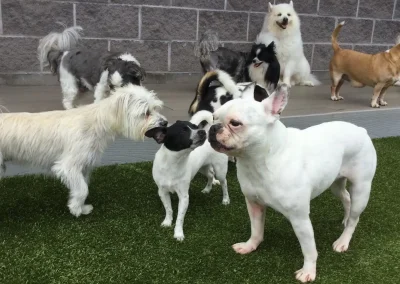
Participating in structured Puppy Play Skills Sessions can help facilitate these interactions in a safe, coach-monitored environment. These sessions focus on teaching bite inhibition and critical canine communication. Whether it’s through group play or individual Training, the goal is always to keep the experience positive.
Tracking Progress with a Puppy Socialization Program
Without a plan, it's easy to miss things. We recommend using socialization schedules to ensure your puppy is getting a well-rounded education. You might set weekly goals, such as "this week we will encounter three new types of flooring and two new types of sounds."
Following PuppyPreK program guidelines can provide a structured curriculum, moving from simple handling in week one to more complex environments like new places and grooming tools in later weeks. Keeping an observation log helps you track what your puppy enjoyed and what they found a bit scary. If they were nervous about the sound of the vacuum, you know you need to revisit that sound at a lower volume with better treats next time. For more localized advice, our Kona Dog Training Guide From Puppies To Pros is an excellent resource for navigating the unique environment of West Hawaii.
The "Do Nothing" Exercise and Positive Reinforcement
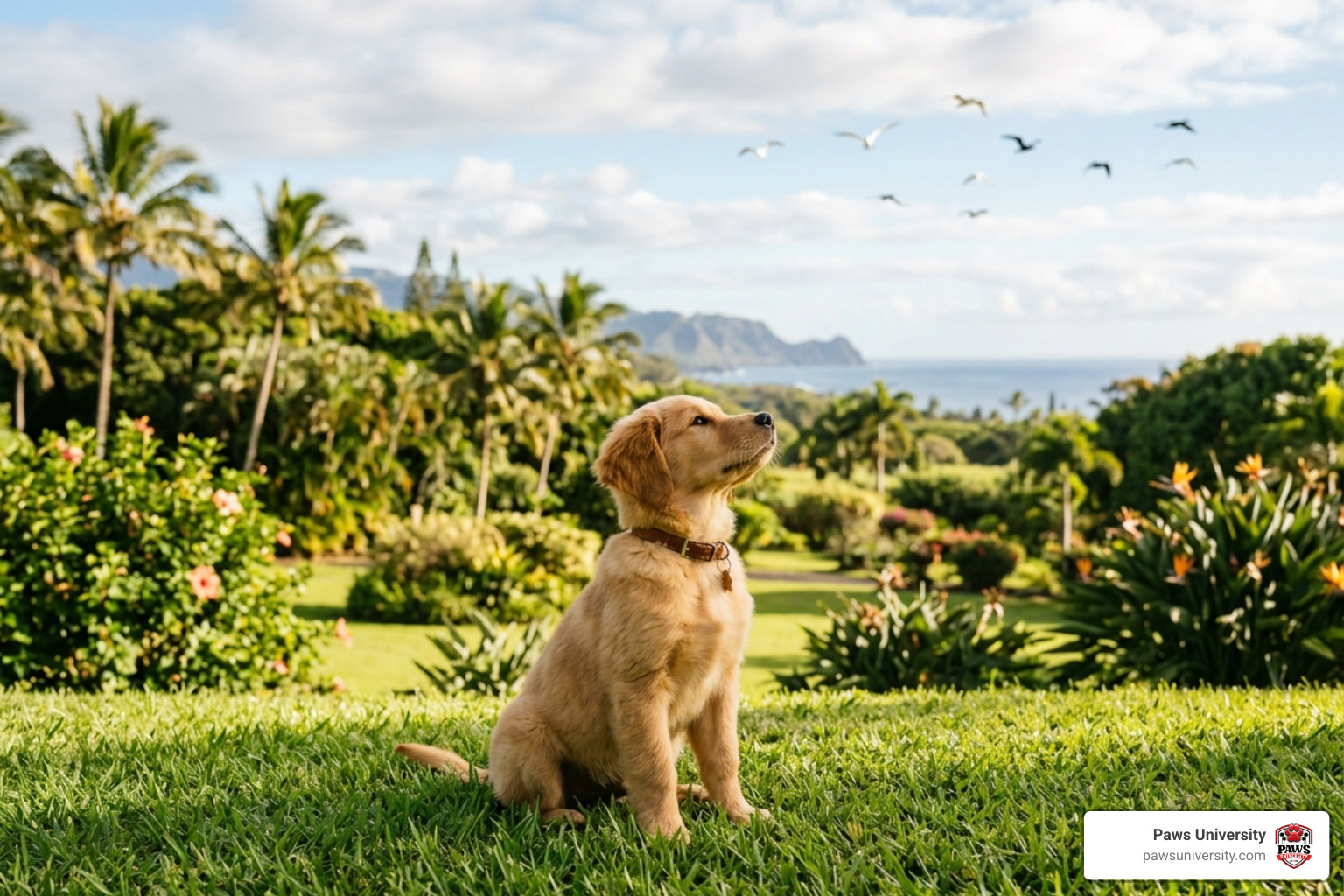
One of the most overlooked "secrets" of a puppy socialization program is the "Do Nothing" exercise. Many owners think socialization means their puppy must greet every person and dog they see. This actually creates a dog that is over-excited and unable to focus.
The "Do Nothing" exercise involves taking your puppy to a semi-busy spot—like a shaded corner of our seven-acre campus—and simply sitting there. Your puppy isn't allowed to go greet everyone; instead, they are rewarded for being calm and neutral while the world goes by. This builds incredible impulse control and teaches your puppy that they don't need to react to every stimulus in their environment.
This exercise relies heavily on positive reinforcement. By using high-value treats and calm praise, you are pairing the sight of "scary" or "exciting" things with something wonderful. If a jogger runs by and your puppy looks at them but remains calm, click and treat! This is the essence of How To Turn Your Lone Wolf Into A Social Star.
| Active Interaction | Neutral Observation (The "Do Nothing" Exercise) |
|---|---|
| Puppy greets and plays with others | Puppy watches others from a distance |
| Builds social skills and play styles | Builds impulse control and focus |
| Can lead to over-arousal if not managed | Teaches calmness in busy environments |
| Essential for learning dog-to-dog "language" | Essential for public access and "good citizen" behavior |
Recognizing Stress and Preventing Behavioral Issues
A puppy socialization program is only effective if the puppy is actually having a good time. If you force a fearful puppy into a situation, you aren't socializing them—you are sensitizing them, which makes the fear worse.
You must learn to read your puppy’s body language. Signs of stress include:
- Lip licking or yawning when not tired.
- Whale eye (seeing the whites of the eyes).
- Tucked tail or a stiff, frozen body.
- Panting when it isn't hot.
- Turning away or trying to hide.
If you see these signs, it’s time to move further away from the stimulus and give your puppy a break. Proper Dog Socialization is about giving the puppy the choice to interact.
Early socialization also helps prevent common issues like resource guarding, where a dog becomes aggressive over food or toys. By practicing "trading" items for high-value treats during the critical window, you teach the puppy that people approaching their things is a good thing. Similarly, teaching bite inhibition through play and ensuring they have positive "alone time" can prevent future separation anxiety and Dog Training struggles.
Socialization Across Life Stages: From Puppies to Pros
While the 3-14 week window is the most critical, socialization doesn't end there. As puppies enter adolescence (around 5-6 months), they often go through "fear periods" where they might suddenly become afraid of things they used to be fine with. This is a normal part of development, but it requires patience and continued positive reinforcement.
Adult dogs also benefit from "maintenance" socialization. However, adult dogs often change their play styles. While a puppy might want to play with everyone, many adults prefer a "small circle of friends" or one-on-one interactions. Enrolling in Fun Obedience Classes Kona Dogs Actually Enjoy is a great way to keep your adult dog’s mind sharp and their social skills polished without the chaos of a dog park.
For dogs that missed out on early socialization, we often see issues like leash aggression. This is where Private Training becomes invaluable. We can work one-on-one to desensitize the dog to their triggers in a controlled, rewards-based environment, helping them navigate the world with less stress.
Frequently Asked Questions about Socialization
How do I socialize my puppy before they are fully vaccinated?
You can socialize safely by carrying your puppy in public (so their feet don't touch the ground), taking them for car rides to see the sights, and inviting healthy, fully vaccinated adult dogs over to your home for playdates. Our premium facility also offers supervised environments that prioritize cleanliness and safety for young learners.
What are the most common mistakes to avoid during socialization?
The biggest mistakes are forcing interactions and overwhelming the puppy. Never pull your puppy toward something they are afraid of. Another mistake is using punishment (like scolding or leash pops) when a puppy is scared; this only confirms to the puppy that the situation is indeed bad. Always use a rewards-based approach.
Can an adult dog still be socialized if they missed the puppy window?
Yes, but it takes more time and patience. For an adult dog, we call it "rehabilitation" or "desensitization" rather than socialization. You are working to change an existing emotional response rather than building one from scratch. It requires a slow, steady, and strictly positive approach to build their confidence.
Conclusion
Building a confident dog starts with a commitment to a structured puppy socialization program. By respecting the critical development window and using rewards-based methods, you aren't just teaching your dog to "behave"—you are giving them the emotional tools they need to handle the world with ease.
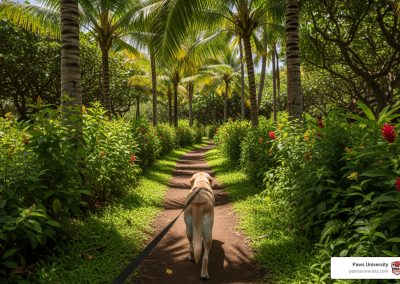
At Paws University, we are proud to offer West Hawaii’s premier facility for this journey. Our seven-acre campus in Hawaii County provides a lush, tropical environment where puppies and adult dogs alike can learn and play under expert supervision. Since 2002, our philosophy has remained the same: use positive reinforcement to build a bond of trust that lasts a lifetime.
Whether you are looking for supervised play to reduce behavior issues or structured training to start your puppy's journey today, we are here to help your furry family member become a confident, happy "pro."