Why Teaching a Puppy to Be Alone Is One of the Most Important Things You'll Do
Teaching your puppy to be alone is a skill — and like all skills, it has to be learned gradually.
Here's the short version of how to do it:
- Start immediately. Begin on the first day your puppy comes home, even if just for a few minutes.
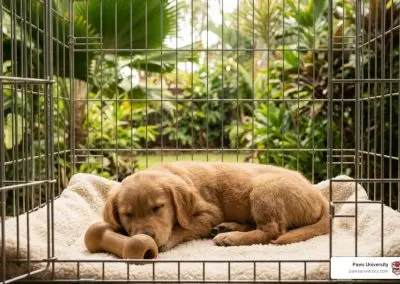
- Use a safe confinement space. A crate or playpen creates a calm, predictable environment.
- Build in tiny steps. Start with seconds, not hours. Return before your puppy gets distressed.
- Create positive associations. Give a stuffed Kong or chew toy every time your puppy is in their space alone.
- Keep departures and arrivals low-key. No big goodbyes. No dramatic hellos.
- Be consistent. Practice daily — including weekends and days you're home.
That's the foundation. Everything else in this guide builds on those six steps.
Here's why this matters: surveys suggest that anywhere from 40% to 80% of dogs show signs of separation anxiety — potentially affecting millions of pets. And eight out of ten dogs find it hard to cope when left alone, yet half never show obvious signs. By the time most owners notice a problem, the habit is already deeply ingrained.
The good news? With the right approach started early, most puppies can learn to feel safe and calm when alone. Prevention is far easier than treatment.
I'm Allen Daniels, co-founder of Paws University in Kailua-Kona — and teaching puppies to be alone is one of the behavioral foundations I work on most with new pet owners here in West Hawaii. My background in operant conditioning, developed over more than three decades working with marine mammals and dogs alike, gives me a science-backed perspective on exactly why gradual, trust-based training works — and what to do when it doesn't. Let's walk through everything you need to know.
Basic teaching puppy to be alone vocab:
The Importance of Teaching Puppy to Be Alone
When you bring a new puppy home, the instinct is to spend every waking second with them. They are soft, they smell like baby powder, and they follow you around like a tiny, furry shadow. However, constant companionship can accidentally set your puppy up for a major shock when real life resumes.
Dogs are highly cooperative, social animals. In a natural family group, being completely isolated is rare and can feel inherently unsafe to a young animal. This is why teaching puppy to be alone is a vital life skill that protects their future welfare.
The Optimal Training Window: 8 to 13 Weeks of Age
The most critical developmental stage for socialization and building confidence occurs between 3 and 14 weeks of age. When you bring your puppy home—typically around the 8-to-9-week mark—you are right in the sweet spot of this developmental window.
During this phase, puppies are incredibly adaptable. New experiences introduced positively during this time are accepted as normal parts of daily life. If you wait until your puppy is five or six months old to practice departures, they have already built a strong expectation of constant human presence. Suddenly changing the rules of the game can trigger frustration and panic.
Preventing Separation Anxiety Before It Starts
Separation anxiety is a serious, panic-induced condition that can be incredibly difficult to resolve once fully established. According to a 2024 survey by the American Pet Products Association, over 67 million US households own a dog, and separation-related behavior problems consistently rank among the top reasons owners seek professional training help.
By taking a proactive approach, you can future-proof your puppy's emotional health. Introducing gentle, structured independence training from day one helps your puppy realize that when you leave, two predictable things happen:
- They get something delicious to enjoy.
- You always return.
Teaching these concepts early prevents your puppy from developing a hyper-alert state where they constantly monitor your movements to see if you are leaving. To explore more about building early confidence, check out this guide on How To Teach Your Puppy To Be Alone Without Separation Anxiety and read about The Importance of Teaching Your Puppy How to Be Alone.
Step-by-Step Guide to Alone-Time Training
Teaching independence isn't about shutting a door and hoping for the best. It requires a structured, scientific approach called systematic desensitization combined with counterconditioning.
- Systematic Desensitization: Gradually exposing your puppy to being alone in tiny, non-threatening increments, ensuring they never cross the threshold into true panic.
- Counterconditioning: Changing your puppy's emotional response to being left alone by pairing the experience with something high-value, like a special treat.
By using a strictly rewards-based approach, you build a foundation of trust. For a deeper dive into these training concepts, you can read Home Alone: How to Teach Your Dog to Be Alone and review the professional recommendations in Alone Training - Pet Professional Guild.
Let's break the training process down into manageable phases.
Phase 1: Creating a Safe Confinement Space
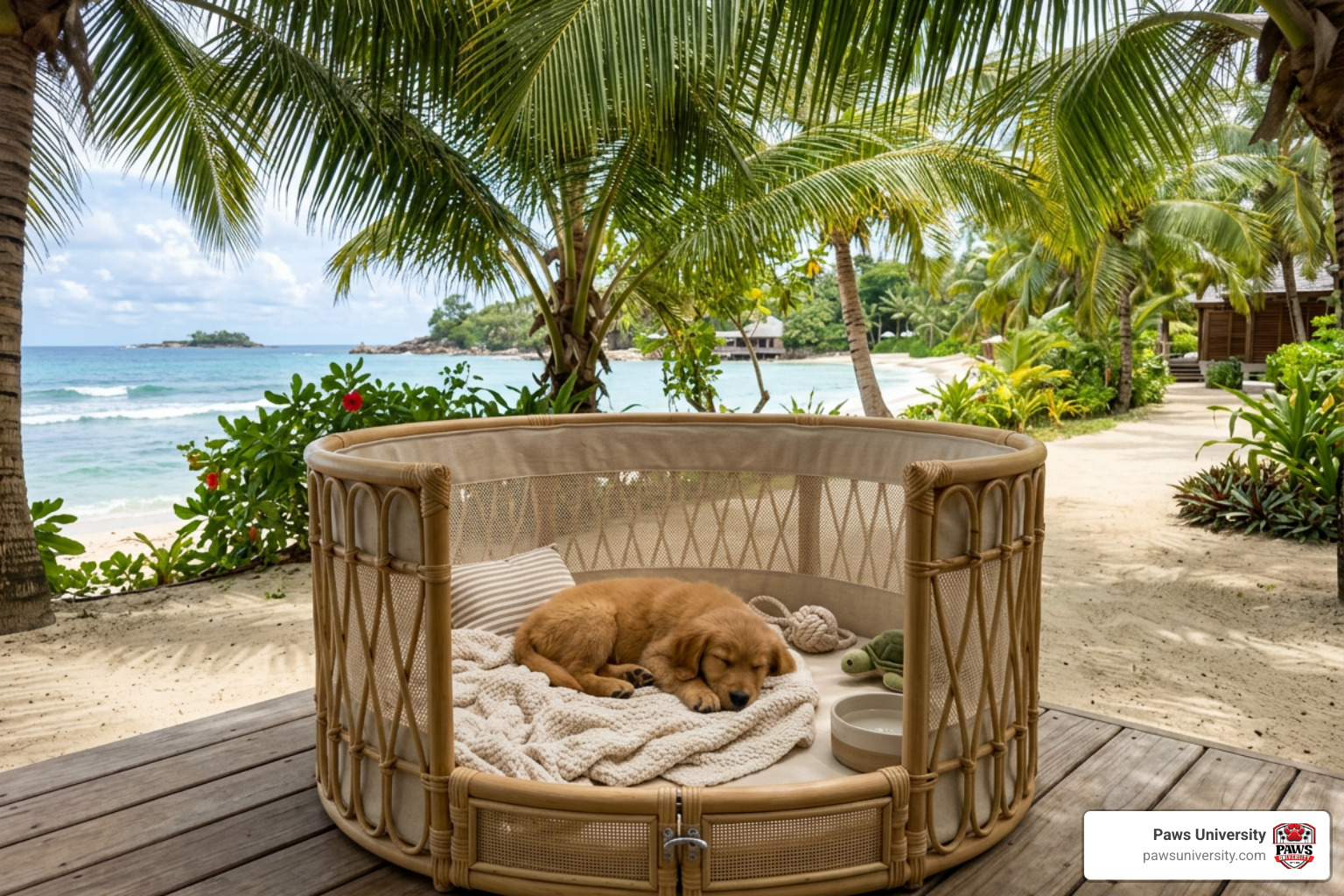
Before you can practice leaving your puppy alone, you need to set up a secure, comfortable environment where they can't get into trouble or hurt themselves. A safe confinement space prevents destructive chewing, aids in potty training, and provides a physical boundary that helps your puppy wind down.
The Crate vs. The Playpen
Both crates and playpens are excellent tools, and using them in tandem often yield the best results:
- The Crate: A properly sized crate should be just large enough for your puppy to stand up, turn around, and lie down comfortably. It acts as a cozy, den-like bedroom. Because dogs naturally avoid soiling their sleeping area, a crate is an indispensable tool for housebreaking. For detailed steps on making the crate a sanctuary, read our guide on Crate Training: Teaching Your Dog to Love Their Space.
- The Playpen: A playpen provides a larger "puppy zone" where your puppy can play safely with toys, stretch out, and have a designated sleeping spot. It is ideal for slightly longer stretches when you are home but cannot supervise them directly. Learn how to set this up smoothly with our advice on How to Successfully Playpen Train Your Puppy Without the Stress.
Setting Up the Confinement Area for Success
Place the crate or playpen in a quiet corner of a frequently used room, away from direct drafts, intense heat, or high-traffic exit routes. To build positive associations, feed your puppy their regular meals inside this area. Leave the door open initially so they can wander in and out at will.
You can also introduce a soft comfort item, like a heartbeat toy, which mimics the warmth and rhythm of their littermates to soothe very young puppies. For overnight tips that tie directly into this setup, read The New Owner Guide to Overnight Puppy Care and Potty Training.
Phase 2: Gradual Desensitization and Teaching Puppy to Be Alone in Small Steps
Once your puppy is comfortable eating meals and resting in their confinement area with the door open, you can begin systematic alone-time training.
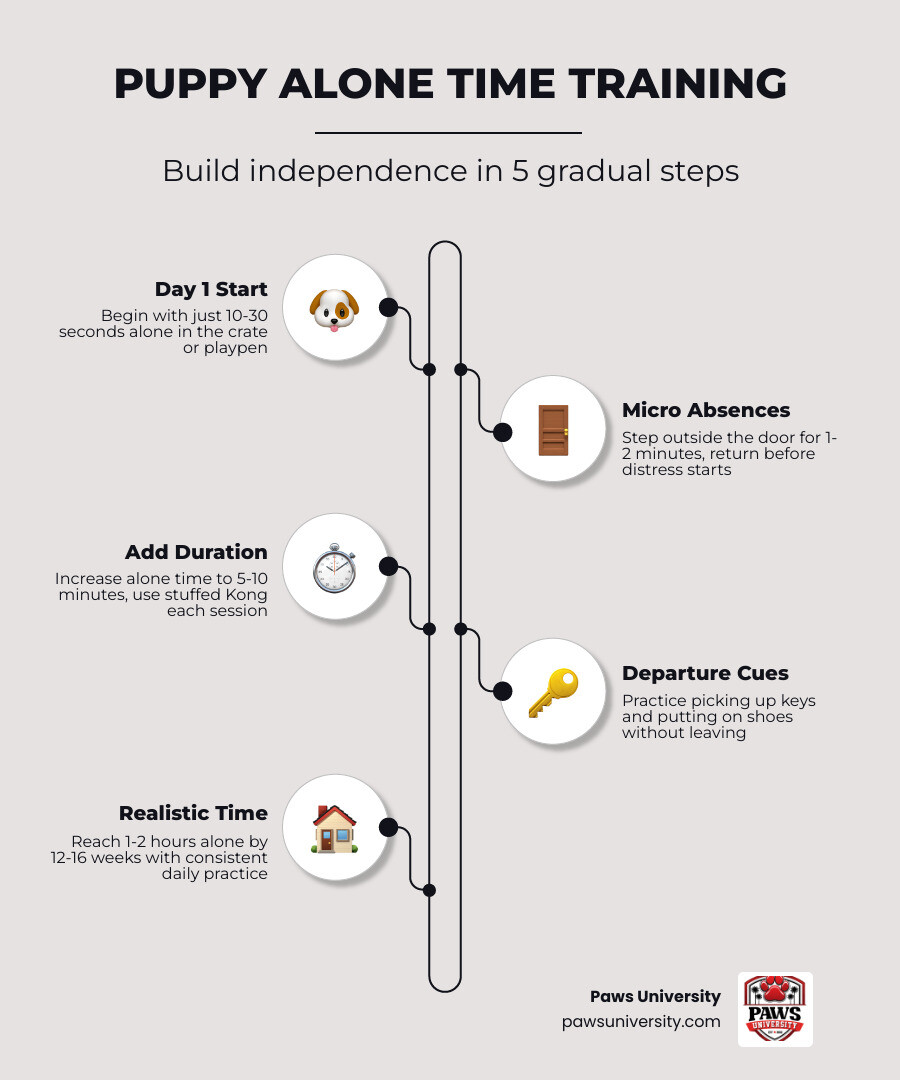
Step 1: Confinement While You Are Present
Start by placing your puppy in their playpen or crate with a high-value chew toy. Close the door and sit right next to them. If they remain calm, praise them quietly and feed a small treat through the bars. Keep these initial sessions short—just 2 to 3 minutes—and open the door before they show any signs of frustration.
Step 2: Micro-Absences and Moving Away
Next, step a few paces away from the confinement area while your puppy is busy with their chew. Return immediately, reward their calm behavior, and open the door. Gradually increase the distance until you can walk to the other side of the room.
Step 3: Door Desensitization (Out of Sight)
Now, practice stepping out of the room entirely. Start by walking out of sight for just 1 to 2 seconds, then return calmly.
- The "Click-for-Quiet" Technique: If your puppy is quiet during those brief seconds, use a clicker or a consistent marker word (like "Yes!") right before you step back into view, then deliver a high-value treat. This teaches them that quiet, relaxed behavior is what brings you back.
- Desensitizing Departure Cues: Puppies are expert observers. They quickly learn that actions like putting on shoes, grabbing keys, or sliding on sunglasses mean you are about to disappear. To prevent these cues from triggering early anxiety, practice them throughout the day without actually leaving. Put on your shoes, pick up your keys, sit on the couch to read for five minutes, and then put them away.
Step 4: Building Duration Slowly
Over several days, gradually increase your out-of-sight time from 5 seconds to 30 seconds, then to 2 minutes, 5 minutes, and eventually 15 minutes. If your puppy whines or paws at the door, you may have moved too fast. Take a step back to a duration where they were successful and build up more slowly.
Creating Positive Associations When Teaching Puppy to Be Alone

The secret to a puppy who loves their alone time is simple: make being alone the most rewarding part of their day. If they only get their absolute favorite treats when you walk out the door, they will start looking forward to your departures.
High-Value Food Puzzles and Stuffed Toys
Instead of feeding your puppy out of a standard bowl, use their daily food allowance for enrichment. Stuffed chew toys, lick mats, and food puzzles are perfect for this.
- The Frozen Treat Trick: Mix your puppy's kibble with a little wet food, plain unsweetened yogurt, or safe peanut butter, stuff it inside a durable rubber toy, and freeze it. A frozen treat can keep a puppy happily occupied for 20 to 30 minutes. By the time they finish licking, the chemical process of licking has naturally released calming hormones in their brain, preparing them for a nap.
Setting the Ambiance
Silence can sometimes make a puppy feel isolated and hyper-sensitive to every tiny outdoor sound.
- Masking Sounds: Leave a white noise machine, a fan, or soothing classical music playing near their confinement area. Studies show that gentle music can promote calm, resting behaviors in dogs.
- Visual Boundaries: If your puppy's playpen is near a window where they can see birds, pedestrians, or cars, they may become frustrated or overstimulated. Close the curtains or position the pen in a quieter corner to encourage rest.
Low-Key Departure and Arrival Routines
Keep your exits and entries entirely neutral. When you leave, don't kiss your puppy repeatedly, use a high-pitched "goodbye" voice, or make a dramatic scene. Simply hand them their stuffed toy, say a calm, consistent cue phrase (like "Be good, I'll be back"), and walk out.
When you return, ignore your puppy for the first few minutes until they settle down. If you rush to the crate and match their high-energy, excited state, you inadvertently teach them that your return is a high-stakes, thrilling event, which makes the time spent waiting for you feel much harder. Once they are calm and quiet, greet them gently.
Common Mistakes to Avoid in Independence Training
Even the most dedicated pet parents can fall into common traps that accidentally prolong or worsen separation issues. By staying mindful of these pitfalls, you can keep your training on a positive path.
- Making Goodbyes and Greetings a Major Event: Highly emotional departures and arrivals create a sharp contrast between "together time" and "alone time." This roller coaster of energy can make your puppy anxious during the moments leading up to your exit.
- Letting Them "Cry It Out": Allowing a puppy to scream, howl, or panic in their crate for extended periods is counterproductive. It floods their system with cortisol (the stress hormone) and teaches them that their confinement space is a place of distress. Always distinguish between minor, short-lived frustration whines (which usually resolve in a minute or two) and genuine panic.
- Rushing the Timeline: Expecting a young puppy to go from 5 minutes of alone time to 3 hours overnight is a recipe for regression. Progress is rarely perfectly linear; be prepared to adjust your pacing based on how your puppy is feeling on any given day.
- Only Practicing When You Actually Leave: If you only put your puppy in their crate when you are leaving the house for work, they will quickly associate the crate with your long absences. Practice short, positive confinement sessions daily while you are still home—such as when you are washing dishes, folding laundry, or working in another room.
- Punishing Distress Behaviors: If you return home to find a chewed-up bed or an indoor potty accident, never punish your puppy. They will not connect the punishment with an action they did hours or even minutes ago. Instead, they will learn to fear your arrival, which drastically increases their overall anxiety.
For more insights on managing early departure struggles, read our practical Dog Anxious When Leave Tips and find out how to establish healthy boundaries in Preparing to leave your puppy alone for the first time.
Frequently Asked Questions About Puppy Alone Time
Navigating puppyhood comes with plenty of questions. Here are some of the most common queries we hear from pet parents regarding independence training.
How long can a young puppy realistically be left alone?
A puppy's physical and emotional limits change rapidly as they grow. A general rule of thumb for physical bladder capacity is that a puppy can hold their bladder for about one hour per month of age, plus one. However, this rule applies to a resting puppy—awake puppies need to eliminate much more frequently.
| Puppy Age | Maximum Recommended Alone Time (Once Trained) | Key Considerations |
|---|---|---|
| 8–10 Weeks | 30 to 60 minutes | Bladder control is minimal; puppies need frequent potty breaks and struggle with long isolation. |
| 10–12 Weeks | 1 to 2 hours | Independence is growing, but active puppies still need a potty break every 30–60 minutes when awake. |
| 3–6 Months | 2 to 4 hours | Can handle longer stretches of rest, provided their physical and mental needs are met beforehand. |
| 6+ Months | 4 to 6 hours | Healthy adult dogs can typically manage up to 4 to 6 hours alone, but should not routinely exceed this without a break. |
To set your puppy up for success, always provide physical exercise and mental stimulation before leaving them alone. A tired puppy is a sleepy puppy!
What are the signs of separation anxiety in puppies?
It is entirely normal for a young puppy to whine or protest briefly when first confined—this is often simple frustration or "fear of missing out" (FOMO). However, true separation anxiety is rooted in genuine panic.
Watch for these warning signs:
- Persistent Vocalization: Continuous howling, barking, or crying that does not taper off after 10 to 15 minutes.
- Destructive Escape Attempts: Chewing specifically around exit points, like the crate door, room doors, or window sills.
- Physiological Stress Signs: Excessive panting, drooling (wetting their chest or crate floor), trembling, or pacing.
- Loss of Toilet Training: Urinating or defecating in their safe space immediately after you leave, even if they just went outside.
- Extreme Greeting Behavior: An inability to settle down for a long period after you return.
If you suspect your puppy is struggling with true separation distress, explore our guide on how to Stop the Shakes with These Proven Anxious Dog Solutions. For specialized support, you may also want to consult a professional Puppy seperation anxiety training coach.
Should I let my puppy "cry it out" in their crate?
No. The old-school advice of letting a puppy "cry it out" can damage the secure attachment they are building with you. When a puppy is left to panic, their brain is flooded with stress hormones. Over time, this can lead to "learned helplessness," where the puppy stops vocalizing because they have given up hope, but their internal stress levels remain incredibly high.
Frustration vs. Distress
It is crucial to learn the difference between a puppy who is slightly annoyed because they want to play, and a puppy who is genuinely terrified:
- Frustration Whining: This is usually intermittent, lower in pitch, and accompanied by demand behaviors (like pawing at a toy or looking directly at you). If you wait for a brief, 5-second gap of silence before returning, you reward the quiet behavior without reinforcing the whining.
- Distress Crying: This is high-pitched, persistent, and accompanied by physiological signs of panic (like heavy panting or drooling). If your puppy is in true distress, return to them immediately. Do not make a fuss—simply calm them down, let them out, and make a mental note to make your next training step much smaller and easier.
To learn more about managing vocalizations humanely, read The Great Crate Escape from Nonstop Barking.
Conclusion
Teaching your puppy to be alone is one of the greatest gifts of confidence you can give them. By taking a patient, rewards-based approach and breaking the process down into tiny, positive steps, you can help your puppy learn that independence is nothing to fear.
If you live in Hawaii County and are looking for professional, hands-on support, Paws University is here to help. Located on a beautiful seven-acre campus in West Hawaii since 2002, our premier facility offers supervised play and structured puppy social programs designed to reduce behavioral issues and build lifelong confidence. Our experienced team utilizes strictly positive, rewards-based methods to ensure your puppy's training journey is fun, safe, and stress-free.
Ready to set your puppy up for a lifetime of confidence? Discover how we can support your training goals by visiting our Paws University Puppy Training Services.