Why Teaching a Puppy to Walk on a Leash Sets the Foundation for Everything
Teaching a puppy to walk on a leash is one of the most important skills you'll work on together — and the good news is, it's simpler than most people think when you start early and use the right approach.
Here's a quick overview of how to do it:
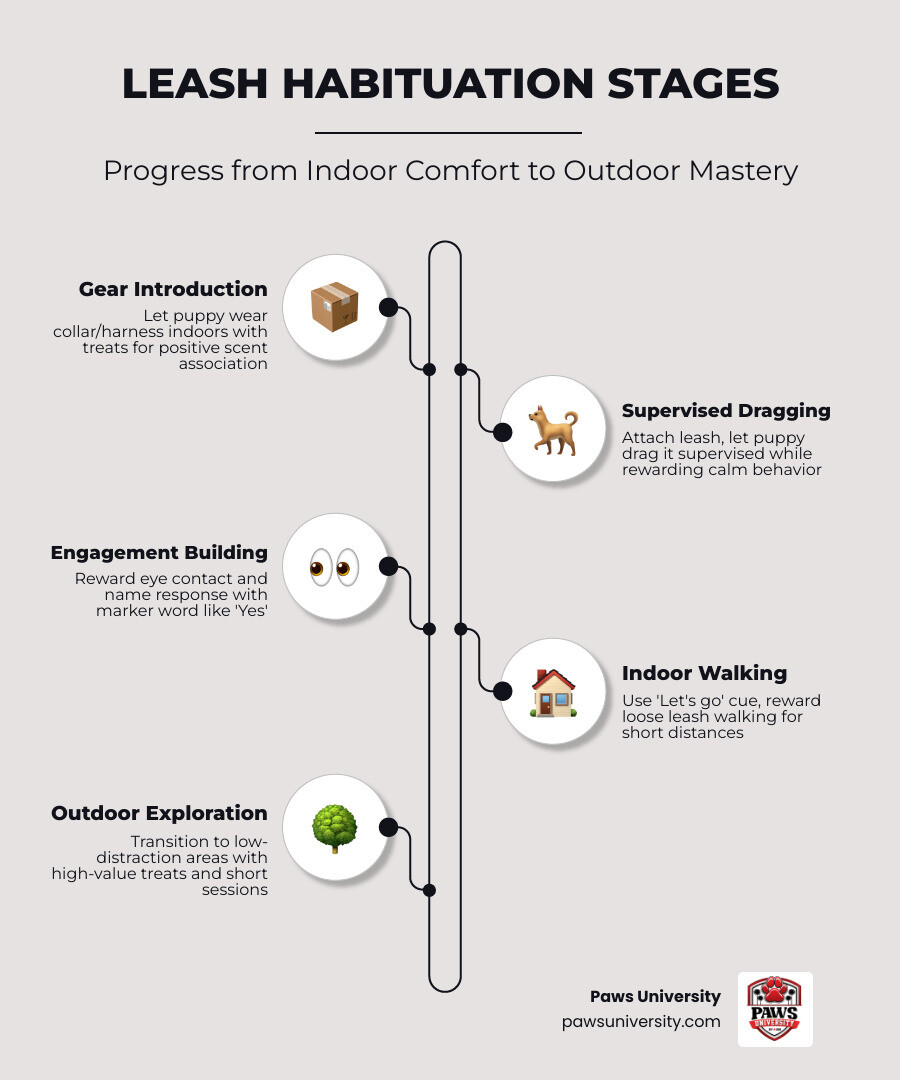
- Introduce the gear indoors — let your puppy wear their collar or harness at home with no pressure
- Build a reward marker — pair a word like "yes" or a clicker sound with treats so your puppy knows when they've done something right
- Reward eye contact and attention — reinforce your puppy for checking in with you while the leash is attached
- Start walking indoors — use a cue like "let's go" and reward every few steps for staying close on a loose leash
- Handle pulling by stopping — stand still like a tree until your puppy returns to you, then reward and move forward
- Transition outside gradually — bring high-value treats and keep sessions short in new environments
The rest of this guide covers each step in detail, including gear selection, common challenges, and how to make walks genuinely fun for both of you.
Most people assume their puppy will just figure out how to walk nicely on a leash. In reality, it's a learned skill — one that puppies have no natural framework for. A leash attached to their body is a completely foreign sensation. The pulling, the stopping, the confusion — it all makes sense when you see it from your puppy's perspective.
The earlier you start, the easier it gets. You don't even need to wait until your puppy is fully vaccinated. Indoor practice at home is where the real foundation is built.
I'm Allen Daniels, co-founder of Paws University here on Hawaiʻi Island, and I've spent over 25 years applying the same operant conditioning methods I refined training marine mammals to help hundreds of local dogs — including teaching a puppy to walk on a leash from the very first day home. Let's walk through exactly how to do it.
Teaching a puppy to walk on a leash definitions:
Getting Started: Preparation and Equipment
The secret to success when teaching a puppy to walk on a leash is starting before you ever step foot on a trail. In April 2026, we are more aware than ever that the "socialization window" is a critical time. You should start leash training the moment you bring your puppy home. Even if they aren't fully vaccinated and ready for the public parks of West Hawaii, they can begin learning the ropes in the safety of your living room or yard.
Early training isn't just about the walk; it's about building a relationship. As we discuss in The Early Bird Gets The Best Behaved Dog, starting early prevents bad habits from forming. A puppy who learns that a loose leash equals rewards will be much easier to manage as a 60-pound adult.
Essential Equipment for teaching a puppy to walk on a leash
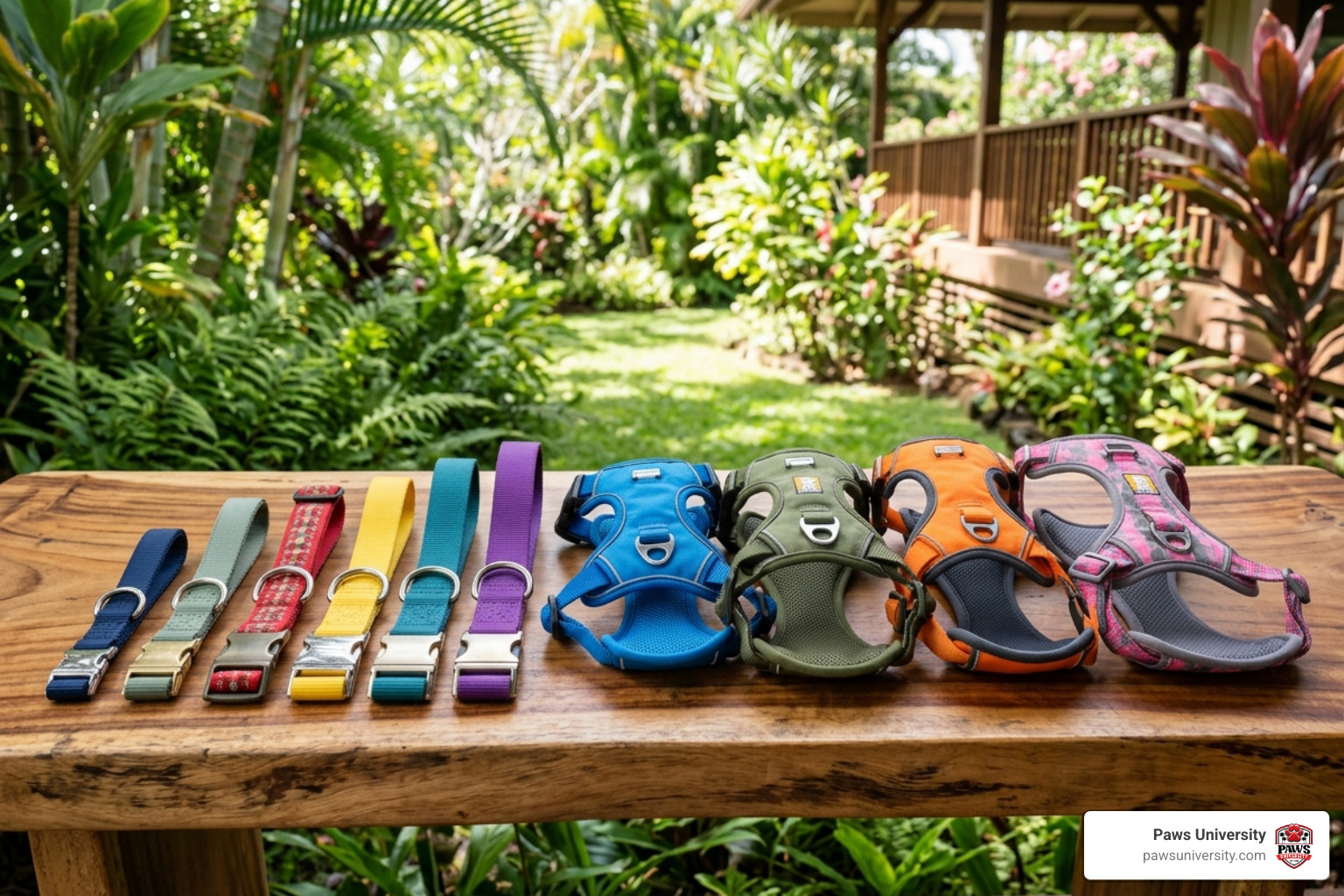
Choosing the right gear is like choosing the right shoes for a hike—it makes all the difference. For our premium training sessions at Paws University, we recommend the following:
- Flat Collars: A standard buckle collar is perfect for holding ID tags and for puppies who already have a basic understanding of leash pressure.
- Front-Clip Harnesses: These are game-changers for larger or more energetic puppies. By clipping the leash to the chest, the harness gently redirects the puppy back toward you if they try to pull ahead.
- 6-Foot Fixed Leash: Avoid retractable leashes. They teach puppies that pulling actually gets them more freedom, which is the opposite of what we want. A sturdy 6-foot nylon or leather leash provides the perfect balance of freedom and control.
- High-Value Treats: Think small, soft, and smelly. Tiny bits of chicken or premium beef treats work best to keep a puppy's focus in a world full of distractions.
If you find yourself overwhelmed by the options, our team is always available for more info about training services to help you pick the perfect fit for your pup.
Introducing the Gear Indoors
A puppy’s first reaction to a harness or collar is often to scratch at it or freeze up. We want them to associate this gear with "food and fun." Start by letting them sniff the equipment. Give them a treat just for looking at the harness.
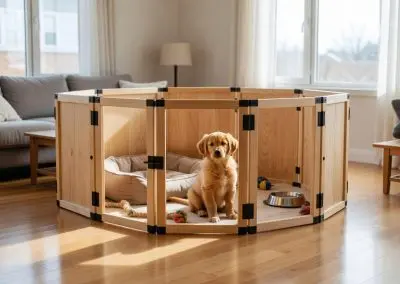
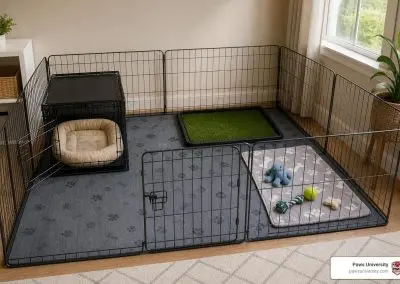
Once they are comfortable, put the collar or harness on for short periods during mealtime or play. This creates a positive association through scent and activity. You can even let them drag a light leash around (under strict supervision) so they get used to the sensation of something following them. This method works beautifully alongside other home-based routines, like when you successfully playpen train your puppy without the stress.
Step-by-Step Guide to teaching a puppy to walk on a leash

Now that your puppy is comfortable wearing their gear, it’s time to start the actual training. We use a rewards-based approach, which means we mark the exact moment the puppy does something right and follow it with a treat.
Building Engagement and Focus
Before you move, you need your puppy’s attention. We use a "marker word" like a sharp, happy "Yes!" or a clicker. The goal is to teach the puppy that when they hear that sound, a treat is coming.
- Eye Contact: Stand still with your puppy on a leash. The moment they look up at your face, mark it ("Yes!") and reward. This teaches them that checking in with you is the most rewarding thing they can do.
- Name Recognition: Say your puppy's name. When they look at you, mark and reward.
- Treat Positioning: Keep your treats in a pouch or pocket on the side you want your puppy to walk on (traditionally the left). This encourages them to stay close to your leg.
For more on building this kind of focus, our guide on Crate Training Teaching Your Dog To Love Their Space offers great insights into using rewards to build positive associations with boundaries. You can also find detailed steps in this Leash Training Guide.
The First Steps: Indoor Practice
Start in a hallway or a quiet room with zero distractions.
- The "Let’s Go" Cue: With your puppy on your left side, say "Let's go!" in a cheery, "jolly talk" voice.
- Take One Step: Take a single step forward. If the puppy follows you and the leash stays slack, mark and reward at your knee.
- Increase the Distance: Gradually move to two steps, then three. The goal is to keep the leash in a "J" shape. If the leash tightens, stop immediately.
Consistent indoor practice is the "secret sauce" for success. As the Animal Humane Society points out, mastering the loose leash indoors makes the transition to the busy world much smoother.
Overcoming Common Challenges and Distractions
Even the best-trained puppy will face challenges once you step outside into the beautiful but distracting environment of Hawaii County. Between the scent of tropical flowers and the sight of a stray cat, your puppy’s focus will be tested.
Troubleshooting Tips for teaching a puppy to walk on a leash
- The "Be a Tree" Method for Pulling: If your puppy lunges forward and the leash goes taut, stop walking. Do not yank back. Simply stand still like a tree. Wait for the puppy to realize they aren't going anywhere. The moment they turn back to look at you or step back to create slack, mark, reward, and continue.
- Handling Lunging and Barking: If your puppy gets over-excited by a passing car or another dog, create distance. Move away from the distraction until your puppy can focus on you again. Use high-value treats to keep their attention "proactively" before they start barking.
- Leash Biting: Puppies often bite the leash because they are excited or frustrated. If this happens, stay calm. Offer a treat to "drop it" and redirect them into a "sit" or a "let's go" cue.
If these behaviors become overwhelming, Private Training can provide the one-on-one attention needed to nip these habits in the bud. Learning how to stop a puppy from growling and biting is also a helpful prerequisite for leash manners. For more tips, check out these Loose Leash Walking Tips.
Transitioning to the Great Outdoors
When you move outside, the "difficulty level" jumps from 1 to 10. Start in a quiet area of your yard or a secluded corner of a park. Keep sessions very short—5 to 10 minutes is plenty for a young mind.
In Hawaii, we have to be mindful of the heat. Always check the temperature of the pavement with the back of your hand; if it's too hot for you, it's too hot for their paws. This outdoor transition is a great time to implement the schedules found in The New Owner Guide To Overnight Puppy Care And Potty Training, ensuring your puppy is well-rested and ready to learn.
Making Walks Enjoyable: Sniffing and Enrichment
Walking shouldn't just be about military-style precision. For a puppy, the walk is their "daily news." They learn about their world through their nose.
Loose Leash Walking vs. Formal Heeling
It is important to distinguish between these two behaviors:
- Loose Leash Walking: This is the "off-duty" walk. The only rule is that the puppy cannot pull the leash tight. They are free to sniff, explore, and move around within the radius of the 6-foot lead.
- Formal Heeling: This is a highly focused behavior where the puppy stays pinned to your left knee, looking up at you. This is useful for crossing busy streets or navigating crowds but is mentally exhausting for a puppy.
We recommend using a cue like "Free time" or "Go sniff" to tell your puppy they are allowed to explore. Allowing "sniffy walks" actually reduces pulling over time because it satisfies their natural curiosity. You can find more about these distinctions in our Puppy Training Category or through the AKC's guide on leash walking.
Frequently Asked Questions about teaching a puppy to walk on a leash
When should I start leash training my puppy?
Right away! As soon as they arrive home, you can start with collar acclimation and indoor "follow me" games. You don't need to wait for full vaccinations to start the mental work of leash manners.
What should I do if my puppy refuses to move on the leash?
This is common and is often called "planting." Never pull or drag the puppy. Instead, crouch down, use a happy "jolly" voice, and lure them toward you with a treat. Make it a game of "follow the leader."
Is a harness or a collar better for a young puppy?
A harness is generally safer for young puppies, especially small or brachycephalic (flat-faced) breeds, as it protects their delicate necks from pressure. A front-clip harness is a premium choice for preventing pulling without causing discomfort.
Conclusion
Teaching a puppy to walk on a leash is a journey of patience, consistency, and plenty of treats. By focusing on a rewards-based philosophy, you aren't just controlling your dog; you're teaching them to choose to stay by your side.
At Paws University, we take pride in being West Hawaii’s premium pet facility. Our seven-acre campus is designed to provide the ultimate environment for your puppy to grow and learn. Whether you are looking for supervised play to reduce behavior issues or want to join our Fun Obedience Classes Kona Dogs Actually Enjoy, we are here to support you every step of the way. Happy walking!