Safe, Enriching Hawaii Dog Boarding Group Play
For safe Hawaii dog boarding group play, choose a facility that screens dogs before grouping them, matches them by size, energy, and play style, and provides active staff supervision. In West Hawaii's warm climate, dogs also need shade, fresh water, rest breaks, and the option to step away from the group when they need a reset.
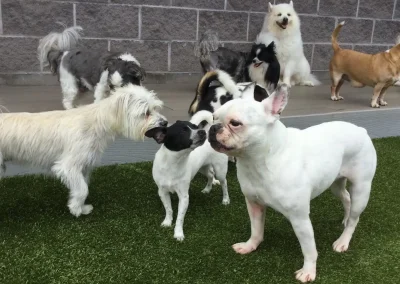
A good playgroup is not simply a yard full of dogs. It is a structured activity that can give social dogs exercise, mental enrichment, and healthy interaction while their families are away. Dogs who are anxious, reactive, overwhelmed, or not ready for group settings should have a safe alternative, such as private play, one-on-one attention, or calm enrichment.
At Paws University, our outdoor campus in Kailua-Kona is designed for dogs to move, explore, cool down, and rest in a managed setting. The goal is not to make every dog play with every other dog. It is to create the right experience for each dog's comfort, behavior, and needs.
I am Allen Daniels, a Hawaii Island native and co-founder of Paws University, with more than 25 years of experience using reward-based behavior methods with dogs. My work with Hawaii dog boarding group play focuses on thoughtful social matching, clear observation, and trust-based care for dogs with all kinds of needs.
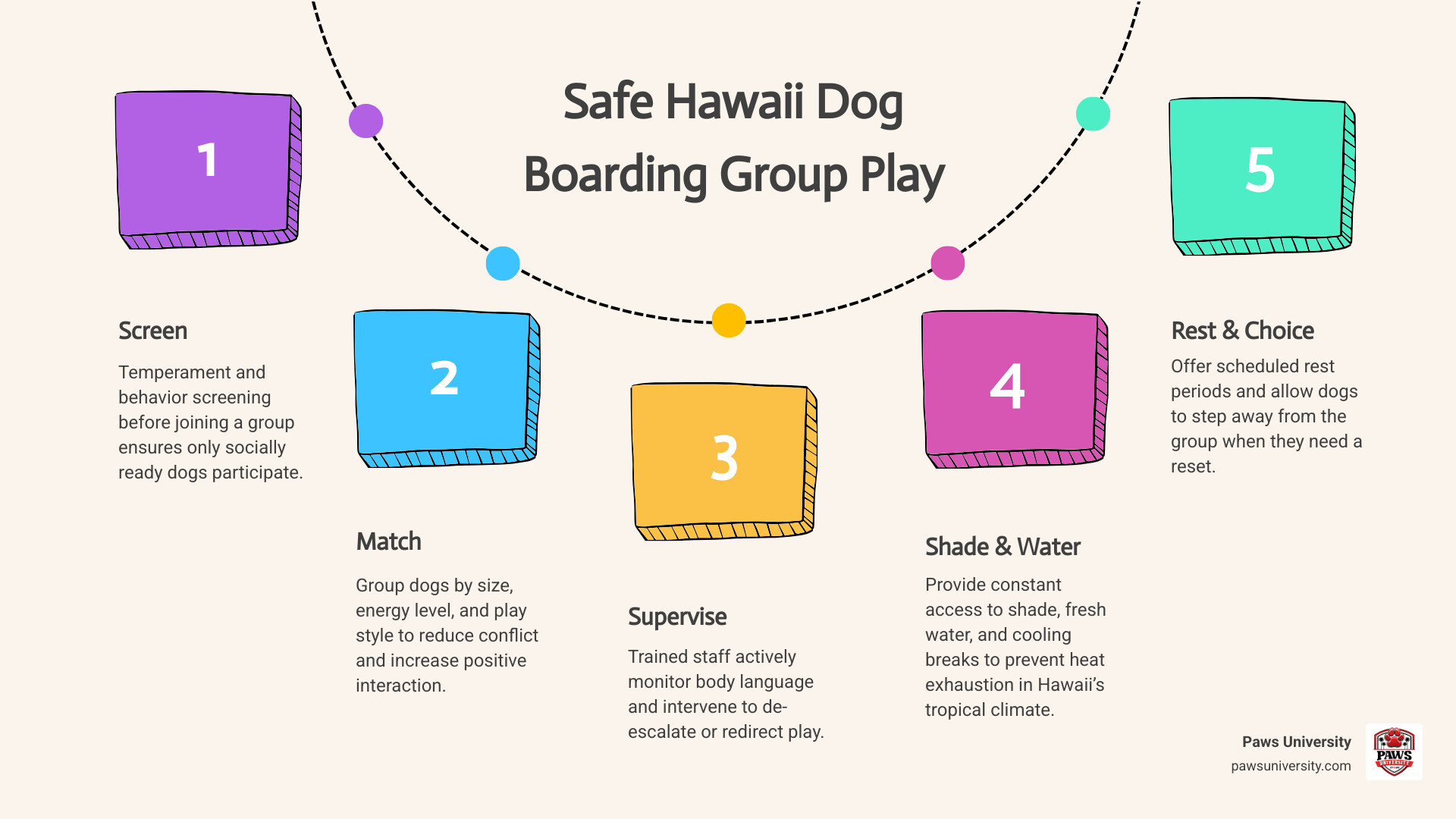
Easy Hawaii dog boarding group play glossary:
For a broader look at how dogs learn to interact safely, practical guides on dog socialization explain why positive early experiences matter.
Benefits of Hawaii Dog Boarding Group Play
When island pet parents travel, leaving a furry family member behind can feel daunting. Group play during boarding provides an outlet that transforms what could be a stressful separation into an engaging holiday for your dog. Rather than spending extended periods resting quietly in an enclosure, social dogs gain physical exercise, essential mental stimulation, and emotional balance.
Daily group interaction helps satisfy a canine’s natural social instincts. Romping with compatible peers allows dogs to release pent-up energy, practice vital social communication, and maintain healthy muscle tone. When dogs engage in appropriate play, their bodies release endorphins that naturally alleviate separation distress and lower stress levels.

A well-managed Hawaii dog boarding play yard offers dogs a dynamic environment where they can sniff, stretch, and engage their senses. Regular, positive social play prevents the boredom that often leads to unwanted behaviors such as excessive barking or anxious pacing. By the time evening rolls around, dogs are happily relaxed, well-exercised, and ready for a peaceful night of sleep.
How Island Facilities Structure Safe and Supervised Play
A thriving social setting relies entirely on deliberate structure. Safe play sessions are never a chaotic free-for-all; instead, they are carefully orchestrated routines guided by attentive staff members who understand canine communication.
Supervised interaction means that attendants are actively observing the yard at all times, tracking every tail wag, ear position, and play bow. Staff manage play arousal levels to keep interactions polite, fun, and safe. They encourage healthy turn-taking, intervene gently before arousal turns into overstimulation, and introduce positive reward-based redirections whenever energy spikes too high.
Beyond running and chasing, premium island boarding introduces sensory enrichment into daily routines. Natural grass yards, gentle agility obstacles, and textured play surfaces allow dogs to explore and learn. Giving dogs the freedom to play all day on the Big Island always includes built-in rest periods. Structured downtime in quiet spaces prevents physical exhaustion, ensuring that each play session remains positive and safe throughout a dog's stay.
Climate and Safety Standards in Hawaii Dog Boarding Group Play
Managing group play under the warm island sun requires specialized environmental safeguards. Hawaii County’s tropical climate brings consistent warmth and humidity, which makes temperature regulation a top operational priority.

High-standard boarding facilities build heat management directly into their yard design. Outdoor areas feature expansive shade sails, covered pavilions, and mature canopy trees so dogs can play entirely out of direct sunlight. Facilities also maintain continuous hydration stations equipped with cool, fresh water that is cleaned and replenished throughout the day.
To help dogs stay cool and comfortable, staff incorporate cooling activities such as shallow splash pools, gentle misting areas, and low-pressure water sprinklers. Attendants closely monitor each dog for subtle signs of warming, such as heavy panting, slowing down, or seeking shade, and proactively escort dogs to cool rest zones to rest.
Group Management by Size, Energy, and Play Style
No two dogs play in the exact same manner. A rambunctious young Labrador plays very differently than a reserved senior Beagle or a swift Whippet. For this reason, professional facilities never group dogs solely by physical size; they group them by a balance of size, developmental maturity, and distinct play styles.
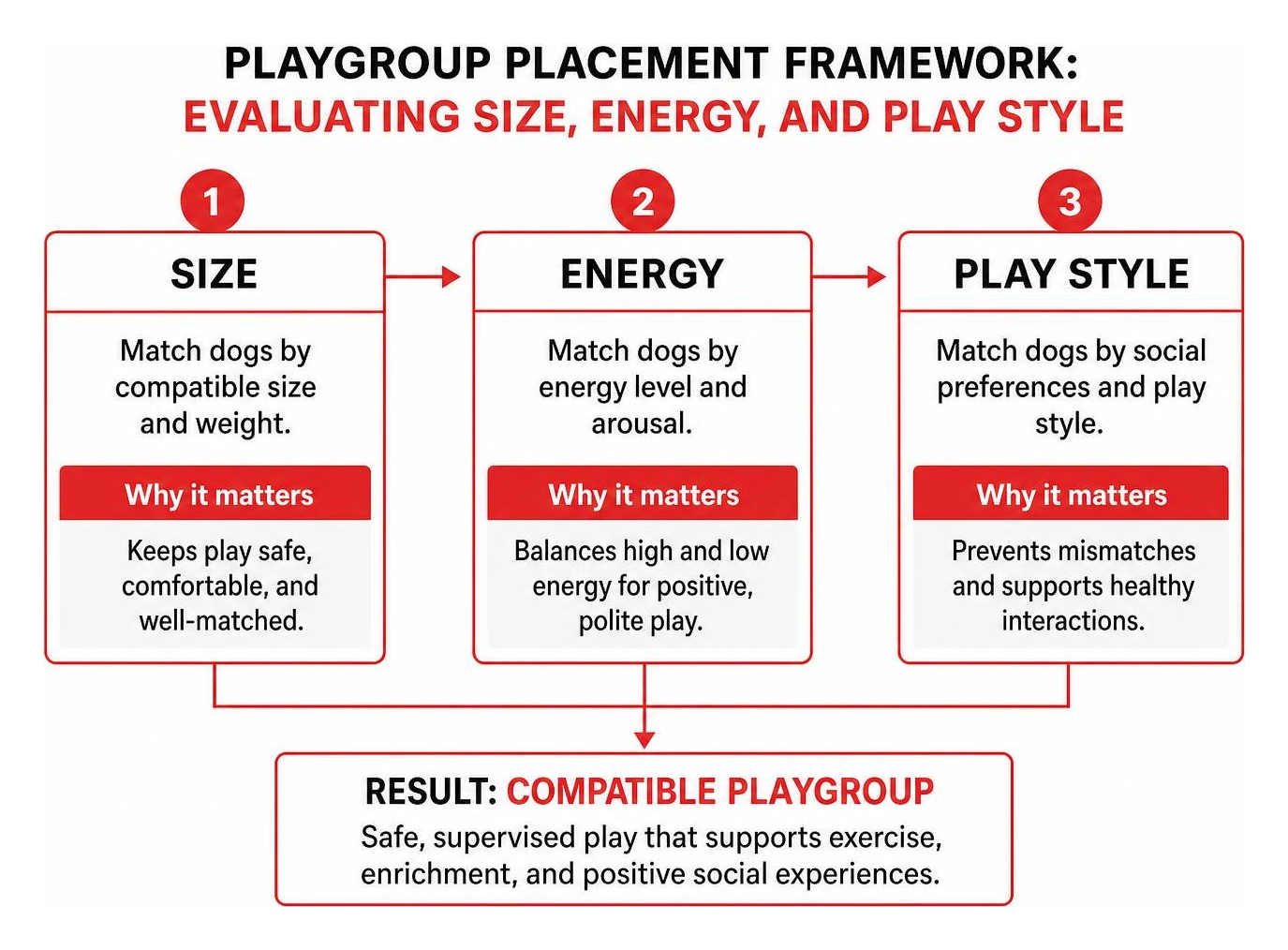
Understanding play styles helps prevent misunderstandings between dogs:
| Play Style | Common Behaviors | Ideal Playmates | Yard Management Focus |
|---|---|---|---|
| Chase & Run | Fast sprints, dodging, tag games | High-speed sprinters, herding breeds | Providing large open lanes, monitoring cornering |
| Wrestle & Tumble | Play bowing, pawing, gentle rolling | Sturdy body-slammers, boxers | Enforcing frequent pauses to prevent over-arousal |
| Gentle & Polite | Soft approaches, side-by-side sniffing | Seniors, timid dogs, small breeds | Quiet yard spaces, calm interactions, zero roughhousing |
| Observer / Solo | Sniffing perimeter, human focus, lounging | Low-energy loungers, independent dogs | Individual enrichment, staff affection, peaceful spaces |
Attendants continuously evaluate play dynamics. If a dog’s energy level shifts during the day, staff seamlessly move them to a group that better matches their current mood.
Determining If Your Dog Is Ready for Boarding Playgroups
While group play offers wonderful enrichment for many dogs, it is not the right fit for every dog—and that is completely fine. A dog's suitability for playgroups depends on personality, past experiences, and social preferences.
Some dogs thrive as social butterflies, while others are "dog-selective" or simply prefer human companionship. For pets who experience stress around other animals, specialized options like dog kennels for anxious dogs provide peaceful private suites, one-on-one staff playtime, and customized enrichment that keeps their stay calm and restorative.
Use this checklist to evaluate your dog's playgroup readiness:
- Enjoys meeting new dogs: Demonstrates relaxed body language, loose tail wags, and polite curiosity when encountering unfamiliar dogs on walks or during playdates.
- Understands canine social cues: Respects when another dog asks for space by backing off without frustration or reactivity.
- Comfortable sharing space: Shows no resource guarding behaviors over toys, water bowls, resting areas, or human attention.
- Recovers quickly from excitement: Able to calm down and disengage from play when prompted with positive reinforcement.
- Confident in new settings: Navigates new environments without showing persistent fear, cowering, or prolonged anxiety.
Health and Vaccination Protocols
To maintain a secure and hygienic environment, island boarding facilities uphold strict wellness protocols. In tropical island climates, year-round warmth creates ideal conditions for environmental pests and communicable bugs, making preventive healthcare essential for group participation.
All dogs joining playgroups must be up to date on core veterinary vaccinations:
- Rabies: Protects against fatal viral transmission and is required by law.
- DHPP (Distemper, Hepatitis, Parvovirus, Parainfluenza): Protects against severe, highly contagious canine viruses.
- Bordetella: Guarding against canine infectious respiratory disease complex (commonly called kennel cough), which spreads easily in group play settings.
In addition to core vaccines, strict parasite prevention is vital. Tropical fleas and brown dog ticks thrive in Hawaii's warm conditions year-round. Facilities require ongoing, veterinarian-approved flea and tick preventatives, along with regular internal parasite screening, ensuring every pup stays healthy and protected.
Temperament Screening for Hawaii Dog Boarding Group Play
Before any dog enters a boarding playgroup, professional pet care facilities conduct a thorough temperament assessment. This evaluation ensures that every dog in the yard can socialize safely and comfortably.
When looking for a trusted Kona dog boarding facility, ask about their intake screening process. The assessment begins with a hands-on review where staff assess how the dog handles gentle touch, collar handling, and human interaction. Next, attendants introduce a neutral, socially stable helper dog across a secure barrier to observe initial reactions and body language.
If the initial introduction is positive, staff proceed to off-leash introductions in a quiet yard, carefully watching for loose, wiggly postures, mutual play bows, and polite sniffing. Only after demonstrating relaxed, friendly social behavior is a dog placed into a tailored playgroup that matches their size and tempo.
Frequently Asked Questions About Island Dog Boarding Playgroups
What if my dog does not enjoy group play?
If your dog prefers human company or feels overwhelmed by other dogs, they do not have to join group play. Premium facilities offer individualized programs featuring private one-on-one play sessions with trained staff, personal fetch and agility time, puzzle enrichment toys, and peaceful solo yard rotations.
How are playgroups supervised during boarding?
Playgroups are monitored continuously by dedicated attendants trained in canine body language and positive, reward-based management. Attendants maintain active visual contact at all times, actively diffusing tension, interrupting over-arousal, and ensuring that play remains polite, consensual, and safe.
What vaccinations are required before joining boarding playgroups?
Dogs must have up-to-date core vaccinations, including Rabies, the DHPP series, and Bordetella. Additionally, dogs must be on active, year-round flea and tick prevention to protect against island parasites before participating in social group activities.
Conclusion
Enriching group play can turn your dog's boarding stay into a fulfilling vacation filled with exercise, social engagement, and tail-wagging fun. By prioritizing strict temperament screening, mindful play-style matching, heat safety, and experienced supervision, professional facilities create an environment where island dogs can play safely and thrive.
At Paws University, our seven-acre campus in Kailua-Kona has provided West Hawaii pet parents with premier pet care since 2002. As the first facility in the state to offer doggie daycare, our reward-based philosophy and expansive outdoor yards ensure every pet receives individualized attention. Whether your companion loves romping with buddies or prefers calm, private enrichment, our island dog boarding programs deliver the tailored social care your dog deserves.