Start Relieving Dog Separation Anxiety Today
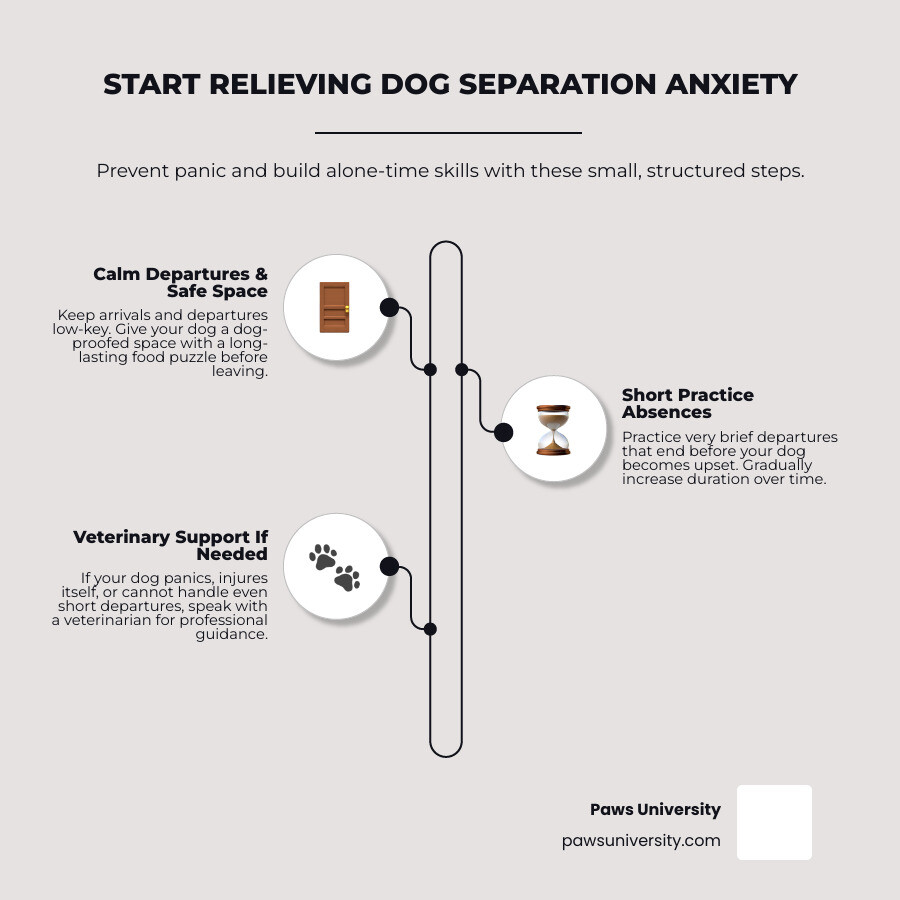
To relieve dog separation anxiety, prevent panic when possible and build alone-time skills in very small steps. Start with these basics:
- Keep departures and arrivals calm and brief.
- Give your dog a safe, dog-proofed space and a long-lasting food puzzle before leaving.
- Practice short absences that end before your dog becomes upset.
- Make other arrangements for longer absences while training is underway.
- Speak with a veterinarian if your dog panics, injures itself, will not eat when alone, or cannot handle even brief departures.
Separation anxiety is not spite, stubbornness, or ordinary boredom. It is a fear response that may show up as barking, howling, pacing, drooling, accidents, or frantic chewing and scratching near doors and windows. The goal is not to "wear your dog out" or let them cry it out. It is to help them feel safe and successful while alone.
I am Allen Daniels, a Hawai'i Island native and co-founder of Paws University. After more than 25 years training dogs with reward-based methods, including dogs with dog separation anxiety, I have seen that patient, structured practice can turn departure panic into calmer routines.
Quick look at dog separation anxiety:
Understanding Dog Separation Anxiety: Signs vs. Normal Behavior
When we leave our homes, our dogs do not have the context of our daily schedules. For a pet experiencing true distress, an empty house can trigger an intense neurological panic response. Understanding whether your canine companion is suffering from genuine fear or simply acting out of youthful exuberance is the essential first step toward recovery.
True distress behaviors appear almost exclusively when you are absent or preparing to leave. Dogs facing this challenge may engage in continuous distress vocalization (such as high-pitched howling, barking, or whining), destructive chewing, scratching at exit points, inappropriate elimination, and excessive hypersalivation. According to resources on Separation Anxiety | ASPCA, destructive behaviors driven by panic center almost entirely around barriers—such as windows, doorway trim, and exterior gates—where the dog attempts to escape and reunite with you.
In contrast, simple boredom or juvenile antics happen at any time, whether you are in the kitchen cooking or running errands. A bored dog might shred a shoe or rummage through a wastebasket for fun, but they do not experience systemic panic. For pet parents struggling to differentiate clingy habits from emotional distress, reviewing an In-Depth Guide to Fixing Dog Attachment Issues provides deeper clarity on healthy boundaries.
| Feature | Separation Anxiety | Boredom / Under-Stimulation | Incomplete Housetraining |
|---|---|---|---|
| Primary Trigger | Owner departure or isolation | Lack of physical/mental enrichment | Lack of house manners or routine |
| Destruction Focus | Doors, windows, crates, entryways | Random household objects, toys, trash | Non-destructive (focused on elimination) |
| Vocalization | Persistent high-pitched howling, whining | Occasional alert barking at passersby | Whining specifically at the door to go out |
| Food Motivation | Refuses high-value treats while alone | Readily eats food puzzles and treats | Readily eats food and treats |
| Physical Signs | Drooling, panting, trembling, pacing | Relaxed body posture, normal respiration | Normal body posture and vitals |
Identifying Subtle Symptoms of Dog Separation Anxiety
While torn drywall and soaked door frames are impossible to miss, separation distress often starts with subtle physical and behavioral cues long before you walk out the door.
Early indicators of rising panic include:
- Dilated pupils and wide "whale eyes"
- Frequent lip licking and yawning out of context
- Heavy panting when the ambient room temperature is cool
- Repetitive pacing along hallways or near the entryway
- Trembling or shivering as departure routines begin
- Appetite suppression (leaving favorite meats or peanut butter untouched until you return)
If your dog displays physical shaking when departures approach, exploring Stop the Shakes with These Proven Anxious Dog Solutions can help you pinpoint soothing environmental adjustments.
Root Causes and Behavioral Triggers
Separation-related challenges do not stem from a single flaw in your dog's character, nor are they caused by showering your dog with love. Research indicates that shelter adoption history plays a significant role; dogs rehomed from rescue environments experience this condition at far higher rates than those raised in a single household since puppyhood.
Other common triggers include:
- Abrupt schedule changes: Transitioning from working at home to long shifts away.
- Rehoming transitions or moves: Relocating to an unfamiliar neighborhood or environment.
- Household membership changes: The loss of a family member or animal companion.
- Genetic predispositions: Heightened sensitivities common across various herding and companion breeds.
- Sensory decline in seniors: Late-onset anxiety brought on by vision loss, hearing changes, or cognitive decline.
7 Practical Steps to Relieve Departure Distress
Resolving separation challenges requires a systematic, reward-based approach. By helping your dog learn that departures are non-threatening events, you can replace panic with peaceful independence.
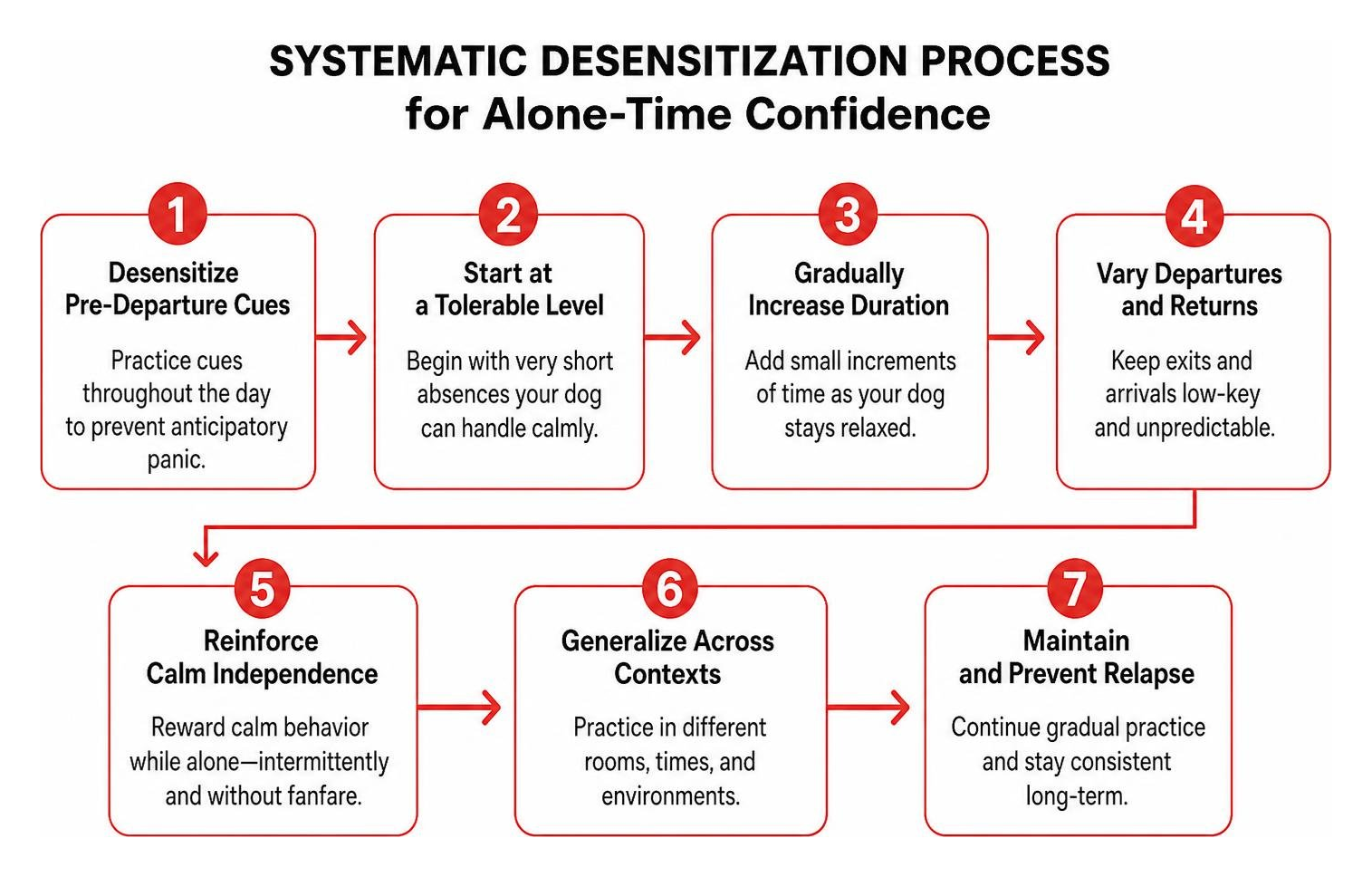
Step 1: Desensitize Pre-Departure Cues
Dogs are masters of observation. They recognize the sound of jingling car keys, the zip of a backpack, or the putting on of work shoes as clear signals that you are about to vanish. This triggers anticipatory panic before you even reach the door.
To break this conditioned panic loop, practice cue habituation throughout the day:
- Pick up your car keys, walk across the living room, and set them back down without leaving.
- Put on your heavy work coat or boots, sit down on the sofa to relax for ten minutes, and take them off.
- Touch the front doorknob, turn the handle, and step away calmly.
By repeatedly exposing your dog to these triggers without an actual departure, you decouple the cues from the emotional stressor.
Step 2: Implement Graduated Departures and Counterconditioning
Desensitization involves exposing your dog to brief absences that remain strictly sub-threshold—meaning you return before any vocalization, pacing, or distress begins.
- Micro-departures: Begin by stepping behind a closed interior door (such as a bedroom or bathroom) for 2 to 5 seconds, then return calmly.
- Add positive associations: Introduce long-lasting, frozen puzzle toys filled with dog-safe ingredients right before you step away, removing the toy immediately upon return so its presence becomes a special safety signal.
- Vary duration: Rather than increasing time in a rigid straight line (1 minute, 2 minutes, 3 minutes), vary your absences unpredictably (30 seconds, 1 minute, 15 seconds, 2 minutes). This prevents anticipatory dread.
- Gradual expansion: Once your dog can handle 30 to 45 minutes of calm solitary rest, scaling up to longer periods becomes substantially easier.
Step 3: Establish a Predictable Daily Routine and Exercise Regimen
A predictable daily schedule helps an anxious dog feel secure. Ensure your dog receives adequate physical and mental engagement before any scheduled absence:
- Scent walks: Allow your dog ample time to sniff and explore during outdoor walks to engage their brain and naturally lower stress.
- Aerobic play: Engage in a focused game of fetch or flirt-pole play to burn off excess physical energy.
- Mental workouts: Practice simple, positive training cues or offer food-dispensing puzzles to foster cognitive calm.
Step 4: Foster In-Home Independence and Mat Training
Teaching your dog to be comfortable relaxing away from you while you are inside the home builds foundational resilience.
Designate a specific relaxation zone or comfortable dog bed and teach a reliable "settle" cue using positive reinforcement. Reward your dog with small treats whenever they choose to lie quietly on their mat while you move around the room. For young dogs, practicing these independent routines early is crucial; consult The Ultimate Guide to Teaching Your Puppy to Be Alone for age-appropriate developmental steps.
Step 5: Keep Departures and Arrivals Low-Key
Emotional, drawn-out goodbyes and ecstatic greetings heighten emotional arousal and validate your dog's belief that departures are monumental events.
When leaving, offer a calm, neutral transition. When returning home, walk in quietly and ignore demanding or frantic behaviors for the first few minutes until your dog's four paws are on the floor and their breathing slows. Once they settle, offer quiet, gentle affection. If your dog struggles with arrival excitement, you can learn How to Stop Your Dog from Panicking When You Leave to refine your doorway habits.
Step 6: Create a Safe Space and Evaluate Confinement Risks
While standard crate training works wonderfully for many dogs, it can trigger severe barrier frustration in dogs with separation distress. Panicked dogs confined to wire or plastic crates may break teeth, tear nails, or injure their gums attempting to escape.

Evaluate your dog's preferences carefully:
- If a crate causes panting, drooling, or frantic clawing, transition to an open, dog-proofed room partitioned with a sturdy baby gate.
- Leave an unwashed blanket or shirt carrying your scent in their resting area for familiar comfort.
- Ensure windows with high visual stimulation are covered with sheer curtains to prevent reactive barking.
For a deeper look into selecting supportive containment options, explore The Complete Guide to Dog Kennels for Anxious Dogs.
Step 7: Use Daycare or Temporary Absences to Prevent Panic
During active desensitization retraining, your dog must avoid experiencing full-blown panic episodes. Every time a dog panics in isolation, the neurological fear pathway is reinforced, setting your training back.
To bridge the gap while building alone-time stamina:
- Utilize premium doggy daycare services to provide social stimulation, supervision, and structured play during work hours.
- Enlist trusted friends, neighbors, or professional pet sitters for midday visits.
- Plan brief errands around your dog's current sub-threshold tolerance levels.
Veterinary Support and Behavioral Aids for Severe Cases
When separation distress is intense, behavioral modification alone may stall because the dog is in a constant state of neurological fight-or-flight. A panicked brain cannot process new learning.
Veterinary Medications and Natural Remedies for Dog Separation Anxiety
Consulting your veterinarian or a veterinary behavior specialist provides access to valuable medical therapies that lower baseline anxiety. As detailed in veterinary literature from Treating separation anxiety in dogs - Veterinary Practice News and Separation Anxiety in Dogs | VCA Animal Hospitals, prescription medications such as fluoxetine or clomipramine can balance brain chemistry over several weeks, allowing training to take hold. Fast-acting situational anxiolytics may also be prescribed for acute departure events.
Supportive non-pharmaceutical aids can complement your routine:
- Pheromone diffusers and collars: Replicate natural maternal appeasing pheromones to create a soothing environment.
- Acoustic therapy: Soft reggae or classical music helps mask abrupt outdoor noises and promotes canine relaxation.
- Compression wraps: Gentle, continuous torso pressure can offer comfort for dogs sensitive to environmental stress.
Why Punishment and Flooding Always Fail
Never scold, yell at, or physically correct a dog for messes, chewed furniture, or vocalization caused by separation distress.
Separation anxiety is an involuntary emotional panic attack, not willful disobedience. Punishing a dog upon your return does not teach them not to chew; it simply teaches them to fear your arrival, compounding their anxiety for the next departure. Similarly, "flooding" or forcing a dog to "cry it out" for hours can cause severe trauma and escalate self-injurious behaviors. Sustainable change comes exclusively through patience, empathy, and positive reinforcement.
Frequently Asked Questions About Canine Separation Distress
How long does it typically take to treat separation distress in dogs?
Every dog progresses at their own pace based on temperament, history, and consistency of training. Mild cases may show substantial improvement within 4 to 8 weeks of structured counterconditioning. Moderate to severe cases often require 3 to 6 months or longer of gradual desensitization paired with veterinary support. Consistency, patience, and keeping departures sub-threshold are the keys to long-term success.
Will getting a second pet solve my dog's isolation panic?
Generally, no. If your dog suffers from true separation anxiety tied to a specific human attachment figure, a second pet will not alleviate their panic and may introduce additional management complexities. A second dog only provides comfort if your pet experiences general isolation distress (a fear of being completely alone) rather than human-specific attachment distress.
What should I do immediately if my dog destroys something while I am away?
Clean up the mess quietly and calmly without acknowledging the damage, scolding your pet, or making eye contact. Inspect your dog carefully for lacerations, broken teeth, or foreign object ingestion. Treat any physical injuries immediately, and adjust your interim management strategy—such as utilizing daycare or a dog-proofed safe room—to prevent unmonitored panic episodes during future departures.
Conclusion
Overcoming departure distress is a journey of building confidence, safety, and mutual trust. With a systematic routine, environmental support, and positive reinforcement, your dog can learn that you will always return. For dedicated pet parents seeking expert, hands-on guidance on Hawai'i Island, explore our structured dog training programs to help your four-legged family member develop lasting emotional resilience and calm independence.