
Why Finding In Home Dog Trainers Near Me Can Transform Your Dog's Behavior
If you're looking for in home dog trainers near me, here's what you need to know right away:
What to look for in a qualified in-home dog trainer:
- Rewards-based methods - positive reinforcement only, no punishment or shock collars
- Professional education - look for documented training experience, continuing education, and humane handling standards
- Local service area - confirm they travel to your neighborhood or region
- Behavior specialization - experience with your dog's specific issues, such as barking, reactivity, or anxiety
- Owner coaching - they should teach you, not just the dog
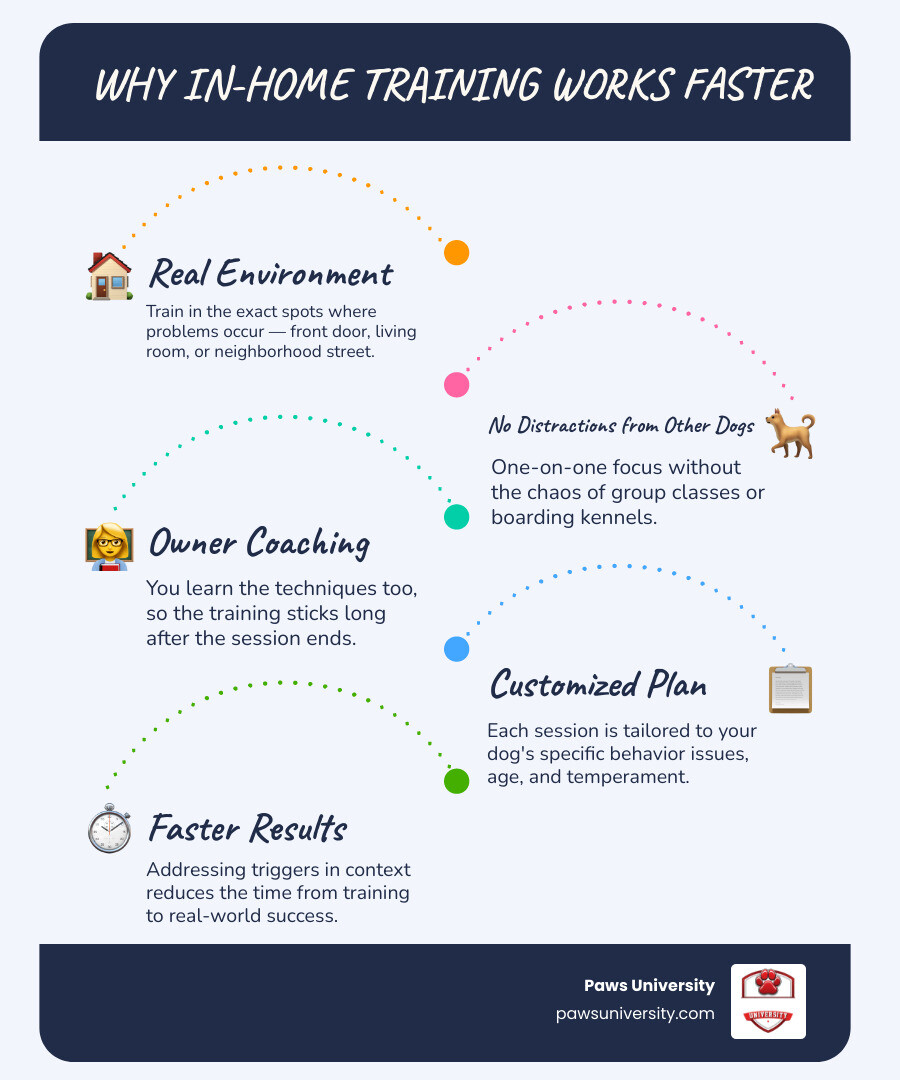
In-home trainers come directly to your house and work with your dog where problem behaviors actually happen - in your living room, at your front door, on your street. That's a fundamentally different approach from a group class or a boarding facility, and for many dogs it produces faster, more lasting results.
Common reasons West Hawaii pet parents search for in-home training include:
- Separation anxiety and destructive behavior when left alone
- Excessive barking at neighbors, guests, or other animals
- Leash pulling and reactivity on neighborhood walks
- Jumping on guests and door-darting
- Housebreaking and basic manners
I'm Allen Daniels, co-founder of Paws University in Kailua-Kona, and my background in operant conditioning - refined over a decade training marine mammals before I ever worked with dogs - shapes everything I know about in home dog trainers near me and what makes private, environment-based coaching so effective. That foundation is what I'll draw on throughout this guide to help you find the right fit for your dog.
Know your in home dog trainers near me terms:
Understanding In-Home Dog Training vs. Facility Programs
When exploring training options for your pup, it helps to understand how different learning environments shape your dog's progress. In-home dog training brings professional, private instruction right to your front door, addressing behavior where it occurs every day. In contrast, facility programs like group classes or overnight training camps take place in specialized environments tailored to group learning or structured immersion.
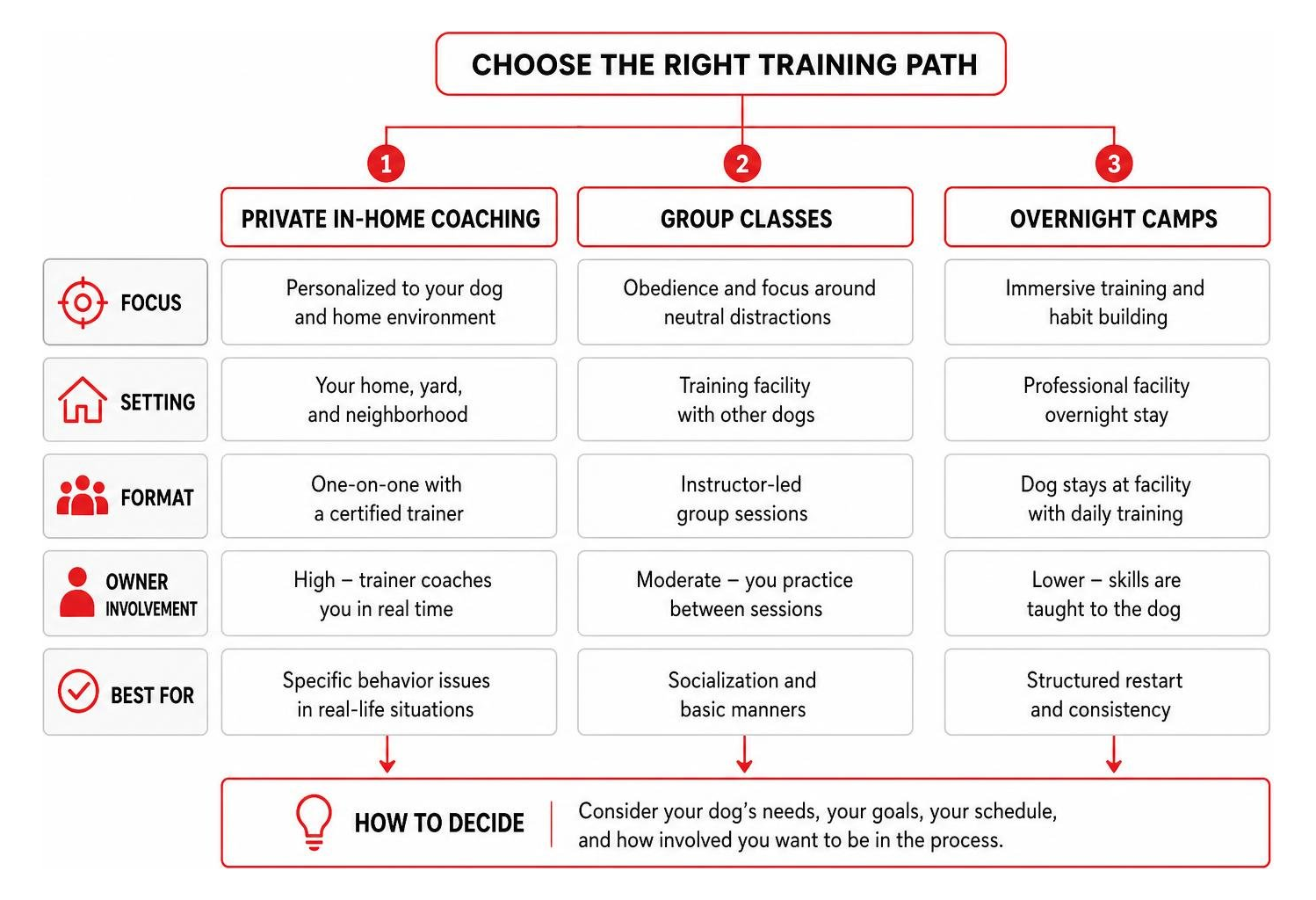
The primary difference lies in the setting and focus:
- In-Home Training: Targets specific triggers within your dog's living space—such as barking at the mail carrier, guarding the couch, or darting through open patio doors. It combines hands-on dog training with real-time human coaching.
- Group Classes: Provide controlled social settings ideal for practicing focus and basic obedience around neutral dogs and foreign distractions.
- Board-and-Train Programs: Offer residential immersion where dogs build foundational habits at a professional facility before transitioning those skills back home.
At Paws University, we often recommend pairing customized private coaching with group settings or supervised socialization to build well-rounded canine manners. For dogs that need individual focus, exploring Private Training allows owners to conquer household challenges directly.
| Training Format | Ideal Environment | Main Focus | Owner Involvement |
|---|---|---|---|
| In-Home Private Coaching | Your home & neighborhood | Behavior modification, real-world triggers | High (Live human coaching) |
| Facility Group Classes | Dedicated campus / lawn | Basic obedience, controlled socialization | Moderate (Guided practice) |
| Overnight Camps / Board & Train | Professional 7-acre campus | Foundation skills, daily routine building | Hand-off & transition sessions |
Why Search for In Home Dog Trainers Near Me for Behavior Modification
When you search for in home dog trainers near me, you are looking for solutions that address your household's unique daily rhythm. Dogs are situational learners—a skill learned inside a sterile classroom does not always automatically translate to a busy living room or a sunny lanai.
In-home sessions tackle specific daily habits like housebreaking routines, counter surfing during meal preparation, or door darting when visitors arrive. By observing your pet in their natural territory, a professional trainer can craft personalized lesson plans that fit your lifestyle. For pet parents wanting to build stellar home manners while enjoying tropical island living, combining in-home habits with structured practice like Mastering Manners with Kona Pet Training Classes offers a balanced path to success.
Common Behavioral Issues Solved by In Home Dog Trainers Near Me

Many nuisance behaviors are fueled by subtle cues in the home environment. When a trainer works directly in your living space, they can identify underlying triggers and apply positive, rewards-based techniques immediately.
Here are the most common household issues solved through mobile or in-home dog training:
- Door Darting and Guest Jumping: Teaching impulse control at entryways so your dog remains calm on a designated mat when visitors arrive.
- Leash Pulling: Establishing loose-leash walking mechanics right outside your front door before venturing out onto neighborhood trails.
- Counter Surfing: Redirecting curiosity by reinforcing boundary stay behaviors during family meal prep.
- Excessive Barking: Identifying whether barking is driven by territorial arousal, boredom, or excitement, and introducing quiet cues using positive reinforcement.
- Separation Anxiety: Building calm independence in gradual increments so your pet feels safe when left alone.
By rewarding desired behaviors with treat rewards, affection, and clear communication, dogs learn what to do instead of feeling stressed or confused. To delve deeper into step-by-step obedience techniques, check out The Ultimate Guide to Dog Obedience Training.
Managing Aggressive and Reactive Behaviors at Home
Reactivity and fearful behavior often stem from underlying anxiety or lack of confidence. Attempting to address reactivity in high-stress public settings can overwhelm a dog, leading to threshold overload.
In-home training allows trainers to implement fear-free methods in a safe, low-stress setting. Using positive reinforcement, desensitization, and counter-conditioning, we help dogs change their emotional response to triggers—such as delivery trucks, fence line movement, or passing dogs. Safety protocols, boundary management, and careful threshold control are established at home first, ensuring both handler and dog feel confident before practicing outdoors. You can read more about selecting specialized support in our guide on Individual Dog Training Near Me: 7 Local Trainers to Consider.
How to Choose Qualified In-Home Dog Trainers Near Me
Selecting the right professional to invite into your home is an important decision. Dog training is an unregulated field, meaning methodologies and qualifications vary widely.
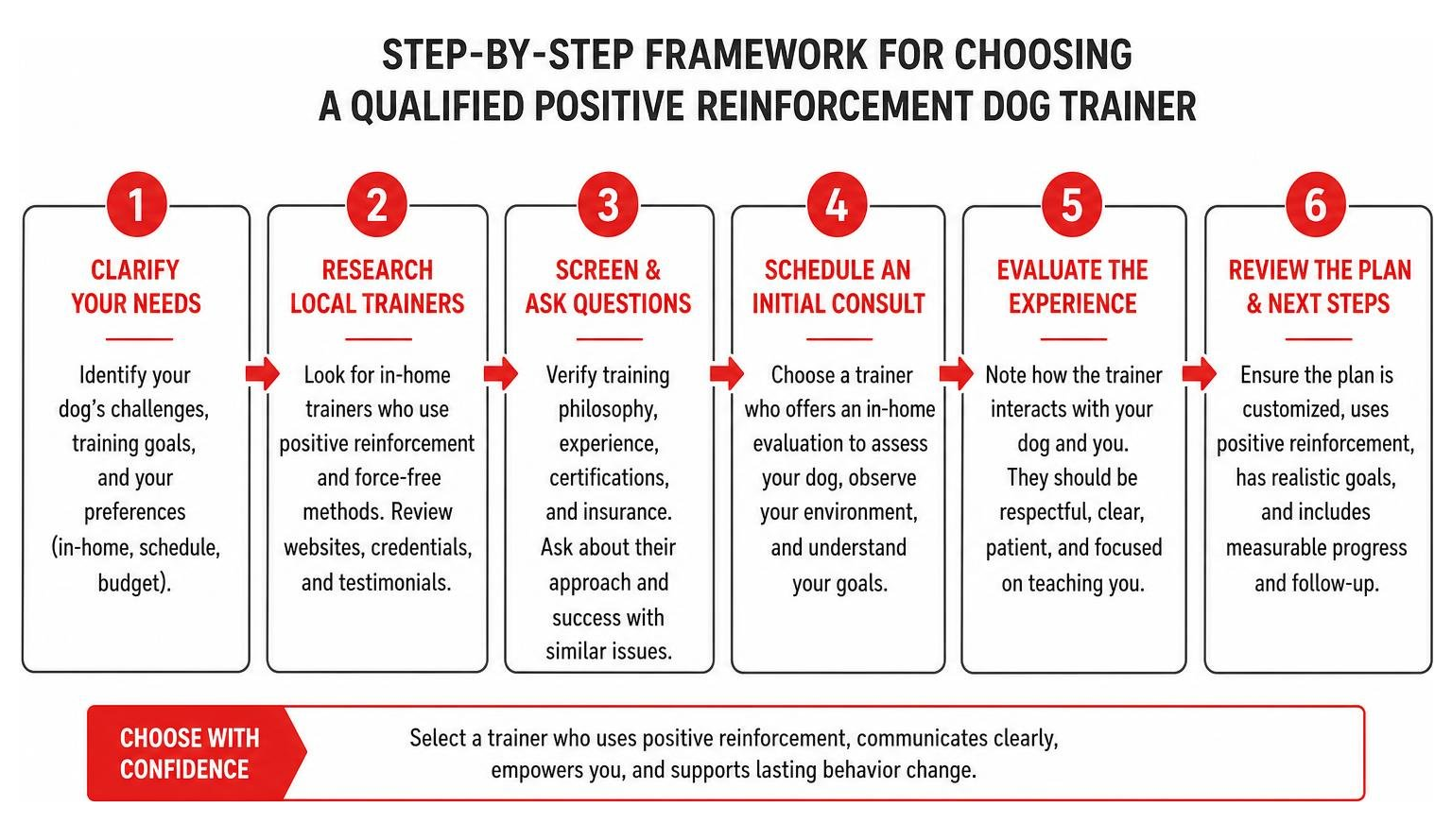
When vetting local mobile trainers, prioritize these essential criteria:
- Rewards-Based Philosophy: Verify that the trainer uses positive reinforcement, marker training, or force-free methods. Avoid trainers who use intimidation, dominance theories, or punishment tools.
- Human Coaching Ability: Effective dog training is equal parts dog training and owner education. Look for a coach who explains the why behind techniques clearly and encourages you throughout the process.
- Transparent Evaluation: Reputable trainers conduct initial assessments, set realistic timelines, and measure progress objectively without offering unrealistic "overnight fixes."
- Local Expertise: Ensure they service your specific neighborhood in Hawaii County and understand local environmental factors, such as tropical weather extremes, outdoor distractions, and the day-to-day realities of West Hawaii households.
Essential Credentials When Reviewing In Home Dog Trainers Near Me
Professional education demonstrates a trainer's commitment to humane, science-based learning. Rather than relying on labels alone, ask how a trainer studies behavior, how they stay current, and how they handle dogs who are fearful, reactive, or easily overwhelmed.
Helpful qualifications and evaluation points include:
- Documented education in learning theory: The trainer should be able to explain reinforcement, motivation, timing, and behavior change in plain language.
- Commitment to humane methods: Look for a clear, written emphasis on positive reinforcement and fear-free handling. The American Veterinary Society of Animal Behavior provides helpful educational resources on humane behavior guidance.
- Experience with your specific goals: A trainer who regularly works on barking, leash reactivity, separation-related stress, or door manners can build a more practical plan for your home.
- Ongoing professional development: Continuing education, mentorship, and transparent training standards are signs that a trainer takes the work seriously.
Choosing a rewards-focused professional ensures your dog receives humane, science-backed guidance. Learn more about our overall educational framework on our main Training page.
What to Expect and How to Prepare Your Household

Understanding what happens during an in-home training session helps set your household up for success.

Here is a typical roadmap for in-home private coaching:
- Initial Consultation & Behavior Evaluation: The trainer reviews your dog's history, daily routine, diet, and specific challenges while observing your dog's natural behavior in the house.
- Customized Plan Creation: A tailored training schedule is established, breaking long-term goals into manageable weekly milestones.
- Hands-On Coaching: The trainer demonstrates a skill, guides you through live practice, and provides immediate feedback while you lead.
- Family Involvement: Everyone living in the household—including children—is taught how to deliver consistent cues and rewards so the dog receives clear guidance.
- Homework Practice: Success relies on short, 5-to-10-minute daily practice sessions between trainer visits to solidify muscle memory.
To prepare your home, clear small open spaces for indoor exercises, gather high-value treats, and ensure family members are ready to participate. For dogs that benefit from group practice alongside private lessons, explore Fun Obedience Classes Kona Dogs Actually Enjoy.
Frequently Asked Questions About Mobile Dog Training
How long does it take to see results with home dog training?
Initial behavior shifts—such as better eye contact or reduced door rushing—can often be seen within 2 to 4 weeks of consistent daily practice. However, complex behavioral modification for anxiety or severe leash reactivity typically takes 4 to 8 weeks or longer. Lasting results depend heavily on owner consistency with positive rewards and incorporating micro-training sessions into daily life.
Is in-home training effective for severe leash pulling and door jumping?
Yes, in-home training is remarkably effective for these specific issues because it addresses the behavior at the precise location where the trigger exists. A mobile trainer works directly on your front entry or driveway, establishing polite boundary manners indoors before moving out to neighborhood sidewalks.
What areas do mobile dog trainers typically serve?
Mobile dog trainers establish specific service radii based on regional location. In Hawaii County, mobile trainers typically cover local West Hawaii communities across Kailua-Kona and nearby coastal or upcountry neighborhoods. Always confirm a trainer's service territory during your initial phone consultation.
Conclusion
Finding expert in home dog trainers near me is one of the most effective ways to foster a calm, well-mannered companion who thrives in your everyday home environment. By addressing behaviors where they naturally occur using positive, rewards-based methods, you build a foundation of trust and clear communication.
At Paws University, we have served West Hawaii as a premium seven-acre pet care facility since 2002. Whether families use private coaching, group obedience, supervised play, or structured daytime enrichment, the goal remains the same: helping dogs build reliable manners in a warm, tropical Hawaii County setting.
For more information about training options, visit Explore Premier Dog Training Programs with Paws University.