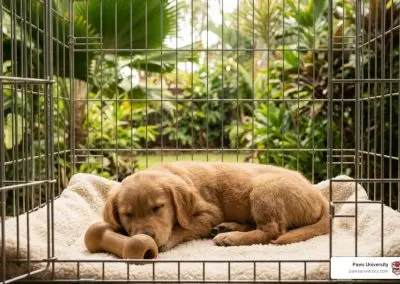
What is a Puppy Playpen and Why Do You Need One?
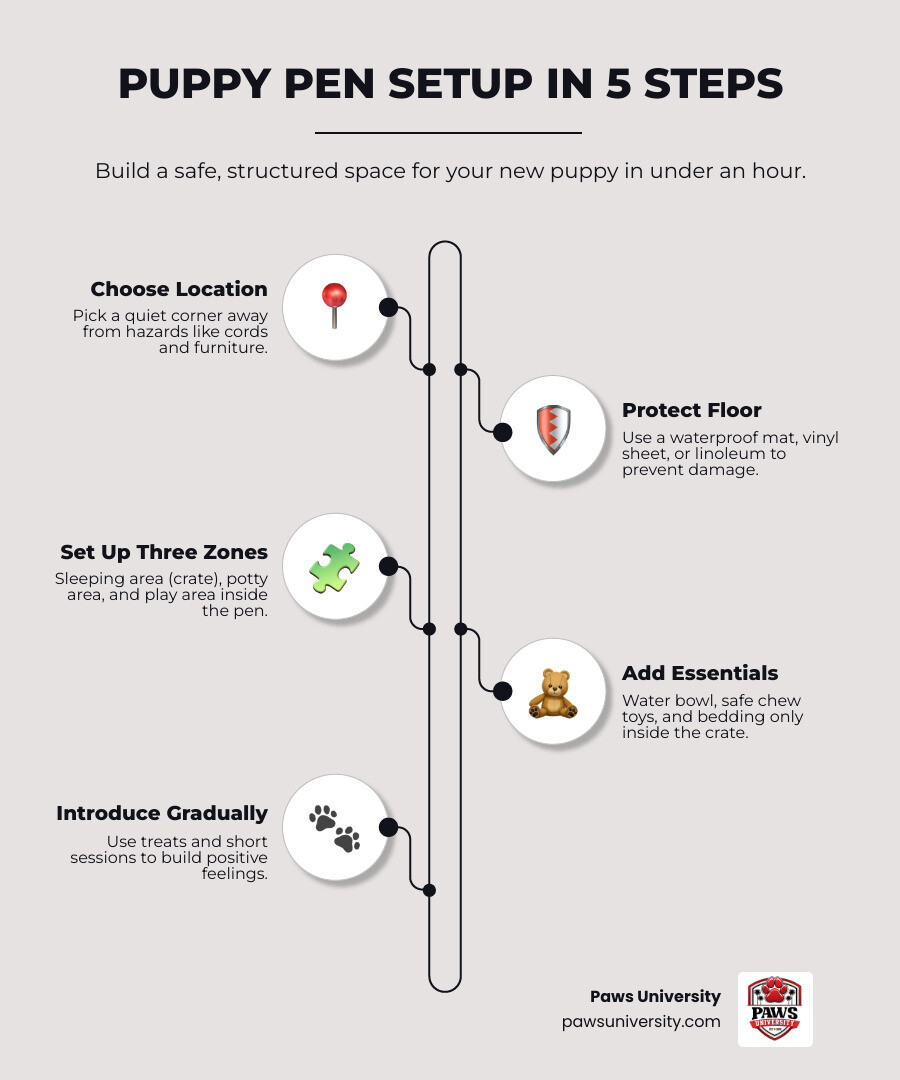
A proper puppy pen set up gives your new dog a safe, contained space to sleep, play, and potty — without giving them access to your whole home before they're ready. Here's what a basic setup includes:
- Choose a location — a quiet room or corner away from hazards
- Protect the floor — use a waterproof mat, vinyl sheet, or linoleum
- Set up three zones — sleeping area (crate), potty area, and play area
- Add essentials — water bowl, safe chew toys, and bedding inside the crate only
- Introduce gradually — use treats and short sessions to build positive feelings
That's the core of it. The sections below walk through each step in detail.
Bringing a new puppy home is exciting — but it can also be overwhelming fast. Puppies need 12 to 16 hours of sleep a day, can't fully control their bladder until around 5 months old, and will chew anything they can reach. Without a contained space, the results can be costly. We've seen puppies chew through electronics, area rugs, and leather furniture — all within the first 48 hours.
A puppy pen solves this. It's not punishment. It's structure — and structure is what helps puppies feel safe and learn the rules of your home faster.
I'm Allen Daniels, co-founder of Paws University here on Hawaiʻi Island, and over 25+ years of working with hundreds of dogs (and applying the same behavioral science I used training dolphins), a well-designed puppy pen set up is one of the first things I recommend to every new puppy owner. Let's get yours built the right way.
A puppy playpen, often referred to in professional dog training circles as a Long-Term Confinement Area (LTCA), is a secure, fenced-off space in your home designed specifically for your puppy. Unlike a standard crate, which is primarily a sleeping and transport space, a playpen is a larger "puppy apartment" that accommodates your dog's daily biological needs: sleeping, playing, eating, and toileting.
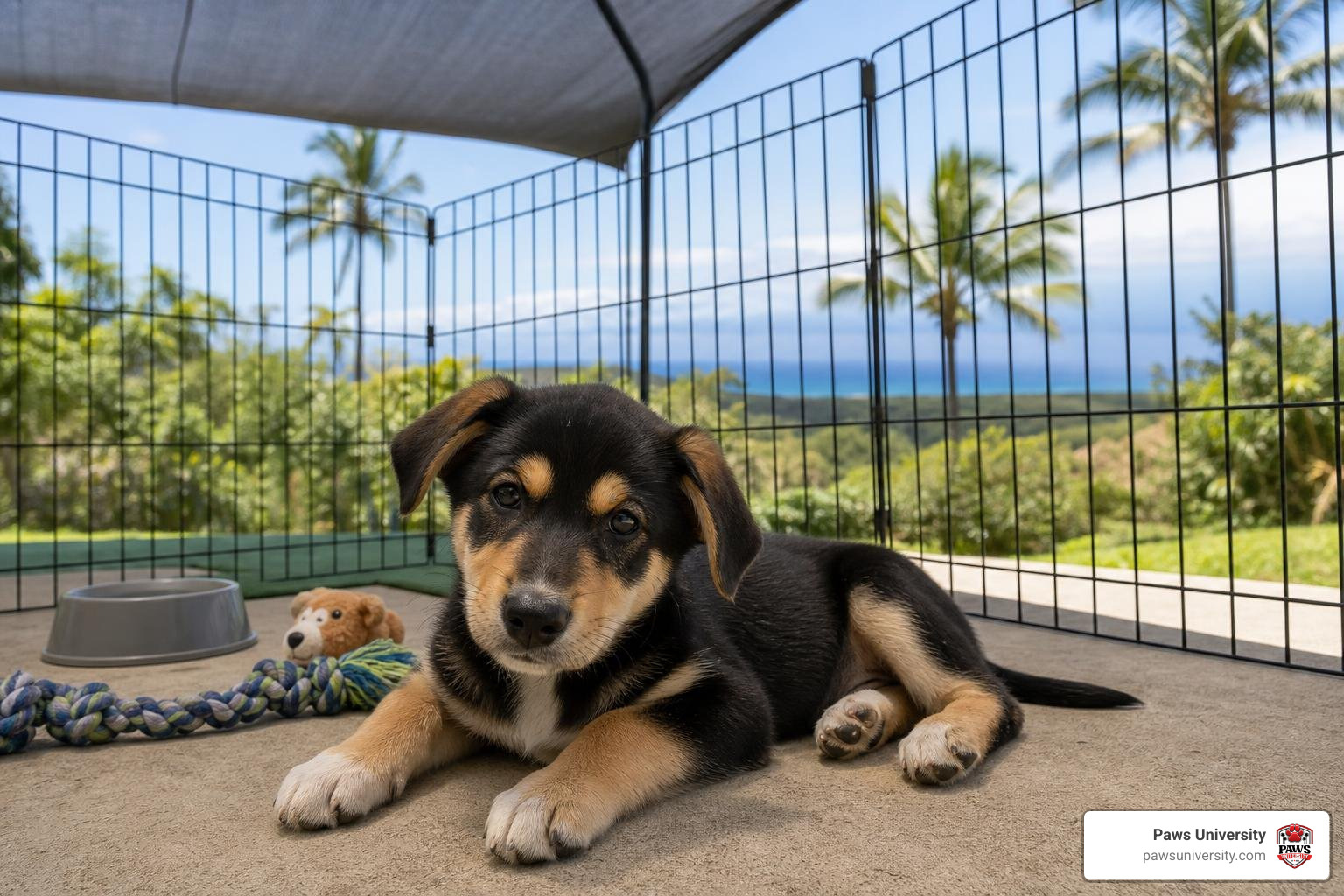
Setting up an LTCA is one of the most effective ways to make raising a puppy significantly easier. It serves as a management tool that keeps your puppy safe when you cannot directly supervise them. If you are cooking dinner, working from home, or step out of the room to do laundry, the playpen prevents your puppy from engaging in destructive behaviors or finding hidden household hazards.
The physical and developmental needs of a puppy make a playpen an absolute necessity:
- Bladder Control Timeline: Puppies do not gain full physiological control over their bladder muscles until they are about 5 months old. Expecting a young puppy to hold their bladder for hours at a time is unrealistic. A playpen allows you to set up a designated, acceptable potty area so they can relieve themselves without ruining your carpets.
- Sleep Requirements: Growing puppies need between 12 to 16 hours of sleep per day. The playpen provides a quiet, distraction-free environment where they can settle down and get the rest their developing bodies require.
- Chewing and Curiosity: Puppies explore the world with their mouths. Unsupervised puppies can easily chew through live electrical wires, swallow small choking hazards, or destroy valuable home furnishings. We have seen puppies chew through electronics and ruin entire sets of leather furniture because they were allowed free roam of the house too early.
To learn more about the philosophy behind containing your puppy safely, check out How to Set Up a Long–Term Puppy Confinement Area and read our guide on The Ultimate Guide to Teaching Your Puppy to Be Alone.
Choosing the Right Location and Floor Protection
Choosing where to place your puppy pen set up is a critical decision. You want a location that balances your puppy's social needs with your need for a quiet, manageable home.
The ideal spot is a central, high-traffic area where the puppy can still feel like part of the family, such as a corner of the living room, a family room, or even a covered lānaʻi. If a puppy is completely isolated in a dark basement or a drafty back hallway, they are more likely to experience isolation distress and bark or whine excessively. However, avoid setting up the pen directly in the middle of a chaotic kitchen or next to loud television speakers, as this can prevent them from getting their required 12 to 16 hours of sleep. Good ventilation is also essential, especially in our warm, tropical Hawaii County climate, so ensure the area has a steady cross-breeze or a ceiling fan overhead.
Once you have selected the perfect location, protecting your floors is the next immediate priority. Puppies will have accidents, spill their water bowls, and occasionally try to dig or scratch at the ground.
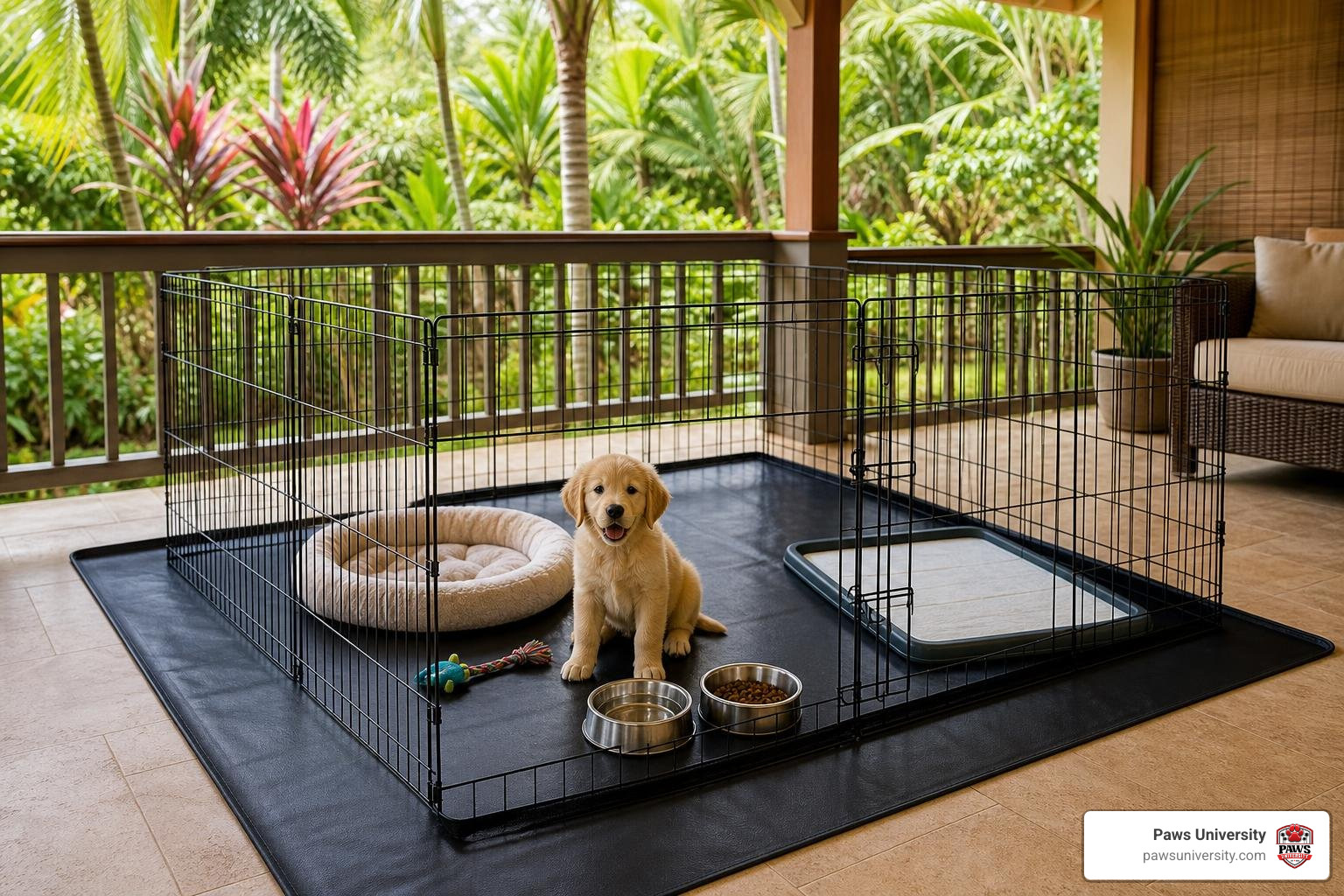
To safeguard your hardwood, tile, or carpet, we recommend laying down a durable, waterproof barrier underneath the entire playpen. Excellent options include:
- Linoleum or Vinyl Remnants: You can purchase a piece of sheet vinyl or linoleum from a local home improvement store. Cut it so it extends at least 6 inches past the perimeter of the pen. This is highly durable, completely waterproof, and incredibly easy to wipe clean.
- Waterproof Playpen Mats: Many manufacturers make washable, non-slip fabric mats designed specifically for pet pens.
- Heavy-Duty Tarps: A simple option, though less aesthetically pleasing and easily bunched up by active puppies.
For more detailed tips on selecting structural materials for your pen, see Setting Up Your Puppy Pen — Wagtime Co. .
Designing Your Puppy Pen Set Up: The Three-Zone Layout
To make the playpen highly functional and intuitive for your puppy, you should arrange it like a "puppy apartment" divided into three distinct zones. Dogs naturally possess an instinct to keep their sleeping area clean and will avoid toileting where they sleep if given the choice. By structuring the pen with clear physical boundaries, you leverage this natural instinct to make house training much easier.
The three zones of a successful puppy pen set up are:
- The Bedroom (Sleeping Zone): This area should contain your puppy's crate with the door secured open, or a high-quality, chew-resistant bed. Keeping the bedding exclusively inside the crate naturally encourages the puppy to choose the crate as their primary sleeping spot.
- The Bathroom (Potty Zone): This must be placed on the exact opposite side of the pen, as far away from the sleeping zone as possible. This physical separation prevents the puppy from accidentally confusing their bed with their bathroom.
- The Kitchen & Playroom (Living Zone): Positioned in the middle or adjacent to the sleeping zone, this area holds the non-spill water bowl and safe, durable chew toys.
For more visual examples of how to organize these zones, refer to How to Set Up a Puppy Playpen and check out The New Owner Guide to Overnight Puppy Care and Potty Training.
Step-by-Step Guide to Your Puppy Pen Set Up
Assembling the pen is a straightforward process that you can easily complete in under an hour.
First, choose the right type of pen. While standard wire grid pens are popular, we often recommend sturdy children's playpens or modular panels with vertical bars. Clever puppies can use the horizontal cross-wires of standard grid pens as ladder rungs to climb right out. Vertical bars eliminate this escape route. Additionally, children's playpens tend to sit more rigidly and are less likely to fold in on themselves when a puppy jumps against them.
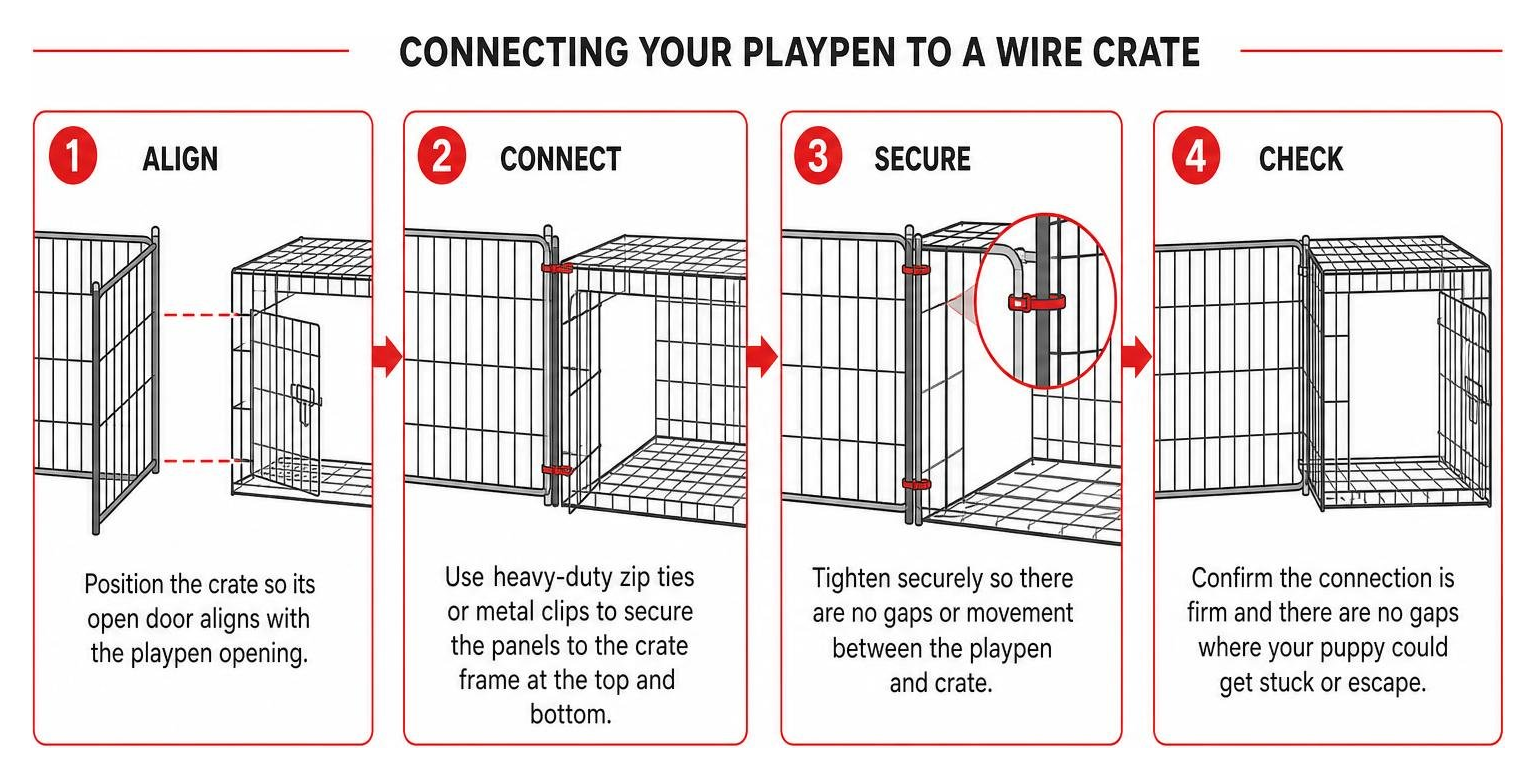
Follow these steps to assemble and secure your pen:
- Step 1: Lay Down Floor Protection. Position your vinyl remnant or waterproof mat in your chosen location.
- Step 2: Assemble the Panels. Connect the modular panels to form a spacious square or rectangle. Ensure the pen is tall enough for your puppy's adult height (usually 24 to 36 inches is sufficient for small to medium breeds, while larger breeds may require 40 to 50 inches).
- Step 3: Connect the Crate. If you are integrating a wire crate, align the open crate door with one of the pen's panel openings. Use heavy-duty zip ties or sturdy metal clips to secure the pen panels directly to the crate frame. This eliminates any gaps where a puppy could get stuck or escape.
- Step 4: Secure the Pen. Active puppies can push wire pens across the room. Secure the pen by anchoring it against a wall, placing non-slip rubber pads under the corners, or using heavy furniture or sandbags on the outside of the panels to keep it firmly in place.
- Step 5: Check for Hazards. Inspect the perimeter of the pen. Ensure there are no electrical cables, window blind cords, or toxic houseplants within reach of the puppy through the bars.
Setting Up the Potty Zone Within the Pen
The type of potty setup you choose inside the pen depends on your long-term training goals. The key is to avoid using standard paper pee pads if you eventually want your dog to toilet outdoors. Puppies associate potty spots with texture; the soft, paper texture of a pee pad feels very similar to household carpets and area rugs. If you train your puppy to pee on a pad, they may naturally transition to peeing on your living room rug when given free roam.
Instead, we recommend using a setup that mimics outdoor textures or uses a clear physical boundary:
- The Paper Pellet Litter Box: Use a low-sided plastic under-bed storage box and fill it with recycled paper pellets or pine shavings. The distinct physical border of the box and the unique texture of the pellets make it incredibly easy for the puppy to understand. It provides a clear boundary: paws inside the box means it's time to potty.
- Natural or Artificial Turf Patches: Placing a small patch of real grass turf or high-quality artificial turf on the opposite side of the pen from the crate helps the puppy associate the feeling of grass under their paws with going to the bathroom. This makes the eventual transition to outdoor potty training seamless.
For a deeper dive into integrating your potty setup, see How To Set Up A Puppy Playpen and Crate .
What to Put Inside Your Puppy's Playpen
To keep your puppy safe and content, you must be highly selective about what goes inside the pen. Only include items that are 100% safe and indestructible for unsupervised play.
Here is a list of essential, safe items for your puppy pen set up:
- Bedding (Crate Only): Keep bedding simple during the teething stage. Avoid soft, plush foam beds with zippers, as puppies can easily chew them open, swallow the foam filling, and suffer dangerous intestinal blockages. Instead, use a snug, durable crate mat or old towels and blankets that are tucked tightly into the crate.
- Water Solutions: Puppies love to play in water, and a standard bowl is easily flipped, turning the playpen into a wet mess. To prevent this, use a heavy-bottomed ceramic bowl or hang a flat-sided stainless steel bucket from the pen wall using a secure carabiner.
- Safe Chew Toys: Provide durable, non-plush toys that satisfy your puppy's natural urge to chew. Classic rubber Kong toys, Nylabones, or safe dental chews are excellent choices. To keep toys clean and prevent your puppy from dragging them into the potty zone, you can thread a sturdy rope through a Kong, tie a knot inside, and tether the other end of the rope to the outer bars of the playpen.
- Calming Enrichment: Lick mats and puzzle feeders are fantastic for keeping your puppy mentally stimulated and calm. However, always remove plastic puzzle feeders about 10 minutes after the puppy finishes eating to prevent them from chewing on the plastic parts.
To understand how to properly introduce these items to build a positive association with the space, read our guide on Crate Training: Teaching Your Dog to Love Their Space.
How to Introduce Your Puppy to Their New Space
Simply putting your puppy in a brand-new pen and walking away is a recipe for isolation distress, leading to frantic barking, digging, and whining. Instead, use a rewards-based approach to teach your puppy that the pen is a safe, wonderful place to be.
Follow these steps to build a positive association:
- Keep the Door Open: Let the puppy explore the pen freely during active playtime. Toss high-value treats inside and let them walk in and out on their own terms.
- Feed All Meals Inside: Feed your puppy their meals inside the crate or pen. This teaches them that the space is a source of good things.
- Provide "Jackpot" Toys: Give your puppy special, high-value treats — like a rubber toy stuffed with peanut butter or wet food — exclusively when they are inside the pen.
- Practice Short Sessions: Place your puppy in the pen with their stuffed toy, close the door, and sit right next to the pen. Open the door and let them out before they finish their treat. Gradually increase the time the door is closed while you remain in the room.
- Step Away Gradually: Once your puppy is comfortable chewing their toy with the door closed, practice stepping out of the room for a few seconds, then returning calmly. Keep your departures and returns low-key to teach them that your coming and going is no big deal.
For a comprehensive training schedule, check out How to Successfully Playpen Train Your Puppy Without the Stress and read our tips on How to Quiet a Whining Puppy in Their Playpen for Good.
Transitioning Away From the Puppy Pen Set Up
The playpen is a temporary phase in your dog's life. Most puppies should continue using their pen setup until they are at least 6 to 8 months old, fully house-trained, and have learned the basic house rules.
As your puppy matures and demonstrates reliable manners, you can begin transitioning them out of the playpen. Start by giving them supervised access to a single, puppy-proofed room. If they remain accident-free and do not chew on inappropriate items, gradually expand their freedom over several weeks.
To help your puppy build the skills they need for free-roaming success, check out our Beginner's Guide to Dog Manners Training.
Frequently Asked Questions About Puppy Playpens
Managing a playpen comes with common questions. Here are quick, practical answers to help you navigate the process.
How long can a puppy stay in a playpen at a time?
While a playpen provides more room than a crate, puppies should not be left confined for excessively long periods. A young puppy's bladder capacity is limited. A good rule of thumb for maximum confinement time during the day is the puppy's age in months plus one hour (for example, a 3-month-old puppy can comfortably stay in the pen for up to 4 hours, provided they have access to their potty area). Ensure your puppy receives plenty of physical exercise, mental stimulation, and dedicated bonding time outside of the pen throughout the day.
Why is my puppy crying in the playpen and how do I stop it?
Crying or whining is incredibly common when a puppy is first introduced to a playpen. It is often a bid for attention or a sign of mild frustration. If you immediately rush to open the door every time your puppy cries, you accidentally teach them that whining is the key to freedom.
Instead, wait for a brief moment of silence (even just three seconds of quiet) before opening the door or offering a treat. This teaches them that calm, quiet behavior is what earns rewards and release. To help them settle, you can also use calming techniques like playing white noise, using a dog-safe pheromone diffuser, or providing a heartbeat plush toy. For more detailed solutions, see How to Quiet a Whining Puppy in Their Playpen for Good.
Should I put a crate inside the puppy playpen?
Yes, absolutely! Integrating a crate directly into your puppy pen set up is a highly effective strategy. By attaching the playpen to your puppy's crate and keeping the crate door latched open, you allow your puppy to move freely between their cozy sleeping "bedroom" and their larger play and potty areas. This helps your puppy naturally develop a love for their crate, making overnight crate training much easier. To learn more about successful crate training, refer to Crate Training: Teaching Your Dog to Love Their Space.
Conclusion
A thoughtful, secure puppy pen set up is one of the greatest gifts you can give yourself and your new companion. It keeps your puppy safe from household hazards, protects your home from destructive chewing, and provides a structured environment that makes house training and independence training a breeze. By setting up a clear three-zone layout, protecting your floors, and using positive, rewards-based training to introduce the space, you will set your puppy up for a lifetime of good manners and confidence.
If you are looking for additional support during this exciting transition, Paws University is here to help. Located on a beautiful seven-acre tropical campus in Hawaii County, we are West Hawaii's premier facility for premium pet care. Since 2002, we have been the first in the state to offer supervised, structured Doggie Daycare, boarding, and expert training.
Whether you need help with How to Successfully Playpen Train Your Puppy Without the Stress or want to enroll your puppy in our premium daycare and training programs, our experienced team is dedicated to helping your dog thrive. Reach out to us today to learn more about our rewards-based programs and how we can support you and your puppy on this wonderful journey!