Build Recall and Leash Manners Before You Head Off-Leash
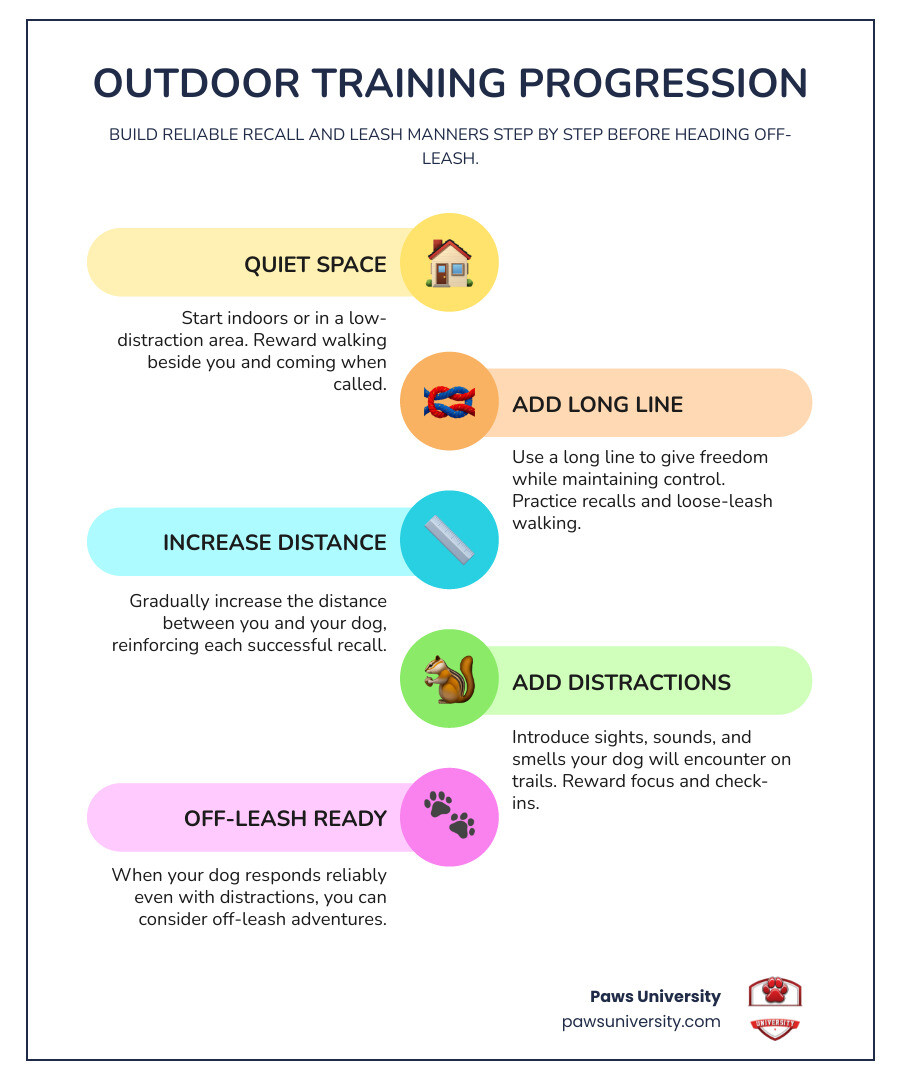
Start outdoor training for dogs in a quiet space. Reward your dog for walking beside you and coming when called. Then practice on a long line, adding distance and distractions one at a time. Keep the line on until your dog responds reliably around the sights, sounds, and smells you expect on a trail.
I'm Allen Daniels, co-founder of Paws University in West Hawai'i. I've trained dogs for more than 25 years, and my approach to outdoor training for dogs builds on the reward-based methods I first learned working with marine mammals.
Important outdoor training for dogs terms:
Exploring the open outdoors provides unparalleled sensory enrichment and mental stimulation for your canine companion. An hour spent actively sniffing novel scents along a nature path burns as much mental energy as an entire day of mundane physical pacing. However, turning every nature hike or beach walk into a stress-free adventure requires deliberate preparation. Reliable environmental confidence begins when you replace guesswork with a systematic, positive reinforcement framework.
Core Foundations: Equipment and Safety for Outdoor Training for Dogs
Before stepping onto a sun-drenched trail or open grassy meadow, having the right gear ensures both safety and effective communication. Modern, rewards-based training relies on management tools that protect your dog while setting them up to succeed.

To navigate outdoor adventures safely, handlers must follow fundamental canine health and safety essentials, including hydration, tick prevention, and appropriate control gear. Here is how standard handling equipment compares for field excursions:
| Equipment Type | Best Use Case | Primary Advantage | Safety Consideration |
|---|---|---|---|
| Standard 6-Foot Leash | Crowded paths, narrow sidewalks, trailheads | Maximum direct control in tight quarters | Limits natural movement and sniffing radius |
| 15- to 30-Foot Long Line (Biothane) | Open fields, recall proofing, radius training | Provides off-leash freedom with full safety backup | Can snag on roots or brush; best paired with a harness |
| Head Halter | Strong pullers needing gentle redirection | Guides head orientation without force | Requires gradual desensitization before field use |
| Basket Muzzle | Dogs prone to eating trail debris or fear-reactive pups | Allows panting, drinking, and treat-taking safely | Needs positive association at home first |
Biothane long lines are especially valuable because they resist moisture, do not hold burrs, and wipe clean after dragging across damp grass or muddy ground.
Essential Leash Manners and Radius Control
A dog that pulls constantly turns an excursion into an exhausting tug-of-war. Teaching your companion to keep a loose leash begins by rewarding slack before your dog ever reaches the end of the line.
When your pup discovers that walking near your side delivers delicious rewards, remaining in that zone becomes their preferred choice. Exploring how to teach loose leash walking using consistent positive reinforcement helps establish this habit quickly.
Once basic leash manners are steady, introduce radius training. Radius training teaches a dog to maintain an invisible boundary—often 10 to 15 feet around you—even when they have room to wander.
- Allow your dog to move away on a 15-foot line.
- The moment they pause, turn their head back, or match your walking pace, mark the moment with a verbal cue ("Yes!") and toss a high-value treat near your feet.
- Your dog learns that checking in and staying within a comfortable perimeter is far more reinforcing than charging ahead.
Structuring Outdoor Training for Dogs by Progression Level
Mastering open-air manners is an exercise in managing environmental complexity. When you take skills outdoors, the environment itself becomes the ultimate distraction. Pairing your sessions with structured daily exercise routines helps burn excess physical energy so your dog can focus during field work.
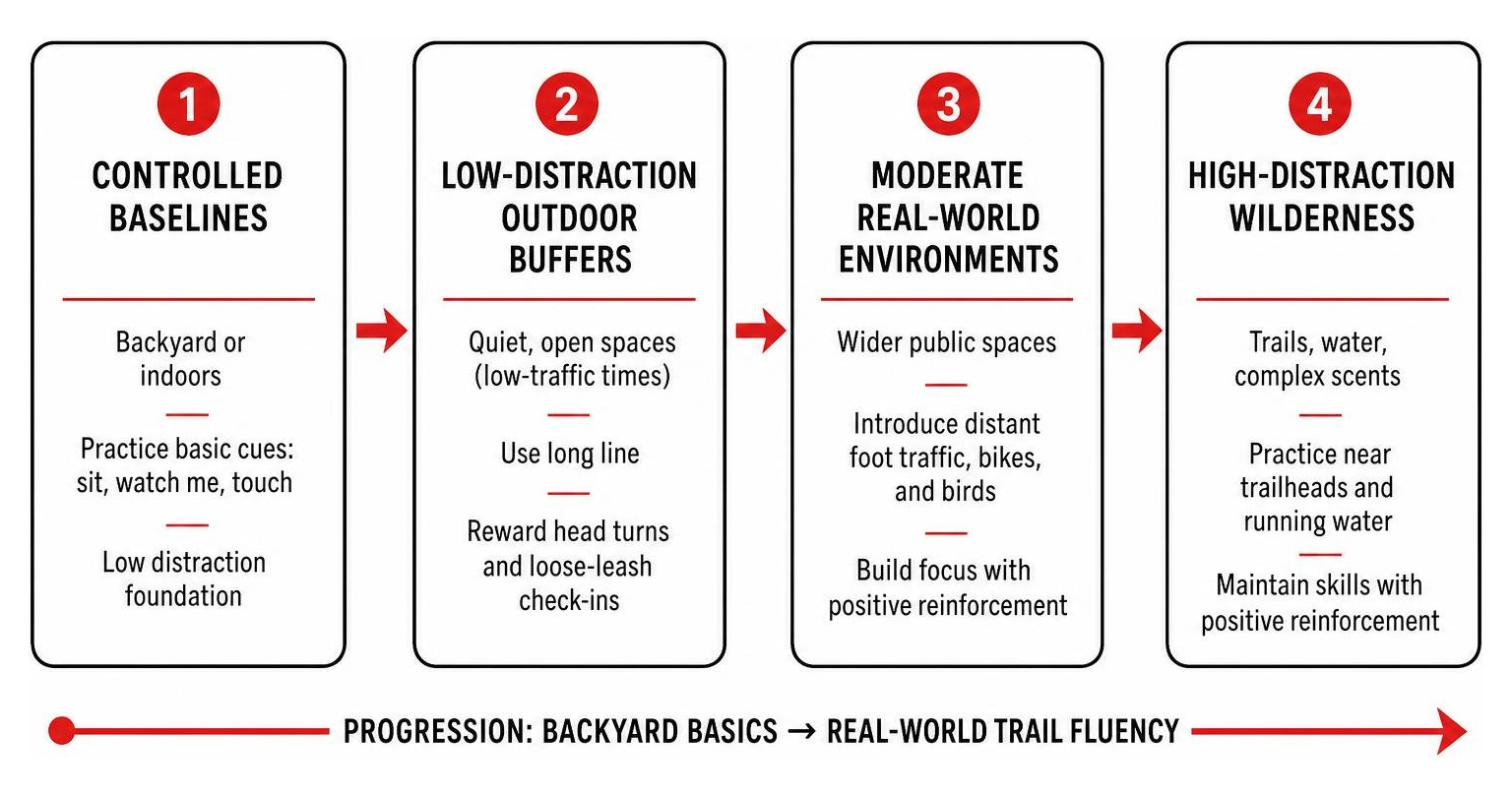
Progression should follow clear, objective milestones:
- Level 1: Controlled Baselines: Practice basic cues (sit, watch me, touch) in low-distraction zones like your living room or an enclosed yard.
- Level 2: Low-Distraction Outdoor Buffers: Move to a quiet, open outdoor space on a long line during low-traffic hours. Reward rapid head turns and loose-leash check-ins.
- Level 3: Moderate Real-World Environments: Introduce wider public spaces with distant foot traffic, rolling bicycles, and bird activity.
- Level 4: High-Distraction Wilderness: Practice near trailheads, running water, and complex scents while maintaining positive reinforcement management.
Step-by-Step Guide to Proofing Recall in High-Distraction Environments
A reliable recall is the single most important safety skill your dog will ever learn. In open spaces, coming when called must always be paired with tremendous value so your dog gladly chooses you over wildlife smells or passing dogs.
By applying ultimate dog obedience training methods, you can systematically build a bulletproof recall:
- Establish a High-Value Cue: Choose a distinct verbal cue (such as "Here!") or a specific two-tone whistle. Never use this cue to call your dog for something unpleasant, like a bath or nail trim.
- Charge the Marker: Whistle or say the cue inside your home. When your dog turns, immediately reward them with high-value treats like real roasted chicken, string cheese, or an energetic game of tug.
- Add Distance on a Long Line: Take the training outside on a 30-foot line. Wait for your dog to sniff, say the cue once in a clear, upbeat tone, and take three steps backward to encourage chase drive toward you.
- Jackpot the Return: When your dog reaches you, deliver multiple small treats in rapid succession for 5 to 10 seconds. This teaches them that coming back prolongs the fun rather than ending it.
- Release to Explore: The ultimate reward for coming back on a trail is getting to go right back to sniffing. Say "Free!" and let them return to exploring.
The Look-at-That Method for Reactivity
New environments are filled with startling visual triggers like fast-moving runners, unusual wildlife, or other leashed dogs. Managing your dog's emotional threshold is essential for calm behavior. Understanding effective dog socialization strategies prevents fear-based reactivity before it becomes an ingrained habit.
The Look-at-That (LAT) method changes how your dog feels about visual triggers:
- Position yourself at a safe distance where your dog notices the trigger (such as another dog walking 50 yards away) but does not bark, lunge, or stiffen.
- The instant your dog looks toward the trigger, mark with your verbal cue ("Yes!").
- Deliver a premium treat at your side, prompting your dog to turn away from the trigger.
- Repeat this sequence. Over time, your dog learns that noticing an exciting or intimidating stimulus is simply a cue to check in with you for a reward.
Solving Recall and Distraction Challenges in Outdoor Training for Dogs
When exploring untamed trails, unexpected distractions can derail focus. Having concrete recovery strategies keeps your dog safe:
- Emergency U-Turns ("Let's Go!"): Teach a rapid 180-degree turn. Give your cue in a bright voice, pivot on your heel, and jog a few steps in the opposite direction. Reward your dog enthusiastically as they catch up to you. This breaks visual fixation when encountering unexpected wildlife around a trail bend.
- Settling Mats: Bring a lightweight, foldable mat on outdoor excursions. Rewarding your dog for lying calmly on their mat allows them to relax during rest stops, park lunches, or patio visits. Practicing calm behavior and the do-nothing exercise teaches your pup that being outdoors does not always require high-arousal running.
- Scent Work Diversions: If your dog becomes hyper-fixated on a distant scent trail, scatter a handful of high-value treats into short grass and say "Find it!" Sniffing ground-level treats actively lowers a dog's heart rate and resets their focus.
Preparing Your Dog for Real-World Outdoor Adventures
As descendants of ancient canines, dogs possess innate foraging, scenting, and roaming instincts. A deeper look at canine natural behaviors and history reveals how deeply dogs thrive when exploring natural topography.
Hiking and Trail Running Preparation
Conditioning a dog for trail runs and uneven hiking routes requires physical preparation and thoughtful trail etiquette:
- Build Endurance Gradually: Increase hike durations in small increments to strengthen your dog's paw pads and build cardiovascular stamina.
- Master Passing Etiquette: Step off the trail to the downhill side when horses, mountain bikes, or other hikers pass, putting your dog in a focused sit-stay while rewarding eye contact.
- Early Foundation Work: Starting leash foundations early through dedicated puppy leash mastery ensures good trail manners are second nature as your dog matures.
- Terrain and Hazard Awareness: In tropical and volcanic regions like Hawaii County, sharp lava rock, heat radiating from paved paths, and kiawe thorns require careful foot checks after every outing.
Water Sports, Paddleboarding, and Camping Manners
Taking your dog along for water sports or overnight camping calls for specialized desensitization. Reviewing a comprehensive socialization checklist for sound temperament helps you introduce novel gear safely:
- Paddleboard Balance: Introduce the stand-up paddleboard on dry grass at home first. Reward your dog for stepping onto the board, sitting, and settling. Once they are relaxed, move to shallow, calm water.
- Life Jacket Acclimation: Fit your dog with a buoyant canine life jacket with a sturdy rescue handle. Let them wear it during brief play sessions with plenty of treats before heading near the water.
- Campsite Relaxation: When you arrive at a campsite, secure your dog on a stationary long line away from the campfire pit. Set out their familiar bedding and reward them for remaining calm while you set up tents and gear.
Frequently Asked Questions About Outdoor Training
How do I know if my dog is ready for off-leash outdoor freedom?
Your dog is ready for off-leash exploration only when they demonstrate near-perfect recall responsiveness on a slack 30-foot long line across varied environments. They should spontaneously check in with you every few minutes without being prompted and disengage immediately from minor distractions like birds or passing hikers when called. If your dog ignores you while tracking a scent on a long line, they need more practice before earning full off-leash privileges.
What is the most effective way to handle wildlife distractions?
The most reliable approach is pre-emptive threshold management. Learn to read your dog's body language—such as perked ears, a stiffened tail, or a sudden pause—before they sprint. The moment they spot wildlife, use your Look-at-That marker or execute an immediate emergency U-turn before their predatory chase drive takes over. Always carry extraordinary rewards (like liver treats, squeeze cheese, or a favorite squeaky ball) that are reserved solely for wildlife recalls.
Why is early intervention critical for outdoor behavior?
Allowing a young dog to practice self-rewarding habits—such as chasing critters, pulling ahead on trails, or lunging at passing dogs—makes those behaviors much harder to correct later. Early positive reinforcement guides puppies through natural fear periods and builds solid social resilience. Discovering the advantages of early obedience training benefits ensures your pup grows into a calm, confident, and reliable outdoor partner.
Conclusion
Transforming your dog into an exceptional adventure companion takes patience, clear criteria, and consistent positive reinforcement. By mastering loose-leash walking, instilling a dependable recall, and proofing behaviors against real-world distractions, you open up a lifetime of safe outdoor exploration together.
At Paws University, we specialize in helping island dogs and their guardians build strong, lifelong communication. Our premium, spacious campus in West Hawaii provides the ideal environment for social enrichment and reliable field manners. Whether you are getting ready for quiet nature hikes, beach strolls, or camping trips, exploring our professional outdoor dog training programs will help you turn every outdoor outing into an effortless adventure.