How to Choose the Best Dog Training Camps
The best dog training camps give your dog a safe place to practice new skills, use reward-based methods, and teach you how to keep those skills going at home. If you’re considering an overnight program, ask to see where dogs sleep and play, how staff handle stress, and what happens when your dog returns home. A camp can build good habits, but it cannot fix barking, anxiety, or aggression without your continued work.
I’m Allen Daniels, co-founder of Paws University in West Hawaiʻi. I’ve trained dogs for more than 25 years, and I believe the best dog training camps help owners carry each lesson into daily life.
What Is a Board and Train Program and How Does It Work?
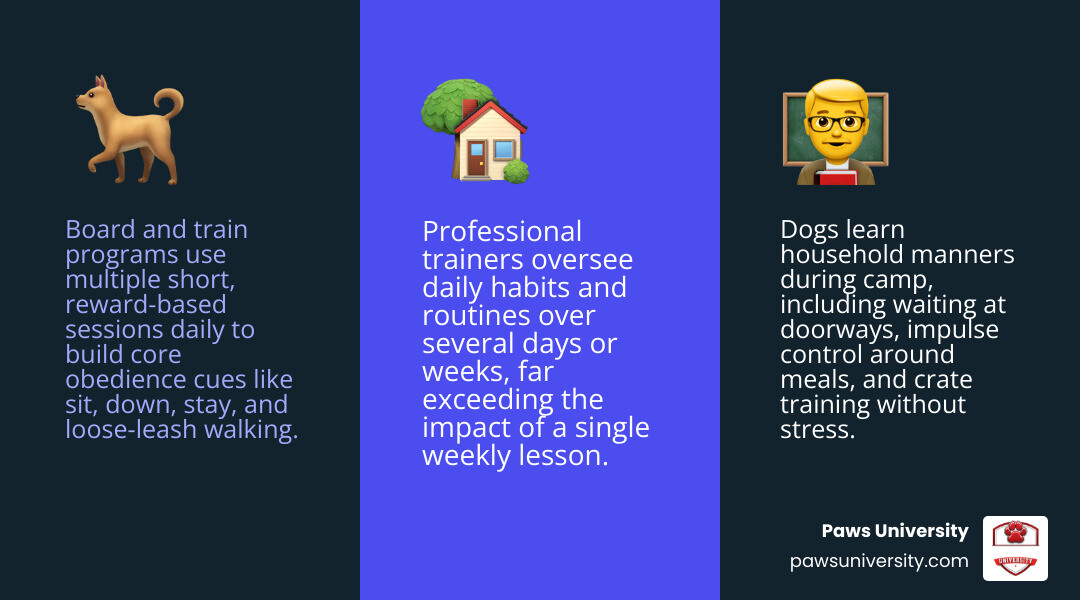
A board and train program—frequently referred to as an overnight dog training camp or boot camp—is an immersive learning setup where your dog stays on-site at a dedicated facility for several days or weeks. Instead of receiving a single 45-minute lesson once a week, your dog enters a structured environment where professional trainers oversee daily habits, routines, and skill building.
During a typical stay, trainers work with your dog across multiple short, reward-based sessions each day. These micro-sessions build core obedience cues such as sit, down, stay, reliable recall, and loose-leash walking. In between structured sessions, your dog learns good household manners: waiting at doorways, practicing impulse control around meal times, settling quietly during rest periods, and crate training without stress.
To understand the full day-to-day rhythm of these immersive stays, take a look at our overnight dog training camp guide.

Immersive Socialization and Routine for Puppies
For young dogs, an immersive program acts as an accelerator during the critical developmental window between 8 and 16 weeks of age. Early socialization during this phase is about calm exposure to new stimuli—unfamiliar textures, gentle obstacle navigation, novel sounds, and positive interactions with other balanced dogs.
A camp setting removes the chaos of unstructured public dog parks. Young pups practice bite inhibition, self-soothing, and redirection to safe chew toys, preventing early behavioral missteps from hardening into long-term habits. If you want early developmental support without overnight stays, enriching daycare training packages provide a structured day-camp alternative with daily play and focused learning.
Behavior Modification for Busy Pet Parents
Modern schedules can make it difficult to maintain the repetition and strict consistency required to reshape stubborn habits like leash pulling, jumping, or alert barking. When a dog practices an unwanted behavior repeatedly, that neural pathway strengthens.
An immersive camp temporarily resets these patterns. By placing your dog in an environment where good choices are immediately reinforced and unwanted behaviors are prevented, progress happens quickly. For households balancing demanding work schedules, overnight training for busy owners bridges the gap between chaotic schedules and a well-mannered family companion.
Potential Drawbacks and the Generalization Challenge
While overnight camps produce rapid progress, they are not without limitations. The single largest hurdle in canine learning is generalization.
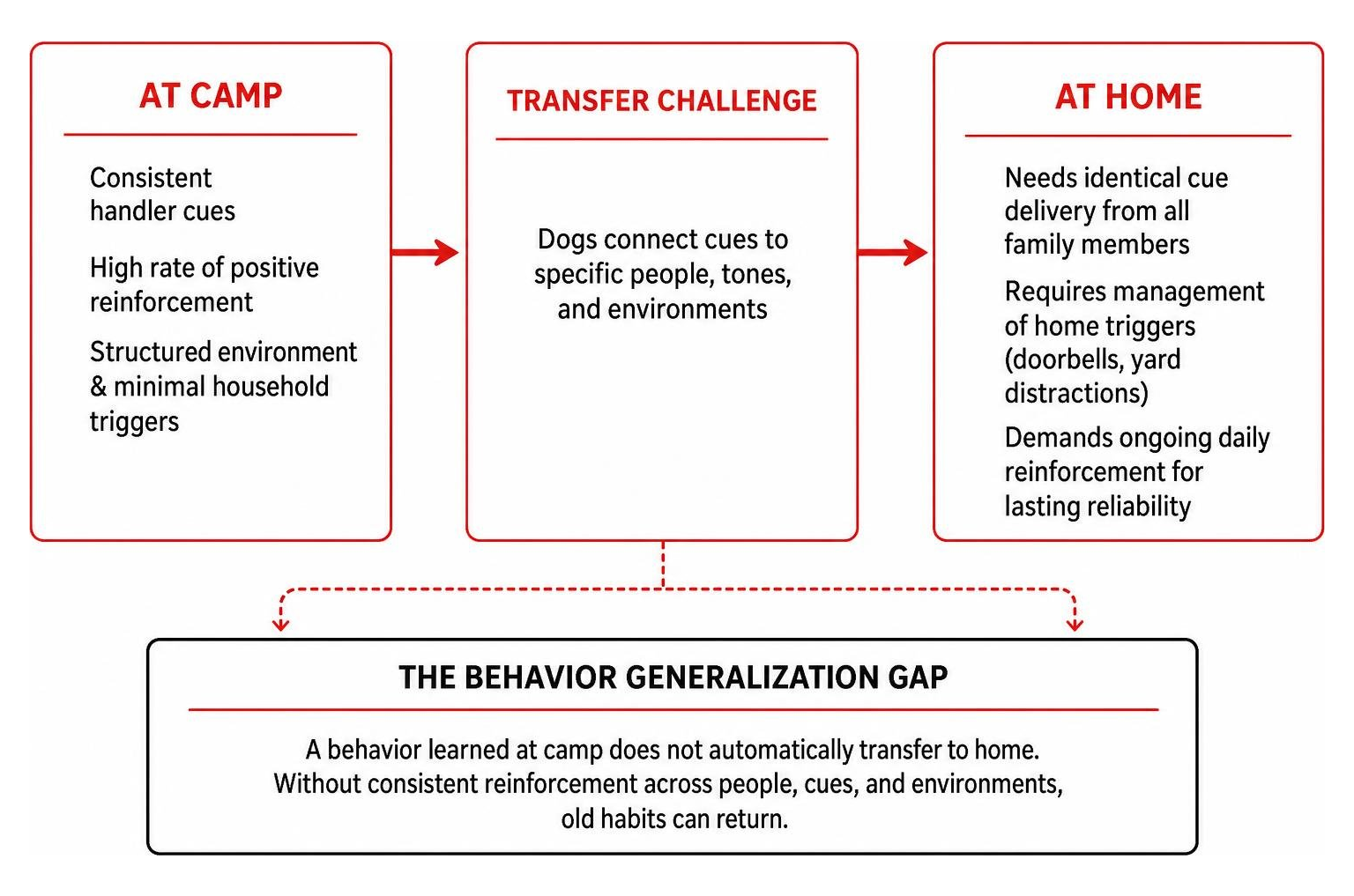
Dogs are highly contextual learners. A behavior learned on an open training field with a professional handler does not automatically transfer to your living room with your family. If your dog learns to walk politely beside a trainer, they may still pull on leash with you if you use different cues, change the reward timing, or drop your expectations.
Mastering lasting habits requires mastering dog obedience training through consistent reinforcement across many environments.
Why Board and Train Is Not a Magic Fix
Dogs are living, thinking companions—not cars that you drop off at a mechanic for a tune-up. An immersive program cannot "cure" a dog forever without your involvement.
When your dog returns home, the environmental cues (antecedents) that originally triggered problem behaviors—such as the delivery driver approaching the front window or excitement at the kitchen counter—are still present. If the home dynamic does not change and old habits are left unaddressed, behavioral regression will follow.
The Transfer Process: Bringing Camp Lessons Home
Top-tier programs recognize that training the pet parent is just as vital as training the dog. A reputable camp always includes dedicated handover sessions upon completion.
During these transition sessions, your trainer demonstrates the exact hand signals, verbal markers, and reward schedules your dog responded to during camp. You will practice handling your dog under the trainer’s guidance so you feel confident maintaining those behaviors in your own neighborhood.
Evaluating the Best Dog Training Camps: What Sets Top Programs Apart
Not all boarding and training operations operate at the same standard. Because facilities range from converted garages to open, park-like campuses, pet parents must carefully assess where their dog will live, rest, and learn.
For a detailed walkthrough on vetting facilities, consult our guide on evaluating boarding and training facilities.

Key Features Found in the Best Dog Training Camps
When touring prospective facilities, evaluate the physical campus, daily operational philosophy, and overall atmosphere.
| Feature | Standard Commercial Kennel | Dedicated Training Campus |
|---|---|---|
| Living Spaces | Small, noisy chain-link runs with concrete floors | Spacious, clean, climate-appropriate suites with quiet rest areas |
| Outdoor Environment | Small gravel runs or concrete pens | Expansive acreage with open grass yards for natural movement |
| Training Philosophy | Often unspecified or relying on pressure-based tools | Strictly rewards-based positive reinforcement |
| Staff Engagement | Basic feeding and quick turnout rotations | Continuous behavioral monitoring by experienced handlers |
| Program Transparency | Limited access to facilities; strict no-visitation rules | Open tours, clear daily schedules, and progress updates |
Red flags to avoid:
- Any facility that offers "guaranteed" behavioral results (behavior involves living variables that cannot be ethically guaranteed).
- Facilities that use fear, intimidation, or harsh physical corrections.
- Loud, chaotic environments where dogs bark continuously without intervention or decompression.
- Refusal to let you inspect the sleeping and resting quarters prior to enrollment.
How the Best Dog Training Camps Address High-Anxiety Behaviors
Dogs dealing with generalized nervousness, hyper-arousal, or fear require a gentle, measured approach. Placing an anxious dog into a high-stress kennel environment can exacerbate existing issues.
Top-tier programs use gradual desensitization, calm ambient environments, and structured decompression periods to keep stress hormones low. If your dog struggles with being away from family, explore our resources on separation anxiety boarding solutions and our comprehensive guide on managing high-anxiety dogs.
Comparing Training Formats: Board and Train vs. Daycare vs. At-Home Practice
Selecting the right training format depends on your dog’s personality, your available time, and your specific goals.
| Training Format | Learning Speed | Owner Time Commitment | Best Suited For | Key Advantage |
|---|---|---|---|---|
| Overnight Board & Train | Rapid / Immersive | Low during camp; high during handoff | Busy schedules, foundational habits, immersive puppy resets | Professional consistency creates fast baseline behaviors |
| Daycare Training | Moderate / Progressive | Moderate (reinforce skills each evening) | Working owners, puppy socialization, mild obedience | Dog returns home every night; regular daily routine |
| At-Home / Private Lessons | Steady / Gradual | High (owner handles all repetitions) | Mild manner issues, direct owner-dog bonding | Immediate learning in the exact home environment |
Daycare-Based Training and Owner Participation
Daycare training blends daytime professional instruction with evening home life. Your dog spends the day engaged in supervised playgroups, impulse control drills, and individual training sessions, then returns home each afternoon. This format lets you practice newly introduced skills right away, creating a steady cycle of learning between the campus and your home.
At-Home Dog Training and Hands-On Practice
Private in-home training or one-on-one coaching puts you in the driver’s seat. While it requires the most personal time and daily consistency, it offers one major benefit: your dog learns directly inside your living environment, eliminating the need to bridge the generalization gap from a camp setting.
How to Match Training Programs to Age, Breed, and Behavior Needs
Before enrolling your dog in any camp, review this readiness checklist:
- [ ] Current on all standard health requirements and preventative care.
- [ ] Able to rest comfortably in an individual suite without extreme panic.
- [ ] Shows no severe, unmanaged dog-to-dog aggression that poses safety risks.
- [ ] Family is committed to attending handover sessions and following training protocols at home.
- [ ] Realistic goals focused on progress and communication, not overnight perfection.
Age Considerations: Starting Between 8 and 16 Weeks
The prime socialization window for puppies closes around 16 weeks of age. Early exposure during this timeframe shapes how your dog reacts to novel situations for the rest of their life.
Puppy camps focus heavily on positive reinforcement for crate comfort, gentle handling, sound desensitization, and basic impulse control. Beginning early prevents common behavioral challenges like persistent play biting and separation distress before they take root.
Addressing Breed Drives and Specific Behavioral Challenges
Every breed brings unique genetic wiring to the table:
- Herding Breeds (Border Collies, Australian Shepherds): Highly visual and sensitive to movement; benefit from impulse control around moving distractions and structured focus games.
- Working & Sporting Breeds (Labradors, Golden Retrievers, German Shepherds): High physical energy and drive; thrive with structured fetch routines, nose work, and boundary training.
- Terriers & Hounds: Independent and scent-driven; require high-value food rewards and clear marker cues to build reliable recall.
A dedicated training program tailors its enrichment to satisfy these innate drives in productive ways.
Frequently Asked Questions About Dog Training Camps
Will my dog forget me while staying at an overnight training camp?
No. Dogs build deep, lasting attachments with their primary families through familiar scents, voices, and daily routines. While your dog will form positive, affectionate bonds with their trainers, they will recognize you immediately and be excited to reunite on pick-up day.
What should I look for during a tour of a training camp?
Observe the overall state of the facility and the body language of the dogs already on campus. Look for relaxed postures, wagging tails, clean and odor-free living suites, securely fenced play yards, and staff members interacting calmly without shouting or using forceful corrections.
What happens if my dog regresses after returning home from camp?
Minor regression can happen if your dog tests boundaries in their familiar home environment. The solution is returning to the exact cue-and-reward structure demonstrated during your handover session. Reputable training camps provide follow-up guidance and support to help you troubleshoot challenges and maintain long-term success.
Conclusion
Enrolling your dog in an overnight training camp can build foundational manners, improve impulse control, and give your companion a structured head start. However, lasting success is always a partnership. The camp establishes clear communication and good habits; your daily follow-through turns those habits into a lifetime of reliable behavior.
If you are ready to give your canine companion clear, rewards-based instruction in an enriching environment, explore our comprehensive dog training programs to find the right fit for your family.