Why Socializing Your Puppy with Other Dogs Is One of the Most Important Things You'll Ever Do
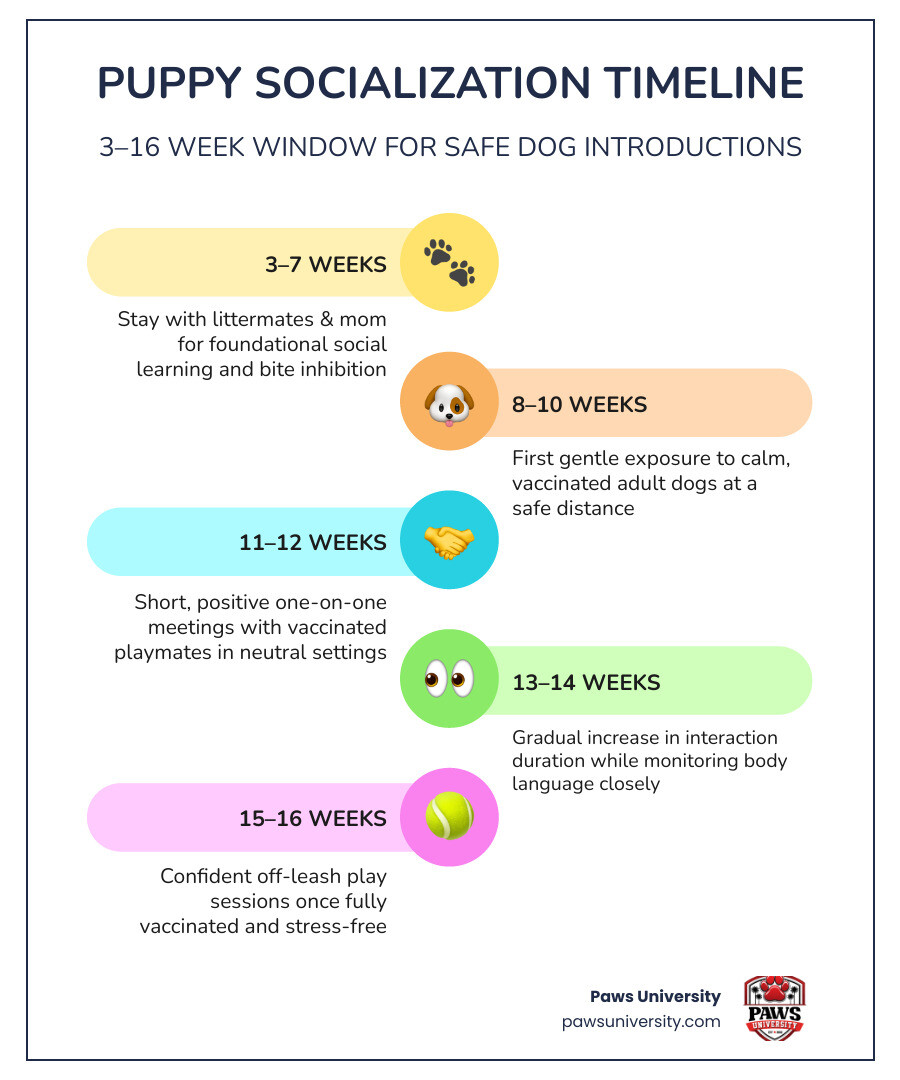
Socializing your puppy with other dogs early — ideally between 3 and 16 weeks of age — is the single most important step you can take to raise a confident, friendly, well-adjusted dog.
Here's a quick overview of how to do it safely:
- Start early — begin gentle dog-to-dog exposure between 8 and 16 weeks old
- Vaccinate first — wait at least 7 days after your puppy's first vaccine round before any dog contact
- Choose safe playmates — only meet fully vaccinated, healthy dogs in controlled settings
- Go slow — start at a distance, then gradually move closer as your puppy relaxes
- Keep it positive — use treats and calm praise to build good associations
- Watch body language — stop the interaction if your puppy shows fear or stress
- Avoid dog parks — until your puppy is fully vaccinated and has had successful one-on-one experiences
The stakes are high. Behavioral issues — not infectious diseases — are the number one cause of death in dogs under three years old. A puppy who misses this early window can grow into an anxious, reactive, or aggressive adult dog. And once that window closes, reversing those patterns takes far more time and effort.
The good news? With the right approach, early socialization is safe, simple, and deeply rewarding for both you and your pup.
I'm Allen Daniels, co-founder of Paws University in Hawaii County, and I've spent over 25 years applying science-backed, rewards-based methods to socializing puppies with other dogs — first honed during a decade training marine mammals alongside behavioral scientists. Everything in this guide reflects what I've seen work, time and time again, right here in Hawaii County.
Glossary for socializing puppy with other dogs:
The Golden Rules of Socializing Puppy with Other Dogs
When we talk about socializing puppy with other dogs, we aren't just letting a group of puppies run wild in a backyard. True socialization is about teaching your puppy that other dogs are safe, predictable, and nothing to fear.
To achieve this, we follow a set of golden rules rooted in positive reinforcement and a deep understanding of canine communication.
- Rule 1: Prioritize Quality Over Quantity. Three calm, positive interactions are infinitely better than thirty overwhelming ones.
- Rule 2: Never Force an Interaction. Let your puppy choose when and how to approach. Pushing a timid puppy into a social situation can create the very fear and reactivity you are trying to prevent.
- Rule 3: Keep Your Own Energy Calm. Dogs are incredibly sensitive to human emotions. If you tighten the leash or gasp nervously, your puppy will instantly assume there is a threat. Keep your breathing steady and your voice soft.
- Rule 4: Use High-Value Rewards. Pair every new canine encounter with something extraordinary — like a small piece of freeze-dried liver or chicken — to build a strong positive association.
Why Socializing Puppy with Other Dogs in the 3–16 Week Window is Critical
During the first few months of life, a puppy’s brain is incredibly malleable. This period of high neuroplasticity is a biological fast-track for learning. From 3 weeks to about 16 weeks of age, your puppy is a developmental sponge. They are biologically programmed to accept new sights, sounds, smells, and other animals as normal and safe.
According to veterinary and behavioral experts in Puppy Socialization 2026: The Critical 3–16 Week Window, the window is most open between 8 and 14 weeks. Once your puppy reaches 14 to 16 weeks, their brain’s natural filter flips. From an evolutionary standpoint, wild canines who survived past this age needed to treat anything unfamiliar as a potential threat. In our domestic companions, this translates to a natural rise in caution and fear.
If a puppy is isolated during this critical period, they miss out on learning the foundational language of dog-to-dog communication. Without these early lessons, they are up to four times more likely to be surrendered to shelters before they reach three years of age due to preventable behavior issues. To avoid these pitfalls, we must utilize structured Step-by-Step Guide to Puppy Socialization Methods that respect this developmental timeline.
Balancing Disease Prevention and Early Socialization
The historic dilemma for new puppy parents has always been: How do I socialize my puppy before they are fully vaccinated?
Historically, pet parents were told to keep their puppies indoors until they received their final booster shots at 16 weeks. However, waiting this long means completely missing the golden socialization window. Today, the consensus among veterinary behaviorists is clear: the behavioral risks of under-socialization far outweigh the medical risks of controlled, early exposure.
To safely balance disease prevention and early social experiences, we must navigate the overlap of maternal antibodies and the puppy vaccination schedule. Puppies receive temporary immunity from their mother’s colostrum, which gradually fades over their first 6 to 8 weeks. Because these maternal antibodies can interfere with vaccines, puppies require a series of shots (usually starting at 6-8 weeks and repeated every 2 to 4 weeks until 16 weeks) to ensure full protection.
You can safely begin socializing puppy with other dogs before they are fully vaccinated by adhering to these strict safety protocols:
- Wait for the first round: Ensure your puppy has received at least one set of core vaccines (protecting against parvovirus, distemper, and hepatitis) and a deworming treatment at least 7 days prior to any social outing.
- Verify your playmates: Only allow your puppy to interact with adult dogs you know personally to be fully vaccinated, healthy, and friendly.
- Avoid high-traffic public areas: Keep your puppy off the ground in places where unknown dogs congregate, such as public parks, beaches, and pet store floors. Parvovirus is highly resilient and can survive on soil and grass for months.
- Use physical barriers: Carry your puppy in your arms, a stroller, or a clean carrier when exploring public spaces so they can see and smell the world without touching potentially contaminated ground.
For a comprehensive safety plan, consult our When Is It Safe to Expose Puppies to Other Dogs? guide and use our A Bomb-Proof Dog Starts with This Socialization Checklist to track your progress safely.
How to Safely Introduce Your Puppy to Other Dogs
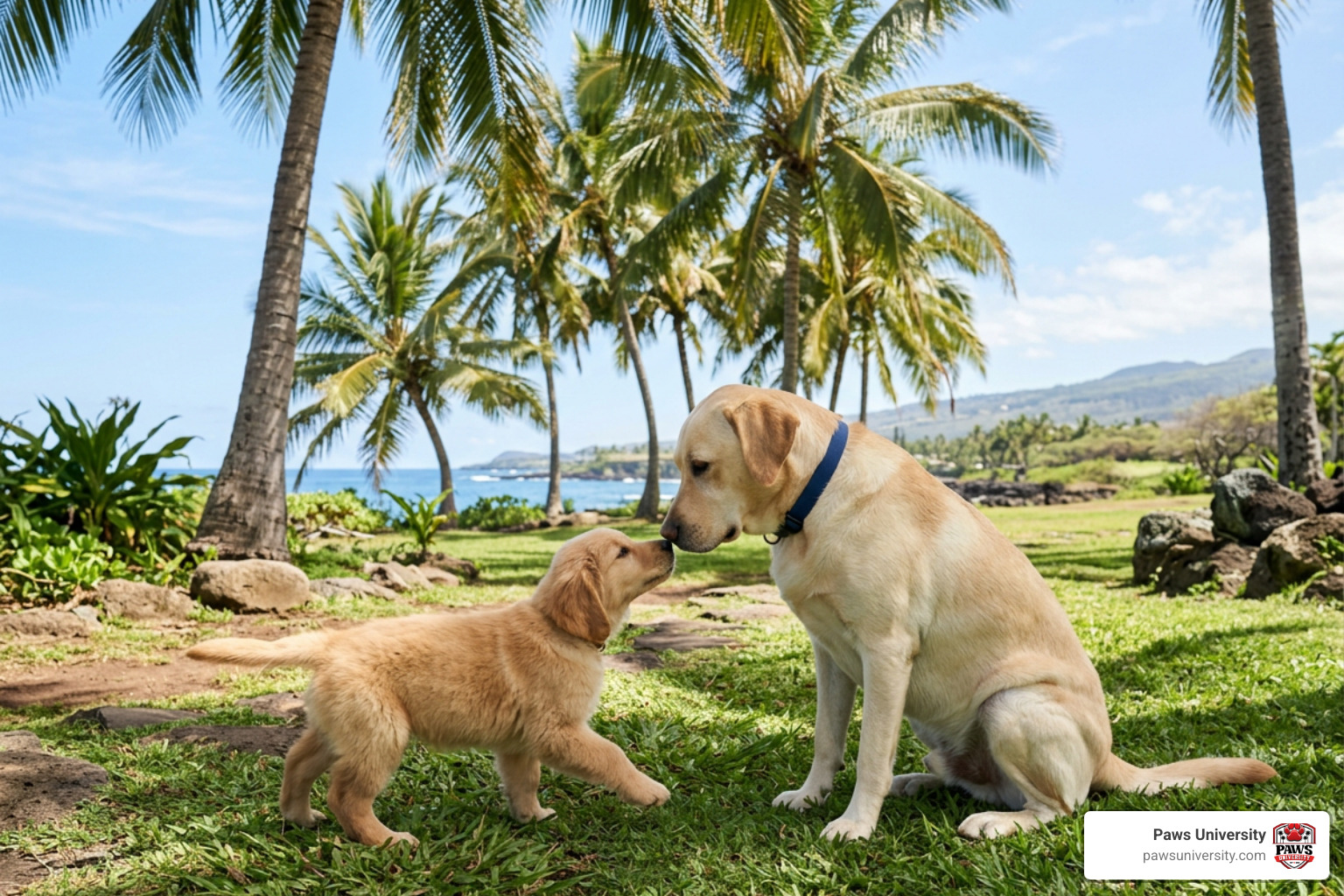
A successful introduction sets the tone for your puppy's relationship with the entire canine species. The secret lies in managing the environment and keeping interactions structured, brief, and entirely positive.
Step-by-Step Guide to Socializing Puppy with Other Dogs Safely
When introducing your puppy to a new dog, avoid a direct, face-to-face greeting on tight leashes. Tight leashes restrict a dog's natural movement, prevent them from using polite body language, and can cause frustration or fear. Instead, follow this gradual, step-by-step approach:
- Start with Distance Desensitization: Begin in a neutral, spacious environment. Keep both dogs on loose leashes at a distance where your puppy can see the other dog but remains calm and focused on you.
- Reward Calm Behavior: Every time your puppy looks at the other dog without barking, whining, or pulling, mark the behavior with a cheerful "Yes!" and deliver a high-value treat. This teaches them that the presence of another dog means good things happen.
- Conduct a Parallel Walk: Instead of walking directly toward each other, walk in the same direction with a wide gap between you. This side-by-side movement mimics natural pack behavior and reduces the tension of a head-on approach.
- Allow a Brief, Three-Second Sniff: Once both dogs are relaxed and displaying loose, wiggy body language, allow them to approach each other on loose leashes. Keep the interaction to a count of "one-two-three," then cheerfully call your puppy away for a treat.
- Separate and Reset: Breaking off the interaction before either dog gets over-excited or tense keeps the experience highly positive. You can repeat these brief greetings, gradually letting them last longer if both dogs remain comfortable.
For more detailed training techniques, refer to our guide on How to Socialize a Puppy and utilize our Ultimate Checklist for Socializing Dogs with Other Dogs to ensure you are covering all the essential steps.
The Role of Adult Nanny Dogs in Teaching Manners
While puppy-to-puppy play is fantastic for burning energy, adult dogs play an indispensable role in a puppy's social education. In particular, gentle, socially mature adult dogs — often called "nanny dogs" — are master teachers.
Puppies under five months old naturally explore the world with their mouths. They do not yet understand that their tiny, needle-like teeth can hurt. While littermates help teach basic bite inhibition, a patient adult dog provides invaluable boundary lessons.
If a puppy plays too roughly or bites too hard, a well-mannered adult dog will deliver a clear, measured correction. This might look like a sharp "woof," a sudden freeze, or a simple walk-away that ends the fun. These calm corrections teach the puppy that rude behavior results in the immediate end of playtime.
Never trap an older dog with an energetic puppy hoping they will "sort it out." The adult dog must always have a clear escape route and voluntarily choose to interact with the puppy. To learn more about selecting the right mentor dogs, read How to Socialize a Dog: The Ultimate Guide.
Setting Up Safe and Successful Puppy Playdates
A private, supervised playdate is one of the safest and most effective ways to build your puppy's social skills. By controlling the environment and the participants, you minimize the risk of disease and negative behavioral experiences.
To get started, download our Puppy Socialization: Checklist PDF to map out your puppy’s social goals, and read How to Turn Your Lone Wolf into a Social Star for tips on managing early playdate jitters.
Choosing the Right Playmates and Environments
The success of a puppy playdate depends heavily on matchmaking. When selecting a playmate, look for:
- Size and Age Matching: A massive, boisterous adolescent dog can accidentally injure or terrify a small puppy, even without meaning to. Match your puppy with dogs of similar size, age, and energy level.
- Responsible Owners: Choose playdate partners whose owners share your commitment to positive reinforcement, keep their dogs fully vaccinated, and agree to cancel the playdate if either dog shows any signs of illness.
- Secure, Enclosed Environments: Host playdates in a securely fenced yard or a clean, private indoor space. Avoid public parks where unvaccinated dogs may have left behind pathogens.
- Physical Obstacles: Set up your play area with physical obstacles like benches, low platforms, or large boxes. These features allow a tired or overwhelmed puppy to easily duck out of sight and take a self-imposed break.
- No High-Value Resources: Before the playdate begins, remove all food bowls, prized toys, and high-value bones. This simple step prevents resource guarding and unnecessary conflict.
Recognizing Play Styles: Puppies vs. Adult Dogs
As dogs grow, their play styles evolve dramatically. Understanding these shifts is crucial for setting realistic expectations and keeping interactions safe.
Puppies typically engage in soft, mouthy, highly reciprocal play. They wrestle, chase, and take turns being on top. Adult dogs, however, reach social maturity between one and three years of age. At this stage, many adult dogs naturally lose interest in rough off-leash play with unfamiliar dogs. They may prefer brief greetings, side-by-side sniffing, or simply ignoring other dogs altogether. This is completely normal and healthy.
To help you distinguish between normal developmental play and adult boundaries, consult our play style comparison:
| Play Feature | Puppy Play Style | Adult Dog Play Style |
|---|---|---|
| Reciprocity | Highly reciprocal; constant role-reversal during chasing and wrestling. | Less reciprocal; play is often centered around specific games (like fetch) or brief chase sequences. |
| Vocalization | High-pitched yips, growls, and playful barking; rarely signals true distress. | Deeper growls and barks; vocalizations are more structured and may signal boundary setting. |
| Biting & Mouthing | Frequent, exploratory play-biting; focused on learning bite inhibition. | Controlled, symbolic mouthing; rarely involves actual pressure unless boundaries are crossed. |
| Breaks & Pauses | Play is continuous until physical exhaustion; puppies rarely self-regulate without help. | Natural, self-imposed pauses; dogs will shake off, sniff the ground, or walk away to cool down. |
| Tolerance | Highly tolerant of rude behaviors, jumping, and physical boundary-crossing. | Low tolerance for rude behaviors; quick to offer clear, corrective body language to establish boundaries. |
If you are working with an older rescue or transitioning your pup into maturity, our A Practical Guide to Socializing an Adult Dog offers tailored advice for managing adult social behaviors.
Reading Canine Body Language and Knowing When to Intervene

To keep your puppy's social experiences positive, you must learn to speak their language. Dogs communicate constantly through subtle shifts in their posture, ears, tail, and eyes.
Signs of Stress, Overwhelm, and Fear
It is easy to mistake an overwhelmed puppy for an excited one. A puppy who is running fast, vocalizing, or jumping may actually be operating in a state of high stress.
As a responsible pet parent, you must watch for subtle "displacement behaviors" and stress signals that indicate your puppy is over threshold:
- Lip Licking and Yawning: If your puppy is yawning or licking their lips when no food is around, they are trying to soothe themselves in a tense situation.
- The "Whites of the Eyes" (Whale Eye): Seeing the white, crescent-shaped portion of your puppy's eyes means they are tense, highly alert, and feeling threatened.
- Tail Tuck and Low Body Posture: A tail tucked tightly between the hind legs, accompanied by a lowered head and cowering body, is a clear sign of fear.
- Avoidance and Hiding: If your puppy ducking behind your legs, hiding under a chair, or constantly seeking an exit, they are telling you they have had enough.
- Stiff Body and Closed Mouth: A puppy who suddenly freezes, holds their body rigid, and tightly closes their mouth is highly uncomfortable and may react defensively if pushed.
Recognizing these signs early is key to preventing long-term behavioral issues. For a deeper dive into identifying these behaviors, read our Signs of a Poorly Socialized Dog: Essential Guide.
How to Safely Intervene and Redirect Play
If you notice signs of stress, or if playtime becomes one-sided (where one dog is constantly chasing, pinning, or standing stiffly over another), it is time to intervene.
Never use a confrontational approach like pinning, scruffing, or shouting. These harsh methods will only teach your puppy to associate the presence of other dogs with fear and human punishment. Instead, use these rewards-based, positive redirection techniques:
- The Consent Test: If you aren't sure if both puppies are enjoying the play, gently catch and hold the apparent "aggressor" for a few seconds. Watch the other puppy. If they immediately run away, take a break, or hide, the play was too intense and should be ended. If they eagerly bounce back and try to re-engage the held dog, the play is mutual and safe to resume.
- Call and Reward: Practice calling your puppy away from play in a cheerful, upbeat voice. Reward them with a high-value treat for turning their focus to you, then immediately send them back to play. This prevents them from associating your recall with the end of the fun.
- The "Do Nothing" Intermission: Periodically interrupt play for short, calm breaks. Have both dogs sit quietly near their handlers, enjoy a few treats, and let their adrenaline levels drop before allowing them to play again.
For more secrets on managing play dynamics and teaching calm focus around distractions, explore The Do Nothing Exercise and Other Socialization Secrets.
Preventing Leash Aggression and Reactivity on Walks
One of the most common mistakes puppy owners make is allowing their puppy to greet every single dog they see while on leash. While this seems friendly, it actually sets the stage for severe barrier frustration, leash tension, and reactivity.
When a puppy is allowed to greet every dog on leash, they learn to expect constant social interaction. When they are eventually held back by a tight leash, they experience intense frustration. Over time, this frustration manifests as barking, lunging, and whining — behaviors that are easily mistaken for aggression.
Our goal is to teach puppies that leashed dogs are simply neutral parts of the environment to be passed calmly, unless given a specific, rare cue to interact. To build these habits early, review the training tips in Puppy Socialization: When & How to Socialize a Puppy.
Best Practices for Neutral Environment Introductions
To prevent leash reactivity and build polite walking habits, practice these neutral environment exercises:
- Maintain Handler Engagement: Keep your puppy's focus on you during walks. Carry high-value treats in a pouch and reward your puppy frequently for looking up at you (eye contact) when another dog is in sight.
- Use the "Step-Back" Technique: If you see another dog approaching on the sidewalk, step off the path into a driveway or grassy shoulder. Keep your puppy at a comfortable distance where they can watch the other dog pass without reacting, and feed them continuous treats.
- Keep Leashes Loose: If you do allow a brief, pre-approved greeting, ensure both leashes remain completely loose. A tight leash transmits your physical tension directly to the dog, triggering their natural defense mechanisms.
- Never Let Leashes Tangle: Tangled leashes trap dogs in close quarters, preventing them from using natural escape routes. This can cause a minor misunderstanding to quickly escalate into a fight.
The Risks of Improper Socialization and Negative Experiences
It is a common misconception that "any socialization is good socialization." In reality, a single terrifying or painful encounter during your puppy's critical fear periods (typically occurring between 8-11 weeks, and again between 6-14 months) can leave permanent psychological scars.
This is known as "single-event learning." Because puppies are evolutionary programmed to remember threats for survival, one attack or severe scare by another dog can cause a lifetime of fear-based reactivity and defensive aggression.
This is why we must actively protect our puppies from unpredictable environments, such as off-leash public areas, until they have a rock-solid foundation of positive social experiences.
Frequently Asked Questions about Socializing Puppies
What should I do if my puppy is too scared to play?
If your puppy is hiding, cowering, or refusing to engage, do not force them. Respect their boundaries and increase their distance from the other dog until they feel safe.
Let them observe from a distance while you feed them high-value treats. Over multiple sessions, as they learn that other dogs predict delicious rewards, they will naturally begin to show curiosity. Let them set the pace for engagement.
Can my puppy catch parvovirus from a socialization class?
While parvovirus is a serious concern, a landmark study conducted by UC Davis found that none of the puppies who attended well-managed puppy socialization classes contracted parvovirus.
At premium training facilities, socialization classes are held in strictly sanitized, indoor environments with non-porous surfaces that are cleaned daily with veterinary-grade antimicrobial solutions. By requiring proof of at least one set of vaccinations and deworming at least 7 days prior to the first class, these structured environments remain incredibly safe.
Is it okay to take my unvaccinated puppy to a dog park?
No. Public dog parks are high-risk environments for young puppies. They are high-traffic areas where parvovirus can easily survive on the soil, and you cannot verify the vaccination status or health of the other dogs.
Furthermore, dog parks are highly unpredictable. An off-leash dog with poor manners can easily overwhelm or injure your puppy, creating lasting behavioral trauma. Stick to controlled, private playdates and sanitized puppy classes until your puppy is fully vaccinated.
Conclusion
Socializing your puppy with other dogs is a journey that requires patience, consistency, and a commitment to positive, rewards-based training. By protecting your pup from negative experiences, choosing safe playmates, and utilizing a step-by-step approach, you will lay the foundation for a lifetime of confidence and joy.
At Paws University, we are dedicated to helping Hawaii County pet parents raise happy, well-adjusted companions. Our premier, seven-acre campus in Hawaii County offers premium doggie daycare, secure boarding, and expert training services designed to support your puppy's development every step of the way. Our structured, fully supervised playgroups provide the perfect, safe environment for your puppy to build impeccable social skills under the watchful eyes of our professional staff.
Ready to take the next step in your puppy's social education? Explore our Paws University Training Services and join our community of confident, happy dogs today.