
What Are Dog Training Classes — and Which One Does Your Dog Need?
Dog training classes come in several formats, each designed for a different stage of your dog's development:
| Class Type | Best For | Typical Age |
|---|---|---|
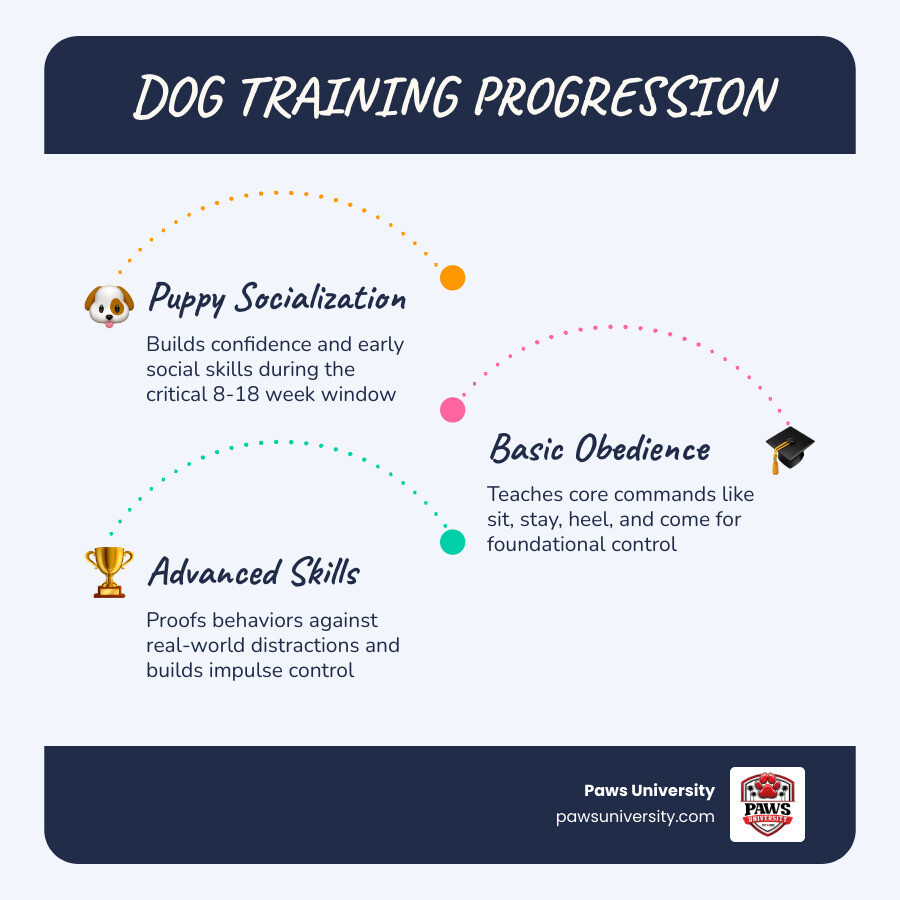
| Puppy Socialization | Building confidence, early social skills | 8–18 weeks |
| Basic Obedience | Core commands (sit, stay, heel, come) | 16 weeks+ |
| Advanced Skills | Distraction proofing, impulse control | Any adult dog |
| Behavioral Classes | Reactivity, fear, aggression | Any age |
| Competition Training | Rally, agility, competition titles | Trained adults |
Most dogs start with puppy socialization or basic obedience, then progress from there.
If your dog is barking, destroying furniture, struggling around other dogs, or ignoring you the moment something interesting walks by — you're not alone. These are among the most common reasons Hawaii County pet owners go looking for help. And the good news is that structured training classes address almost all of them.
But with so many options — puppy classes, group obedience, private sessions, board-and-train programs — it's easy to feel lost before you even start.
This guide breaks it all down simply: what each type of class covers, what to expect, and how to find the right fit for your dog right now.
I'm Allen Daniels, co-founder of Paws University in Kailua-Kona, and I've spent over 25 years teaching dog training classes using the same rewards-based, science-backed methods I first developed training dolphins under professional marine mammal behaviorists in the late 1980s. Whether your dog is eight weeks old or eight years old, the path forward starts with understanding what kind of training they actually need.
Understanding the Different Types of Dog Training Classes
To choose the right path for your dog, it is helpful to look at training as an ongoing education. Just like school for humans, canine education relies on curriculum progression and cumulative learning. A behavior taught in an introductory setting is reinforced, polished, and eventually proofed against heavy distractions in more advanced environments.
By utilizing rewards-based training (positive reinforcement), we build a cooperative relationship where your dog learns because they want to, not because they are afraid of a correction. When you understand the science of how dogs learn, you can build a language of mutual trust. For a deeper look at this training philosophy, check out The Ultimate Guide to Dog Obedience Training. For an external veterinary behavior perspective, the American Veterinary Society of Animal Behavior shares guidance on humane, reward-based training in its position statements on training and behavior.
Puppy Socialization and Early Dog Training Classes
The early months of a dog's life represent a critical socialization window, typically closing around 18 weeks of age. During this phase, a puppy's brain is highly receptive to new experiences. Proper early exposure helps with confidence building, ensuring that novel sounds, surfaces, and environments do not trigger fear or anxiety later in life.
Before enrolling in early group socialization, puppies must meet strict health safety guidelines. Standard protocol requires that puppies have at least two rounds of their DHPP vaccine, alongside up-to-date Rabies and Bordetella vaccines. In these early classes, the focus is less on rigid obedience and more on supervised play, body language awareness, and learning basic leash manners. If you want to start building great habits early, you can learn How to Teach Your Puppy to Heel in Hawaii County.
Basic Obedience and Core Commands
Once your puppy is at least 16 weeks old—or if you have adopted an adult dog with little formal education—it is time for basic obedience. These dog training classes focus on establishing clear communication for essential everyday commands, including:
- Sit and Down: Foundational stationary positions.
- Stay: Teaching your dog to remain in place until released.
- Drop It and Leave It: Crucial safety commands to prevent your dog from consuming dangerous items.
- Heel: Walking politely next to you without pulling.
- Come: Achieving a reliable recall, even when there are minor distractions.
By mastering these fundamentals, you set your canine companion up for a lifetime of polite behavior. To explore how to integrate these habits into your daily routine, read about Mastering Manners with Kona Pet Training Classes.
Advanced Skills and Specialized Dog Training Classes
Once the basics are locked in, advanced classes help you take those skills into the real world. Advanced training centers heavily on real-world distraction training, helping your dog maintain focus when surrounded by the sights, sounds, and scents of our beautiful tropical environment.
These programs focus on advanced obedience and impulse control, teaching your dog to stay calm when a skateboard rolls past or another dog walks nearby. Many owners also enjoy transitioning into specialty activities like scent work or trick training, which provide incredible mental enrichment. If you are looking for ways to keep your dog's mind active, check out these Fun Obedience Classes Kona Dogs Actually Enjoy.
Credentials to Look For in a Professional Trainer
The dog training industry is unregulated, which means anyone can call themselves a trainer. When researching local dog training classes, it is vital to look for instructors with recognized professional training credentials.
Reputable professional certifications require rigorous testing in:
- Canine body language: Understanding subtle signs of stress, excitement, or fear.
- Learning theory: The science of how animals process information and form habits.
- Cooperative care: Training dogs to participate willingly in grooming and veterinary handling.
- Coaching humans: Because a trainer's primary job is to teach you how to communicate with your dog.
Always choose a professional who uses strictly rewards-based training methods. Avoid anyone who relies on physical punishment, fear, or pain-inducing equipment.
Group Classes vs. Private Lessons: Which is Best?

Choosing between a group class and private lessons depends entirely on your dog’s current behavior, personality, and your specific training goals.
Group dynamics are incredible for teaching handler focus. In a group class, your dog learns to listen to you while other dogs and owners are in the same room. However, in a high-quality group setting, dogs are generally kept from directly interacting during exercises to ensure their attention remains entirely on their handler.
On the flip side, private lessons offer dedicated individual attention. If your dog struggles with specific behavioral challenges like reactivity, fear, or high anxiety, a busy group classroom can overwhelm them and hinder progress. For dogs experiencing these challenges, starting with one-on-one sessions in a controlled environment is much safer and highly recommended.
To help you decide, here is a quick comparison:
| Feature | Group Classes | Private Lessons |
|---|---|---|
| Best For | Socialization, distraction training, basic manners | Specific behavior issues, fearful/reactive dogs, custom schedules |
| Environment | Controlled group setting | In-home or private facility field |
| Pace | Structured, weekly curriculum | Customized to your dog's learning speed |
| Distraction Level | Moderate to High | Low (to start) |
If you feel your dog needs customized, one-on-one coaching, you can explore our options for Private Training. For dogs dealing with deep-seated worries, our guide on The Ultimate Guide to High Anxiety Dog Training provides excellent strategies for helping them feel safe.
Industry-wide, structured training programs demonstrate the benefit of organized, step-by-step learning. Progressive programs highlight how dogs benefit from moving through clear, developmental tiers. A structured curriculum emphasizes that training is a step-by-step journey rather than a quick fix, helping your dog build reliable habits over time.
Alternative Formats: Daycare and Overnight Training

We understand that Hawaii County pet parents lead busy lives. Between work, family, and enjoying our beautiful island, finding consecutive weeks to attend scheduled evening classes can be tough. Fortunately, premium alternative formats can do the heavy lifting for you while providing immersive learning.
- Overnight Training (Board and Train): Your dog stays at a premium facility, enjoying structured daily training sessions under the guidance of professional trainers, combined with plenty of outdoor play. To learn what to expect from these programs, read The Ultimate Guide to Overnight Dog Training Camps and What to Expect and see how they benefit busy lifestyles in our article on Professional Overnight Dog Training for Busy Owners.
- Daycare Training Packages: This format allows your dog to visit for the day, splitting their time between supervised socialization and focused, one-on-one training sessions with a professional. You can dive into the details with our In-Depth Guide to Dog Daycare Training Packages and discover how we combine learning with fun in The Ultimate Guide to Doggie Daycare with Training and Safe Play.
Frequently Asked Questions About Dog Training
What age and vaccinations are required for group classes?
For early puppy socialization classes, puppies should generally be between 8 and 18 weeks of age. Because health safety is our top priority, we require puppies to have completed at least two rounds of their DHPP vaccination series.
For all older puppies and adult dogs entering group training, we require up-to-date proof of DHPP, Rabies, and Bordetella vaccinations. This ensures a safe, worry-free environment for all dogs playing and learning on campus.
Can training classes help with severe behavioral issues like aggression?
Standard group obedience classes are not the right environment for dogs displaying severe reactivity, fear, or aggression. In a group setting, a highly reactive dog is often in a state of high stress, making it impossible for them to learn.
Instead, severe behavioral challenges should be addressed through private behavior modification. One-on-one sessions allow a professional to establish safety protocols and work with your dog at a distance where they feel safe, gradually building up their confidence.
How do I prepare my dog for advanced training classes?
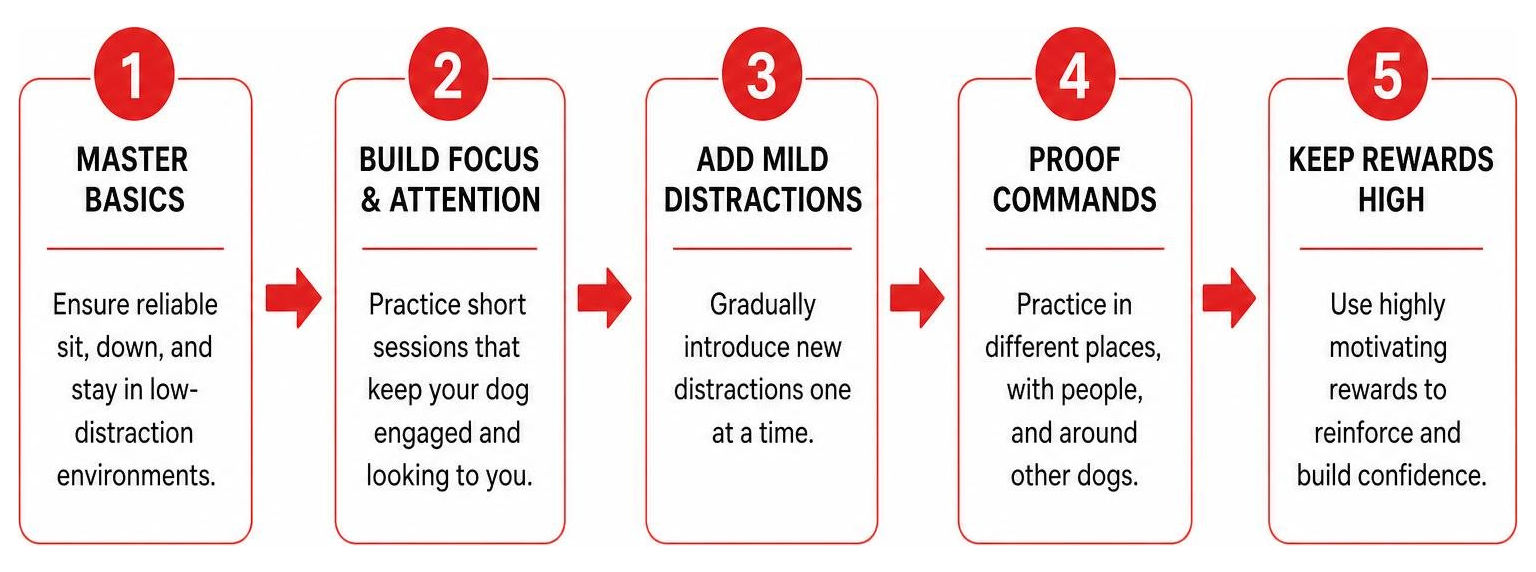
Moving to advanced training requires a solid foundation of focus and attention. Before enrolling, your dog should be able to reliably execute basic commands like sit, down, and stay in low-distraction environments.
You can prepare your dog for the next level by practicing short training sessions in your yard, gradually introducing mild distractions while keeping your rewards highly motivating.
Conclusion
At Paws University, we believe that training should be a joyful experience that strengthens the bond between you and your dog. As Hawaii County's premier pet care facility since 2002, our seven-acre tropical campus in Kailua-Kona offers the perfect setting for your dog to learn, play, and grow.
By using strictly rewards-based, positive reinforcement training methods, we help you build a relationship with your dog based on trust, clear communication, and mutual respect. Ready to start your training journey? Explore our premium options for Training today!