Dog Aggression: What to Do First
If your dog freezes, stiffens, growls, or snaps, give them space. Separate them from children and other pets, and do not punish the warning. Schedule a veterinary exam to check for pain or illness. Then work with a qualified behavior professional on a reward-based plan. Safety comes before training.
I'm Allen Daniels, co-founder of Paws University, where I've trained dogs since 1999. I brought reward-based methods from my earlier work with marine mammals to helping families manage dog aggression through trust, practice, and clear safety steps.
Recognizing the Warning Signs and Body Language of Dog Aggression
Early Warning Signals vs. Escalated Dog Aggression
Recognizing canine communication before an encounter escalates is vital for household safety. Dogs rarely bite out of the blue; they communicate internal conflict, stress, and discomfort long before resorting to physical contact.
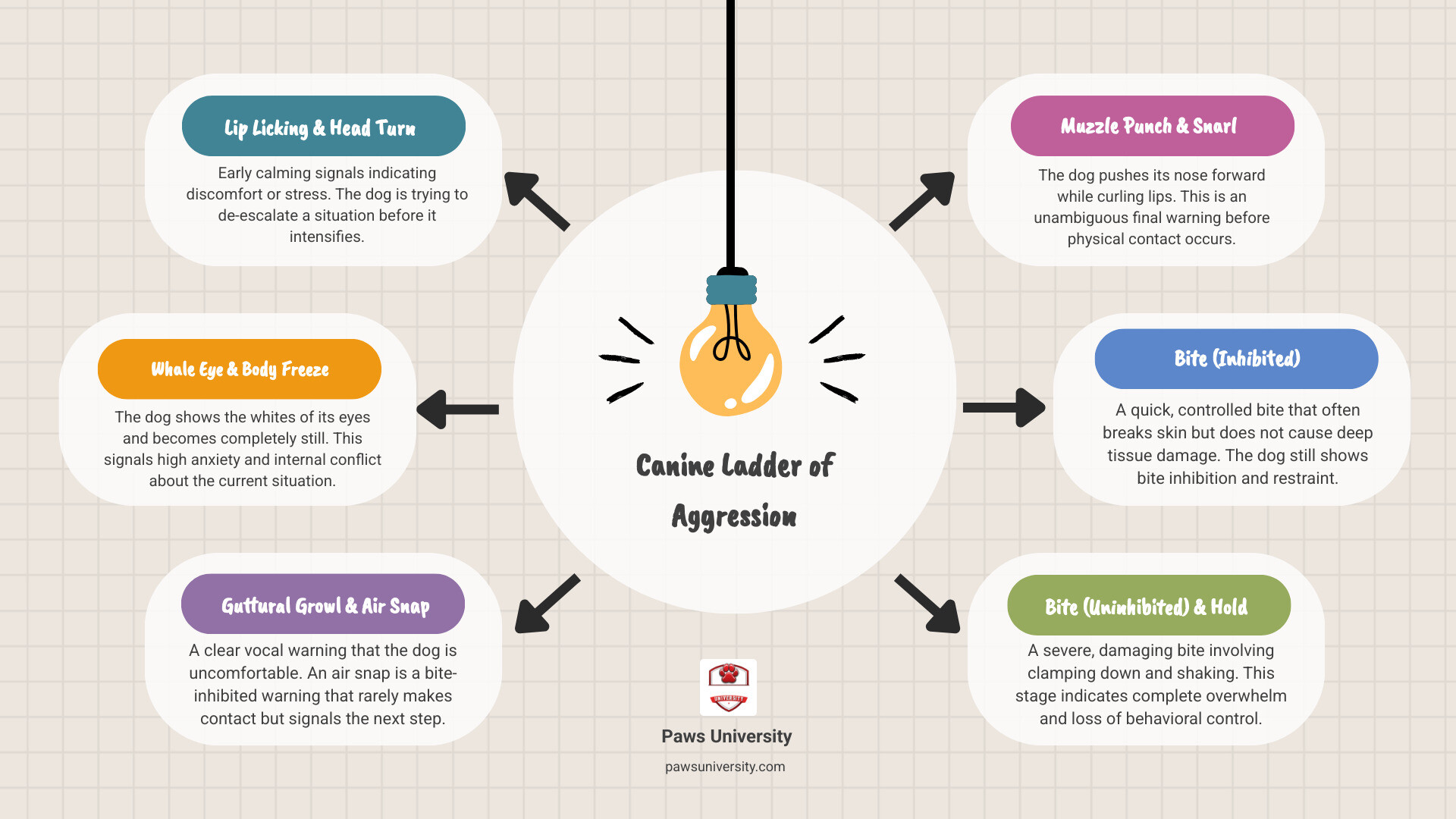
Canine body language operates along a predictable continuum known as the ladder of aggression:
- Subtle Displacement Signals: Yawning out of context, blinking rapidly, licking lips, or turning the head away.
- Appeasement & Distance-Seeking: Lowering the body, walking away, or showing "whale eye" (wide eyes displaying the white sclera).
- Heightened Arousal: Stiffening, a dead eye gaze, closed mouth, and raised hackles (piloerection).
- Active Warning: Guttural barking, curling lips, showing teeth, growling, and lunging.
- Physical Contact: Muzzle punching (hitting a target with a closed snout), snapping, quick inhibition nips, and escalating bites.
Understanding this sequence helps pet parents intervene safely. If a dog stiffens over a chew bone, creating physical distance prevents a bite. Learning how to stop your dog from growling begins with recognizing these early indicators rather than escalating the pressure.
| Behavior Level | Observable Body Language | Recommended Immediate Action |
|---|---|---|
| Low-Level Stress | Lip licking, yawning, looking away, slow movements | Remove the trigger or increase physical distance calmly. |
| Moderate Arousal | Whale eye, freezing, stiff tail wag, crouching | Cease interaction, instruct others to step back, avoid direct eye contact. |
| High Threat / Active Warning | Low growling, snarling, baring teeth, lunging | Do not yell or advance; calmly back away and create a physical barrier. |
| Imminent Bite / Attack | Hard stare, muzzle punch, air snapping, clamped jaw | Place an object (cushion, baby gate) between yourself and the dog. |
Why Suppressing Warning Signals Increases Bite Risk
When a dog growls, our instinct might be to verbally reprimand them. Punishing a growl removes the warning without changing the dog's emotional state.
Growling functions like a household smoke detector. If you remove the batteries from a smoke detector to stop the beeping, the fire is still burning. When dogs are punished for growling or displaying subtle warnings, they learn that communication is dangerous. Consequently, they may skip warning signals entirely and proceed directly to a bite during future moments of fear or stress.
Outdated techniques that rely on physical confrontation, such as "alpha rolls" or forceful scruff shakes, create intense panic. Reviewing methods to stop dog growling highlights why addressing underlying emotions through rewards-based methods is far safer and more effective than suppressing vocal signals.
Primary Types and Root Causes of Aggressive Behavior

Fear-Based, Defensive, and Frustration Responses
The majority of aggressive incidents stem from fear rather than a desire to dominate. When an animal perceives a threat and cannot retreat, their sympathetic nervous system activates the fight-or-flight response. Studies show that roughly 77% of dogs exhibiting aggressive behavior toward children display abnormalities on standardized anxiety screenings.
Defensive reactions occur frequently when a dog feels trapped, such as during veterinary handling, physical grooming, or when cornered by unfamiliar individuals.
Frustration-based reactivity develops when a dog's natural desire to explore, socialize, or flee is physically thwarted by a tight leash or window barrier. Over time, that pent-up energy can boil over into lunging, barking, and snapping. Working through high anxiety dog training helps owners build emotional resilience. Interactive exercises like the look at that game allow dogs to observe stimuli safely below their emotional threshold.
Resource Guarding, Territorial Defense, and Leash Reactivity
Possessive aggression, commonly called resource guarding, occurs when a dog feels the need to protect items they value:
- Food bowls and edible chews
- Favored toys or stolen socks
- Resting areas like sofas or human beds
- A primary handler or companion
Territorial behaviors involve perimeter defense, such as aggressive fence-running or barking at the door. If a dog becomes overstimulated by a passing postal carrier behind a fence and cannot reach them, they may pivot and bite a nearby housemate dog. This reaction is known as redirected aggression.
On-leash triggers represent another common challenge. Between 22% and 47% of companion canines exhibit reactive or aggressive responses toward unfamiliar dogs while walking. For comprehensive step-by-step strategies to calm these reactions, explore our guide to leash reactivity correction and learn how to stop barking on leash.
Genetics, Early Adversity, and Socialization History in Dog Aggression
Aggression is polygenic, meaning it involves interactions across multiple genes associated with neurotransmission and stress signaling (Sartore et al., 2025). However, genetic predispositions interact constantly with early life environments.
Recent findings published on the influence of early life adversity and breed on aggression and fear in dogs highlight that trauma experienced within the first six months of life significantly increases fear and aggressive behaviors in adulthood. A systematic review on Genetic and Gene-by-Environment Influences on Aggressiveness in Dogs confirms that while certain working lineages carry strong protective instincts, environment and handling heavily shape behavioral outcomes.
Recognizing the signs of a poorly socialized dog is essential for early intervention. If you are caring for a rescue or an older pet, our guide to socializing an adult dog outlines how to gently expand your dog's comfort zone using positive associations.
Medical Triggers, Pain, and the Gut-Brain Connection
Before implementing any behavior modification program, ruling out underlying medical problems is essential. Clinical surveys reveal that up to 80% of canine behavior cases evaluated by specialists involve a medical component, particularly undetected pain.
A dog experiencing musculoskeletal discomfort from hip dysplasia or osteoarthritis may snap if brushed or bumped. Hypothyroidism can alter mood and lower an animal's tolerance for stress, leading to sudden behavioral shifts. For detailed veterinary perspectives on physical discomfort, review Aggressive behaviour in dogs.
Emerging neurocognitive research also emphasizes the bidirectional communication between the central nervous system and the gastrointestinal tract (Kleszcz et al., 2022). Diets optimized with balanced tryptophan (a precursor to serotonin) and omega-3 fatty acids (EPA/DHA) support emotional stability, whereas chronic gut dysbiosis can exacerbate stress and reactivity.
Evidence-Based Behavior Modification and Management Strategies
Immediate Safety Measures and Environmental Management
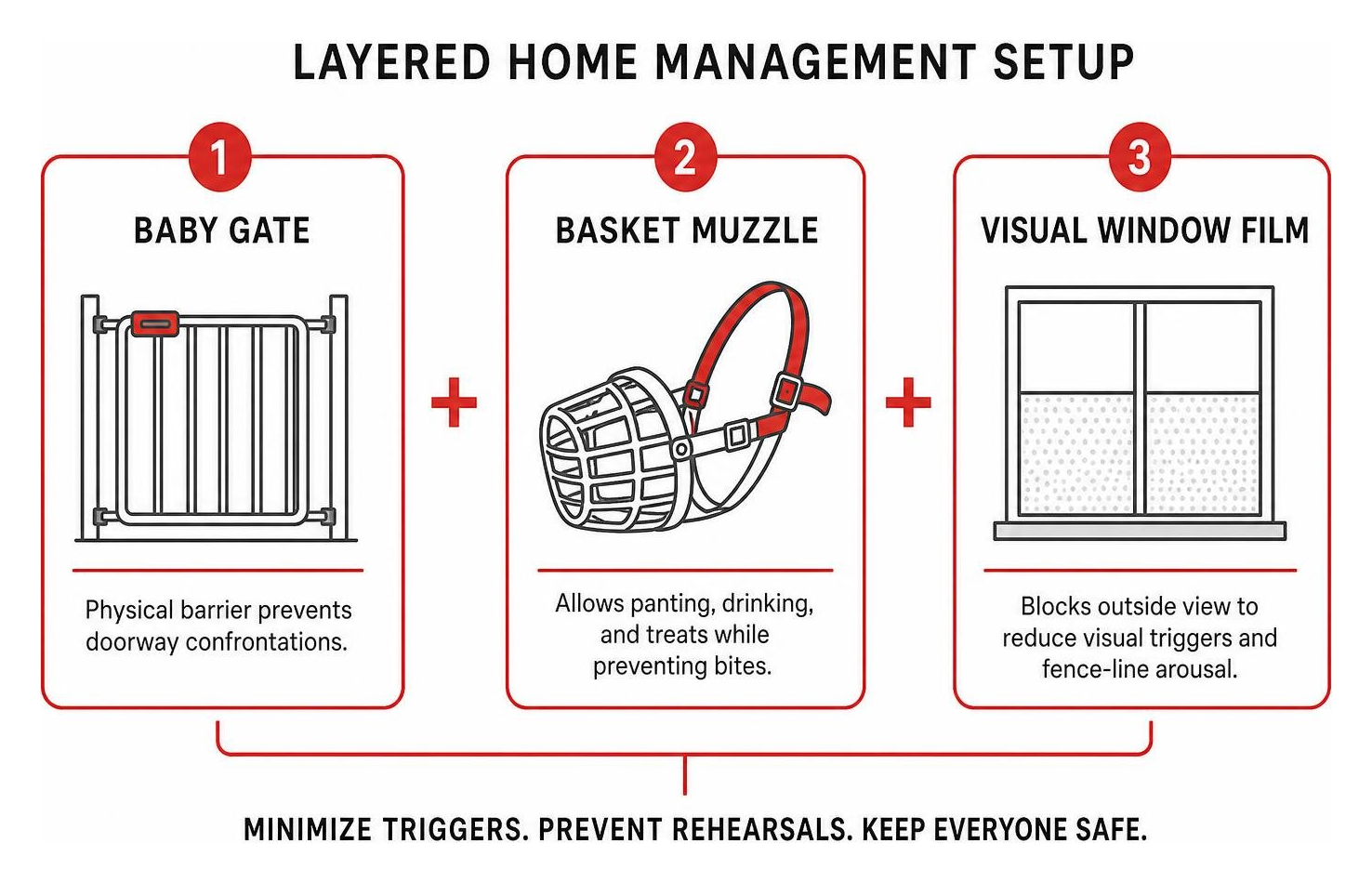
Management prevents rehearsals of unwanted behaviors and keeps everyone safe (Pike, 2018). While training addresses the emotional root cause, environmental management minimizes risk during daily routines.
Key safety protocols to put in place immediately include:
- Basket Muzzles: When introduced slowly with treats, a properly fitted basket muzzle allows dogs to pant, drink water, and take treats comfortably while preventing bites.
- Physical Barriers: Solid baby gates, visual barriers (such as window films), and designated quiet rooms prevent stressful doorway confrontations and fence-line arousal.
- Supervised Exercise: Creating safe, enclosed spaces for enrichment ensures dogs burn energy without encountering outdoor triggers.
Detailed protocols in Managing Canine Aggression in the Home stress that minimizing trigger exposure is essential for maintaining household harmony.
Desensitization, Counter-Conditioning, and Safety Training
Modifying aggressive responses requires systematic behavioral conditioning. Rather than suppressing outward symptoms, we alter how the dog feels about the trigger:
- Systematic Desensitization: Exposing the dog to their trigger at a distance or intensity low enough that they notice it without entering a state of stress or arousal.
- Classical Counter-Conditioning: Pairing the sight of that distant trigger with high-value rewards (like roasted chicken or liver treats) so the trigger becomes a predictor of positive outcomes.
- Conditioned Safety Cues: Teaching reliable alternative behaviors, such as targeting a hand or turning around on cue, which lets the dog move away from stressors safely.
You can address canine aggression by focusing on emotional well-being rather than punishment. Building foundational skills through manners training strengthens focus and cooperative communication.
Professional Intervention, Safe Rehoming, and Difficult Decisions
Consulting Veterinary Behaviorists and Professional Trainers
Persistent, escalating, or severe aggression warrants professional intervention. Because dog training is an unregulated field, pet parents must screen professionals carefully. Look for specialists who practice exclusively reward-based, humane methodologies.
For complex aggression, sudden personality shifts, or cases involving bites with puncture wounds, consult a veterinary behaviorist. As detailed in the Los Angeles Times guide on When to Call a Veterinary Behaviorist for Your Pet, these specialists can prescribe behavioral medications—such as selective serotonin reuptake inhibitors (SSRIs)—to lower anxiety and improve receptivity to training.
If you need localized assistance, guidance on finding aggression training can help you identify qualified experts committed to humane behavior modification.
Ethical Rehoming and Behavioral Euthanasia Considerations
Navigating severe aggression is emotionally demanding. When an aggressive dog lives with vulnerable individuals, such as young children or elderly family members, management protocols can occasionally fail despite best efforts.
When assessing next steps, consider the following ethical framework:
- Bite History Severity: Evaluate previous incidents using standardized bite scales (such as the Ian Dunbar Bite Assessment). Deep, multiple punctures with shaking carry a much higher safety risk than inhibited snaps.
- Predictability and Triggers: Dogs whose triggers cannot be safely managed in standard residential environments pose ongoing safety concerns.
- Quality of Life: An animal living in constant fear, hypervigilance, and isolation is experiencing poor welfare.
Ethical rehoming requires complete transparency regarding the dog's behavioral history, bite incidents, and medical evaluations. If safe placement cannot be accomplished without endangering others, behavioral euthanasia may be the most humane and responsible choice to end an animal's suffering.
Frequently Asked Questions about Dog Aggression
Can dog aggression ever be completely cured?
Aggression is a behavioral strategy driven by emotional states, meaning it is managed and improved rather than "cured" like an infection. With consistent counter-conditioning, environmental safety, and rewards-based learning, dogs can develop alternative coping mechanisms and significantly lower their reactivity. Read our exploration on whether you can train aggression out of an adult dog for realistic timelines and management perspectives.
Will spaying or neutering fix aggressive behavior?
Spaying or neutering can reduce behaviors influenced by reproductive hormones, such as competition between intact male dogs or roaming. However, gonadectomy is not a standalone fix for fear-based, territorial, or frustration-related aggression. If an aggressive behavior has become an established habit, behavior modification is necessary regardless of reproductive status.
What should I do immediately if an unfamiliar dog charges or attacks?
If an unfamiliar dog approaches aggressively, avoid running, screaming, or making direct eye contact, as sudden motion can trigger a predatory pursuit. Stand tall, turn slightly sideways, and fold your arms across your chest ("be a tree"). In a firm, deep voice, give a clear cue like "NO" or "STAY." If you carry an umbrella, opening it toward the charging dog can create an effective visual and physical barrier.
Conclusion
Managing canine aggression requires patience, empathy, and a strong commitment to safety. By understanding subtle body language, ruling out medical pain, and applying reward-based training, you can build trust and reduce behavioral stress. At Paws University, our team is dedicated to supporting pet parents through positive, evidence-based methods on our seven-acre campus in Hawaii County. To take your next practical step, explore our guide on dog aggression training and help your canine companion navigate the world with confidence.
References
Kleszcz A, Cholewińska P, Front G, Pacoń J, Bodkowski R, Janczak M, Dorobisz T. "Review on Selected Aggression Causes and the Role of Neurocognitive Science in the Diagnosis.." Animals : an open access journal from MDPI, 2022. PMCID PMC8833765. Pike A. "Managing Canine Aggression in the Home.." The Veterinary clinics of North America. Small animal practice, 2018. PMID 29429601. Sartore S, Moretti R, Chessa S, Sacchi P. "Genetic and Gene-by-Environment Influences on Aggressiveness in Dogs: A Systematic Review from 2000 to 2024.." Animals : an open access journal from MDPI, 2025. PMCID PMC12345521.