How to Calm a Fear-Reactive Dog
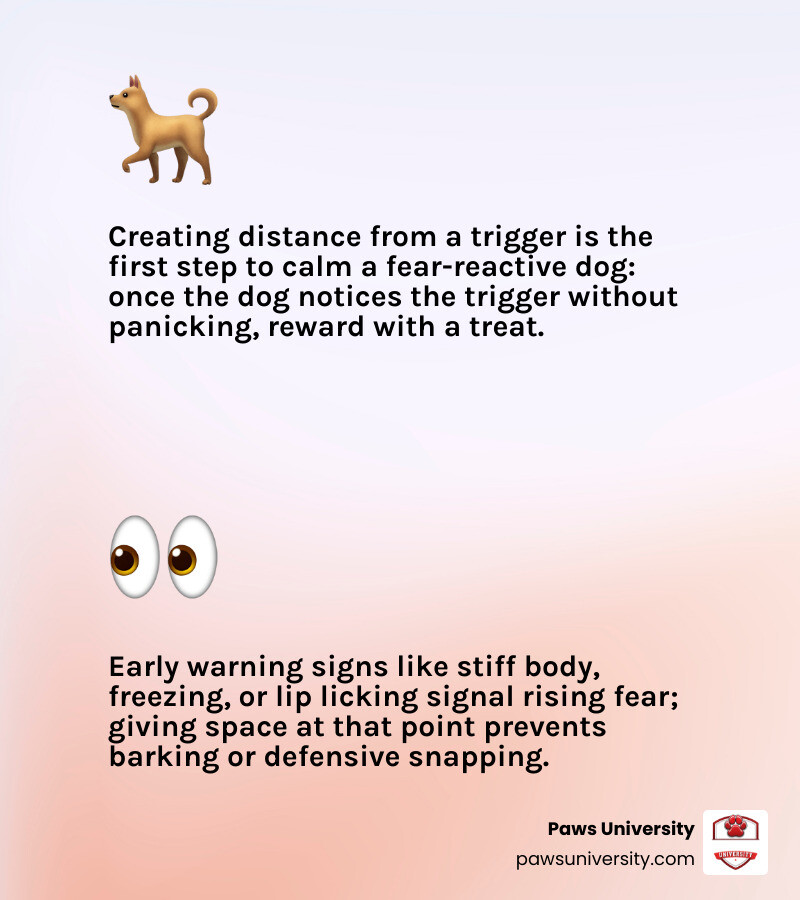
If your dog barks or lunges at a person, another dog, or a sound, create distance first. Once your dog can notice the trigger without panicking, reward them with a treat. Move closer only as they stay comfortable. Fear reactivity in dogs is a strong response to something that feels threatening; it does not mean every reactive dog wants to bite.
Watch for early signs such as a stiff body, freezing, or lip licking. Giving your dog space at that point can keep fear from building into a bark or defensive snap.
I'm Allen Daniels, co-founder of Paws University. I've spent more than 25 years using reward-based training to help dogs, including those with fear reactivity in dogs; the guide below starts with the signs to catch early.
Relevant articles related to fear reactivity in dogs:
Understanding Fear Reactivity in Dogs vs. True Aggression
When a dog explodes at the sight of another dog across the street, many people assume they are witnessing an aggressive animal. In reality, most explosive episodes stem from emotional dysregulation and a surging fight-or-flight response.
Reactivity refers to an exaggerated emotional reaction to a stimulus that a calm dog would normally tolerate or ignore. A fear-reactive dog is acting purely defensively: their barking, lunging, and snarling are distance-increasing behaviors. They are putting on a dramatic display to shout, "Stay away from me!"
By contrast, true offensive aggression involves intent to close distance, control resources, or inflict harm without prior defensive provocation. When you understand this distinction, your training shifts from punishing a "bad dog" to helping a scared animal feel secure. You can learn how to stop canine aggression before it escalates with positive modification by focusing on underlying emotions rather than just suppressing vocal outbursts.
| Feature | Fear Reactivity | Offensive Aggression |
|---|---|---|
| Primary Goal | Increase distance from trigger | Decrease distance / control / dominate |
| Emotional State | Fear, anxiety, panic, panic-induced arousal | High confidence, predatory drive, or resource control |
| Body Posture | Tense, tucked tail, ears pinned, leaning back | Forward-leaning, stiff, high tail carriage, hard stare |
| Leash Behavior | Lunging forward while trying to retreat or deflect | Purposeful lunging with forward momentum to attack |
| Response to Space | De-escalates rapidly when distance is granted | Remains focused on pursuing the target |
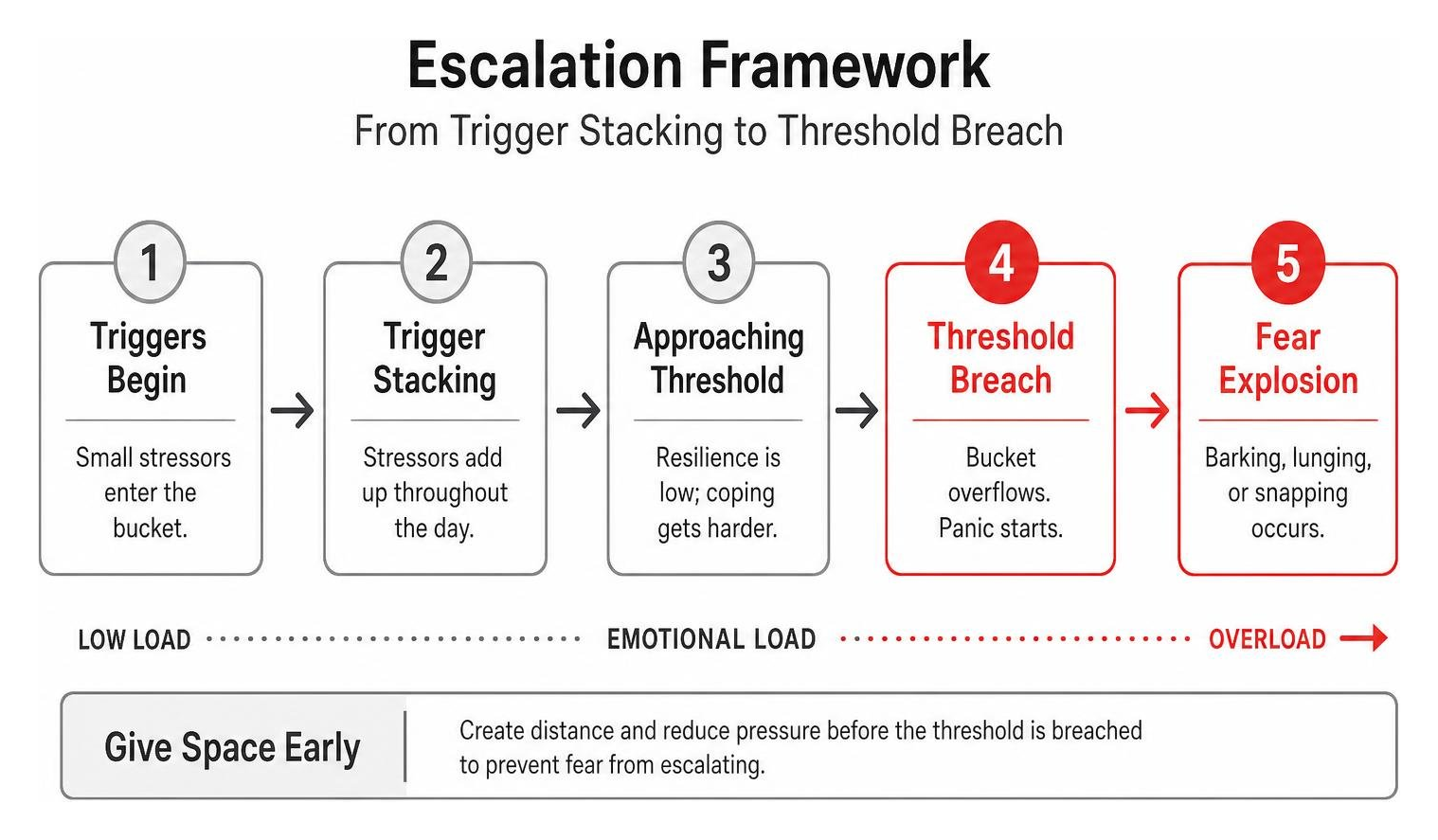
Trigger stacking makes fear reactivity much worse. Think of your dog's emotional resilience as a bucket. A sudden thunderstorm empties a cup of patience into the bucket. A noisy garbage truck adds another cup. By the time an unfamiliar dog walks past during your evening stroll, the bucket overflows. Your dog passes their threshold—the physical distance or emotional limit where they can no longer process cues or accept treats—and enters a state of panic.
Common Triggers and Early Warning Signs
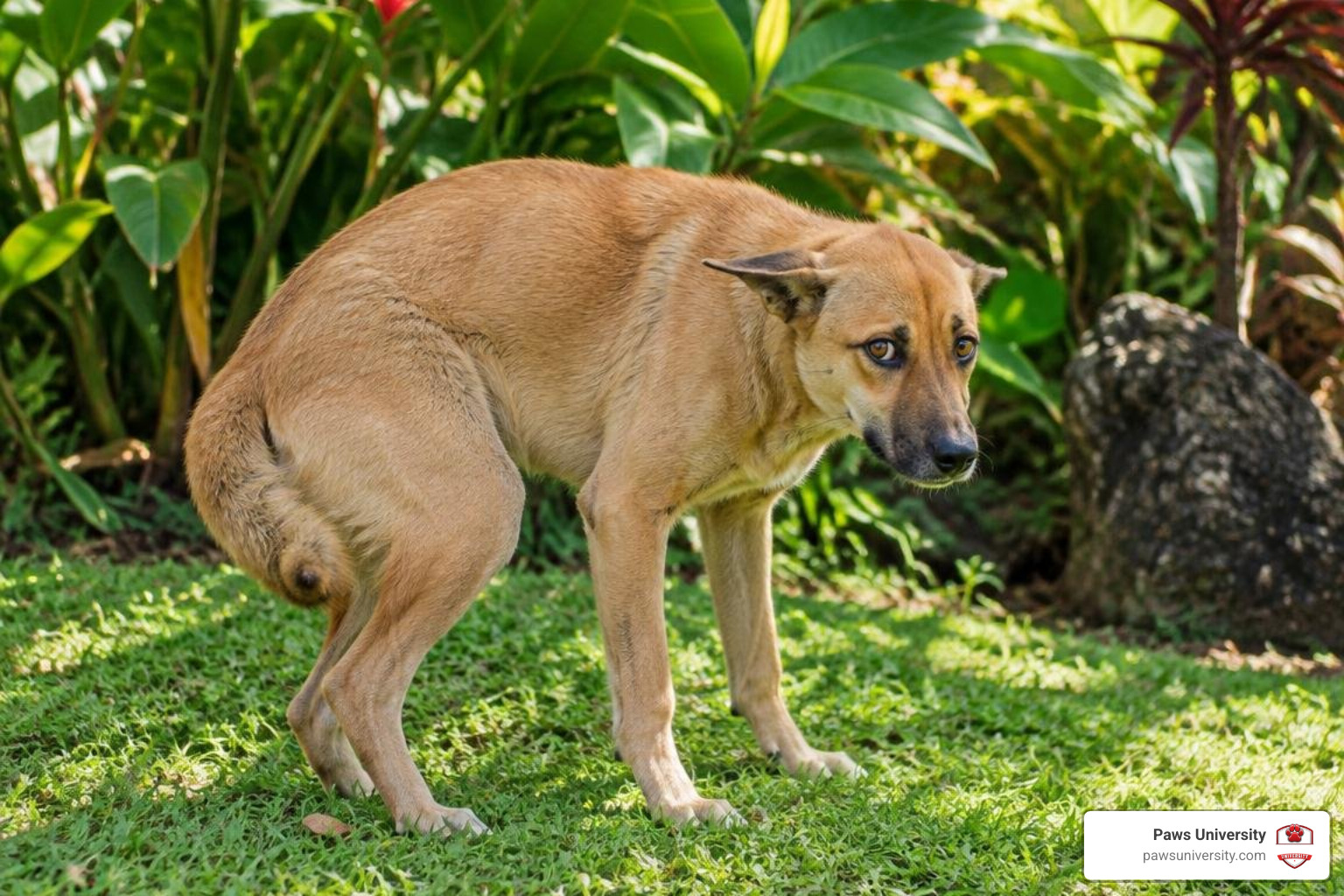
Fear reactivity rarely happens without warning. Long before a dog barks or snaps, they communicate distress through subtle body language cues.
Common triggers include:
- Unfamiliar dogs approaching head-on
- Strangers wearing unusual gear (such as hats, sunglasses, or carrying large objects)
- Fast-moving wheeled objects like bicycles and skateboards
- Sudden loud noises or unexpected environmental movements
Early behavioral warning signs include:
- Lip licking and yawning outside the context of food or sleep
- Whale eye, where the whites of the dog's eyes become visible as they track a trigger
- Sudden body freezing or momentary stiffness
- Tightly closed mouth paired with rapid, shallow panting
- Lowered tail with rigid, fast tip-wagging
Recognizing these precursors allows you to intervene before your dog resorts to vocal warnings. If your dog has begun growling, a growl is valuable communication; applying methods that help manage growling without punishment protects your dog's warning system so they never feel forced to bite without signaling first.
Root Causes of Fear Reactivity in Dogs
Canine behavior does not develop in a vacuum. A dog’s tendency toward fear-based reactivity involves genetics, environment, and development.
- Genetic Predisposition: Some dogs inherit sensitive temperaments. Scientific studies published in Scientific Reports show that smaller dogs, certain breeds (such as Collies, Toy Poodles, and Miniature Schnauzers), and dogs lacking stable canine companionship show higher probabilities of fearfulness and defensive reactions compared to breeds like Golden Retrievers or Labrador Retrievers.
- Socialization Gaps: The primary sensitive developmental window occurs between 3 and 14 weeks of age. A scientific study on social fearfulness in pet dogs analyzing thousands of pets found that inadequate puppy socialization, urban living environments, and low daily activity are strongly associated with social fearfulness toward both unfamiliar humans and dogs. You can review our guide to identifying signs of a poorly socialized dog to spot early socialization deficits.
- Traumatic Experiences: A single traumatic incident—such as an off-leash dog attack or an intense acoustic scare—can sensitize the canine amygdala, leading to generalized fear responses.
- Caregiver Stress: Dogs are sensitive to human emotional states. Research on caregiver dynamics reveals that high owner stress and anxious handling correlate with increased fear-based reactions in dogs, creating an unintentional feedback loop down the leash.
Managing Specific Manifestations: Leash and Noise Reactivity
Fear reactivity often takes specific forms. Two of the most common challenges dog guardians face are leash reactivity and noise sensitivity.
When a dog struggles on a walk, owners need a dedicated leash reactivity guide to re-establish calm outings. Similarly, acoustic sensitivity can erode a dog's general confidence. Scientific research on noise fear and canine problem solving shows that noise-reactive dogs experience impaired cognitive performance and show significantly less coordinated, fluid movement during problem-solving tasks. In studies using Anxiety Intensity Rank (AIR) metrics, noise-phobic dogs were statistically less likely to complete puzzle box trials because acute fear deactivates their executive functioning.
The Mechanics of Leash Reactivity
Why does a dog who plays off-leash transform into an explosive lunger on-leash? The answer comes down to spatial restriction.
In natural off-leash interactions, dogs communicate using gentle curves, indirect approaches, and loose body language. When placed on a tight leash:
- The dog loses the ability to flee (the "flight" in fight-or-flight).
- Natural body posturing is distorted, often pulling the dog into an upright, confrontational posture.
- The sensation of being tethered increases feelings of vulnerability.
When flight is impossible, fight becomes the dog's sole remaining strategy to establish space. To handle these moments smoothly, check out our in-depth guide to leash reactivity correction and master the emergency U-turn: cheerfully cue your dog with a vocal sound, turn 180 degrees, and reward them generously as you both trot away from the pressure.
Noise Phobias and Auditory Stress
Up to 50% of pet dogs experience an extreme reaction to loud noises during their lifetime. Thunderstorms, fireworks, and sudden industrial sounds can trigger sensory overload.
During a noise event, the stress hormone cortisol spikes, prompting pacing, trembling, drooling, or frantic hiding. Clinical research on firework fear mitigation demonstrates that structured environmental management—such as setting up a dark, insulated interior safe room with white noise—significantly lowers behavioral fear scores. For dogs whose anxiety lingers long after a storm passes, implementing proven anxious dog solutions can restore baseline emotional balance.
Step-by-Step Behavior Modification Techniques
Modifying fear reactivity requires rewiring the dog’s emotional association with their triggers using reward-based methods. We never use punitive tools like prong collars, choke chains, or shock collars; adding physical discomfort to an already fearful dog reinforces that the trigger predicts pain, which can escalate defensive reactions.
For dogs experiencing elevated baseline stress, exploring our ultimate guide to high anxiety dog training provides a foundation for structured emotional recovery.
Implementing Desensitization and Counter-Conditioning
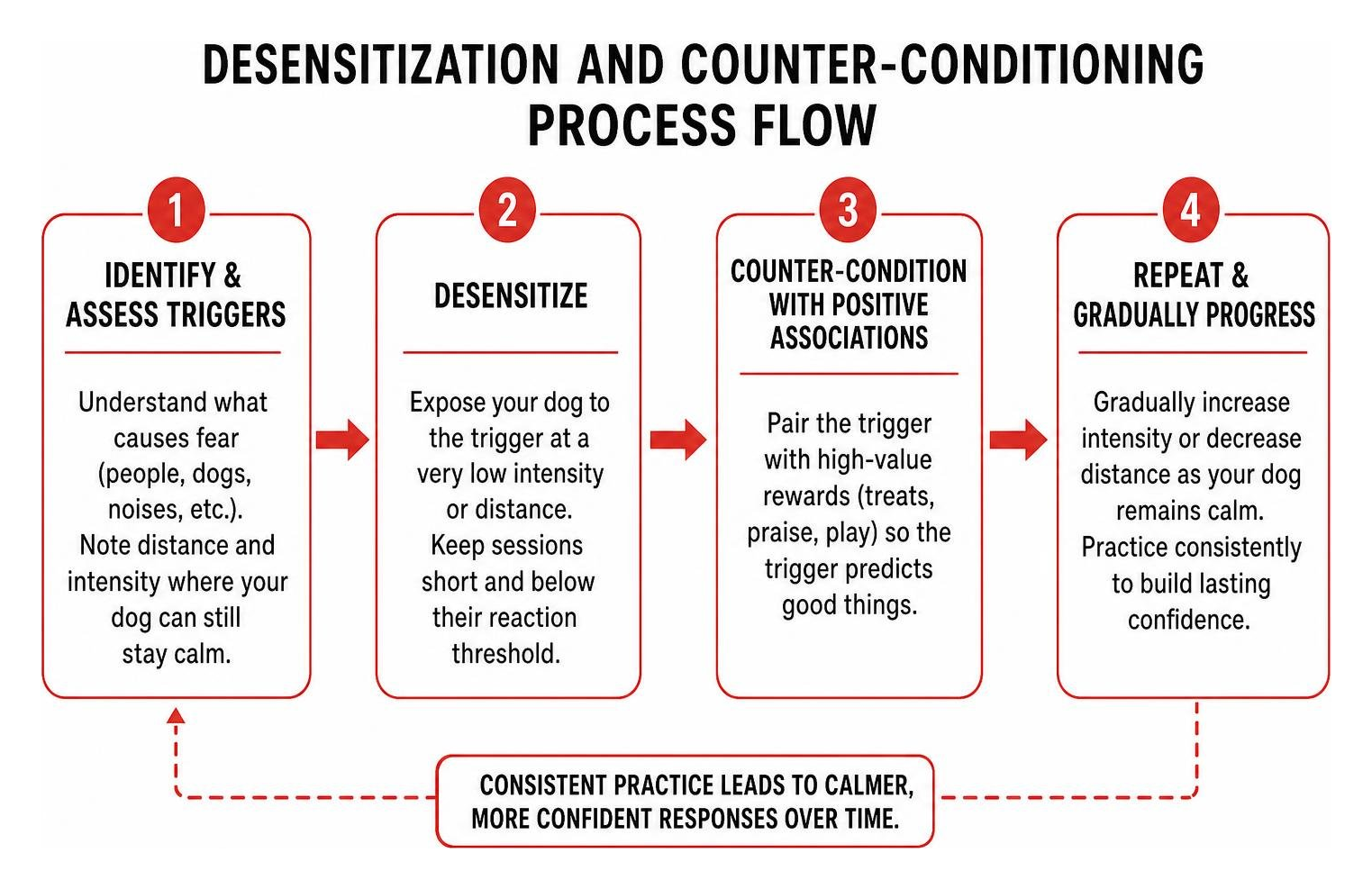
Systematic Desensitization and Counter-Conditioning (DSCC) is the gold standard for treating fear-based reactivity.
- Systematic Desensitization: Exposing the dog to the trigger at an intensity (usually distance) so low that no fear response is elicited.
- Counter-Conditioning: Pairing the sight of that sub-threshold trigger with high-value rewards (like roasted chicken, string cheese, or real meat) to replace fear with positive anticipation.
A reliable exercise for this is the "Look at That" (LAT) game:
- Find the Sub-Threshold Zone: Position your dog far enough away from a trigger that they notice it with relaxed ears and soft posture.
- Mark the Glance: The instant your dog looks at the trigger, use a clear verbal marker (such as a crisp "Yes!") or a clicker.
- Deliver High-Value Food: Turn your dog's focus toward you and deliver a treat.
- Repeat: Over successive repetitions, your dog learns that spotting the scary stimulus triggers a treat delivery from you, shifting their emotional reaction from alarm to happy expectation.
You can use the Look at That game to turn scary triggers into calm moments during daily walks to build predictable focus.
Environmental Management and Threshold Control
Behavior modification cannot succeed if your dog practices explosive reactivity every day. Every time a dog lunges and barks, stress hormones flood their bloodstream, taking up to 72 hours to return to baseline.
Key management strategies include:
- Visual Barriers: Apply frosted window film to home windows facing busy walkways to eliminate fence-line or window barking.
- Walking Route Planning: Walk during quiet hours or in open, low-traffic green spaces where you have clear sightlines.
- Creating Space: Step behind parked cars, natural foliage, or across the street when another dog approaches.
- Handler Relaxation: Keep the leash loose. Tightening the leash telegraphs anxiety down the line. Take slow, deep breaths to model calm composure.
Implementing these steps supports reducing dog behavior issues without stress for both you and your canine companion.
Prevention Strategies and Professional Support
Preventing fear reactivity is simpler than reversing established behavioral patterns. Early, thoughtful habituation combined with solid foundation training builds a resilient pet.
When working with puppies or newly adopted adult dogs, integrating the core principles of dog obedience training creates a shared language of clear cues, boosting mutual trust.
How to Prevent Fear Reactivity in Dogs Through Early Socialization
Socialization is not simply exposing your puppy to as many dogs and people as possible; it is about creating positive, neutral associations at the puppy's pace. A scientific evaluation of early fearfulness in dogs highlights that early habituation to diverse visual and auditory stimuli directly correlates with reduced salivary cortisol responses and lower adult fear scores.
Key socialization practices:
- Prioritize Quality Over Quantity: One calm, positive observation of a bicycle from 30 feet away is far better than an overwhelming encounter up close.
- Allow Choice: Never force a puppy to be petted by strangers or cornered by energetic dogs. Always allow them to retreat if they choose.
- Structured Group Play: For adult dogs needing safe exposure, read our practical guide to socializing adult dogs to set up appropriate parallel walks and low-stress introductions.
If your dog displays sudden changes in temperament, consult a veterinarian first to rule out pain, thyroid imbalances, or sensory decline. When fear reactivity resists basic management, partner with a positive reinforcement behavior professional for an individualized plan.
Frequently Asked Questions About Fearful Dog Behavior
Can fear reactivity turn into aggressive biting?
Yes, fear reactivity can escalate into defensive biting if a dog's early communication is ignored, punished, or trapped. Dogs follow an escalation ladder: if subtle stress signals (lip licking, turning away) fail to create space, they progress to growling, barking, and lunging. If those warnings are suppressed—or if the threatening trigger continues to close in—the dog may use a defensive snap or bite to protect themselves. Respecting early stress cues keeps your dog safe below their bite threshold.
How long does it take to rehabilitate a fear-reactive dog?
Behavior modification is an ongoing learning process rather than an overnight fix. Timeline depends on genetics, how long the behavior has been practiced, and the consistency of environmental management. Most guardians see meaningful improvement within 8 to 12 weeks of consistent counter-conditioning. While some sensitive dogs may always need thoughtful handling in crowded spaces, systematic training will significantly expand their comfort zone.
Should I comfort my dog when they show fear?
Yes, you can comfort a fearful dog. Fear is an emotional state, not an operant behavior, and you cannot reinforce fear by offering comfort. Speaking softly, offering gentle strokes (if your dog enjoys physical touch), or allowing them to lean against you provides valuable co-regulation. Remaining calm and supportive helps your dog feel secure while you move them away from the trigger.
Conclusion
Living with a fear-reactive dog can feel challenging, but fear reactivity is a call for help rather than a character flaw. By understanding your dog's triggers, managing their environment, and using reward-based desensitization, you can help your companion navigate the world with confidence.
At Paws University, our team is dedicated to supporting dogs and their families across Hawaii County. Set on our seven-acre campus in Keauhou Mauka, our premier facility has provided compassionate, reward-based pet day care, boarding, and training since 2002. Supervised play and positive reinforcement build genuine behavioral wellness. When you are ready for individualized, compassionate guidance, explore our structured dog training programs and take the first step toward peaceful, stress-free outings together.