Core Foundations: How to Train Puppy Manners at Home
Bringing a puppy home transforms your daily life, but setting up good habits right away keeps the chaos to a minimum. Dogs thrive on clarity, routine, and positive communication. When you manage the environment so mistakes are rare, your puppy naturally learns what behaviors earn them attention, playtime, and delicious treats. Learning how to train a puppy starts with this proactive approach.
Instead of waiting for your puppy to make a mistake, proactive management prevents bad habits before they take root. Use baby gates, exercise pens, and leashes indoors to guide their choices. Pairing this structured environment with a clear marker—such as the word "yes" or a clicker—lets you communicate the exact second your puppy does something you like. Deliver a small, tasty treat within one to two seconds of that marker, and your puppy will quickly figure out how to repeat that winning behavior.
The 3-3-3 Rule and Setting Realistic Daily Expectations
Puppies do not arrive knowing human house rules. Understanding the adjustment period helps you set fair expectations during those whirlwind initial weeks. Many professional trainers rely on the 3-3-3 rule to outline how a dog settles into a new space:
- First 3 Days: Your puppy is decompressing. Everything feels strange, from the novel smells of your living room to your daily household sounds. They may seem overly shy or surprisingly quiet.
- First 3 Weeks: Your puppy starts learning the daily routine. Their real personality emerges, and they begin exploring their physical boundaries.
- First 3 Months: Your puppy feels fully secure in their home, building true trust with your family and cementing baseline habits.
Young puppies need an extraordinary amount of rest, often sleeping 16 to 20 hours every day. An overtired puppy turns into a frantic, mouthy puppy. Establishing steady nap windows makes everyday learning smoother, proving that early training helps produce the best-behaved dog when consistent routines start on day one.
Establishing Foundations: How to Train Puppy Potty Habits and Crate Routines
Reliable house-training relies on timing, supervision, and prompt rewards. A young puppy's bladder capacity is limited; a helpful rule of thumb for their maximum holding time while awake is their age in months plus one, measured in hours. For an eight-week-old puppy, that means taking them out every one to two hours, as well as immediately after waking up, finishing a meal, or wrapping up an active play session.
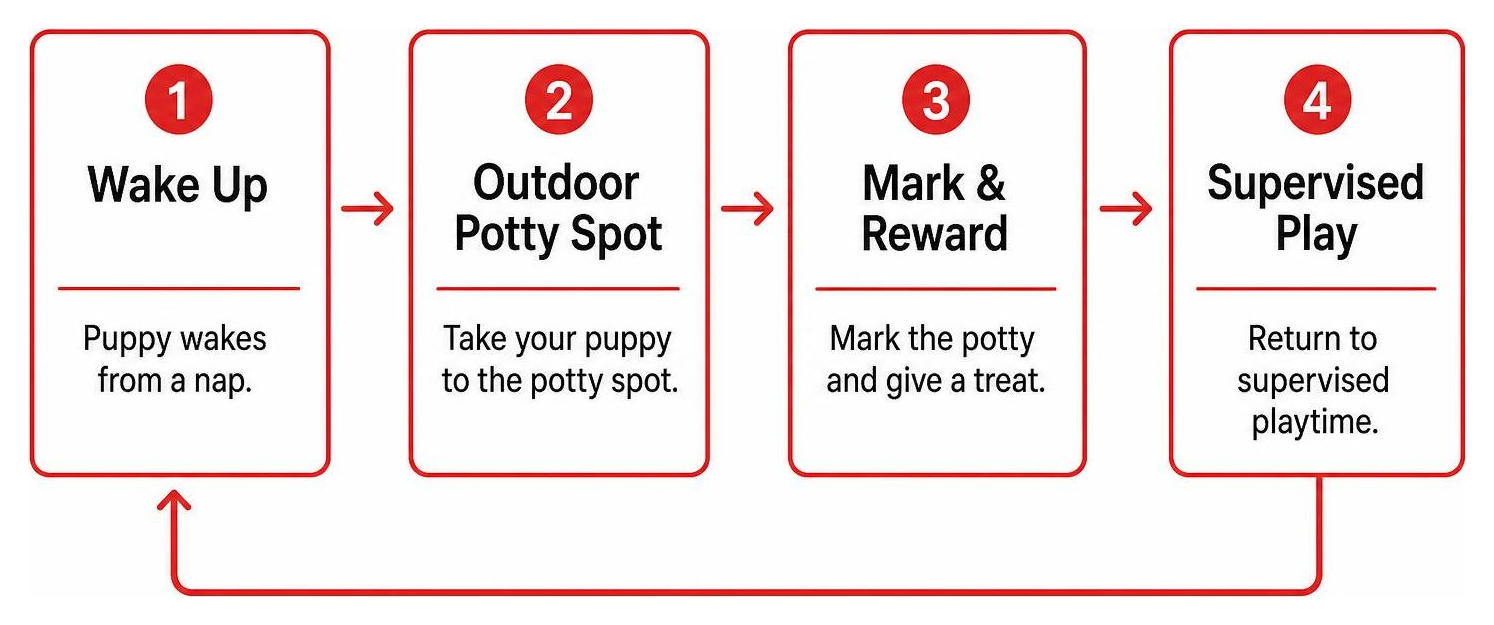
Nighttime routines require the same predictability. Setting up a dedicated sleeping spot near your bed reassures your puppy and lets you hear when they stir for an early morning bathroom break. For a deep dive into nocturnal habits, explore our guide on overnight puppy care and potty training.
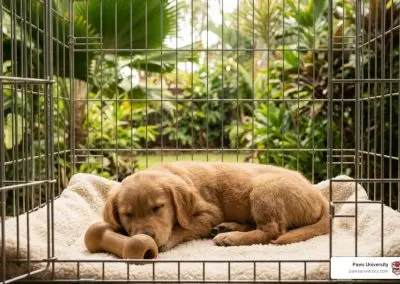
A properly sized crate serves as a cozy bedroom rather than a place of confinement. Introduce the crate with open doors, tossing high-value treats inside and feeding regular meals within it so your puppy forms an immediate positive association. Puppies under six months old should never remain crated for more than three to four hours during daytime hours. Learn step-by-step acclimation techniques in our guide to crate training.
If an accident happens inside, never scold or rub your puppy's nose in the mess. Simply clean the area thoroughly with an enzymatic cleaner. Enzymatic sprays break down the microscopic urine proteins, removing the scent triggers that might draw your puppy back to that indoor spot.
Playpen Setup and Alone-Time Independence
While a crate is perfect for sleeping and short resting periods, an exercise pen provides safe boundaries during the day when you cannot offer direct, hands-on supervision. It gives your puppy room to stretch, chew a safe puzzle toy, and relax without wandering toward electrical cords or dining room furniture.
Learning how to rest calmly alone is an essential life skill. You can discover useful pen arrangements to playpen train your puppy without unnecessary stress. Pair short moments of solo pen time with stuffed food toys to build positive associations with independent rest. For comprehensive steps on preventing separation distress, review our guide to teaching your puppy to be alone.
Age-Appropriate Puppy Training Schedule and Milestones
A puppy's brain develops rapidly between 3 and 16 weeks of age, creating an ideal window for learning household manners and building social resilience. Keeping expectations aligned with their physical maturity ensures steady progress.
| Age Window | Physical Holding Capacity | Primary Training Focus | Daily Session Structure |
|---|---|---|---|
| 8–10 Weeks | 1–2 hours (awake) | Name recognition, crate comfort, baseline potty schedule | 3–5 micro-sessions (2–3 mins each) |
| 10–12 Weeks | 2–3 hours | Luring basic cues (sit, down), gentle sound desensitization | 3–4 micro-sessions (3–5 mins each) |
| 12–16 Weeks | 3–4 hours | Bite inhibition, loose-leash foundations, indoor recall | 2–3 sessions (5 mins each) |
| 4–6 Months | 4–5 hours | Distraction proofing, stay, outdoor leash manners | 2–3 sessions (5–10 mins each) |
| 6+ Months | 5–6+ hours | Adolescence management, impulse control, reliable recall | 2 sessions (10 mins each) + daily play |
Following an age-appropriate puppy training schedule keeps your puppy motivated while avoiding mental burnout.
Safe Socialization: How to Train Puppy Confidence Before Full Vaccination
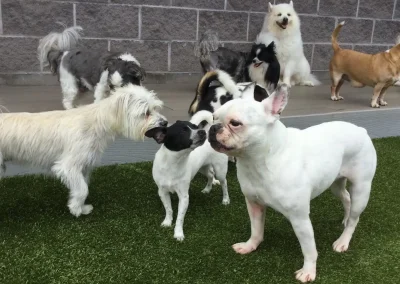
Socialization is often misunderstood as greeting dozens of unfamiliar dogs. In reality, healthy socialization means teaching your puppy to feel calm, curious, and neutral when observing the world around them. The primary developmental socialization window closes around 12 to 16 weeks of age, well before their full vaccination series is finished.
You can safely expose your young pup to novel sights and sounds without touching public ground where unvaccinated dogs congregate. Carry your puppy in a sling or travel bag to observe neighborhood activities, visit quiet open-air spaces, and play recorded city sounds at low volume during mealtime. For a structured checklist of novel sights and textures, check out our guide to puppy socialization methods.
Navigating Puppy Adolescence and Behavior Regressions
Between 5 and 12 months of age, hormonal shifts and brain reorganization can cause sudden training regressions. Your previously attentive puppy might act as if they have forgotten their basic cues, test house boundaries, or show sudden wariness toward familiar objects.
Adolescence is not a lost cause; it simply requires patience and structured mental exercise. Increase scent games, food-dispensing puzzles, and brief review sessions. Brushing up on core skills with dog manners training will help your household stay consistent until adulthood stabilizes their focus.
Essential Obedience Commands and Leash Skills
Teaching basic cues creates a shared language between you and your puppy. Relying entirely on positive reinforcement builds enthusiasm and cooperation, making training a joyful game rather than a chore. For a complete look at early communication tools, consult our guide to teaching puppy obedience basics.
Mastering the Five Core Cues: Sit, Down, Stay, Leave It, and Recall
Focusing on five essential cues provides the foundation for great manners in public and at home:
- Sit: Hold a small treat right in front of your puppy's nose, then slowly lift it up and back toward their ears. As their nose tilts up, their rear naturally lowers to the floor. The moment their bottom touches down, say "yes!" and deliver the treat.
- Down: From a sit, lower a treat straight down between their front paws, then slowly pull it along the floor toward you like an "L" shape. Mark and reward the instant their elbows rest on the ground.
- Stay: Ask for a sit, open your flat palm toward them, pause for just two seconds, mark, and reward while they remain still. Gradually add distance by taking one step back before returning to reward.
- Leave It: Present a treat inside a closed fist. Let the puppy sniff or paw at your hand. The exact second they pull their nose back or look away, mark and reward them with a different treat from your opposite hand.
- Come (Recall): Start indoors from just a few feet away. Call your puppy's name in a bright, cheerful tone followed by "Come!" Back up a few steps to encourage chase, and when they reach you, throw a mini celebration with verbal praise and multiple small treats.
For extra guidance on cue progression, review our tips on quick puppy obedience training.
Loose-Leash Walking and Outdoor Etiquette
Walking pleasantly on a leash requires two separate skills: feeling comfortable wearing equipment and choosing to match your walking pace. Introduce a lightweight flat collar or harness indoors first, pairing it with delicious treats so the gear represents good things.

Once your puppy is comfortable wearing their harness, attach a lightweight leash inside your living room. Walk around, rewarding your puppy every time they choose to walk alongside you with a slack leash. If your puppy pulls ahead toward an object, simply freeze in place like a tree. The moment the leash relaxes or they look back toward you, mark that choice and resume moving forward. For more details on building polite outdoor manners, explore how to master the leash with your new puppy.
Solving Common Puppy Behavioral Challenges
Puppies explore their environment using their mouths, paws, and boundless energy. These behaviors are developmentally normal, but they require early, consistent guidance to prevent frustration. Following established methods from resources like How to Train a Puppy: A Step-by-Step Guide for New Owners | PetSafe® ensures you guide your pet with kindness and clarity.
Stopping Puppy Biting, Nipping, and Mouthing
Puppy teeth are remarkably sharp, and learning bite inhibition—the ability to control the pressure of their jaws—is one of the most critical lessons of early puppyhood. Puppies naturally learn bite limits from their littermates; when one puppy bites too hard, the other yelps and stops playing.
When your puppy mouths your hands during play:
- Say a calm, high-pitched "ouch!" and instantly freeze your hands.
- Redirect their attention onto an appropriate chew toy or braided rope.
- If the hard biting continues, stand up calmly, cross your arms, and step out of reach for a brief 15- to 30-second "reverse time-out."
Consistent feedback teaches your puppy that skin contact ends all the fun, while toys keep the game going. For detailed mouthing solutions, review our guide to teaching your biting pup better manners.
Managing Jumping, Inappropriate Chewing, and Common Training Mistakes
Jumping is another natural puppy greeting behavior that frequently becomes a nuisance in adult dogs. The golden rule for greeting is simple: attention happens only when all four paws rest flat on the floor. If your puppy leaps up, turn your back and look at the ceiling. The instant all paws touch the floor, drop your hands to offer calm affection and a low treat.
To manage inappropriate household chewing, puppy-proof your living areas thoroughly. Keep shoes, remotes, and wires out of reach, and supply a rotating assortment of rubber toys, chilled chew rings, and textured ropes. If your puppy picks up an off-limits item, avoid chasing them; instead, trade them for a high-value toy or treat. If you encounter vocal frustration or tension during handling, check out our guide on puppy growling and biting for supportive management strategies.
Frequently Asked Questions about Puppy Training
How long does it typically take to fully house-train a puppy?
Most puppies achieve reliable house-training between four and six months of age. Toy breeds may take slightly longer due to smaller bladder capacities, while larger breeds often gain physical control sooner. Total reliability depends heavily on your supervision, schedule consistency, and environmental management during the first several months.
How long should puppy training sessions be each day?
Training sessions should last between 3 and 5 minutes, repeated three to five times throughout the day. Young puppies have brief attention spans, and ending each session while they are still engaged, successful, and eager for more ensures high enthusiasm for future learning.
What should I do immediately after my puppy has an indoor accident?
Interrupt the puppy calmly without shouting, gently guide them out to their designated potty area, and praise them warmly if they finish going outside. Clean the indoor mess thoroughly with an enzymatic cleaner to remove any residual odor markers, and shorten the time between your upcoming scheduled outdoor trips.
Conclusion
Training a puppy requires patience, consistency, and a sense of humor. By breaking lessons down into fun micro-sessions, rewarding good choices, and honoring their developmental stages, you lay the foundation for a lifetime of trust and companionship.
At Paws University, our team is passionate about supporting island families through every step of puppyhood. Located on our seven-acre campus in Kailua-Kona, Hawaii, our puppy training programs offer structured, reward-based learning and supervised socialization designed to help your young dog thrive. Embrace the journey, celebrate the small daily victories, and enjoy watching your new puppy grow into a confident, well-mannered companion.